

Nuclear physicists from Princeton University, mechanical engineers who worked with NASA on space-based manufacturing, neuroscientists from the National Institutes of Health , renowned mathematicians, and dozens of AI experts... the list of scientists leaving the US to work in China is growing longer and longer, and all are highly accomplished individuals.
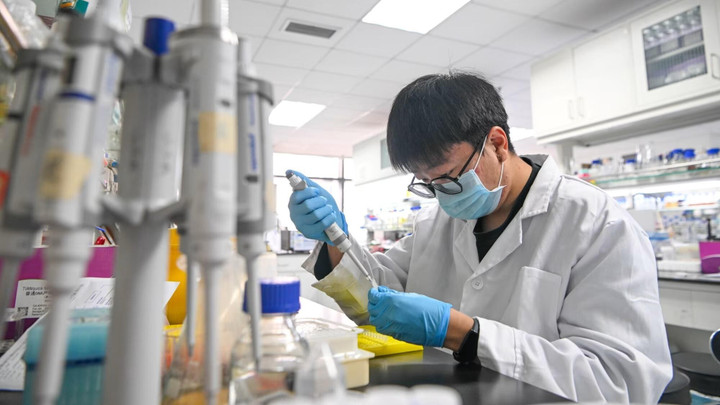
Scientists working at the Chinese Academy of Sciences in Tianjin. (Photo: Xinhua News Agency)
According to CNN statistics, at least 85 young and veteran scientists working in the US have moved to Chinese research institutions on a full-time basis since the beginning of last year, with more than half making the decision in 2025. Observers believe this trend will expand further as the US government cuts research budgets and tightens regulations on foreign talent, while Beijing boosts investment in domestic innovation.
The majority of these scientists belong to the "reverse brain drain" wave, raising questions about America's long-term ability to attract and retain the world's leading research talent, a factor that has helped it maintain its position as the number one power in science and technology since World War II.
This development could directly impact the competition between Washington and Beijing for dominance in future-shaping technologies such as AI, quantum computing, semiconductors, biotechnology, and smart military equipment.
For many years, China has consistently implemented programs to attract international talent, particularly Chinese researchers who have studied abroad and become prominent scientific figures in the United States.
This effort is all the more important given that the US maintains tight technology controls, and Chinese President Xi Jinping asserts that innovation is the only way to ensure economic security.
The actions of the Trump administration, such as drastically cutting research budgets, increasing scrutiny of scientific activities, raising H-1B visa fees, and using federal funds to pressure universities, are seen as having "given China a boost."
Professor Yu Xie (Princeton University) argues that Chinese universities view the changes in the US as "a gift from Trump," giving them access to more high-quality talent.
"Going forward, we will see many new research and training programs being launched, strengthened, and developed across China," he said.
High-tech talent brokerage firms also believe this trend will create more candidates for Chinese government funding programs, particularly in the semiconductor industry.
Although the U.S. Congress is unlikely to block the most drastic budget cuts, months of tightened scientific activity and visa restrictions have already created lasting unease within the research community. This is particularly impactful for scientists with ties to China, which sends more doctoral students in science and engineering to the U.S. than any other country.
This year, the Trump administration used Chinese student visas as a bargaining tool in trade negotiations. Some lawmakers also called for the reinstatement of the China Initiative, a controversial national security initiative criticized for creating an atmosphere of distrust toward Chinese-American academics.
Meanwhile, China continues to attract more scientists from the US and other countries as its domestic research capacity grows significantly. Current events in the US are creating even greater opportunities for Beijing.
The People's Daily called China a "safe harbor" and "a place to shine" for Chinese and overseas Chinese scholars "who are suffering from the reckless interference of some Western countries."
"Roll out the red carpet"
Many Chinese universities are quietly contacting American scientists to offer them positions. Professor Lu Wuyuan, a protein chemist formerly employed at the University of Maryland, said the number of applications from abroad has "surged."
“I know universities are doing everything they can to take advantage of this opportunity,” Lu said, arguing that the trend of scientists trained abroad returning to China is becoming “strong and irreversible.”
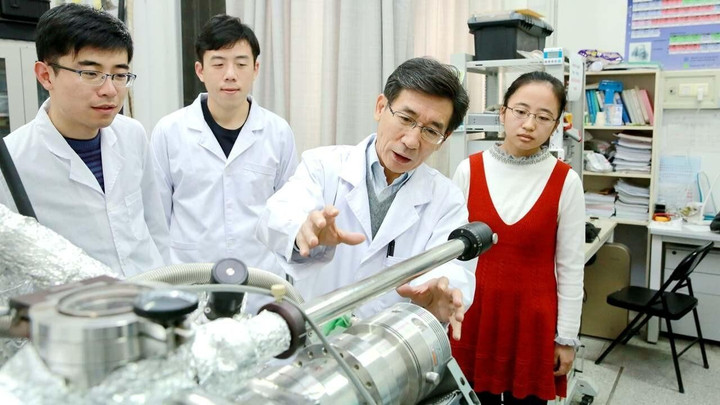
A physics lecture at Tsinghua University, China. (Photo: Xinhua News Agency)
Some universities are recruiting more openly, such as Wuhan University, which is calling for applications from “global talent,” along with a commitment to provide research funding of up to 3 million yuan (over 11 billion VND) for majors in AI, robotics, or cybersecurity.
These incentive packages typically include priority access to research funding, bonuses, housing subsidies, and family support. These policies work in parallel with national funds for young talent from abroad.
Not all programs are academically oriented. For example, the Qiming Program aims to bring top researchers into commercial technology, particularly in the semiconductor field. Applicants typically need a PhD and work experience abroad.
A recruitment expert in Jiangsu said that the demand for semiconductor personnel "across borders" is soaring after the US tightened export controls on critical chip technology. In the coming year, the focus of recruitment may expand to AI and quantum science, especially quantum communication and precision measurement.
The Chinese government has also expanded its talent recruitment channels, such as the Qiming Program, which now includes separate selection rounds for candidates from the US and Europe, something experts describe as "unprecedented."
China also announced the K visa, effective from October 1st, specifically for young talents in science and technology. Simultaneously, the National Natural Science Foundation opened another round of applications for its "Outstanding Young Talent" scholarship program from overseas.
Seize the opportunity from the US.
For many years, Washington has viewed China's talent recruitment programs as a threat, arguing that they could facilitate technology theft. The "Thousand Talents" program has drawn attention for instances where American scientists secretly received funding or participated in research in China without fully disclosing it.
The culmination was the 2018 China Initiative, an investigative campaign targeting universities and researchers suspected of having questionable ties to China. This campaign was accused of leading to discrimination and was canceled in 2022.
A letter dated July 22, signed by more than 1,000 American faculty members, warned that attempts to revive the initiative would only “help China recruit talent more effectively than any program they have ever implemented.”
A 2023 study by Professor Yu Xie showed that after the China Initiative was launched, the number of scientists of Chinese origin leaving the US increased by 75%, with two-thirds of them moving to work in China.
One such example is Lu Wuyuan, who left the University of Maryland to transfer to Fudan University (Shanghai) in 2020 after his research was investigated by the NIH due to collaborations with China. Lu stated that these collaborations were previously seen as mutually beneficial, but later became a source of suspicion.
Now, he fears that the confrontation between the two countries is disrupting a network of scientific cooperation that once greatly benefited both the United States and China.
"Clearly, current restrictive policies have stifled mutually beneficial bilateral cooperation," he said. "Ironically, the damage they inflict on the U.S. may be far greater, while China is rapidly rising to become a scientific and technological powerhouse."

China's science and technology sector has made remarkable strides in recent years. (Photo: Getty Images)
Breakthrough achievement
China's significant investment efforts over the past years are helping it make a distinct mark on the global science and technology map. The country has recovered the first sample from the far side of the Moon, and is leading in renewable energy, quantum communication, and several military technologies. The startup DeepSeek has also garnered attention with its chatbot, which is said to be close to OpenAI's o1 model but at a much lower cost.
According to Nature Index, Chinese scientists are now publishing more high-quality research than their American counterparts, and many universities have entered the top 50 in the world.
However, experts believe China still has a significant gap to bridge before surpassing the US. The pace of R&D development could be affected by slowing economic growth and Beijing's tight regulatory environment, which differs from the more open research ecosystem in the US.
Quality of life and personal freedom are also important factors for academics. More than 83% of Chinese science and engineering PhDs who graduated in the US between 2017 and 2019 chose to stay in 2023.
For scientists of non-Chinese origin, language barriers and a socialist-tinged social environment also present challenges. Some returning scientists have even faced criticism on social media.
Professor Yu Hongtao, Dean of the Department of Life Sciences at Westlake University, advises those considering returning "not to make the decision simply because they want to leave the US, but to truly see opportunities in China," because China also has its own unique challenges such as cultural differences and funding mechanisms.
Nevertheless, many experts believe that what the scientific community prioritizes most remains a stable research environment and strong funding. Changes in the US could shift this balance.
Professor Yau Shing-tung, a Fields Medal-winning mathematician, warned: "If American universities lose their best students, not only to China but also to Europe or other countries, it could be disastrous for the American university system."
Source: https://vtcnews.vn/cach-trung-quoc-thu-hut-cac-tinh-hoa-khoa-hoc-ve-nuoc-ar991733.html

![[Image] Nearly 125,000 Hanoi students completed the Literature exam for the 10th grade entrance exam.](https://vphoto.vietnam.vn/thumb/1200x675/vietnam/resource/IMAGE/2026/05/30/1780117233041_ndo_br_thiet-ke-chua-co-ten-2-png.webp)


















































































Comment (0)