

The project “Research, development, testing of thermal-structural models, central computers and information systems for micro-satellites” led by Dr. Le Xuan Huy, implemented since February 2025, is expected to create an important step forward, contributing to the construction of a line of Earth observation satellites designed and manufactured by Vietnam itself.
Low cost, fast development time and the ability to test new technology make micro satellites the main choice for many countries. Meanwhile, Vietnam is still significantly dependent on foreign satellite data sources. VNREDSat-1 – the main optical satellite today – has operated far beyond its design life and can stop working at any time. This poses the risk of interrupting data sources used for monitoring resources – environment, agriculture , urban areas, natural disaster prevention as well as serving some security and defense requirements.
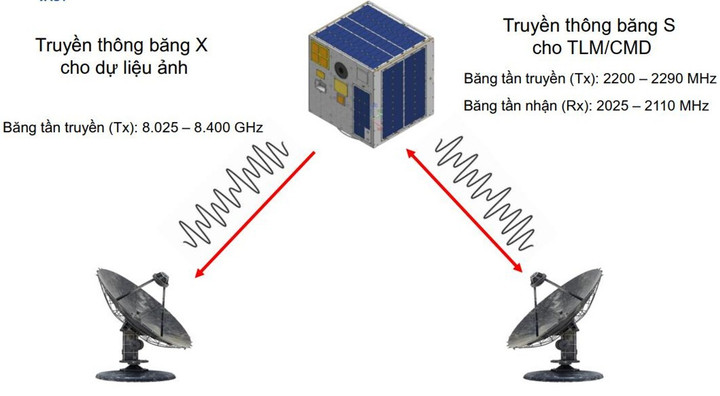
The trend of developing small satellites is reshaping the global space industry. (Photo: VNSC)
“If we do not prepare an alternative satellite line owned by Vietnam, we will be passive in both data and costs,” Dr. Le Xuan Huy emphasized when discussing the urgency of the task. According to him, this topic not only addresses practical needs but also concretizes the spirit of Resolution 57 on science , technology and innovation development, as well as Decision 1131 of the Prime Minister on national strategic technology.
The project focuses on three main directions: building a design – integration – testing platform for a microsatellite of about 50 kg; researching, manufacturing and testing on the ground core subsystems such as the central control computer and the S-band information system with the goal of achieving TRL 4–5; and forming a standard satellite model with flexible reuse capability for remote sensing missions and technology testing.
According to Dr. Huy, the important new point is no longer stopping at assembling according to foreign designs, but starting to design subsystems that previously had to be purchased in packages. “We want to gradually master the core technology blocks – which determine the true autonomy of a satellite,” he said.
The two key subsystems developed are the central control computer, which is responsible for command processing, monitoring and data distribution, and the S-band communication system using the software-defined radio (SDR) approach, which provides flexibility in transmission and reception and is easy to upgrade by software without changing the hardware. The project also opens the research direction for electric propulsion systems for small satellites, serving precise orbit adjustment in the next versions.
The research process faced many challenges. With experience mainly based on foreign designs, the project team had to design their own hardware - software and verification process. The international standard testing infrastructure is still being completed, while the requirements for satellite reliability are very high due to the harsh environment of space. In addition, system integration requires many subsystems developed by different groups but must operate smoothly on the same platform.
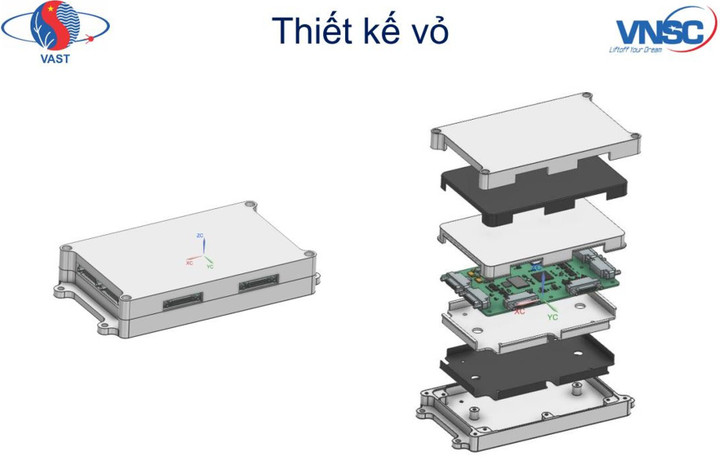
Micro satellite's printed circuit board design. (Photo: VNSC)
To solve this problem, the research team chose a modular design to reduce risks during development and upgrades; used a common hardware architecture with a real-time operating system mastered by the team to ensure safety and security; applied SDR to the information system for easy updating; combined international testing standards with independent tests abroad; and linked research with training through cooperation between VNSC and universities.
“Satellite development is not only a technological problem, but also a human problem. We want to create a team of engineers with practical experience, ready for large projects in the future,” Dr. Huy shared.
If completed as planned, the project will provide a set of design documents and thermal-structural models of the microsatellite; a central control computer model and an S-band communication system capable of being reconfigured and used for various missions at the appropriate TRL level; creating a foundation for developing the next versions of the MicroDragon series more proactively, shortening time and reducing costs. This is the collective result of the research groups, engineers and staff participating in the project.
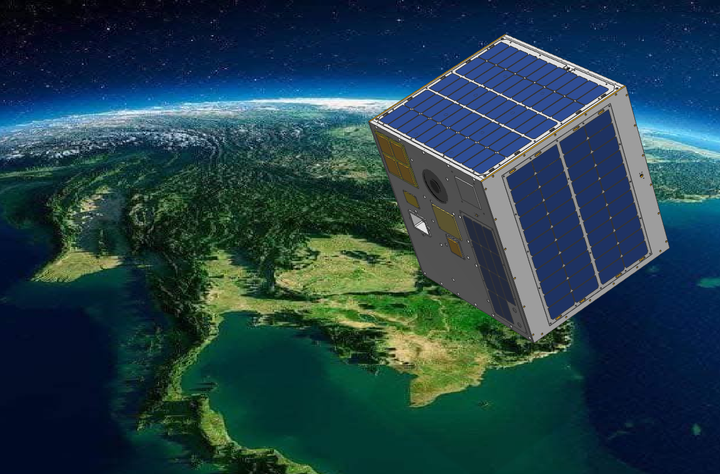
Illustration of the design of the MicroDragon-2 satellite structure thermal model. (Photo: VNSC)
From an application perspective, when equipped with optical sensors with a resolution of less than 5 meters, the microsatellite developed by Vietnam itself can increase the frequency of observing forests, agriculture, urban areas, coastlines and areas frequently affected by natural disasters. Combined with other satellite data sources, Vietnam will have a more complete and synchronous picture of resources and environment nationwide. In the long term, the standard satellite model can also carry payloads for testing new technologies, low-altitude communications or scientific sensors, opening up opportunities to participate more deeply in the regional space industry value chain.
The project also has strategic significance for the implementation of the Strategy for the development and application of space science and technology to 2030. While previous projects mainly relied on transfer cooperation, this task represents a shift to mastering design and manufacturing, building a team of experts and paving the way for Vietnamese enterprises in the fields of precision mechanics, electronics, software, materials, etc. to participate in the supply chain. This is a direction in line with the spirit of putting enterprises at the center of innovation and gradually forming the Vietnamese space industry in the future.
Source: https://vtcnews.vn/viet-nam-tung-buoc-lam-chu-cong-nghe-loi-trong-phat-trien-ve-tinh-micro-ar991998.html

![[Photo] The captivating scenery of the fragrant maple forest in Quang Tri](/_next/image?url=https%3A%2F%2Fvphoto.vietnam.vn%2Fthumb%2F1200x675%2Fvietnam%2Fresource%2FIMAGE%2F2025%2F12%2F10%2F1765353233198_lan09046-jpg.webp&w=3840&q=75)
![[Photo] Explore the US Navy's USS Robert Smalls warship](/_next/image?url=https%3A%2F%2Fvphoto.vietnam.vn%2Fthumb%2F1200x675%2Fvietnam%2Fresource%2FIMAGE%2F2025%2F12%2F10%2F1765341533272_11212121-8303-jpg.webp&w=3840&q=75)


























![[Video] The craft of making Dong Ho folk paintings has been inscribed by UNESCO on the List of Crafts in Need of Urgent Safeguarding.](https://vphoto.vietnam.vn/thumb/402x226/vietnam/resource/IMAGE/2025/12/10/1765350246533_tranh-dong-ho-734-jpg.webp)



























































Comment (0)