

Having converted 1.2 hectares of rice paddy land to coconut cultivation 15 years ago, Mr. Kim Van Thanh (Song Loc commune, Vinh Long province) said that due to severe soil acidity, he could only grow rice once or twice a year, with a yield of only 4-5 tons/hectare/crop, and a maximum profit of about 20 million VND/year, making his family's finances difficult. In 2010, he decided to improve the land and plant 80 wax coconut trees along with 160 native coconut trees.
In recent years, yielding approximately 1,700 dried coconuts and 50 waxy coconuts per month, Mr. Thanh's coconut garden has helped his family maintain a stable profit of over 25 million VND per month. In particular, the recent sharp increase in the price of dried coconuts has significantly boosted his family's income.
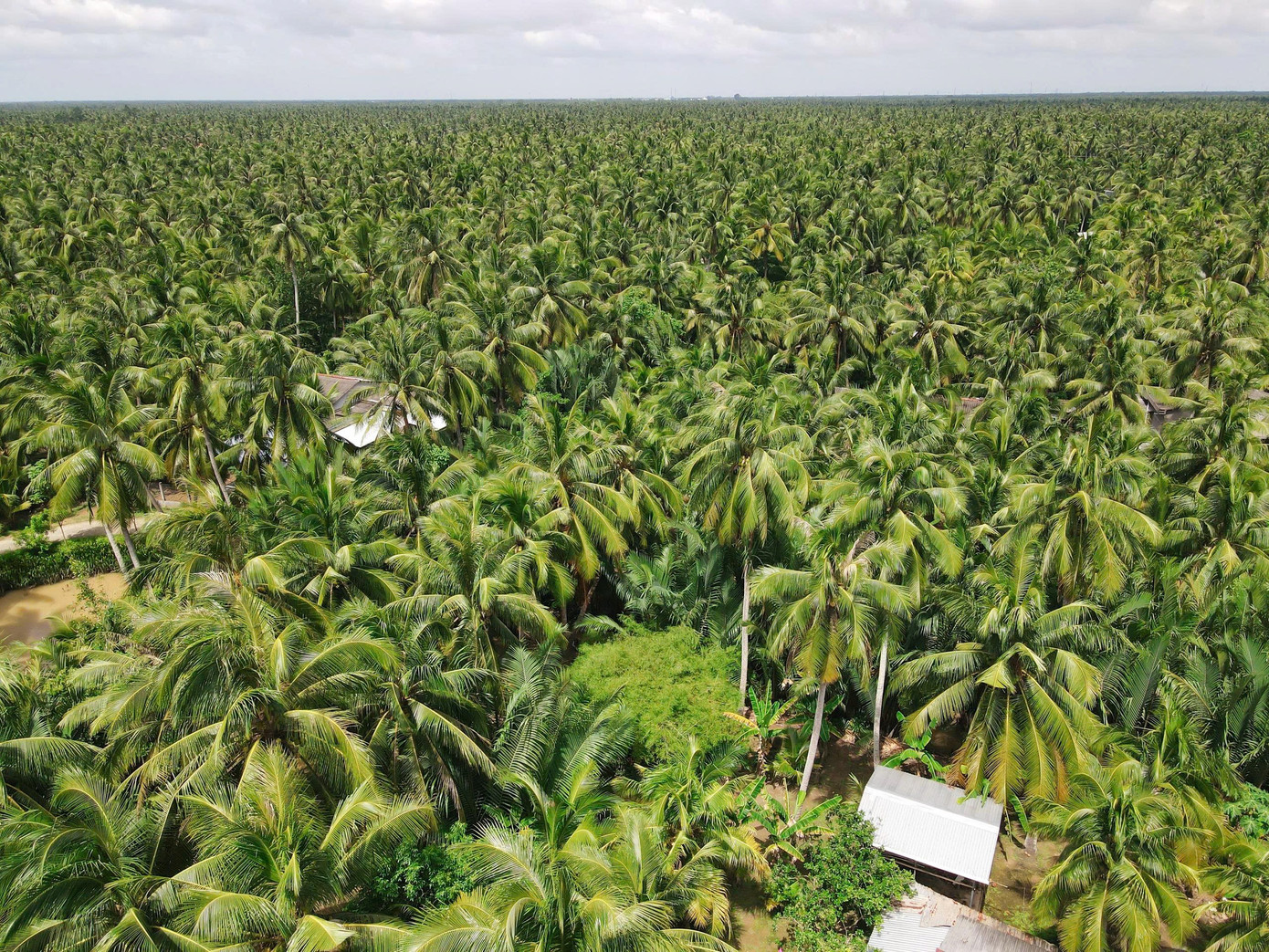
The entire Song Loc commune has over 1,600 hectares of coconut trees; including specialty coconut varieties that have very high economic value.
According to the leaders of Song Loc commune People's Committee, the process of restructuring crop patterns has proven the effectiveness of coconut trees, making them the main crop of the locality in recent years, providing a very stable income for farmers, many times higher than growing rice before.
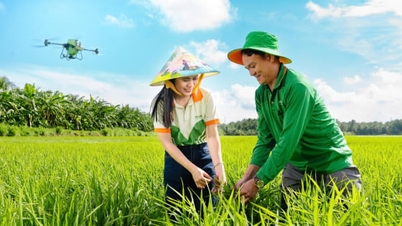
With over 1,000 hectares of coconut trees concentrated mainly in the suburban hamlets, coconut cultivation has brought high economic efficiency to farmers in Long Duc ward in recent years. This crop has proven its adaptability to climate change, suitability to local soil conditions, and high yield with stable quality. Because it requires little care, this crop is very suitable in the current situation of rural labor shortages.
According to Mr. Nguyen Van Lieu, Chairman of the Long Duc Ward People's Committee, in order to enhance the value of the coconut industry and increase income for farmers, especially to help many households escape poverty through coconut cultivation, the local government is actively encouraging farmers to grow coconuts organically, forming concentrated raw material areas with traceable origins. At the same time, they are seeking businesses to link production and consumption with local farmers to create a stable market outlet.
Vinh Long province currently has nearly 120,000 hectares of coconut plantations (equivalent to approximately 22 million trees), ranking first and accounting for nearly 50% of the country's total coconut area. Of this, over 110,100 hectares are fruit-bearing coconut plantations, accounting for over 92%, and over 30,300 hectares are industrial coconut plantations producing according to organic standards, accounting for over 25%. In addition, there are 156 fresh coconut growing areas (over 11,000 hectares) and 17 coconut packaging facilities that have been granted codes by Chinese Customs, meeting the requirements for export to the Chinese market.
In 2025, Vinh Long's coconut production is estimated to reach 1.3 million tons, with export revenue estimated at 500 million USD, an increase of nearly 3% compared to 2024. The total value of coconut production in 2025 is estimated at 4,180 billion VND, with a growth rate of over 4% per year during the 2020-2025 period, accounting for nearly 10% of the value of crop production, 6.5% of the total agricultural production, and nearly 4.1% of the total agricultural production value. This will contribute to developing livelihoods, increasing income, and improving the living standards of nearly 270,000 households in the province.
According to the People's Committee of Vinh Long province, in recent years the locality has implemented many solutions to encourage the development of the coconut value chain, focusing on building models for transferring advanced scientific and technical knowledge, supporting investment in coconut cultivation, renovating inefficient coconut gardens, developing intercropping models in coconut gardens, developing the coconut processing industry, calling on businesses to invest in product procurement, and developing coconut cultivation in an organic direction associated with granting planting area codes for domestic consumption and export.
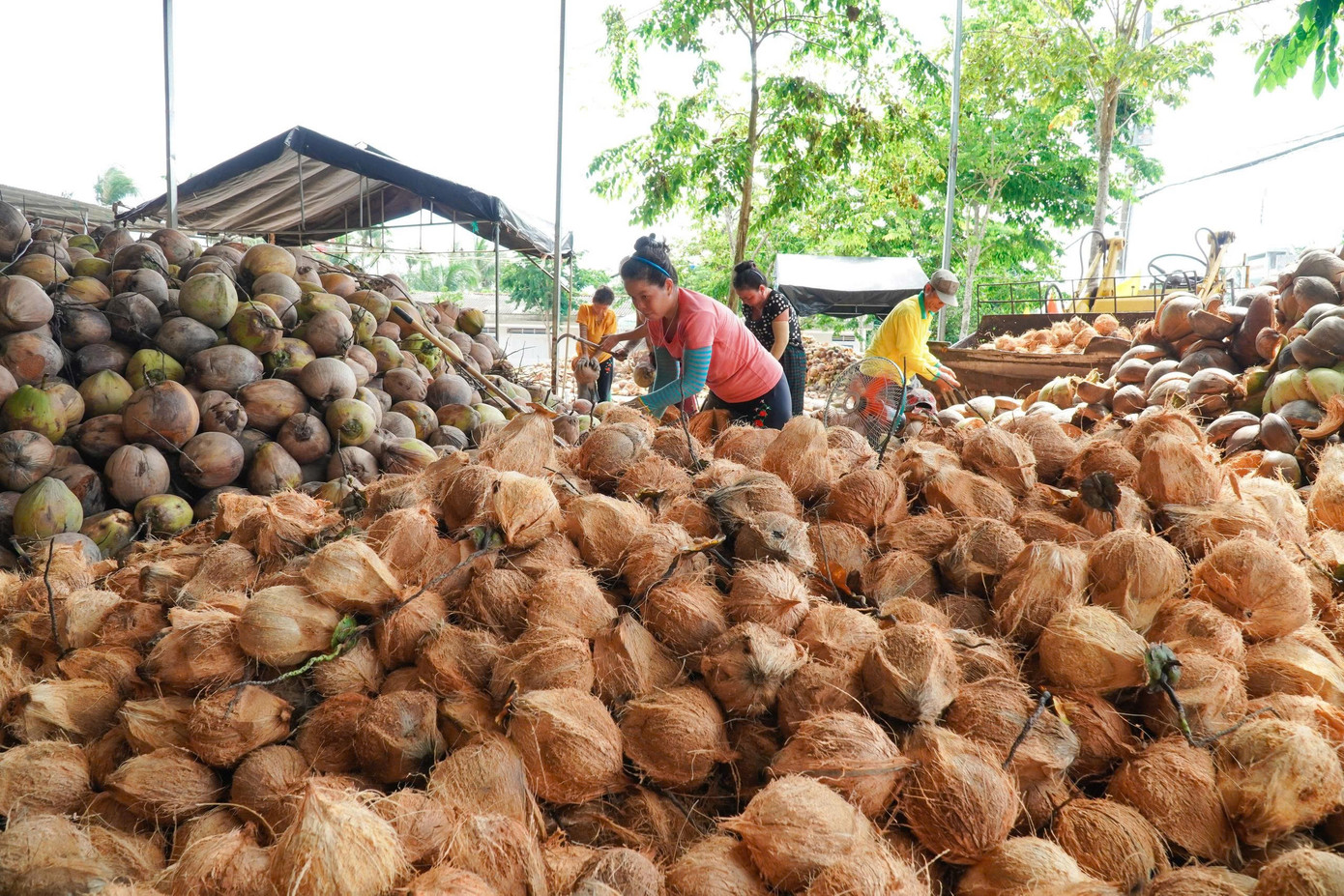
According to Mr. Lam Van Tan, Director of the Department of Agriculture and Environment of Vinh Long province, the goal is to expand the coconut cultivation area to approximately 132,000 hectares by 2030, with a production of over 1.5 million tons. Simultaneously, the province will focus on planting new coconut trees and renovating aging coconut orchards with high-yield, high-quality varieties that meet VietGAP and organic standards, linked with assigned planting area codes. By 2030, the province aims to have approximately 40-50,000 hectares of concentrated raw material areas in freshwater and newly freshwater-treated communes.
The province is also promoting investment attraction and supporting businesses to develop the coconut processing industry; aiming for at least 30-50 businesses to link with coconut production cooperatives to build raw material areas for processing and consuming high-value-added coconut products to sustainably develop the coconut product chain; diversifying products, focusing on rapidly increasing the proportion of high-value-added products and new products. Striving for a production value growth rate of over 10% per year.
Simultaneously, develop eco-tourism and culinary tourism associated with OCOP products made from coconut trees, especially waxy coconuts, and research the flavor of waxy coconuts to produce some characteristic products. Develop traditional craft villages and coconut processing facilities to serve tourism; build tour programs to craft villages and coconut product production facilities. Develop coconut products linked to domestic and international markets, build reputable brands, trademarks, and traceability systems for coconut products. Strive for an average annual increase of over 10% in coconut product export turnover.
According to the leaders of the Vinh Long Department of Agriculture and Environment, to achieve the goals, all sectors and levels must continue to fully and seriously disseminate information about the position and role of coconut trees in the national and provincial industrial crop development orientation in the coming time. Focus on developing and replicating effective production models; expanding and encouraging diversification of production-consumption linkages, especially paying attention to consolidating and establishing new types of cooperative economic organizations and cooperatives specializing in the production and business of organic coconuts to develop concentrated production areas linked to product consumption, and promoting export activities…
Source: https://tienphong.vn/cai-thien-sinh-ke-nong-dan-vuon-len-lam-giau-ben-vung-tu-cay-dua-post1803448.tpo
![[Photo] Prime Minister Pham Minh Chinh holds a phone call with the CEO of Russia's Rosatom Corporation.](/_next/image?url=https%3A%2F%2Fvphoto.vietnam.vn%2Fthumb%2F1200x675%2Fvietnam%2Fresource%2FIMAGE%2F2025%2F12%2F11%2F1765464552365_dsc-5295-jpg.webp&w=3840&q=75)







![Passion fruit 'capital' faces sustainability challenge: [Part 3] Building supply chain linkages](https://vphoto.vietnam.vn/thumb/402x226/vietnam/resource/IMAGE/2025/12/12/1765517075835_1232-akk00534-130606_948.jpeg)






























































Comment (0)