

On July 7th, the Central Hospital for Tropical Diseases reported that its doctors had just admitted Mr. NPT (66 years old, from Hanoi ) in critical condition, in a deep coma, suspected to be due to an electric shock.
The patient was admitted in a deep coma, with no palpable pulse or blood pressure, both pupils dilated to 5mm, and no light reflex. Numerous burn marks were visible on the patient's body, including on both knees, the backs of the hands, around the navel, and the head of the penis – typical signs suggestive of electric shock.
According to family members, about 15 minutes before being discovered, the patient was repairing a water tank on the rooftop when he suddenly lost consciousness. He was found by family members and taken to the hospital. Based on clinical signs, doctors diagnosed the patient with suspected cardiac arrest due to electric shock.
Upon admission, the doctors promptly performed cardiopulmonary resuscitation: chest compressions, administration of adrenaline, endotracheal intubation, and two defibrillation sessions. After 30 minutes of intensive resuscitation, the patient's pulse returned. However, blood gas analysis revealed severe metabolic acidosis, hyperkalemia, and required two vasopressors due to post-cardiac arrest shock.
After the pupils showed signs of constriction, the doctors decided to perform advanced resuscitation measures including mechanical ventilation, continuous hemodialysis, and placing the patient in a controlled hypothermia system to protect brain function. The patient is currently receiving intensive treatment in the Emergency Department.
According to Doctor Le Son Viet, this case carries a very high risk of severe neurological sequelae after cardiac arrest. However, the patient is currently showing some improvement; the pupils have returned to normal and have reflexes, vasopressors have been discontinued, and dialysis has been stopped.
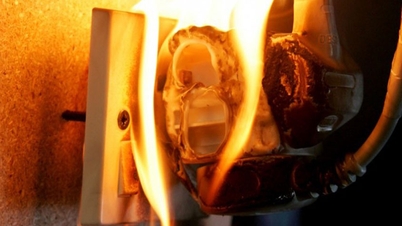
To prevent electric shock accidents in daily life, Vietnamese doctors advise people to be especially careful when repairing electrical equipment or systems in their homes. Before starting any work, the power supply must be completely disconnected by turning off the circuit breaker or fuse. Repairs should only be done with dry hands, standing on a dry surface, and using appropriate insulated tools such as gloves, screwdrivers, and insulated pliers. People should absolutely not climb onto roofs, water tanks, or other high places related to electrical systems without ensuring safety. Old electrical equipment showing signs of damage or leakage should be inspected and replaced promptly. In addition, regular inspection and maintenance of electrical systems is also an important solution to prevent electric shock accidents in the home.
Vietnamese doctors advise that in the event of an electric shock, it is crucial to remain calm and handle the situation correctly. First, quickly disconnect the power source or use an insulating object such as a wooden stick or broom handle to separate the victim from the electrical current. Absolutely do not touch the person who has been electrocuted. Call emergency services (115) immediately and check the victim's reaction.
If the victim stops breathing and has no pulse, perform chest compressions and artificial respiration if the person assisting has been trained in the technique. For conscious victims, keep them lying still, warm, and monitor them continuously until medical personnel arrive. Absolutely do not pour water on the victim and limit movement if a spinal injury is suspected.
Source: https://www.vietnamplus.vn/cap-cuu-nguoi-dan-ong-bi-hon-me-do-dien-giat-khi-sua-bon-nuoc-post1048351.vnp







































































Comment (0)