

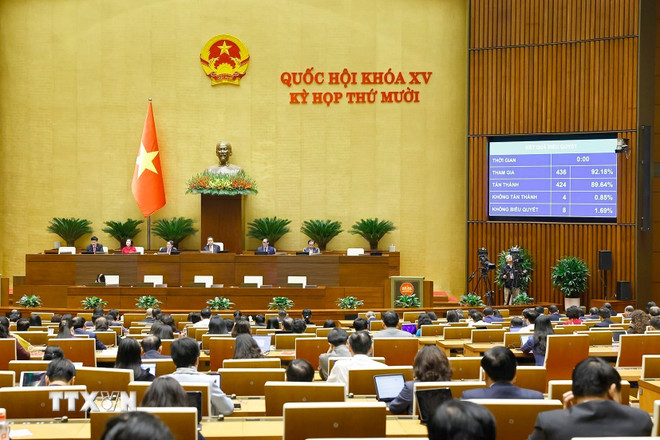
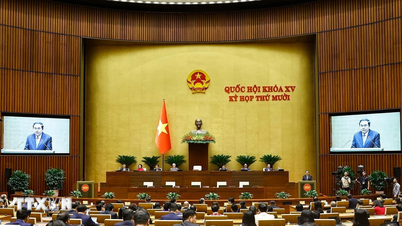
On the morning of December 11th, the National Assembly passed the amended Investment Law with 425 votes in favor, representing 89.85% of the total number of National Assembly delegates.
Fundamental changes to many investment procedures.
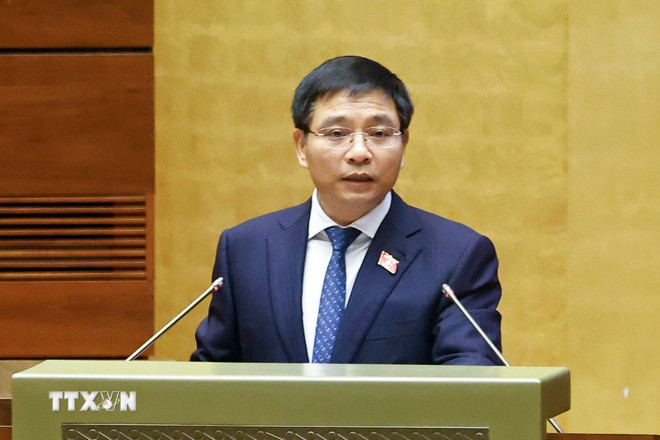
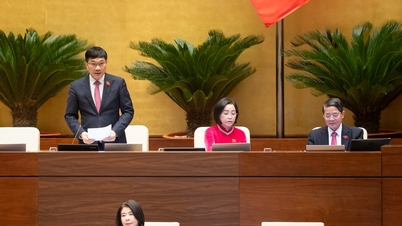
Before voting to approve the bill, the National Assembly heard Minister of Finance Nguyen Van Thang present a summary report on the acceptance and explanation of the draft law.
Regarding the investment policy approval procedure, the draft Law has narrowed and clarified the scope of projects requiring investment policy approval. Accordingly, investment policy approval is only required for investment projects in certain important and sensitive sectors such as seaports, airports, telecommunications, publishing, journalism, and projects implemented in areas affecting national defense and security.
Regarding investment-incentive sectors, the draft Law has reviewed and regulated conditional investment and business sectors, ensuring compliance with the spirit of Resolution No. 68 and Resolution No. 198.
Based on this, the Government has reviewed and reduced 38 conditional investment and business sectors and revised the scope of 20 sectors. At the same time, the Government will publish a list of conditional investment and business sectors that require licensing and certification before commencing investment and business activities, and a list of conditional investment and business sectors that must shift their management method from licensing and certification to publishing business requirements and conditions for post-inspection management.
Regarding the establishment of economic organizations by foreign investors, the draft Law continues to propose regulations allowing foreign investors to establish businesses before the issuance of investment registration certificates. This is a fundamental reform of investment procedures for foreign investors, improving the investment and business environment.
The government plans to add several provisions to the draft decree to ensure state management and safeguard national defense and security, such as regulations on reporting operational status during the period before the investment project is implemented, and regulations requiring businesses to meet market access requirements from the establishment stage.
Regarding the management of overseas investment activities, the draft Law has simplified overseas investment procedures, including abolishing the procedure for approving overseas investment policies and narrowing the scope of projects that must go through the procedure of issuing an overseas investment certificate.
The government will specify in detail the projects that do not require the issuance of certificates for overseas investment registration, in order to facilitate investors' expansion into international markets; at the same time, it will study and add regulations to ensure foreign exchange management, guaranteeing economic security and national financial safety.
In addition, the Government has reviewed and assessed the necessity of amending and supplementing several articles of the Railway Law in the draft Investment Law (amended) and reviewed to ensure consistency regarding cases of investment approval, regulations prohibiting the business of cigarettes and heated tobacco products, and regulations related to real estate projects.
The revised draft Law on Investment has ensured the full institutionalization of the Party's guidelines and viewpoints, established a complete and synchronized legal framework, contributing to the improvement of the investment and business environment and enhancing the quality of investment attraction.
The authority to approve the investment policy for offshore wind power projects is delegated to the Chairman of the Provincial People's Committee.
Also in the morning session on December 11th, the National Assembly voted to approve the Resolution on mechanisms and policies for national energy development in the period 2026-2030 with 424 votes in favor, accounting for 89.64% of the total number of National Assembly delegates.
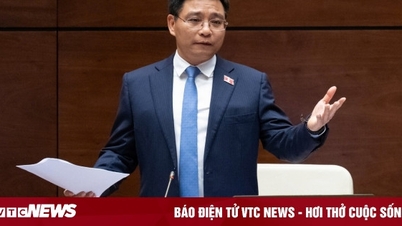
Before voting to approve the resolution, the National Assembly heard Minister of Industry and Trade Nguyen Hong Dien present a summary report on the acceptance and explanation of the draft resolution.
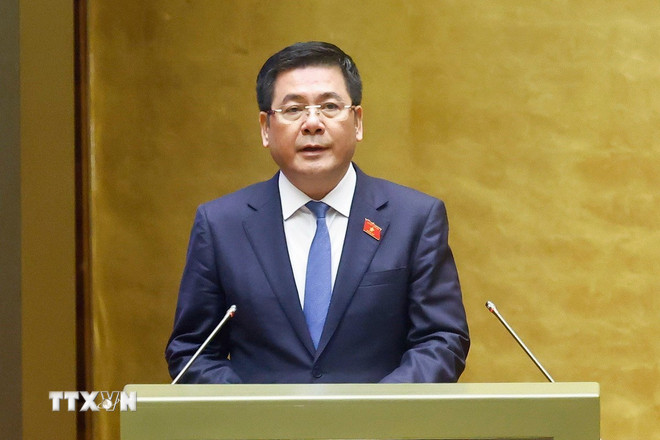
Based on the conclusions of the National Assembly Standing Committee, Minister of Industry and Trade Nguyen Hong Dien stated that the drafting agency had closely coordinated with the verification agency and the National Assembly Committees, incorporating as many valid opinions as possible from National Assembly deputies and revising the draft resolution to finalize it in the following direction: Adjusting the title of the resolution as concluded by the National Assembly Standing Committee.
Regulations stipulate that adjustments and updates to the plan should meet practical requirements but should not alter the overall perspective, objectives, and orientations of the plan, and should not increase the total installed capacity according to the structure of each type of power source.
The regulations grant the Prime Minister the authority to approve investment policies and simultaneously approve investors without auctioning land use rights or bidding for investor selection for offshore wind power projects in the 2025-2030 period.
Delegate authority to the Chairperson of the Provincial People's Committee to approve investment policies for offshore wind power projects in the 2031-2035 period. Expand the scope of participation in the Direct Power Purchase Agreement (DPPA) mechanism to include electricity retailers and avoid overlapping policies.
At the same time, written opinions were submitted to the drafting agency, the reviewing agency, and relevant laws being considered for approval at this session, such as the Law on National Reserves, the amended Law on Public Debt Management, and the mechanism for handling delayed projects in the Investment Law and the Land Law, to ensure the consistency of the law.
Furthermore, the draft law incorporates and revises provisions identified as falling under the Government's jurisdiction or subject to flexible changes requiring detailed government regulation. These include specific conditions regarding the financial capacity of enterprises proposing investment approval for offshore wind power projects, small module nuclear power development, mechanisms for handling survey costs, and procedures for preparing, receiving, and handling situations related to offshore wind power project applications.
To avoid creating a legal vacuum after the resolution is passed, the Government will issue comprehensive guiding documents, ensuring clear, complete, consistent, and feasible regulations to quickly put the resolution into practice.
Directing ministries, sectors, and localities to urgently implement the provisions of the resolution, promptly resolve difficulties and obstacles of power generation and transmission projects, improve market mechanisms, and promote investment attraction to ensure national energy security in the coming years, meeting the requirements of double-digit socio-economic development and achieving carbon neutrality by 2050.
Enhance transparency, accountability, and enforcement oversight; promptly report emerging issues to competent authorities and propose additional solutions if deemed necessary.
The draft resolution, after incorporating feedback and revisions, has been finalized to be more rigorous, consistent with relevant laws, and in line with the spirit of Resolutions 66, 68, and 70 of the Politburo.
Source: https://www.vietnamplus.vn/cat-giam-giay-phep-cho-38-nganh-nghe-dau-tu-kinh-doanh-co-dieu-kien-post1082398.vnp


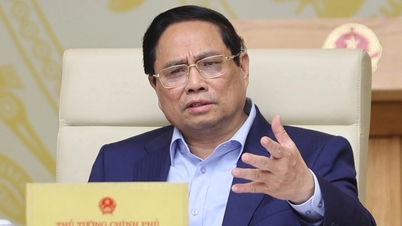
![[Photo] Prime Minister Pham Minh Chinh holds a phone call with the CEO of Russia's Rosatom Corporation.](/_next/image?url=https%3A%2F%2Fvphoto.vietnam.vn%2Fthumb%2F1200x675%2Fvietnam%2Fresource%2FIMAGE%2F2025%2F12%2F11%2F1765464552365_dsc-5295-jpg.webp&w=3840&q=75)






![[Video] National Assembly approves investment plan for Gia Binh International Airport to 5-star standard.](https://vphoto.vietnam.vn/thumb/402x226/vietnam/resource/IMAGE/2025/12/12/1765524874728_dung00-11-54-07still004-jpg.webp)



























































Comment (0)