

GĐXH - Wild mugwort usually grows in clumps and can be easily seen in many places. However, not everyone knows about the uses of this plant.
What is wild mugwort?
Wild mugwort, also known as common mugwort or wormwood, shares many characteristics with and belongs to the same species as common wormwood, but is actually a completely different plant.
Wild mugwort has a very similar appearance to common mugwort, making it easy to confuse the two. The biggest difference is that the upper surface of wild mugwort leaves is light green, while the underside is less hairy and light gray. In contrast, common mugwort leaves have a dark black upper surface and a smooth, velvety white underside. The crushed leaves of wild mugwort also have a stronger, more pungent smell compared to common mugwort.
Wild mugwort is naturally distributed in the northern mountainous provinces of Vietnam at an average altitude of about 800m or more above sea level. Provinces with large reserves of wild mugwort include Lang Son, Lao Cai, Yen Bai , Hoa Binh, and Lai Chau...
Wild mugwort grows in continuous clumps in damp areas along roadsides, forest edges, cultivated fields, or near streams. This plant thrives from April to July each year, after which it begins to flower and bear fruit. The ideal temperature for wild mugwort to grow is 13-18 degrees Celsius.
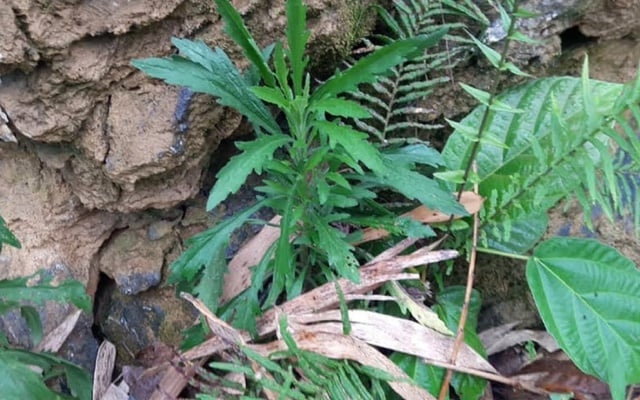
Wild mugwort shares many characteristics and belongs to the same species as common mugwort.
The effects of wild mugwort
According to Traditional Chinese Medicine, wild mugwort has cooling properties and is often used in combination with other medicinal herbs in remedies to relieve fever and reduce inflammation. The most commonly used part is the above-ground portion of the wild mugwort plant, which can be used fresh or dried.
Research by Showkat Rashid and colleagues shows that the majority of active compounds in wormwood are essential oils. According to modern medicine, the large amount of essential oils in wormwood has excellent anti-inflammatory, antibacterial, and antifungal properties.
The active ingredients in this medicinal herb also prevent and quickly eliminate harmful agents present on the skin surface or in the body. The essential oils in wild mugwort also have the ability to support increased resistance for the skin and the entire body, promote wound healing, improve health, reduce fever, and stimulate digestive activity.
Due to its high anti-inflammatory and antibacterial properties, wild mugwort inhibits the activity and prevents bacteria from entering the skin, supporting the treatment of atopic dermatitis and its accompanying unpleasant symptoms such as itching, redness, swelling, edema, and scaling.
Furthermore, the beneficial compounds in mugwort have powerful antioxidant effects, helping inflamed skin recover quickly, balancing skin moisture, nourishing the skin, and minimizing damage to the epidermis. Mugwort also has the ability to quickly soothe itching and burning sensations. More importantly, it has the ability to be toxic to four types of cancer cells: liver cancer, lung cancer, colon cancer, and leukemia.
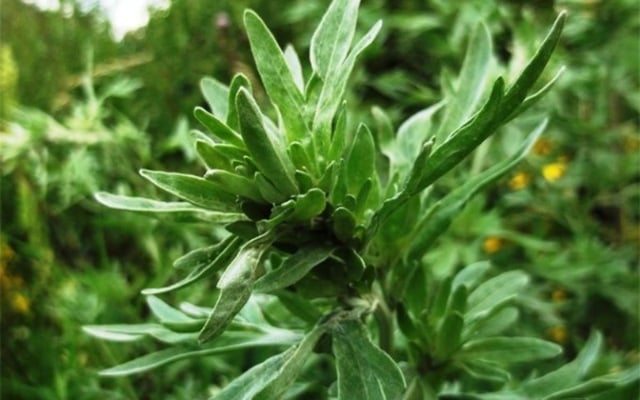
The large amount of essential oil in wild mugwort has excellent anti-inflammatory, antibacterial, and antifungal properties.
Things to note when using wild mugwort.
Wild mugwort offers many therapeutic benefits, including for atopic dermatitis. However, it's important to use it correctly to achieve the best results and avoid potential health risks.
Here are some specific points to note when using wild mugwort:
- Wild mugwort only has a supportive effect in treatment and does not completely replace medication. Therefore, if you have been prescribed medication by a doctor, you should strictly follow the doctor's prescribed treatment plan.
- When using remedies made from wild mugwort, consistent use is necessary to achieve results.
- Wild mugwort grows naturally and usually in damp areas... Therefore, during harvesting, choose plants that grow in clean areas to avoid contamination, impurities, or other harmful substances...
- In case of allergic reaction, or if any unusual symptoms appear after use, stop taking the medication and immediately go to a medical facility for examination and treatment by specialists.
Source: https://giadinh.suckhoedoisong.vn/cay-co-dai-moc-khap-noi-nhung-it-nguoi-biet-la-thuoc-tang-cuong-suc-de-khang-cho-da-giup-vet-thuong-mau-lanh-ha-sot-nhanh-chong-172250111194235445.htm


![[Photo] Prime Minister Pham Minh Chinh holds a phone call with the CEO of Russia's Rosatom Corporation.](/_next/image?url=https%3A%2F%2Fvphoto.vietnam.vn%2Fthumb%2F1200x675%2Fvietnam%2Fresource%2FIMAGE%2F2025%2F12%2F11%2F1765464552365_dsc-5295-jpg.webp&w=3840&q=75)























































Comment (0)