

Leafy green vegetables
Leafy green vegetables top the list of foods good for the colon because, in addition to their high fiber content which helps prevent constipation, they also contain high levels of galactose, a type of sugar that prevents lectin proteins from adhering to the digestive tract lining and causing damage to the colon.
As a result, many studies have shown that consuming a diet rich in leafy green vegetables, such as broccoli, cabbage, and lettuce, can reduce the risk of colon cancer by up to 46%.
Berries
Berries such as strawberries, blueberries, and raspberries are also on the list of foods good for the colon because they are not only rich in fiber and vitamin C, but also rich in antioxidants such as ellagic acid, anthocyanins, quercetin, and catechins.
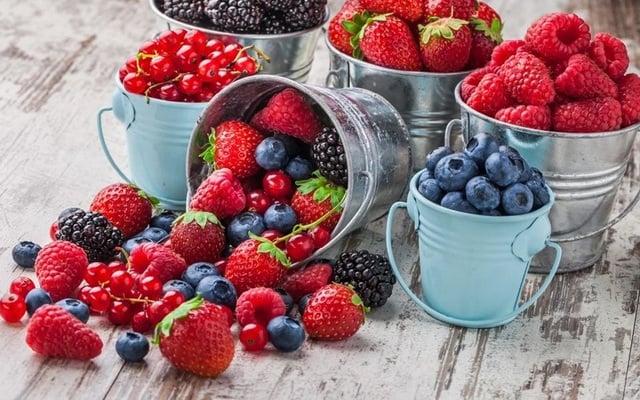
Berries such as strawberries, blueberries, and raspberries are also on the list of foods that are good for the colon.
These are all nutrients that have been shown to have anti-inflammatory effects and inhibit the proliferation of colon cancer cells.
Apple
Similar to berries, apples are also rich in fiber and antioxidants. Studies show that consuming one apple a day can help reduce the risk of colorectal cancer by about 50%. Therefore, apples are a good food for the colon and should be included in your daily diet.
Pear
Pears are a fruit rich in fiber. On average, 100g of pears can contain up to 3.1g of fiber, mainly soluble fiber pectin.
Studies show that consuming more pectin can reduce the levels of β-glucosidase and tryptophanase in stool. These are two enzymes produced by gut bacteria that are involved in the metabolism of toxins in the colon.
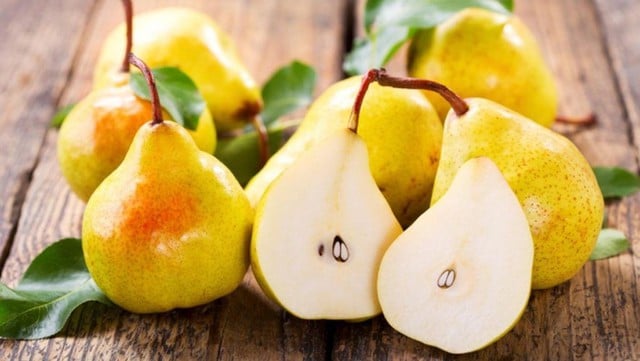
Pears are a fruit rich in fiber. On average, 100g of pears can contain up to 3.1g of fiber, mainly soluble fiber pectin.
Reducing the levels of these enzymes may help minimize the formation of potentially carcinogenic substances, supporting colon health.
Whole grains
Whole grains are not only rich in fiber but also contain plenty of magnesium – an osmotic substance that helps retain water in the intestines, and is widely used in laxatives to help treat constipation.
Therefore, consuming whole grains can help your stool move more easily through the colon, and in the process, they can bind to carcinogenic compounds in the colon, supporting the body in eliminating toxins more effectively.
Through the aforementioned biological effects, consuming approximately 90 grams of whole grains per day has been shown to reduce the risk of colorectal cancer by up to 17%.
Therefore, whole grains such as brown rice, oats, buckwheat, etc., also deserve to be on the list of colon-friendly foods you're looking for.
Yogurt and kefir
Yogurt and kefir are both fermented dairy products containing many probiotics that are beneficial for the gut.
Yogurt: Made from milk fermented by the bacteria Lactobacillus bulgaricus and Streptococcus thermophilus. Other common probiotics in yogurt may include Lactobacillus acidophilus and Bifidobacterium.
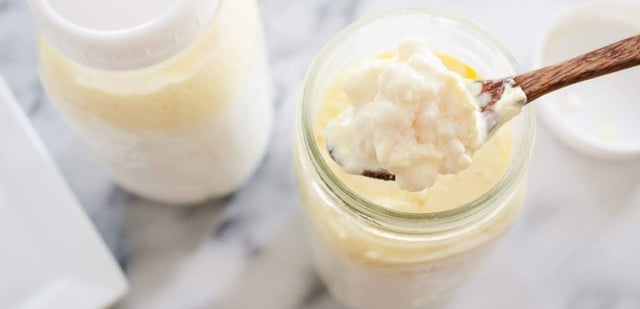
Yogurt and kefir are both fermented dairy products containing many probiotics that are beneficial for the gut.
Kefir: A fermented milk product made from kefir grains containing bacteria and yeast. Kefir typically contains a wider variety of probiotics, including Lactobacillus kefiri, Bifidobacterium, and Saccharomyces cerevisiae.
Both are good foods for the colon, helping to balance the gut microbiome, support digestion, and boost gut immunity.
On the other hand, yogurt consumption has also been shown to inhibit colon cancer by reducing the concentration of harmful enzymes produced by gut bacteria, such as β-glucuronidase, azoreductase, nitroreductase, and 7-α-dehydrogenase…
Banana
Bananas are good for the colon because they are high in fiber, which can help prevent many colon disorders, including constipation, diverticulitis, colon cancer, appendicitis, and hemorrhoids.
Besides fiber, bananas also contain a large amount of resistant starch – a type of starch that is not completely digested in the small intestine. Studies show that the amount of resistant starch in bananas can be up to eight times higher than the amount of natural fiber found in bananas.

Bananas are good for the colon because they are high in fiber, which can help prevent many functional disorders of the colon.
Resistant starch can easily enter the colon for fermentation. This process helps produce short-chain fatty acids, providing energy for intestinal mucosal cells and maintaining a healthy microbial environment in the colon.
As a result, the gut microbiome in the colon thrives, reducing the risk of inflammation and colon cancer, while also aiding digestion and preventing constipation.
Potatoes
Similar to bananas, potatoes such as sweet potatoes, taro, and regular potatoes are also good for the colon because they are rich in fiber and resistant starch.
Upon reaching the colon, this starch ferments, nourishing beneficial bacteria and producing short-chain fatty acids that help protect the colon lining, reduce inflammation, and lower the risk of cancer.
Source: https://giadinh.suckhoedoisong.vn/thuc-pham-ban-day-cho-viet-giup-phong-ngua-ung-thu-dai-trang-172251210203730736.htm


![[Photo] Closing Ceremony of the 10th Session of the 15th National Assembly](/_next/image?url=https%3A%2F%2Fvphoto.vietnam.vn%2Fthumb%2F1200x675%2Fvietnam%2Fresource%2FIMAGE%2F2025%2F12%2F11%2F1765448959967_image-1437-jpg.webp&w=3840&q=75)

![[Photo] Prime Minister Pham Minh Chinh holds a phone call with the CEO of Russia's Rosatom Corporation.](/_next/image?url=https%3A%2F%2Fvphoto.vietnam.vn%2Fthumb%2F1200x675%2Fvietnam%2Fresource%2FIMAGE%2F2025%2F12%2F11%2F1765464552365_dsc-5295-jpg.webp&w=3840&q=75)






































![[OFFICIAL] MISA GROUP ANNOUNCES ITS PIONEERING BRAND POSITIONING IN BUILDING AGENTIC AI FOR BUSINESSES, HOUSEHOLDS, AND THE GOVERNMENT](https://vphoto.vietnam.vn/thumb/402x226/vietnam/resource/IMAGE/2025/12/11/1765444754256_agentic-ai_postfb-scaled.png)














































Comment (0)