

Drooling during sleep can occur after dreaming. While mostly harmless, in some cases it can be a warning sign of a medical condition.
About a month ago, Mr. Li, 61, suddenly started drooling at night for no apparent reason. Every morning, his pillowcases and towels were soaked with saliva.
In recent days, Mr. Li noticed that every day when he woke up, not only was there saliva left in the corners of his mouth, but his face and tongue also felt slightly stiff.
Mr. Li had a bad feeling: "Could this be a premonition of a stroke?" He rushed to the hospital for an examination. After careful diagnosis by the doctors, Mr. Li's condition was confirmed to be a warning sign of a stroke , requiring immediate hospitalization for treatment.
Is drooling while sleeping a sign of good sleep?
In fact, drooling while sleeping is quite common and in most cases nothing to worry about. However, it is not a sign of good sleep quality. This phenomenon may be related to some unhealthy lifestyle habits.
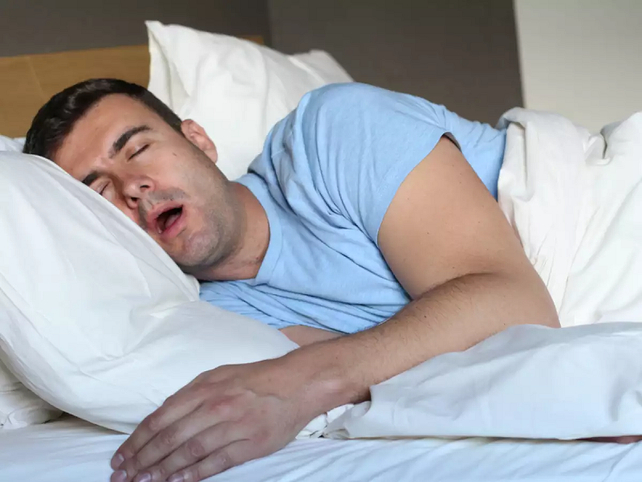
Sleeping in the wrong position
If you're used to sleeping on your side or stomach, your mouth may unconsciously open while you sleep, making it easier for saliva to spill out.
Dental problems
Saliva has the ability to inhibit and kill bacteria. When inflammation occurs in the oral cavity, such as mouth ulcers, periodontitis, or gingivitis, saliva production naturally increases to help kill harmful bacteria, resulting in an increased saliva volume compared to normal.
Mouth breathing
If a person has rhinitis or poor lip-to-tooth contact, they tend to breathe through their mouth. This habit continues during sleep, leading to an inability to close the mouth completely. Therefore, when the mouth is open, saliva naturally flows out.
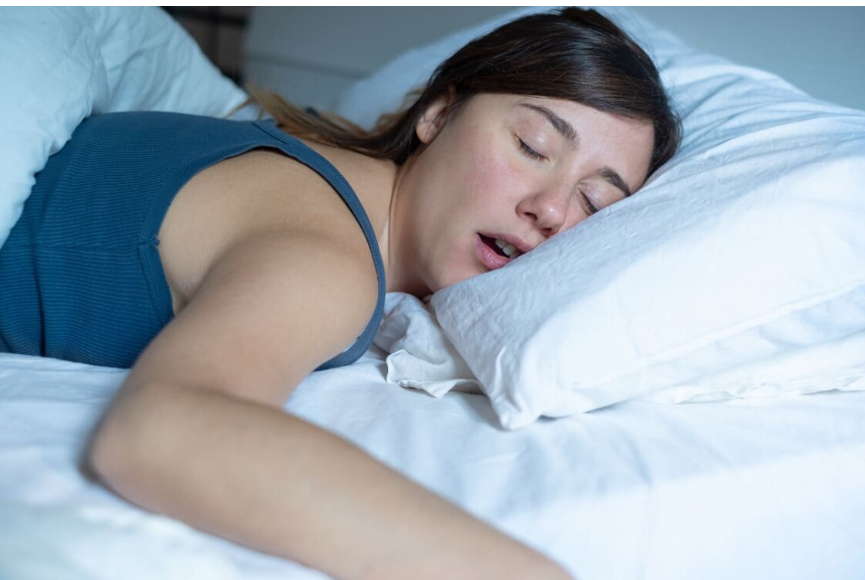
Drooling while sleeping can signal 4 signs of illness.
Sometimes, adults drooling while sleeping can be related to certain physiological factors, such as excitement, excessive mental stress, or excessive physical fatigue.
This is especially common in older adults due to the relaxation of the muscles around the mouth and decreased swallowing ability. As long as there are no other unusual symptoms, special treatment is usually not necessary.
However, if adults drool frequently or for extended periods while sleeping, they should pay close attention and seek medical attention as soon as possible to determine if there is an underlying medical condition.
Facial neuritis
Viral infections, colds, and drafts can invade the body's nervous system, thereby interfering with the normal motor function of the facial muscles. This interference can cause the corners of the mouth to twist and prevent the mouth from closing, leading to involuntary saliva leakage during sleep and potentially accompanied by symptoms such as facial nerve paralysis, spasms, or even facial paralysis.
Arteriosclerosis
Arteriosclerosis can lead to insufficient blood and oxygen supply to the brain and muscles, causing facial muscles to relax. Additionally, as people age, their swallowing ability gradually decreases. The combination of these factors can result in drooling during sleep.
Spleen and stomach deficiency
Excessive drooling is more common in people with weak constitutions. Such individuals often have a frail physique, pale complexion, and are prone to shortness of breath and fatigue. These symptoms are particularly noticeable after strenuous exertion or excessive exercise, sometimes accompanied by spontaneous sweating.
In addition, they may also have typical symptoms such as epigastric bloating, loss of appetite, loose stools, etc.
Alzheimer's or Parkinson's disease
Elderly people with these two conditions also frequently drool at the corners of their mouths. The disease is often accompanied by symptoms such as significant memory loss.
T. Linh
Source: https://giadinhonline.vn/chay-nuoc-dai-khi-ngu-canh-bao-benh-gi-d202576.html

![[Photo] Prime Minister Pham Minh Chinh holds a phone call with the CEO of Russia's Rosatom Corporation.](/_next/image?url=https%3A%2F%2Fvphoto.vietnam.vn%2Fthumb%2F1200x675%2Fvietnam%2Fresource%2FIMAGE%2F2025%2F12%2F11%2F1765464552365_dsc-5295-jpg.webp&w=3840&q=75)

![[Photo] Closing Ceremony of the 10th Session of the 15th National Assembly](/_next/image?url=https%3A%2F%2Fvphoto.vietnam.vn%2Fthumb%2F1200x675%2Fvietnam%2Fresource%2FIMAGE%2F2025%2F12%2F11%2F1765448959967_image-1437-jpg.webp&w=3840&q=75)








































![[OFFICIAL] MISA GROUP ANNOUNCES ITS PIONEERING BRAND POSITIONING IN BUILDING AGENTIC AI FOR BUSINESSES, HOUSEHOLDS, AND THE GOVERNMENT](https://vphoto.vietnam.vn/thumb/402x226/vietnam/resource/IMAGE/2025/12/11/1765444754256_agentic-ai_postfb-scaled.png)














































Comment (0)