

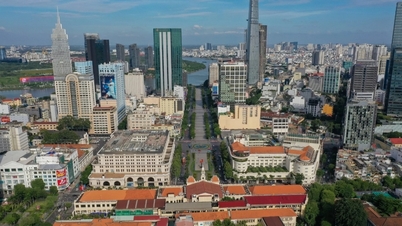
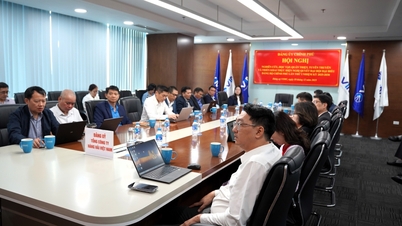
This afternoon (August 27), the Steering Committee for the implementation of Resolution 98 of the National Assembly on the deployment of special mechanisms and policies for the development of Ho Chi Minh City held a meeting to review the first year of implementation.
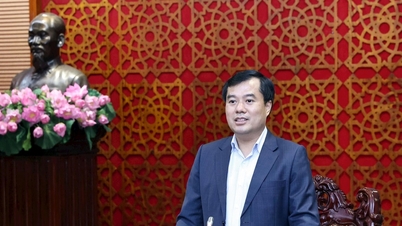
At the meeting, Ho Chi Minh City Chairman Phan Van Mai stated that Resolution 98 gives the city the opportunity to open up mechanisms to unleash resources and overcome difficulties in order to be more proactive in decision-making through decentralization and delegation of power.
However, according to Ho Chi Minh City leaders, despite being implemented for a year, the results are still not as expected.
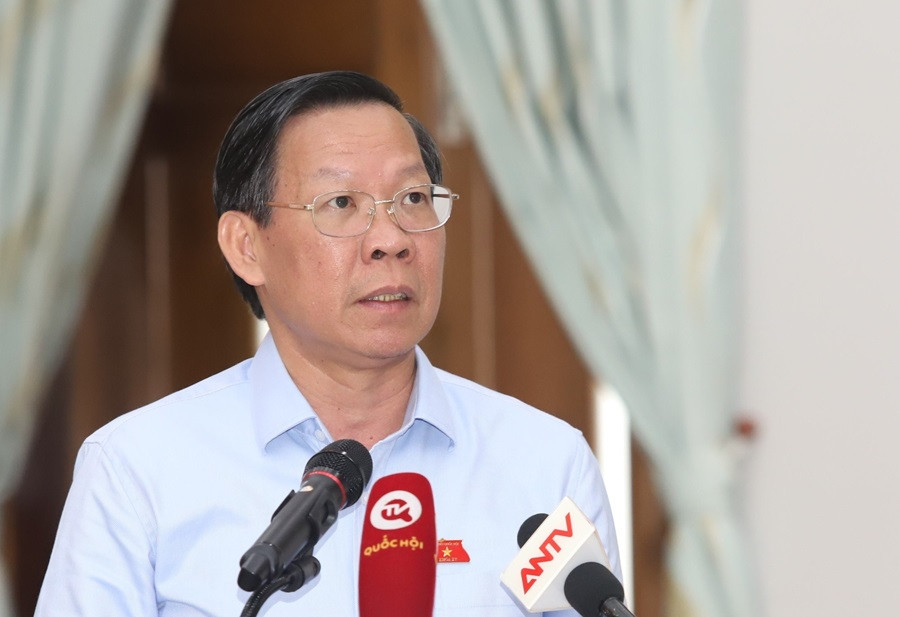
Mr. Mai cited the example of Ho Chi Minh City, which has requested a mechanism to implement projects in the form of PPP (public-private partnerships) in the fields of education , culture, and sports. The city could attract approximately 1 billion USD if all projects on the approved list are implemented.
However, to date, the city has only begun implementing a few projects, and none have been completed. The reason is that the departments and local authorities are still lagging behind.
Another issue that Ho Chi Minh City is still facing is attracting strategic investors, compiling a list of prioritized sectors, and establishing accompanying mechanisms and policies. According to Mr. Mai, the Ministry of Planning and Investment initially disagreed with the city's list of priority sectors. However, after the city persistently explained the situation, the Ministry agreed.
"We still need to coordinate with the ministries, so progress is slow. The city is determined to resolve this bottleneck in the third quarter of this year. Only after resolving it can we discuss attracting investors for the Can Gio international transshipment port and the high-tech zone," Mr. Mai affirmed.
At the same time, the head of the Ho Chi Minh City government informed that there are signs that Intel and Samsung will return to the city with investment packages of 2-3 billion USD.
"Previously, Intel left the city with an investment of over $4.3 billion to go to Poland, and now they want to return. However, to attract these two strategic investors, the city must make good use of the policies and mechanisms from Resolution 98," Mr. Mai expressed.
Choose 7 locations to make TOD
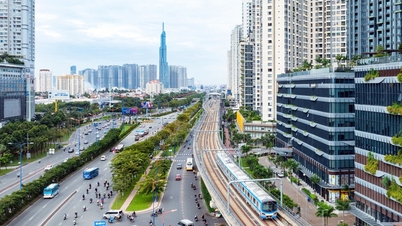
Mr. Mai also stated that the Ho Chi Minh City People's Committee has approved 7 locations for the implementation of TOD (Transit-Oriented Development) along metro lines 1, 2, and Ring Road 3. If implemented successfully, this could generate several hundred trillion VND from land use alone.
Therefore, Mr. Mai requested that relevant agencies and localities conduct fundamental research and quickly plan these TOD (Transit-Oriented Development) sites. Afterward, land planning, compensation for land clearance, and then bidding will be conducted to recover the value from the land.
Initially, Thu Duc City will be selected to pilot the implementation of TOD (Transit-Oriented Development) at two locations before expanding to the remaining locations.
Results after one year of implementing Resolution 98: Regarding investment management, four mechanisms are being implemented, including: allocating 3,794 billion VND in public investment capital to support poverty reduction and job creation; approving a list of 7 TOD (Transit-Oriented Development) locations along Metro lines; issuing a list of 41 investment projects in the fields of health, education, and culture under the public-private partnership method; and approving 5 BOT (Build-Operate-Transfer) projects to upgrade, expand, and modernize existing roads. The group of financial and state budget mechanisms includes 12 mechanisms, of which 5 have been implemented or are currently underway, including: allocating 1,500 billion VND in public investment capital to support interest rates for investment projects financed by HFIC in priority socio-economic development sectors; allocating 11,287 billion VND from the city's budget for salary reform to cover additional income; providing 75 billion VND to Dien Bien province to implement several projects; and providing Cuba with 10 computer sets, 500 bicycles, and 500 tons of rice. The group of mechanisms related to urban management, resources, and environment includes 13 mechanisms, of which 7 have been implemented or are currently underway, including: changing the land use purpose of rice cultivation for one project with an area of 0.04 hectares; approving the investment policy for one project to provide approximately 2,000 social housing units to the market; five units registering to implement the conversion of waste-to-energy technology for five plants; and two projects being added to the objective of waste-to-energy. Regarding priority sectors for attracting strategic investors, there is a mechanism in place. The city has developed a template for publishing information on projects attracting strategic investors and is currently seeking feedback from relevant ministries and agencies, as well as updating the template according to the new regulations of the 2023 Bidding Law. The group of mechanisms for science and technology management and innovation has two mechanisms, both of which are currently being implemented. Regarding support for innovation and entrepreneurship in priority areas, 48 valid applications have been received. The advisory council has selected 21 out of 48 applications and has initially provided support to 15 out of 21. The group of mechanisms for organizing the city's government apparatus comprises 10 mechanisms, with 9 out of 10 currently being implemented. The city has basically completed the establishment of additional specialized agencies and the reorganization of public units with the establishment of the Food Safety Department and the Digital Transformation Center; adding 1 Vice Chairman of the People's Council and 1 Vice Chairman of the People's Committee for Thu Duc City, 1 Vice Chairman of the People's Committee for 2 districts (Can Gio and Hoc Mon), and 51 out of 52 Vice Chairmen of the People's Committee for 51 out of 52 wards, communes, and towns with a population of 50,000 or more. The organizational structure of Thu Duc City's government comprises two groups of mechanisms: those related to decentralization and delegation of authority, and those related to organizational structure. Thu Duc has essentially completed these groups of mechanisms. |
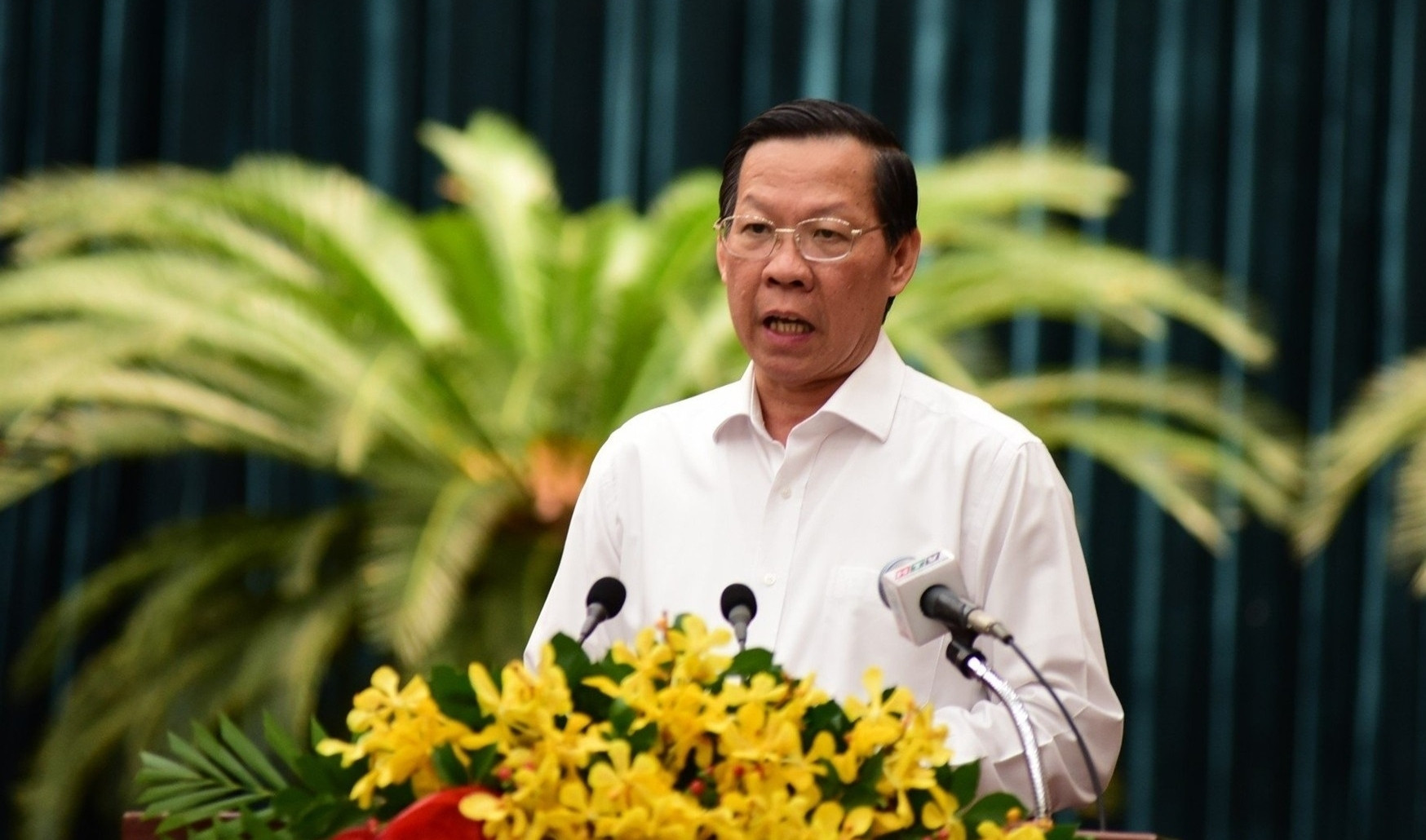 Chairman of Ho Chi Minh City: With Resolution 98, working in 1 year is more effective than in an entire term . Chairman of Ho Chi Minh City People's Committee Phan Van Mai affirmed that after nearly 1 year of implementing Resolution 98 of the National Assembly, the results achieved are more than in an entire term (5 years) compared to the previous special Resolution 54. 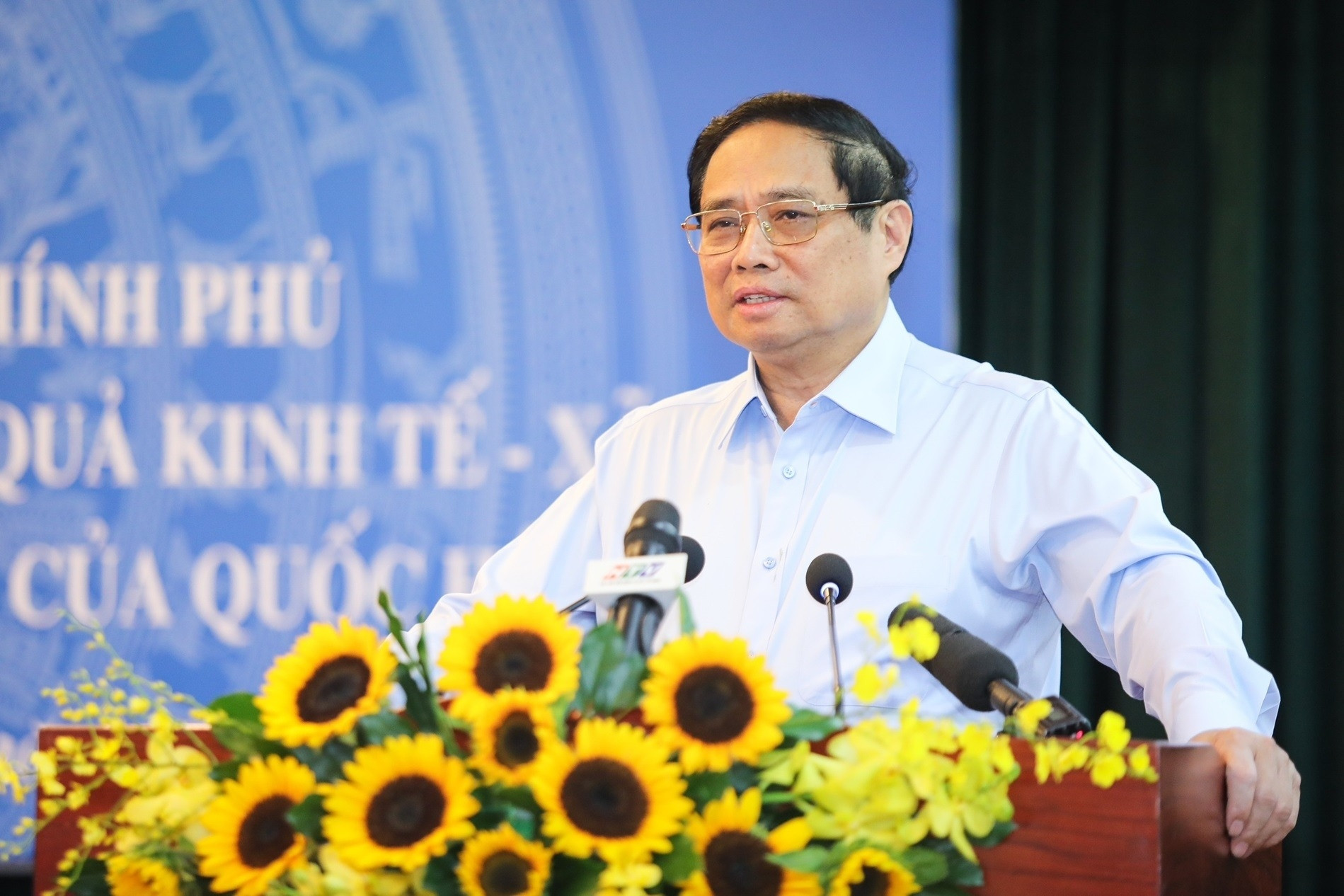 Prime Minister: Remove legal obstacles, avoid haste in implementing Resolution 98. Prime Minister Pham Minh Chinh requested that when implementing Resolution 98, Ho Chi Minh City must learn from experience as it goes, avoiding haste and remaining calm and persistent to achieve high effectiveness. |
Source: https://vietnamnet.vn/chu-tich-tphcm-tan-dung-tot-nghi-quyet-98-de-don-dau-dai-bang-ty-do-2316124.html
































![[Video] The craft of making Dong Ho folk paintings has been inscribed by UNESCO on the List of Crafts in Need of Urgent Safeguarding.](https://vphoto.vietnam.vn/thumb/402x226/vietnam/resource/IMAGE/2025/12/10/1765350246533_tranh-dong-ho-734-jpg.webp)














































Comment (0)