

Recently, the National Assembly passed a law amending and supplementing several articles of 11 laws in the field of military and national defense, including the Law on Civil Defense.
Accordingly, Level 1 civil defense is applied to respond to and mitigate the consequences of incidents and disasters within the commune when the development and extent of damage exceed the response and mitigation capabilities and conditions of specialized and auxiliary forces and other forces in the commune.
Level 2 civil defense is applied to respond to and mitigate incidents and disasters within the provincial area when the development and extent of damage exceed the response and mitigation capabilities of the local commune-level authorities.
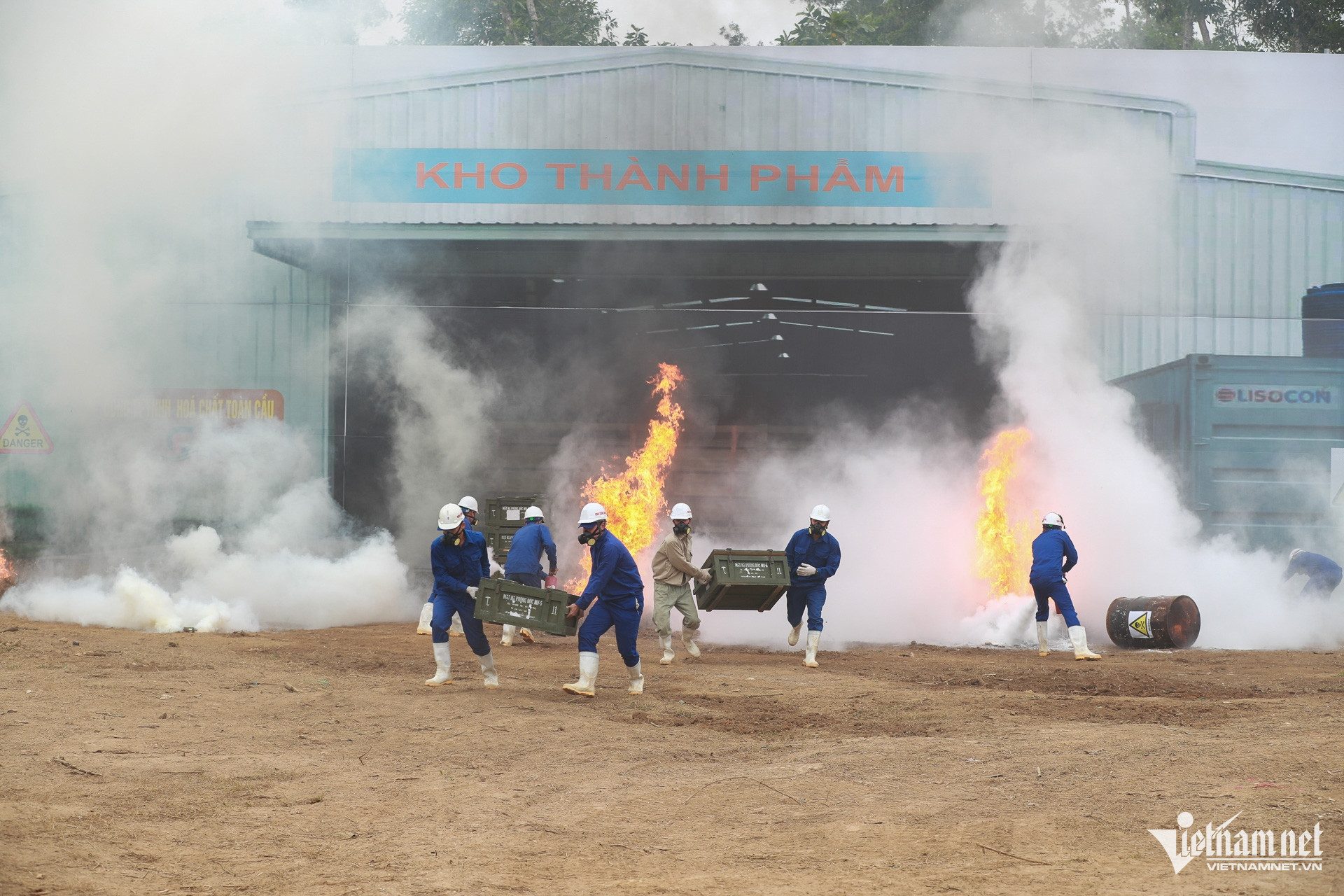
Level 3 civil defense is applied to respond to and mitigate the consequences of incidents and disasters in one or more provinces or centrally-administered cities, when the development and extent of damage from the incident or disaster exceed the response and mitigation capabilities and conditions of the provincial-level local government.
The new law stipulates that the Chairman of the People's Committee at the commune level is responsible for declaring and revoking Level 1 civil defense measures within their jurisdiction. Under the old law, Level 1 measures were issued and revoked by the Chairman of the People's Committee at the district level. After the district level was abolished, this authority was transferred to the Chairman of the People's Committee at the commune level.
The commune chairman has the authority to decide on measures to be implemented, including: evacuating people and property from dangerous areas; ensuring personal protective equipment, food, medicine, drinking water, and other essential necessities for people in the area affected by incidents or disasters; prohibiting or restricting access to dangerous areas for people and vehicles; preventing and controlling fires and explosions; and ensuring security and order in the area affected by incidents or disasters.
Commune and provincial-level chairpersons must regularly monitor the situation regarding incidents and disasters.
Before the law was passed by the National Assembly , there were suggestions to review and supplement the regulations on level 1 and level 2 civil defense; the regulations as drafted in the law were unclear and not specific enough, potentially leading to different interpretations or difficulties in determining the levels.
Regarding this matter, the Government stated that the conditions and criteria for declaring Level 1 civil defense are that an incident or disaster occurs or is likely to occur within the commune, exceeding the response and mitigation capabilities of specialized, part-time, and other forces within the commune.
When an incident, disaster, or risk of incident or disaster occurs and a Level 1 civil defense has not yet been declared, the forces shall respond in accordance with specialized laws (Law on Disaster Prevention and Control; Law on Infectious Disease Prevention and Control).
In cases where response and remediation measures under this specialized law are ineffective, and stronger measures are needed, even if it requires restrictions on human rights and civil rights, or the mobilization of more resources for response, the commune chairman shall declare Level 1 civil defense, providing a basis for applying stronger and more effective measures and mobilizing more resources to meet the requirements of responding to incidents and disasters.
The conditions and criteria for declaring Level 2 civil defense are that an incident or disaster occurs or threatens to occur in one or more communes within the provincial jurisdiction. If the local commune authorities' capacity and resources for response and mitigation are exceeded, the provincial chairman will declare Level 2 civil defense.
The law's continued stipulation of three levels of civil defense is a continuation of the provisions of the previous law, aiming to institutionalize the Party's policies and viewpoints on civil defense up to 2030 and beyond.
Specifically, civil defense must be proactive, preparing early and in advance, even before war, disasters, incidents, natural calamities, or epidemics occur; closely coordinating among all levels, sectors, forces, and the entire population to proactively prevent, respond promptly, and effectively mitigate damage; and effectively implementing the "four on-the-spot" principle combined with support and assistance from the central government, other localities, and the international community.
Based on the above, the Government believes that the criteria for declaring Level 1 and Level 2 civil defense are specific, clear, and easy to apply; at the same time, it assigns responsibility to the chairmen at the commune and provincial levels to regularly monitor the situation of incidents, disasters, and the activities of civil defense forces in their areas...
Source: https://vietnamnet.vn/chu-tich-xa-duoc-ban-bo-phong-thu-dan-su-2415763.html


![[Photo] Prime Minister Pham Minh Chinh attends the Conference summarizing and implementing tasks of the judicial sector.](/_next/image?url=https%3A%2F%2Fvphoto.vietnam.vn%2Fthumb%2F1200x675%2Fvietnam%2Fresource%2FIMAGE%2F2025%2F12%2F13%2F1765616082148_dsc-5565-jpg.webp&w=3840&q=75)

















































































Comment (0)