

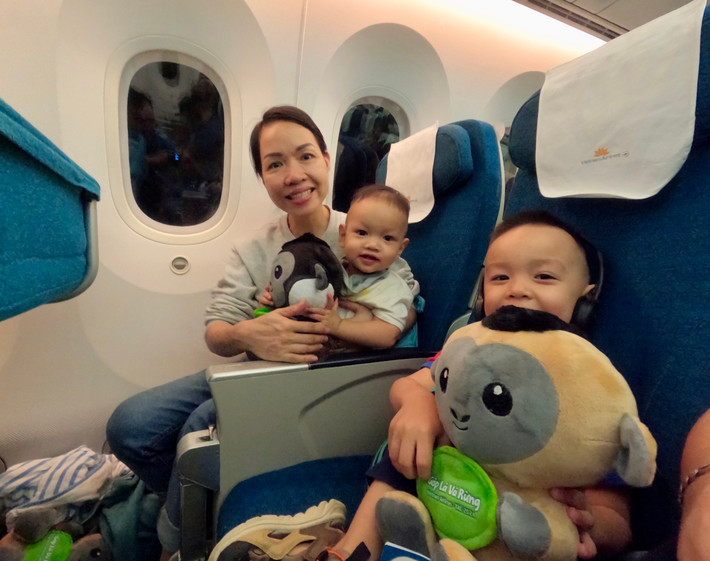
Passengers were delighted with the unexpected and meaningful gifts from Vietnam Airlines. Photo: VNA.
This is a project by Vietnam Airlines in collaboration with MoMo and Pan Nature, aiming to restore 50 hectares of forest in the rocky mountain corridor between Mai Chau ( Hoa Binh ) and Van Ho (Son La), in Northwest Vietnam. Beyond restoring forests, offsetting CO2 emissions, and mitigating climate change, the project also raises awareness among local communities about forest conservation and preserves rare flora and fauna. Of particular note is the critically endangered white-cheeked gibbon, with only 14 individuals remaining in the area and facing a high risk of extinction.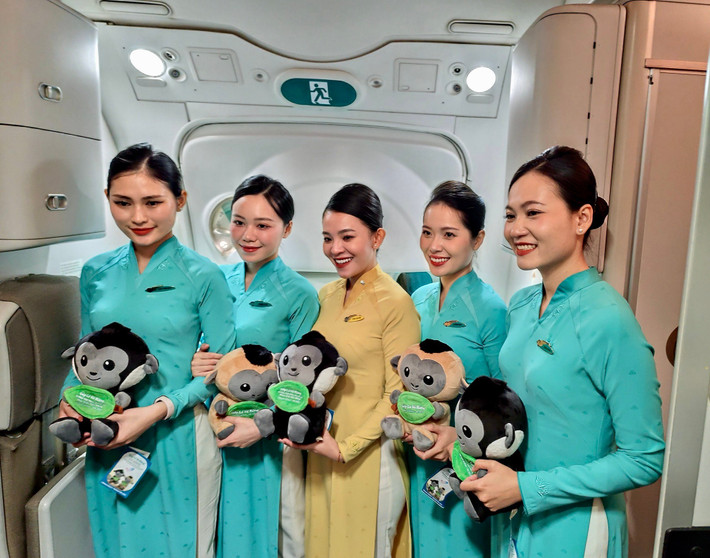
Through this activity, Vietnam Airlines aims to spread the message of protecting the environment and rare animal species. Photo: VNA.
In addition, the "sustainable flight" VN11 also carries the message of "flying light." For the first time, Vietnam Airlines encourages passengers on the flight to reduce their baggage weight. According to the national airline of Vietnam, reducing baggage weight is one of the measures to make the aircraft "lighter," consume less fuel, and thus reduce CO2 emissions into the environment.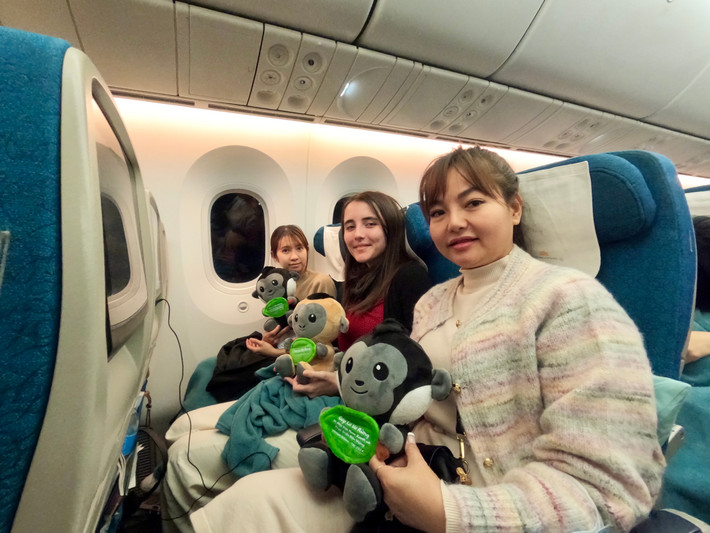
Passengers on the sustainable flight all received a gift: a plush toy of a white-cheeked black monkey. Photo: VNA.
Specifically, passengers on flight VN11 were advised to reduce their baggage weight on the Ho Chi Minh City - Paris route through simple measures such as: reducing the amount of clothing, shoes, or items not absolutely necessary for the trip. Passengers on flight VN11 who met the baggage weight reduction criteria received special gifts from Vietnam Airlines to encourage this action. To carry out flight VN11's SkyTeam "challenge," Vietnam Airlines operated Boeing 787-9 aircraft equipped with new-generation engines, which minimize emissions and noise pollution. Simultaneously, the airline researched and optimized flight routes to Europe to shorten flight time, reduce fuel consumption, and minimize environmental impact. Utilizing a modern fleet and optimizing flight paths are the most important solutions for Vietnam Airlines in its sustainable development strategy.
This meaningful gift made a strong impression on all the passengers. Photo: VNA.
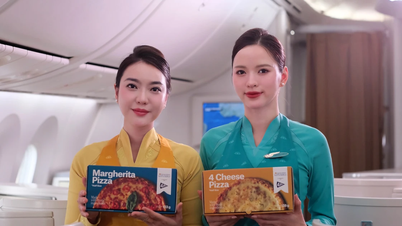
Furthermore, flight VN11 also minimizes the use of nylon and single-use plastics. In fact, this solution has been widely implemented by Vietnam Airlines across its entire flight network for many years, helping to reduce tens of millions of plastic items and nylon bags annually. For in-flight meals, Vietnam Airlines makes maximum use of local ingredients and seasonal foods. Simultaneously, it implements a strict process to recover and repurpose dry goods and disposable utensils that are still in good condition, helping to minimize unnecessary waste released into the environment. The airline also collaborates with USSEC – the U.S. Soybean Export Council – to design healthy and environmentally friendly meal trays (“Healthier and More Sustainable Meal”). Each meal is enhanced with green vegetables and plant-based ingredients, using ingredients and preparation methods that are beneficial to health. Specifically, the fish and seafood ingredients meet ASC standards – an international certification for responsibly farmed seafood, minimizing negative impacts on the environment, ecosystems, and local communities. Simultaneously, it combines these with ingredients processed from sustainably farmed soybeans from the United States.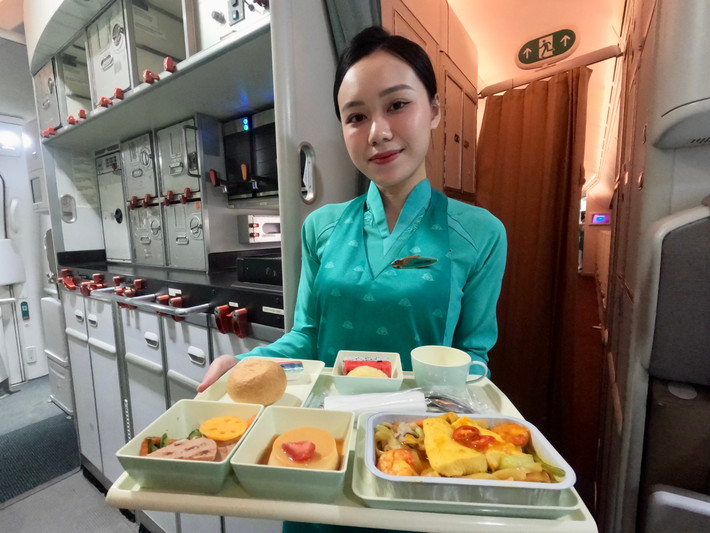
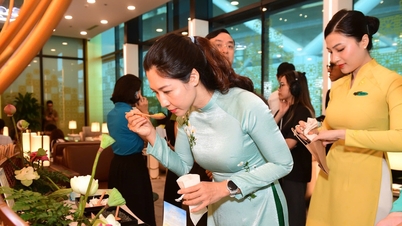
The company also collaborated with USSEC – the U.S. Soybean Export Council – to design healthier and more sustainable meal trays (“Healthier and more Sustainable Meal”). Photo: VNA.
Participating in the Sustainable Flight Challenge is one of the activities in Vietnam Airlines' development strategy, given the numerous challenges facing the global and domestic aviation industry regarding environmental protection. As the national airline, Vietnam Airlines always prioritizes its responsibility to society and the environment, including partnering with the Government to achieve net-zero emissions by 2050, and being an active and responsible member of the SkyTeam Alliance.| The Aviation Challenge (TAC) is an initiative of the global airline alliance SkyTeam to promote sustainable innovation in the aviation industry. First held in 2022 as the Sustainable Flight Challenge (TSFC), the TAC has been renamed this year to reflect its broader scope, encompassing all aspects of the aviation industry. Participating airlines worldwide will compete and collaborate to expand the adoption of sustainable solutions, aiming to minimize the environmental impact of the aviation industry. The theme for the 2024 challenge is "Adaptation." Accordingly, the TAC aims for airlines to implement sustainable solutions across all operations and apply them on a larger scale, from fuel, flight operations, in-flight services, to ground operations, cargo handling, and the application of digital technology to save resources. Previously, in 2023, Vietnam Airlines also participated in the TSFC 2023 challenge and achieved considerable success. |

































































Comment (0)