

Opportunities and strengths of Vietnamese products.
The Mekong Delta region – the country's agricultural hub – is entering a period of significant transformation with the goal of bringing local products to wider markets through the application of technology and e-commerce. From initial pilot models, many localities have demonstrated that digital technology is not only a tool to support production, but also a direct bridge between farmers and modern consumers.

One of the OCOP products participating in exhibitions at major events in the southern provinces.
In Dong Thap , considered a bright spot in promoting digital transformation in the Mekong Delta region, this trend has been identified as a pillar in the development of domestic trade. Mr. Dang Van Tuan, Deputy Director of the Department of Industry and Trade of Dong Thap province, stated that digital transformation and e-commerce are inevitable trends, helping local businesses, cooperatives, and producers proactively expand their markets, increase competitiveness, reduce intermediary costs, and promote their products more effectively.
According to Mr. Tuan, in recent times, the provincial Department of Industry and Trade has organized many training programs to guide businesses on livestreaming sales skills, setting up online stores, connecting with TikTokers and content creators, and supporting the development of product traceability to increase credibility with consumers.
This support is creating a strong ripple effect. Numerous businesses in Dong Thap, An Giang , and Can Tho have started listing their products online. From products like Cat Chu mangoes, Dong Thap lotus, specialty rice, frog sausage, and Linh fish sauce to soursop tea and coconut nectar, all are appearing on Postmart, Voso, Shopee, and Tiki. The combination of traditional production and modern business practices is helping products from these riverine regions reach further, connecting with millions of consumers nationwide.
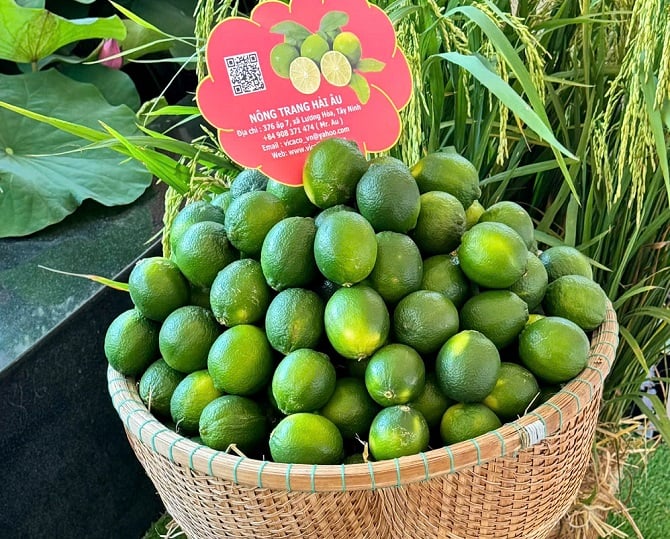
The combination of traditional production and modern business practices has enabled products from the riverine region to reach millions of consumers nationwide.
Beyond e-commerce, smart management models in agricultural production are also gradually emerging. Many cooperatives are applying software for managing growing areas, automated irrigation systems, and electronic logbooks, helping to optimize costs, increase productivity, and meet export standards. This is a fundamental shift, where data becomes an "asset" that helps farmers master the process and businesses proactively connect with the market.
In reality, digital transformation is providing a "double boost": it both modernizes the agricultural economy and enhances the competitiveness of Vietnamese goods. When each local product can tell its story in digital language through images, QR codes, promotional videos, or live streams from the fields, its value lies not only in the product itself, but also in the trust and regional identity it inspires.
Overcoming cognitive barriers to achieve breakthroughs.
Despite expanding opportunities, the digital transformation journey of the Mekong Delta region still faces numerous challenges. According to experts, the biggest obstacle lies not in technology, but in the awareness and management capacity of businesses, cooperatives, and small-scale household businesses – the entities that constitute the majority of the local economic structure.
Most businesses in this region are small-scale, have limited capital, lack a skilled technology workforce, and have not yet developed a clear digital development strategy. Many are still only at the stage of "advertising online," failing to deeply explore customer data or conduct online market analysis – key elements for effective business in the digital environment.
Ms. Le Ngoc Tram, owner of Ut Le Tram pickled cucumber production facility (Dong Thap province), frankly shared: “Our products meet OCOP 3-star standards, but accessing modern distribution channels is still difficult. Hiring personnel skilled in e-commerce in rural areas is very limited; we need more technical support and practical guidance.”
According to the Department of Industry and Trade of Dong Thap province, to overcome this difficulty, the province has implemented many in-depth support programs such as "Bringing agricultural products to the market," "Digital businesses - smart farmers," and coordinating with major e-commerce platforms to guide transaction, payment, and promotion processes for OCOP products. The most important thing is to help producers understand that technology is not something too far-fetched. When they see the concrete benefits – faster sales, better prices, and greater transparency – they will proactively switch.
Simultaneously, provinces in the region are actively implementing the domestic trade development strategy for the period 2025-2030, combining trade promotion with cultural festivals, consumer fairs, and Vietnamese product weeks, aiming to bring local products closer to urban consumers. Some localities, such as Can Tho City and other provinces in the Mekong Delta, have established digital economy operating centers and provincial-level digital trading platforms, contributing to the formation of a smart domestic consumption ecosystem.

TikTokers are preparing to livestream selling seedlings to nurseries in Cho Lach (Vinh Long).
According to experts from the Japan International Cooperation Agency (JICA) and Can Tho University, if the opportunity is well-utilized, the Mekong Delta could become a leading region in digital transformation of agriculture, possessing both abundant raw materials and the ability to link products with traceability, experiential tourism, and a green economy – three factors that are of particular interest to global consumers.
From a practical perspective, digital transformation is not just a "technological trend," but a comprehensive reform in development thinking. When businesses change their mindset, cooperatives change their methods, and people change their consumption habits, the domestic market will be activated from the ground up. It is through this transformation that Vietnamese goods can assert a strong position, not only domestically but also in the regional market.
Digital transformation helps expand the market. Digital transformation is becoming the "golden key" to help the Mekong Delta expand its markets, enhance the value of agricultural products, and affirm its regional identity in the new era. With the government's support, businesses' proactive approach, and people's adaptability, the entire region will gradually form a digital economy with a distinct local character. The combination of constructive policies, modern technology, and creative people is the foundation for Vietnamese products to break through, spreading the "vibrancy of the waterways" from rural markets to the digital space, affirming their position domestically and internationally. |
Source: https://doanhnghiepvn.vn/chuyen-doi-so/chuyen-doi-so-suc-bat-moi-cho-thi-truong-noi-dia-vung-dbscl/20251025030530450
![[Photo] Two flights successfully landed and took off at Long Thanh Airport.](/_next/image?url=https%3A%2F%2Fvphoto.vietnam.vn%2Fthumb%2F1200x675%2Fvietnam%2Fresource%2FIMAGE%2F2025%2F12%2F15%2F1765808718882_ndo_br_img-8897-resize-5807-jpg.webp&w=3840&q=75)


























































































Comment (0)