

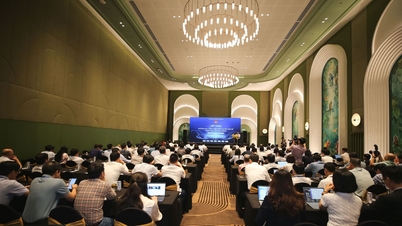
In his opening speech, Mr. Khuat Viet Hung, Chairman of the Board of Directors of Hanoi Railway One Member Co., Ltd., said that digital transformation is not only a trend but also an important foundation and driving force to promote socio -economic development of countries around the world. Digital transformation is an important key to automating processes, standardizing operational management, and increasing the ability to forecast and handle incidents in urban railway operations. Applying digital platforms helps businesses improve productivity, reduce dependence on manual processes, and ensure higher levels of operational safety.
Sharing the implementation roadmap to 2045, Hanoi Metro has proposed a three-phase implementation roadmap. Specifically, the phase to 2027 will begin to develop key software for management and operation. The phase to 2030 will complete the unified management and operation software system. Effectively operate ERP software and infrastructure maintenance software. The vision to 2045 will be to build a large-scale digital data center; form a digital economic model based on urban railway industry data. Strengthen international cooperation to standardize according to advanced urban models.
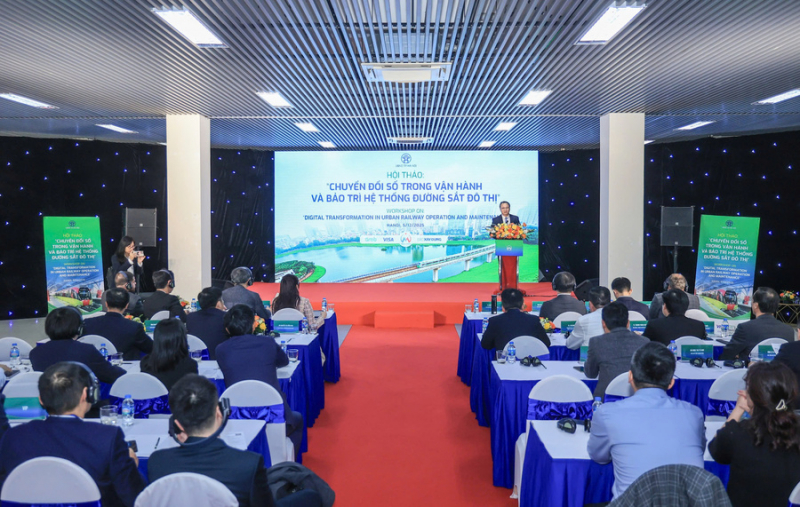
At the workshop, Mr. Atsushi Sato, Manager of the International Business Department, Tokyo Metro Corporation (Tokyo Metro) shared that in 1920, the Tokyo Metro Corporation was established. In 1927, the first subway line in Asia (Ginza Line) connecting Asakusa and Ueno was opened. In 1941, the Teito Rapid Transit Authority (TRTA) was established. By 1990, the subway network was almost completed. In 2004, the Tokyo Metro Corporation (Tokyo Metro) was established. In 2023, the number of passengers transported by Tokyo Metro per day was 6.84 million. The punctuality rate calculated by the rate of trains arriving within 5 minutes on all lines was 99.2%. In 2027, Tokyo Metro will celebrate 100 years since it began operating.
According to Mr. Atsushi Sato, at Tokyo Metro, each department is researching suitable digital transformation solutions to maintain their respective facilities. For locomotives and carriages, it is necessary to regularly check and maintain bogies, power supply arms, brake systems, and electric pneumatic machines. For infrastructure, it is the rail system, civil works, and architectural works; and for electrical equipment, it includes power sources, electrical equipment, information and signaling systems, platform barrier doors (PSD), automatic ticket collection, etc. In terms of training, Tokyo Metro applies virtual reality (AR) technology.
"To train technical staff, we created ten deformation points on the walls (side walls and ceiling) of the 180-meter-long tunnel. Six types of deformations were recreated using AR, such as cracks, peeling/bulging, cold joints, leaks, exposed reinforcement, and honeycombing," said Mr. Atsushi Sato, adding that Tokyo Metro is ready to support Vietnam in implementing and promoting highly applicable digital transformation initiatives.
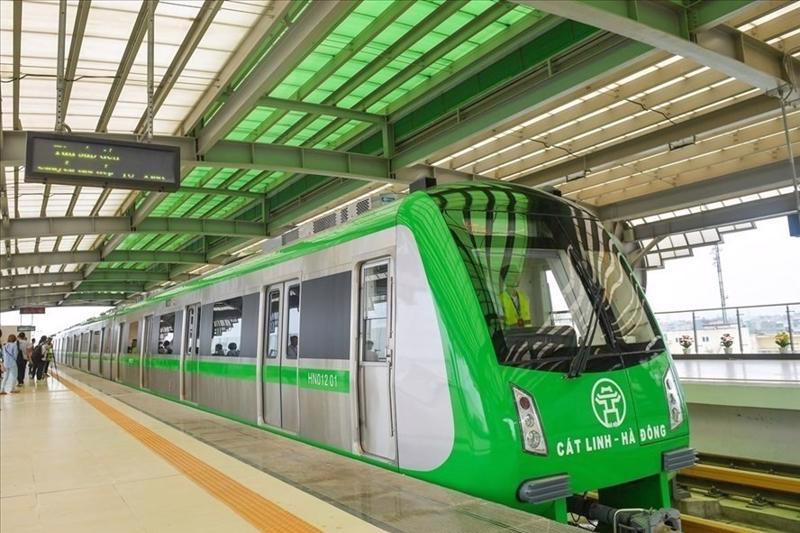
Similarly, Mr. Julian Tu, Senior Director of TRTC, shared his experience in applying AI in the operation of Taipei Metro. Mr. Julian Tu said that Taipei Metro has 5 lines and last year, the number of passengers was 2.2 million. To enhance operational reliability, Taipei Metro regularly uses smart technology to reduce train delays. Taipei Metro also has some key principles to ensure that operations fully meet customer needs. At the same time, Taipei Metro also manages trains according to passenger needs, using AI to ensure that workers comply with occupational safety.
“To ensure safety, we use AI to detect behaviors such as passengers trying to climb fences, or identify stuck shoes… Even to enforce occupational safety measures, when workers are working, AI will help control workers' compliance with occupational safety, AI will detect prohibited behaviors of workers and will immediately notify management of unauthorized behaviors. In addition, AI will help automatically call elevators for wheelchair users, helping to reduce travel time for disabled people, and at the same time help other passengers travel faster,” said Mr. Julian Tu. In the future, Taipei Metro will leverage AI to provide better travel services for passengers.
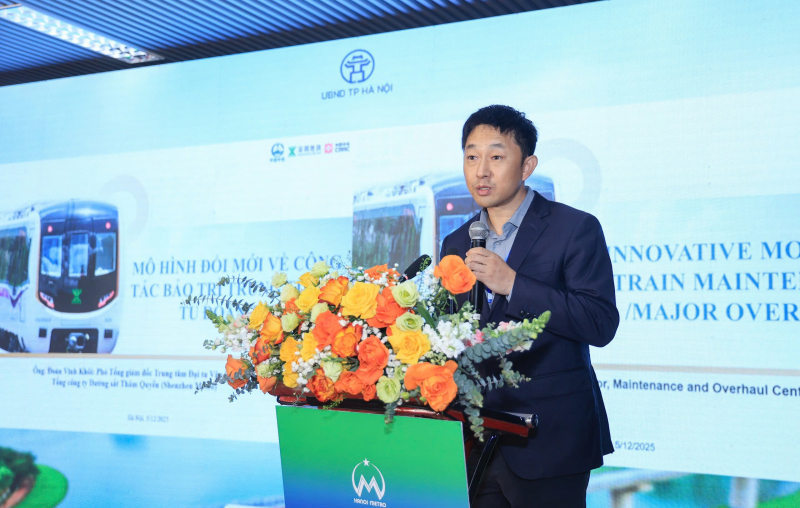
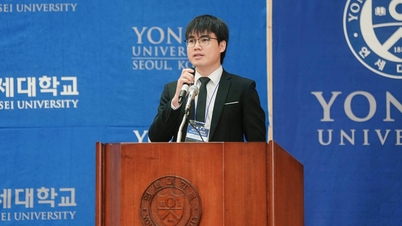
One of the notable presentations was the speech by Mr. Doan Vinh Khoi, Deputy General Manager of the Overhaul Operation Center, Shenzhen Metro Corporation. Mr. Khoi said that Shenzhen Metro Group is operating 595 km with 18 Metro lines and 417 stations. The enterprise has built a stable operating mechanism, not dependent on state subsidies and is completely financially autonomous. The daily peak passenger traffic on the entire network is 11.88 million, with a daily average of 8.38 million.
Sharing about the journey of transformation from “dependence” to “autonomy”, Mr. Khoi emphasized the key role of the technical team. To escape dependence on the original manufacturer, the staff must master the essential technology, master the maintenance of the entire train and evaluate components. Previously, dependence on the manufacturer was reflected in troubleshooting, emergency repairs or purchasing components.
After 20 years of development, Shenzhen Metro has built an independent maintenance system, with internal standards for troubleshooting, optimizing maintenance processes, and implementing many technical innovations. It has drafted 21 new train design standards, including standards for control circuits and software logic. More importantly, Shenzhen Metro has developed an “Autonomous Model” based on condition-based maintenance (CBM), which uses data to predict component conditions and perform precise maintenance.
Regarding the localization of production, under the promotion of the government and industry, China has formed a complete Metro production chain. Thanks to the policy of "using the market to exchange technology", domestic enterprises have mastered many systems such as pulling guides, train doors, brakes or connecting punches. According to him, smart factories help automate heavy steps, freeing up human resources to focus on higher-value tasks...
Source: https://cand.com.vn/Giao-thong/chuyen-doi-so-trong-van-hanh-duong-sat-do-thi-giup-hanh-khach-di-lai-an-toan-hieu-qua--i790227/

![[Photo] National Assembly Chairman Tran Thanh Man attends the VinFuture 2025 Award Ceremony](/_next/image?url=https%3A%2F%2Fvphoto.vietnam.vn%2Fthumb%2F1200x675%2Fvietnam%2Fresource%2FIMAGE%2F2025%2F12%2F05%2F1764951162416_2628509768338816493-6995-jpg.webp&w=3840&q=75)


![[Photo] 60th Anniversary of the Founding of the Vietnam Association of Photographic Artists](/_next/image?url=https%3A%2F%2Fvphoto.vietnam.vn%2Fthumb%2F1200x675%2Fvietnam%2Fresource%2FIMAGE%2F2025%2F12%2F05%2F1764935864512_a1-bnd-0841-9740-jpg.webp&w=3840&q=75)






























































Comment (0)