

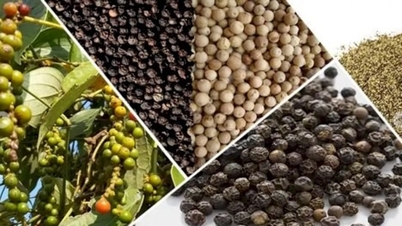
Holding 40% of the world's production, Vietnam is the world's largest producer of 'black gold' (copper). Last year, the global price surge of this spice opened a new golden age for farmers.
Article 1: The spectacular breakthrough of the 'king of fruits', Vietnamese vegetables and fruits rapidly reach record highs.
Article 2: Vietnamese coffee becomes a 'money-making ATM' raking in billions, the most expensive in the world.
Article 3: Quietly becoming the world's number one supplier, the cashew industry rakes in a record $4.34 billion.
Editor's Note: 2024 was a banner year for Vietnam's agricultural sector. Many traditional industries regained their position, generating record-breaking foreign exchange earnings. Farmers in many areas experienced a significant transformation in their lives as a result. In addition, new sectors also presented bright prospects for accelerated growth.
Join VietNamNet in looking back at the bright picture of Vietnam's agricultural sector last year, with confidence in a breakthrough year in 2025, through the series of articles 'The Road to Records for Vietnamese Agricultural Products'.
Back in the 'billion-dollar club'
The Vietnam Pepper and Spice Association (VPSA) has just launched a digital map of Vietnam's pepper and spices, aiming to provide information on acreage, production, and growing regions, support connections between producers and importers, and promote international cooperation. At the same time, it is expected that the digital map will play a crucial role in enhancing the position of Vietnam's spice industry in the international market.
Currently, the area under pepper cultivation in Vietnam is approximately 113,000 hectares, with an estimated production of 190,000 tons. In 2024, businesses exported nearly 250,000 tons of pepper, valued at US$1.31 billion – a record high in the past eight years. Compared to the same period last year, the volume of pepper exports decreased by 6.2%, but the value increased sharply by 44.4%.
Accordingly, Vietnam continues to hold the world's largest inventory, accounting for 40% of global production and 60% of global exports.
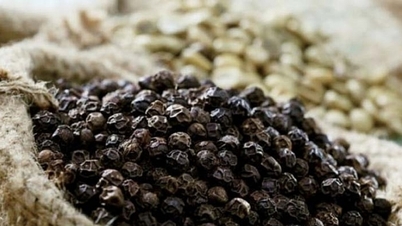
In fact, after many years of cultivation and export, this spice has become a strong industry for our country. Notably, more than a decade ago, pepper prices unexpectedly surged globally. The upward trend began in 2010 and peaked in 2015 at 230 million VND/ton. During this golden age, one ton of dried black pepper was equivalent to 6.5 ounces of gold.
This is also why pepper is considered the "black gold" of Vietnam, and has become a multi-billion dollar commodity for the agricultural sector.
However, the massive expansion of pepper cultivation by farmers in many provinces, even in areas unsuitable for the crop, led to a dramatic increase in production (peaking at 270,000 tons in 2020), resulting in oversupply. The historic price surge quickly subsided, bringing an end to its golden age.
In 2019, the price of pepper plummeted to just 36 million VND/ton, a drop of 85% from its peak. From 2020, the price of this spice recovered but remained at a low level.
The pepper industry's position as a multi-billion dollar sector only lasted for four years (from 2014-2017). In 2018, export revenue decreased to nearly $759 million.
It wasn't until September 2024 that pepper returned to the "billion-dollar club" of the agricultural industry.
The average export price of Vietnamese black pepper in 2024 reached US$5,154 per ton, an increase of 49.7%, and white pepper reached US$6,884 per ton, an increase of 38.9% compared to the previous year. At certain times, the price of this commodity from our country even surged to be the most expensive in the world.
Domestic pepper prices have also been rising steadily. At the beginning of 2024, prices were around 80,000 VND/kg, but by June they had skyrocketed to 180,000 VND/kg. On the last day of the year, pepper prices fluctuated between 146,000 and 147,000 VND/kg.
As 2024 drew to a close, businesses in the pepper industry collectively recorded strong growth rates ranging from 32-68%, with some companies even experiencing a dramatic 150% increase in export revenue compared to 2023. Farmers also had a bumper year, earning profits of 60,000-100,000 VND per kilogram of pepper sold.
The new golden age of 'black gold' will last for a decade.
Ms. Hoang Thi Lien, Chairwoman of VPSA, pointed out that the sharp decrease in global pepper supply is the main reason for the surge in pepper prices in 2024.
Global pepper production in 2025 is projected to continue declining compared to 2024, as it is no longer a major crop, especially given the competition from other crops and the rising costs of maintaining pepper cultivation.
Furthermore, increasingly severe climate change is affecting pepper-growing regions in many countries such as Indonesia, India, Malaysia, Sri Lanka, Brazil, etc., leading to a significant decrease in production.
In Vietnam, the 2025 pepper harvest will be almost entirely completed in February, with some areas extending into March or April, 1-2 months later than in previous years due to the impact of drought.
Vietnam's "black gold" price will remain high due to declining supply, while demand in major markets such as the US and Europe remains stable, and China may increase imports from March-April as its inventories are dwindling.
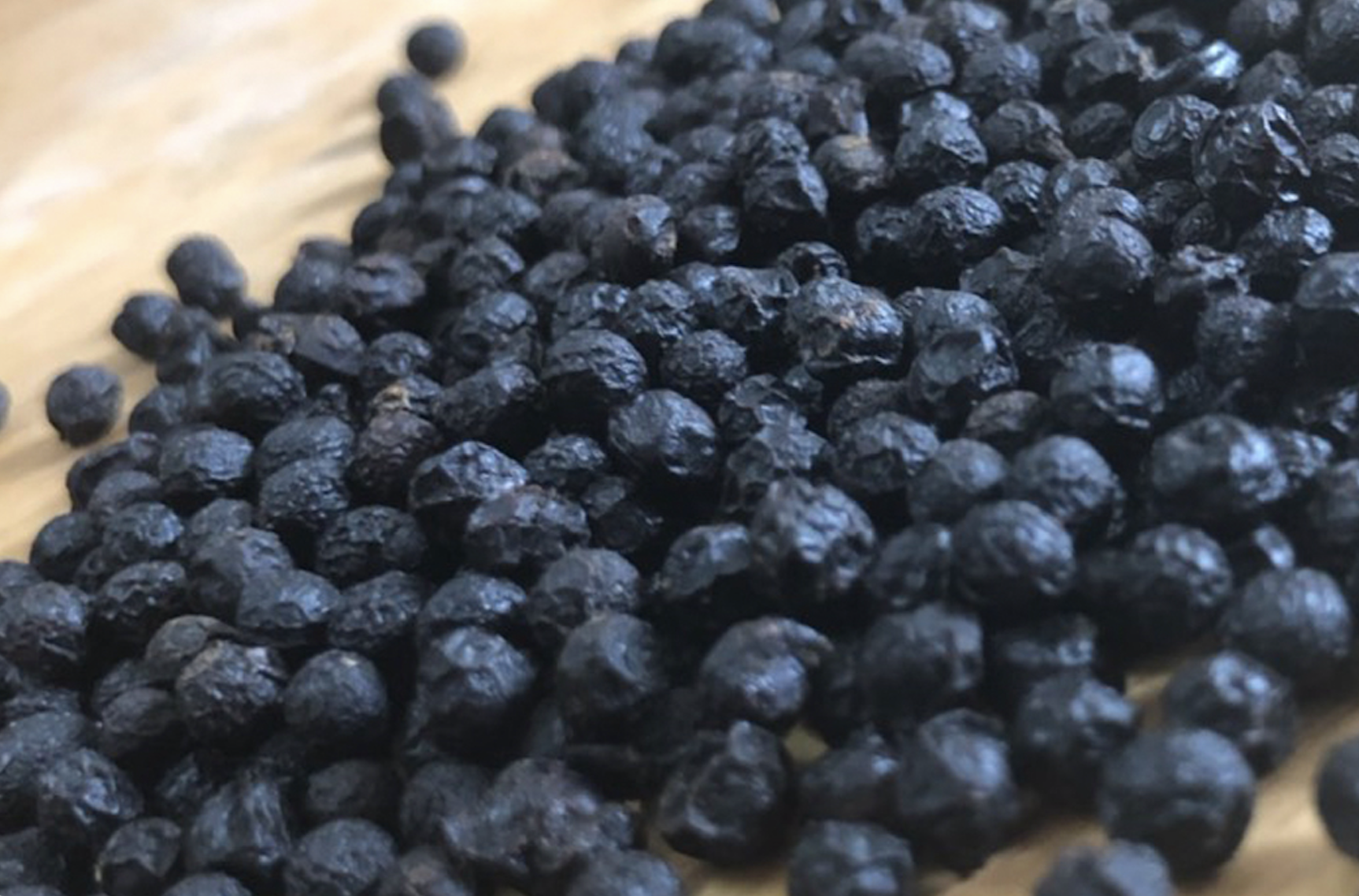
Many previous forecasts suggested that global pepper production would remain insufficient to meet consumer demand in the coming years. Therefore, prices began a sharp upward trend from 2024, simultaneously ushering in a new golden age for Vietnam's pepper industry.
"Given the current situation, global pepper production cannot meet the increasing demand expected in the next 3-5 years. In our country, this key crop is entering a new price increase cycle, compensating for the years when prices were too low," Ms. Lien commented.
According to Mr. Hoang Phuoc Binh, Vice Chairman of the Chu Se Pepper Association ( Gia Lai ), pepper prices always increase in cycles. For example, the previous price increase cycle started in 2010 and peaked in 2015.
After years of hitting rock bottom, nut prices gradually recovered until 2024, marking the beginning of a new upward price cycle. He predicted this cycle would last 10 years, with prices potentially reaching a new peak of 350,000-400,000 VND/kg – an extremely high price. However, prices will fluctuate, but in the long term, they will continue to rise.
He explained that the area under pepper cultivation continues to decrease due to aging plants and farmers switching to other crops. Meanwhile, if no new planting is done now, it will be impossible to increase production in four years. Therefore, pepper will remain in short supply.
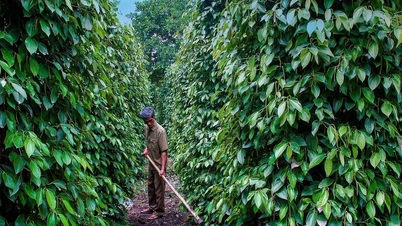
In pepper-growing regions across Vietnam, farmers are also calmer amidst the price surge. Instead of planting only pepper and expanding acreage indiscriminately, they are now focusing more on quality, shifting to sustainable farming practices, and opting for intercropping to reduce investment costs and adapt to climate change.
Meanwhile, businesses, in addition to exporting raw materials, are also aiming to create value-added products to target niche markets, while simultaneously building a high-quality Vietnamese pepper brand.
Next article: Bringing home $5.7 billion and the song 'Rice Grain Rock'
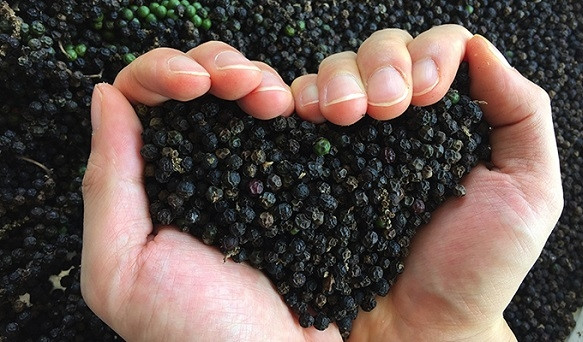
Source: https://vietnamnet.vn/co-kho-hang-lon-nhat-the-gioi-vang-den-viet-nam-sot-gia-vao-thoi-hoang-kim-2366461.html



![[Image] Vietnam's colorful journey of innovation](/_next/image?url=https%3A%2F%2Fvphoto.vietnam.vn%2Fthumb%2F1200x675%2Fvietnam%2Fresource%2FIMAGE%2F2025%2F12%2F14%2F1765703036409_image-1.jpeg&w=3840&q=75)























































![[Image] Vietnam's colorful journey of innovation](https://vphoto.vietnam.vn/thumb/402x226/vietnam/resource/IMAGE/2025/12/14/1765703036409_image-1.jpeg)































Comment (0)