

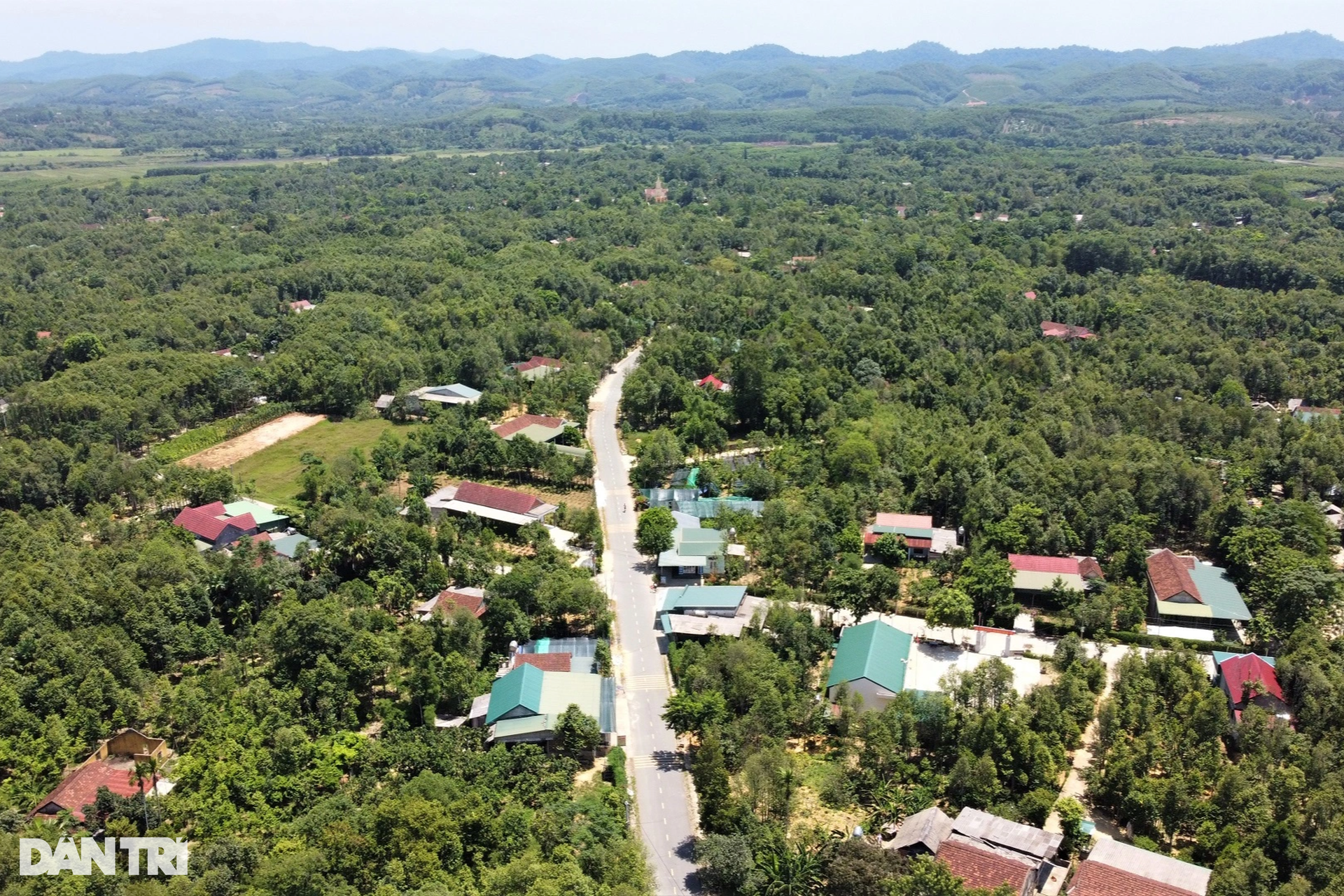
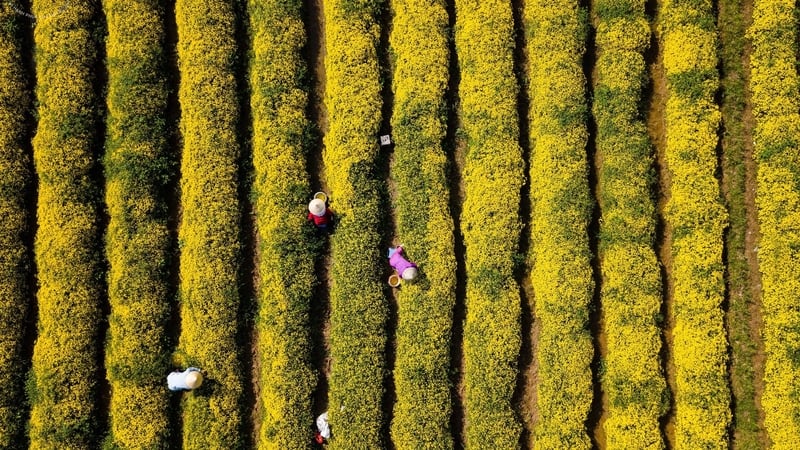
For decades, Phuc Trach commune (Huong Khe district, Ha Tinh province) has been known as the capital of agarwood trees (also known as Aquilaria, Aquilaria aquilaria, or Aquilaria sinensis). In this locality, 100% of households cultivate agarwood. Viewed from above, these trees, with an average height of 6-20m, blanket the gardens of local residents.
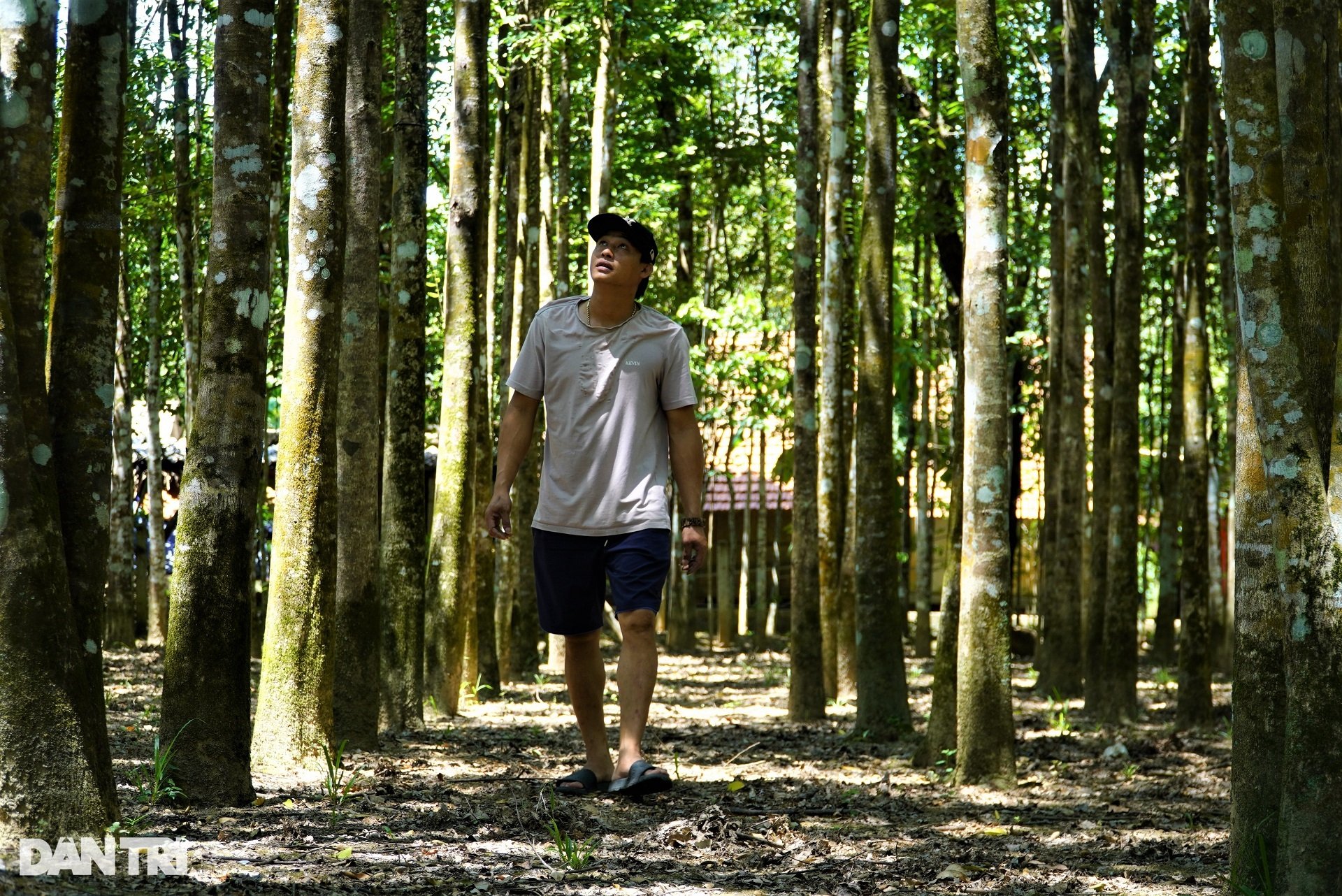
According to many locals, the soil and climate here are suitable, so agarwood trees grow abundantly, and if planted, they are easy to care for and thrive. In the past, people didn't know the value of agarwood and often cut them down for wood to build houses. Around the 1980s, many traders from Thua Thien - Hue, Da Nang, and Quang Nam came to buy them. From then on, local people gradually recognized the high value of agarwood trees.
Life transformed thanks to a plant that generates billions of dong in income every year ( Video : Duong Nguyen).
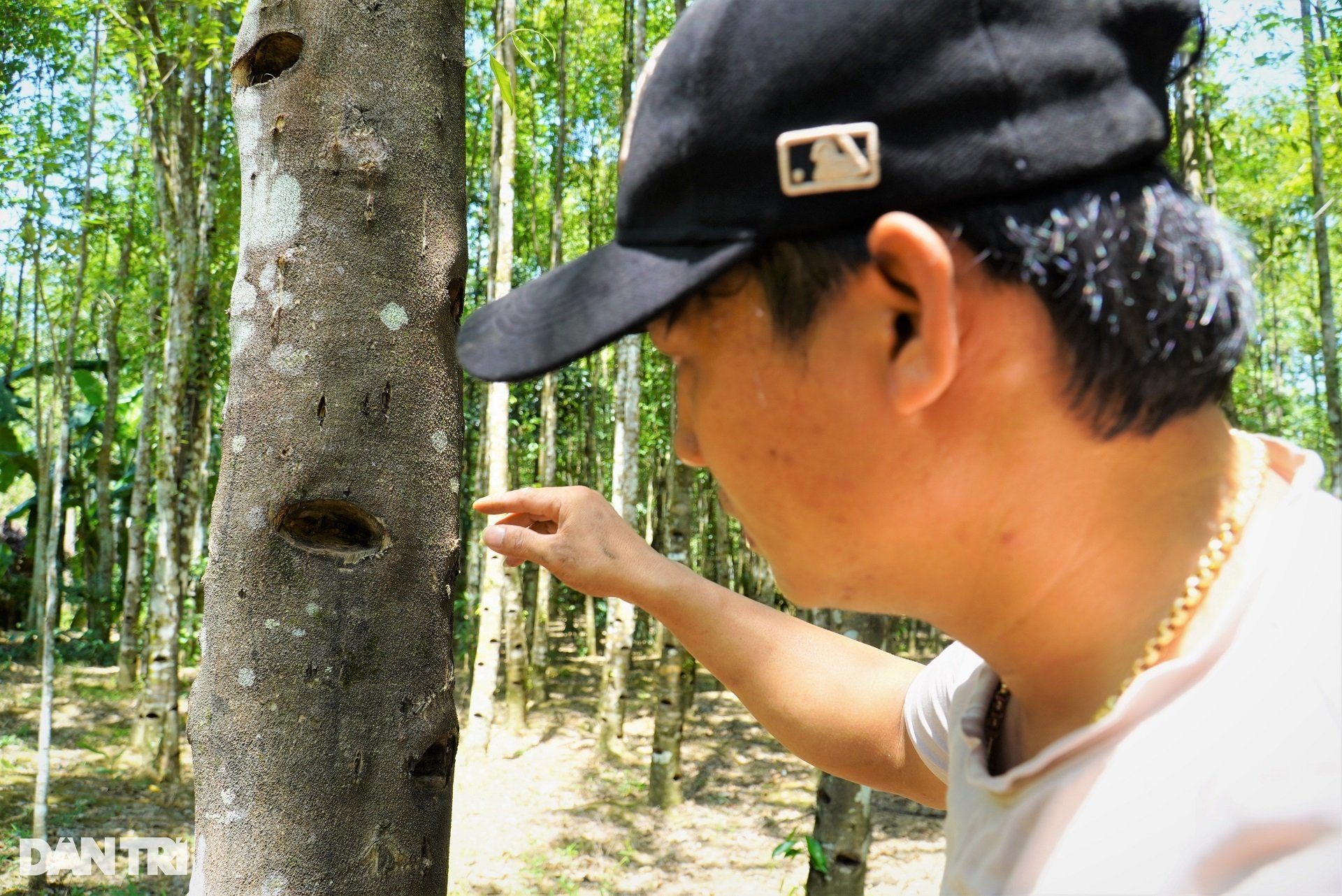
Agarwood is a damaged part or area of the Aquilaria tree. Naturally, agarwood formation occurs when the tree trunk breaks or is damaged by insects or ants. In agarwood harvesting areas, these wounds are often caused by human physical actions such as chiseling, drilling, or digging. The wound secretes sap, which, combined with climatic and soil factors, forms a layer of oil.
Over time, the oil accumulated in the tree trunk forms agarwood with its distinctive fragrance. According to local experience, an agarwood tree must be at least 10 years old before it can be harvested.
Besides planting, many households in Phuc Trach also open workshops to process agarwood products at home. The work requires meticulousness and dedication. The family of Ms. Nguyen Thi Lan (33 years old, Hamlet 8, Phuc Trach commune) has more than 7,000 square meters of land planted with agarwood trees, some of which are worth hundreds of millions of dong when they reach decades of age.
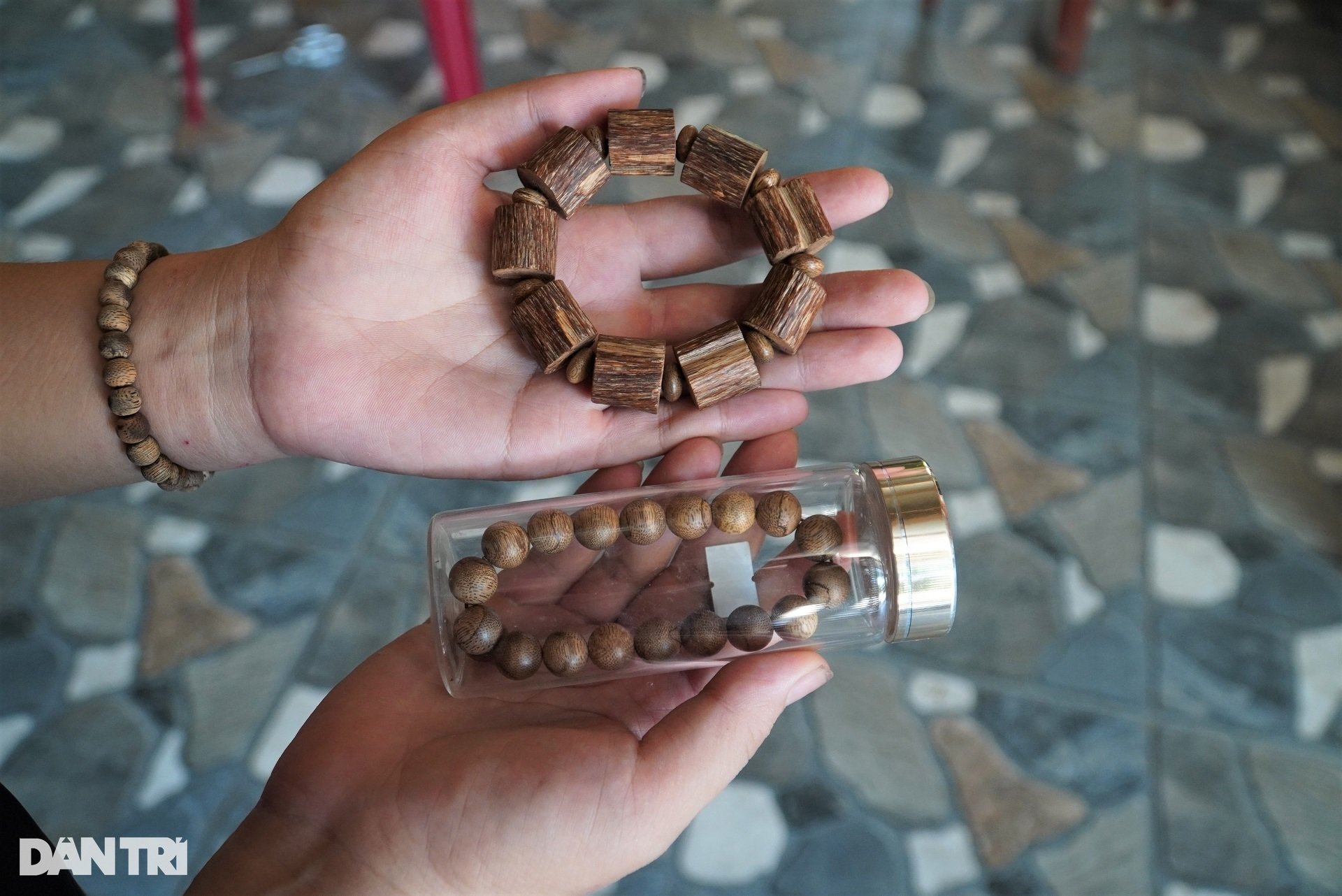
"Our family also makes our own products such as agarwood bracelets, incense sticks, and other chemical-free products from the tree trunk for traders both domestically and internationally to use in pharmaceuticals, shampoos, and perfumes. Each year, we earn 400-500 million VND," Ms. Lan shared. The image shows an agarwood bracelet, priced from 1.5 to 8 million VND.
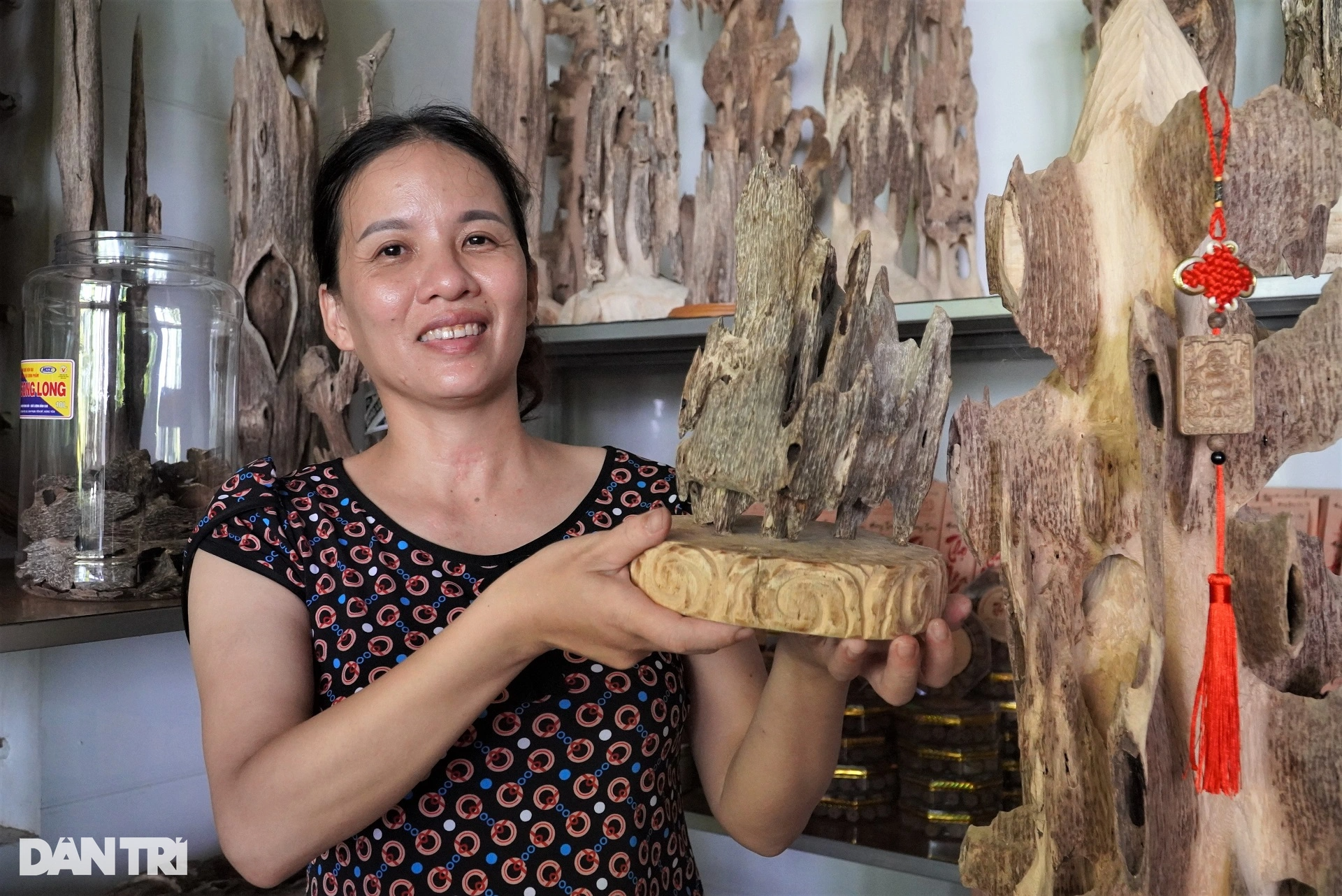
Ms. Vo Thi Nga (47 years old, Hamlet 8, Phuc Trach Commune) said that her husband's family has had a tradition of growing agarwood trees and crafting products from agarwood for nearly 40 years.
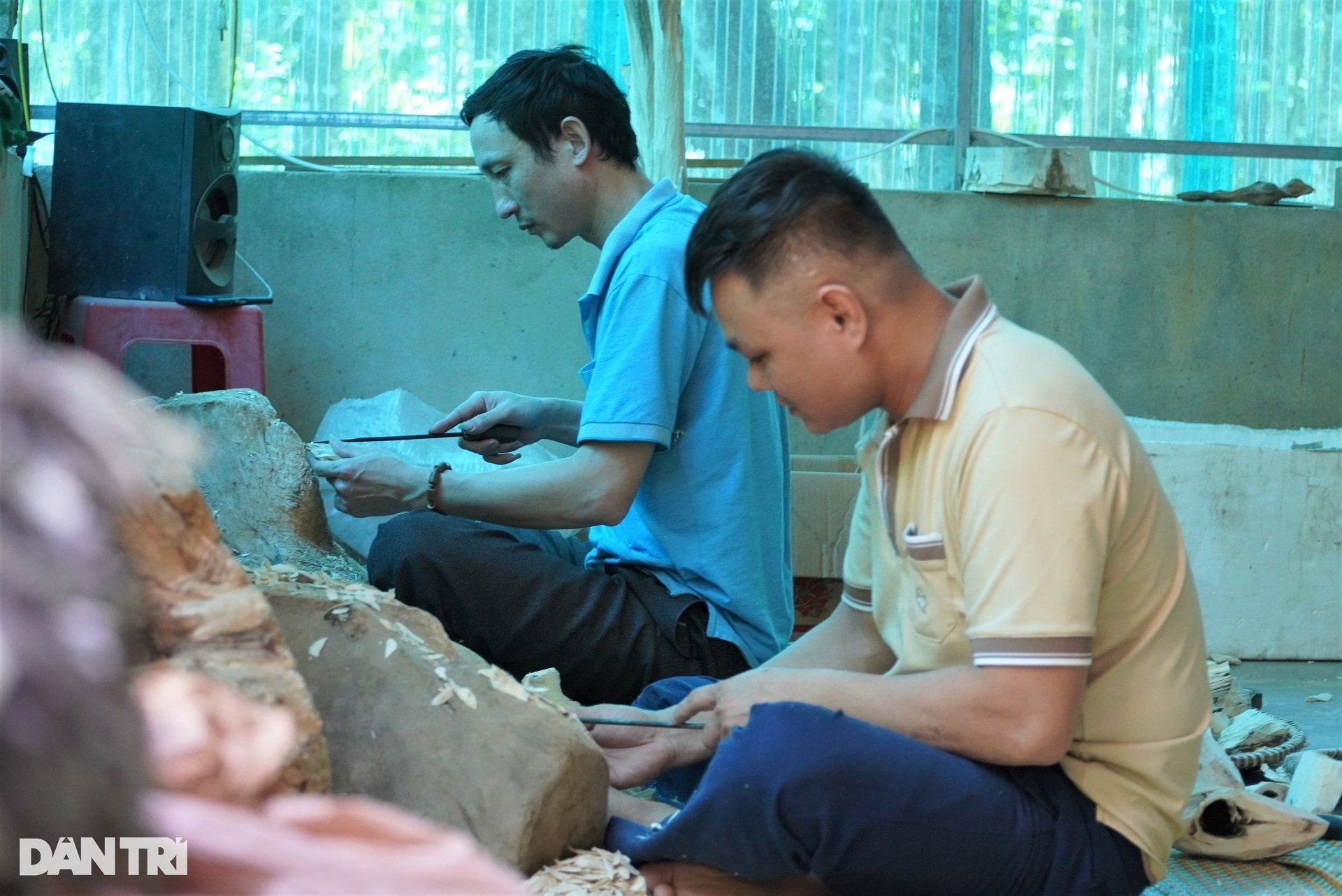
Ms. Nga's family-owned agarwood production and business facility is currently providing employment for 8 workers.
"We specialize in producing and supplying incense sticks, agarwood cones, agarwood chips, agarwood ornaments, and agarwood bracelets of all kinds," Ms. Nga said.
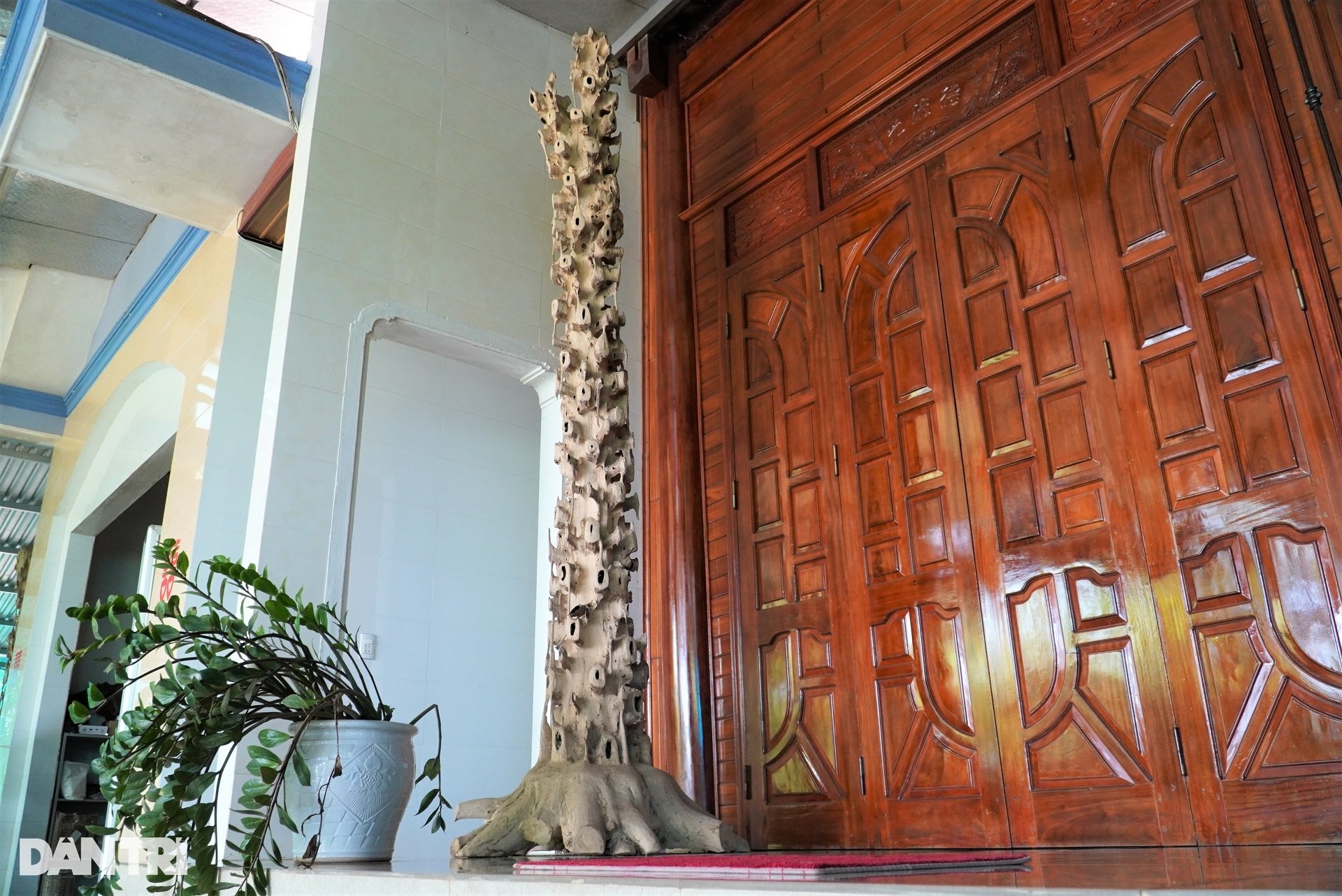
According to folk beliefs, using products made from agarwood is believed to bring good luck, success in business, good health, and peace to the family. Recognizing this demand, Ms. Nga's family opened a workshop to craft unique and eye-catching agarwood products for customers to display in their homes. Products like the one pictured can cost up to 150 million VND.
"That's not even our most expensive product. We once sold a decades-old agarwood tree, already crafted, for 300 million VND. Many customers from Hanoi, Ho Chi Minh City, Quang Binh, Hue, and even foreigners are willing to spend money on expensive agarwood products to place in their homes for good luck or as gifts. Products made from agarwood trees in Phuc Trach commune are popular with customers because of their sweet, gentle fragrance," Ms. Nga said.
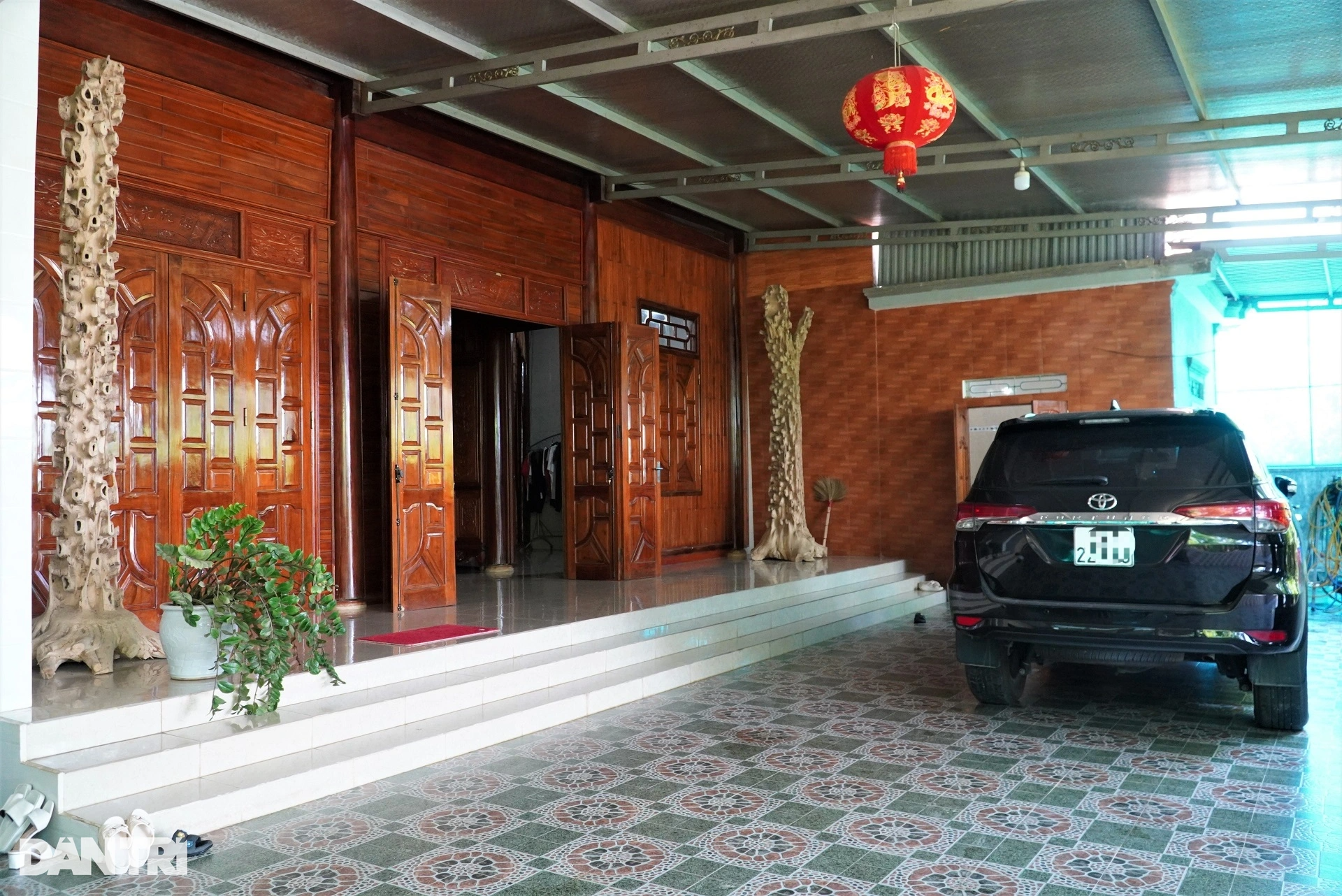
Thanks to agarwood trees, households in Phuc Trach commune have escaped poverty and transformed their lives. They now have money to raise their children, educate them, build beautiful houses, and buy cars.
According to Ms. Pham Thi Hanh, Vice Chairman of the People's Committee of Phuc Trach commune, agarwood trees are grown in various communes of Huong Khe district, producing both natural and artificial agarwood. However, based on practical experience, agarwood trees grown in Phuc Trach commune yield a higher percentage of natural agarwood, thus having a much higher economic value compared to those grown in other areas.
Therefore, all 1,700 households in Phuc Trach cultivate agarwood trees on an area of over 350 hectares. As a result, the average per capita income in the locality reached 56.4 million VND in 2022. In 2023, it is expected to reach an average income of 58.1 million VND per person. The development of agarwood products will create valuable goods to serve tourists as part of the local tourism development plan.
Source link















































































Comment (0)