

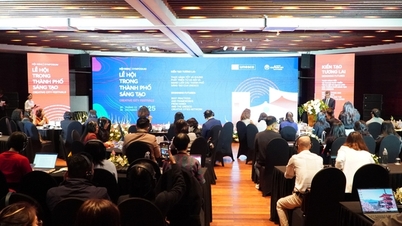
– Four heritage tours recently launched in Hanoi not only connect 28 typical relics, but also open up a digital approach to the past. Thang Long heritage is now “awakened” through interactive maps, QR codes and the H-Heritage application.
The project is implemented by the University of Social Sciences and Humanities - Vietnam National University, Hanoi in collaboration with the French École Française d'Extrême-Orient and the French University Organization, with the support of the French Embassy and the French Institute in Vietnam.
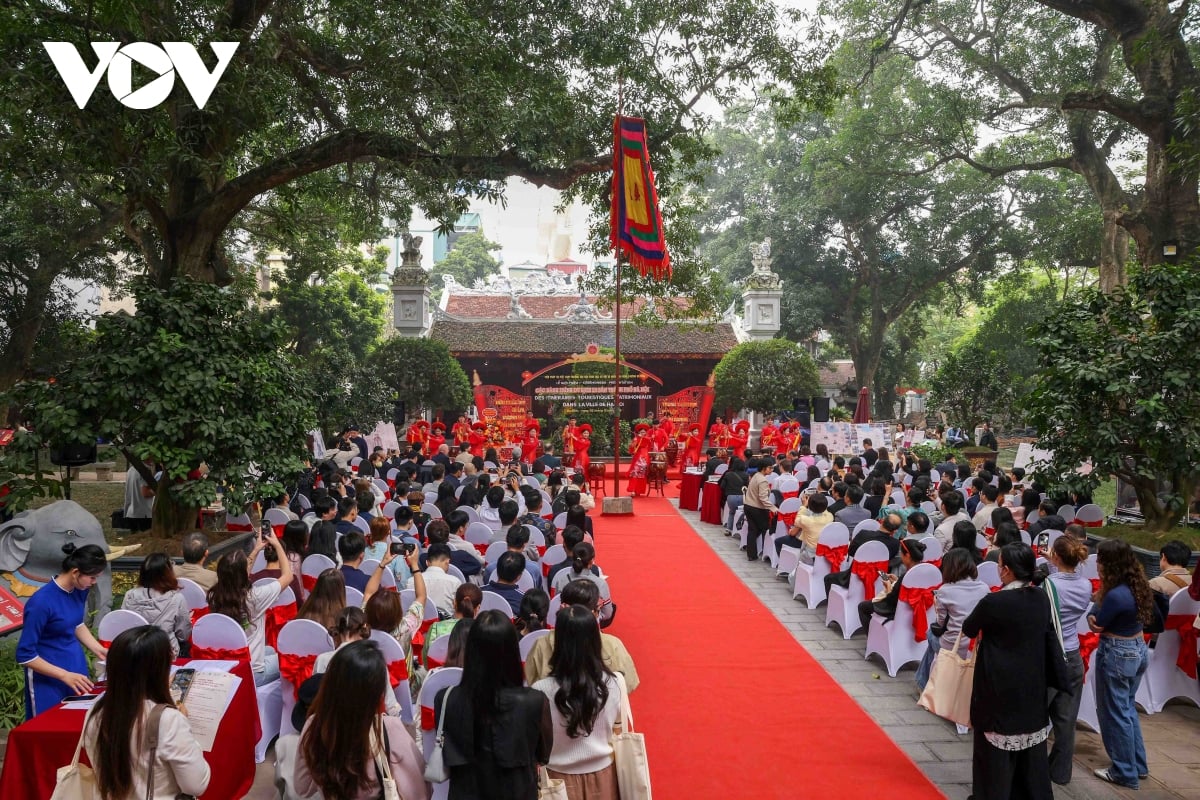
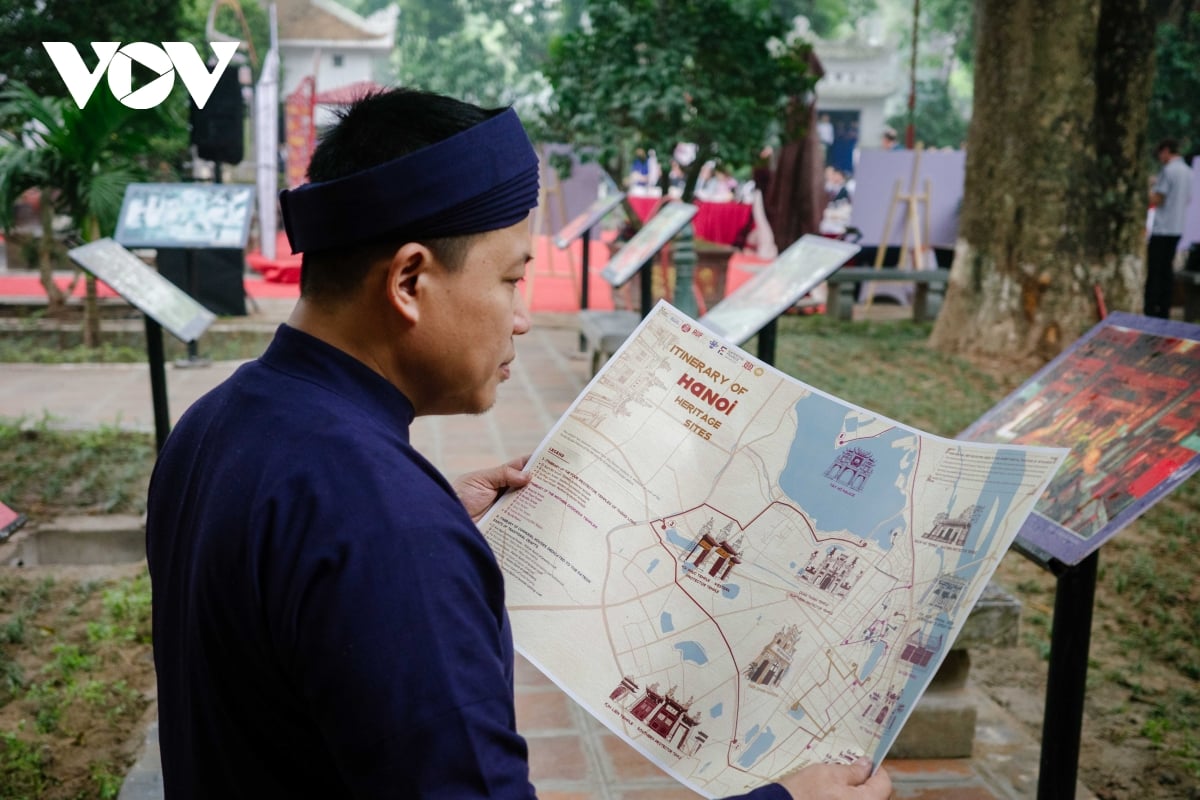
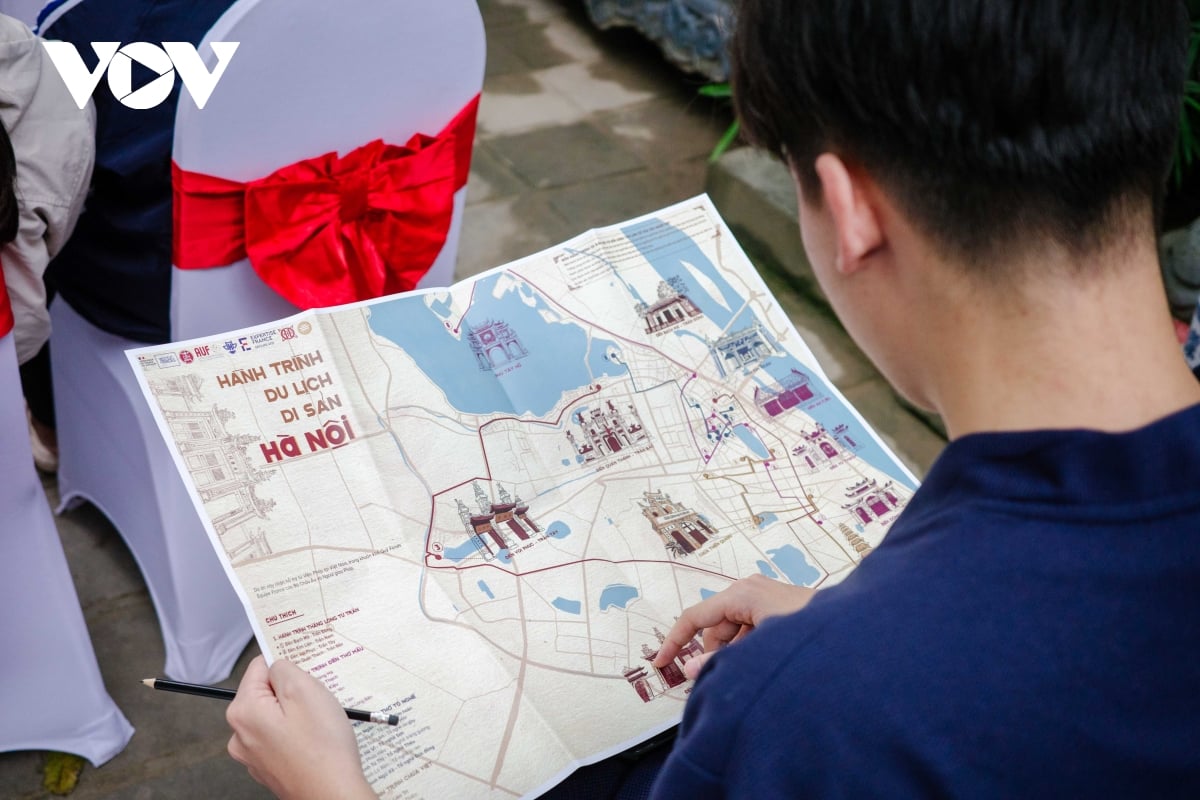
This initiative aims to identify, preserve and promote the value of Hanoi's tangible, intangible and digital heritage through four experimental heritage tourism itineraries, combining an interactive map system, QR codes and the H-Heritage application at many relic sites right in the central area of the capital.
When past and present intersect in the heart of the city
Hanoi – a city of a thousand years of culture – is facing many challenges in preserving its heritage amidst rapid urbanization. Many ancient relics still exist in the heart of modern residential areas, but have not been protected and introduced systematically and methodically.
From that reality, the program “Hanoi Heritage Tourism Journey” was formed with the desire to connect those discrete values into a systematic network, told by scientific methods and modern technological language. The project combines field surveys, document analysis, student training and application of mapping technology in the implementation process.
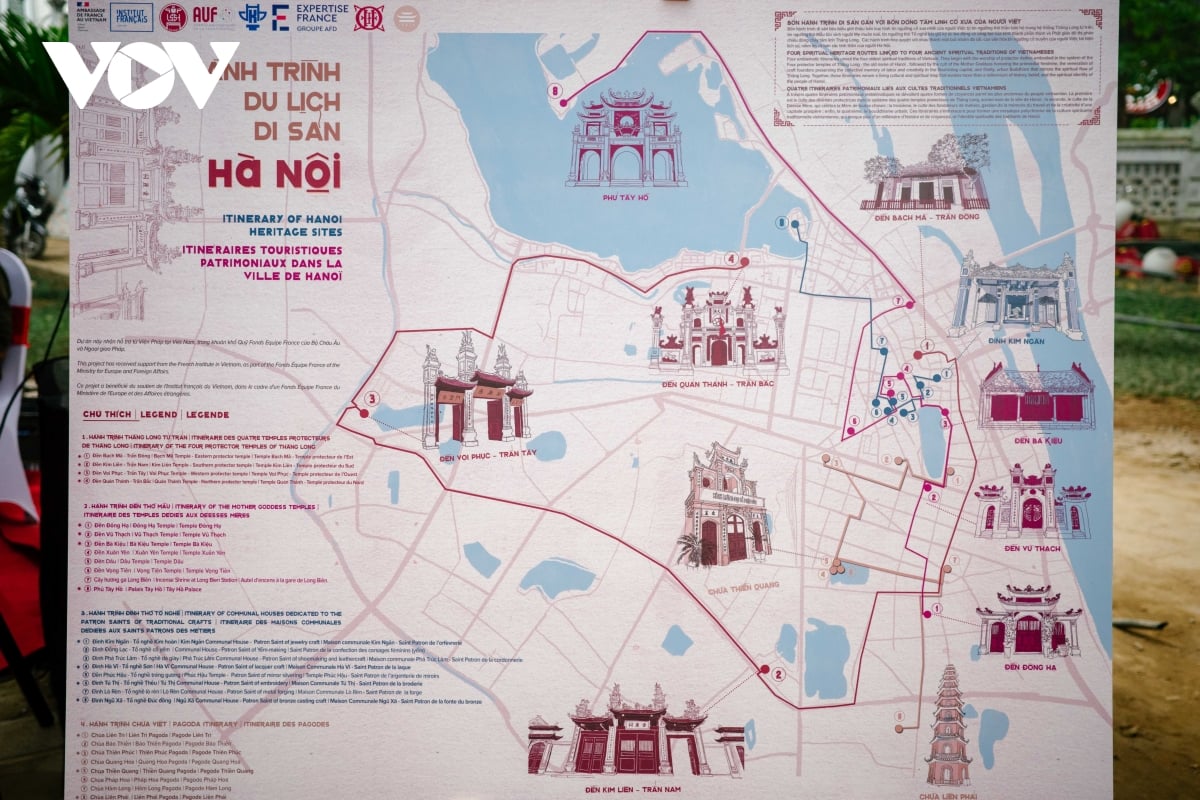
From more than 100 relics surveyed in Hanoi, the research team selected 28 typical relics, built into four itineraries, associated with four important beliefs in the spiritual life of Vietnamese people.
Four journeys – four layers of cultural sediment
Journey 1: Thang Long Tu Tran
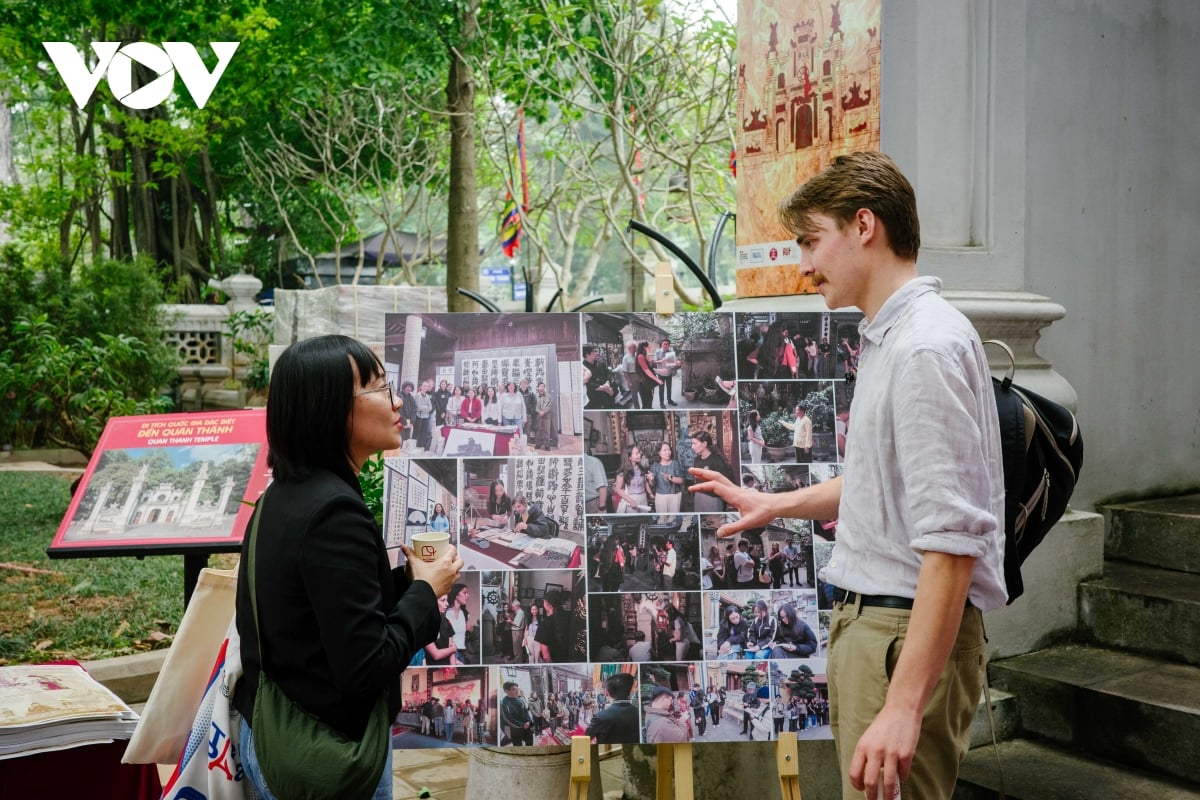
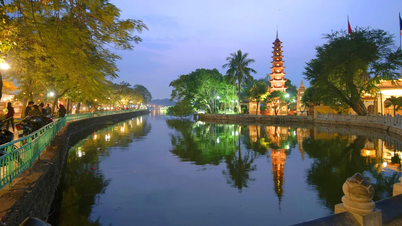
Explore the four sacred temples guarding the ancient capital: Bach Ma, Voi Phuc, Quan Thanh and Kim Lien, corresponding to the four directions East - West - South - North. The itinerary honors the special spiritual space of Thang Long, where humans and gods together protect life.
Journey 2: Mother Goddess Temples
Connecting eight typical Mother Goddess worshiping places such as Dong Ha, Vu Thach, Ba Kieu, Xuan Yen, Dau Temple, Vong Tien, Tay Ho Palace and Long Bien Station incense tree. The journey introduces the Tam Phu belief - an intangible cultural heritage recognized by UNESCO, with the combination of rituals, music and honoring the Mother.
Journey 3: Temple to worship the founder of the profession
Leading tourists through Hanoi's Old Quarter, where each communal house is a symbol of a traditional craft: Kim Ngan (jewelry), Dong Lac (necklaces), Pha Truc Lam (shoe leather), Ha Vi (painting), Phuc Hau (mirror plating), Tu Thi (embroidery), Lo Ren (forging), Ngu Xa (bronze casting)... The journey recreates the history of the development of handicrafts, creating the identity of the capital.
Journey 4: Hanoi Pagoda
Associated with Monk An Thien (Phuc Dien) - a typical founder of Vietnamese Buddhism, the journey takes visitors through places such as Bao Thien (now only in memory), Lien Tri, Ham Long, Lien Phai... This is a journey of memory, belief and the process of losing - remaining - recreating heritage in the flow of history.
Digitizing heritage knowledge with modern technology
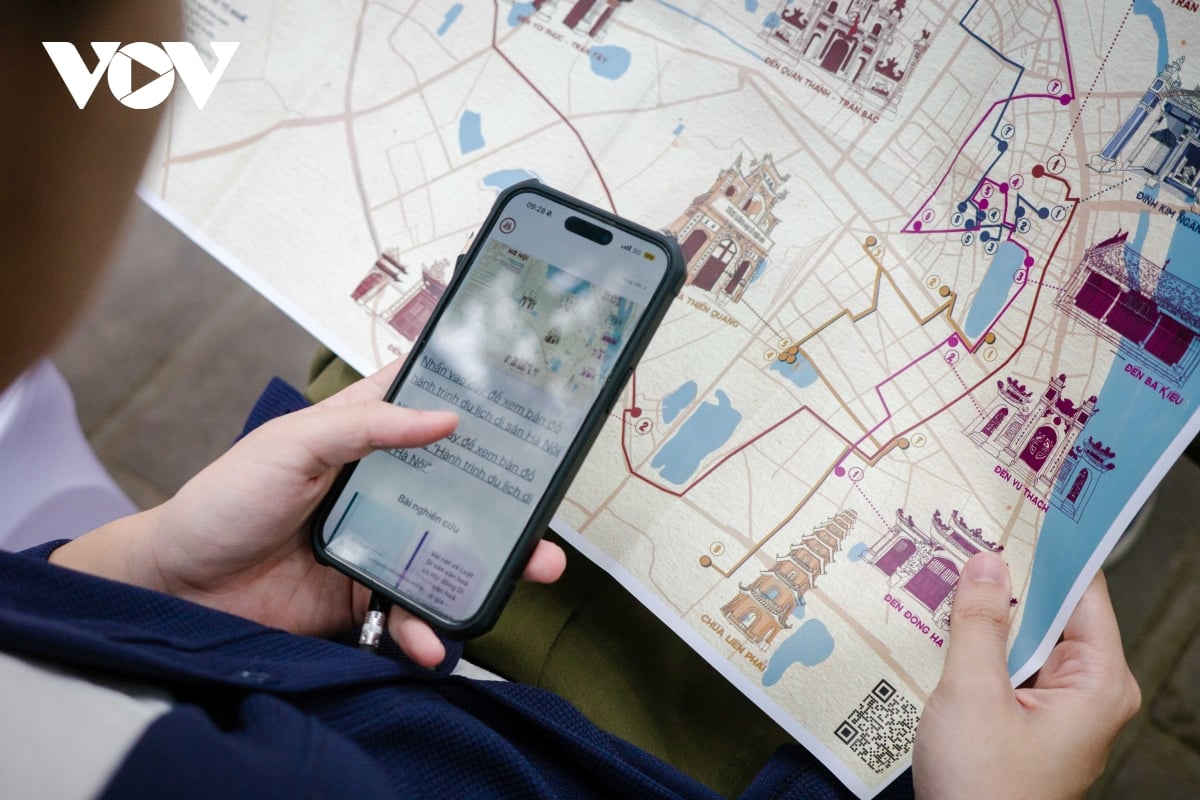
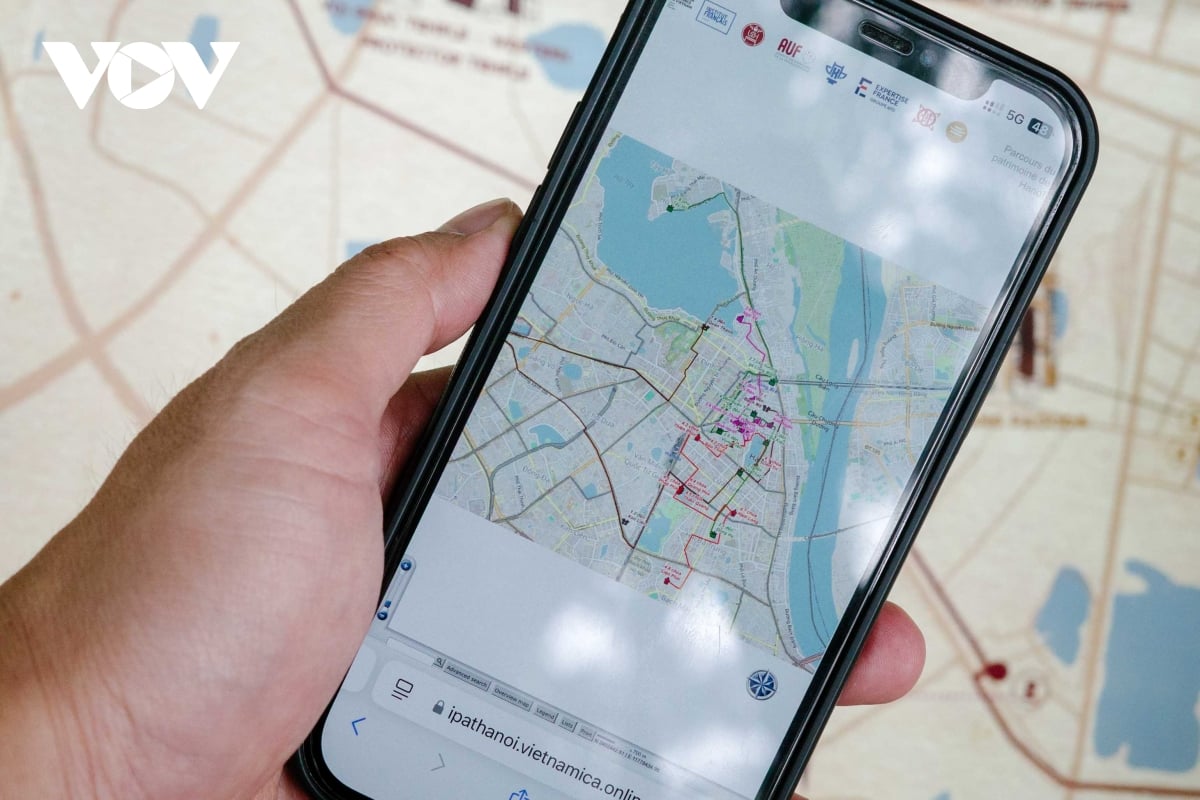
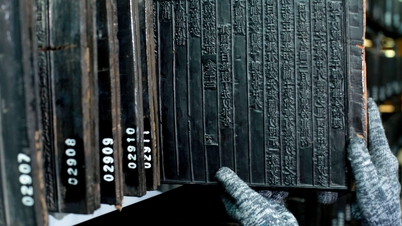
Each relic in the project is built into a complete profile, including: scientific description, ancient and modern images, videos, quotes from stele inscriptions, Han Nom documents, architectural diagrams and related research catalogs. All are digitized and integrated into electronic maps, QR codes and the H-Heritage application.
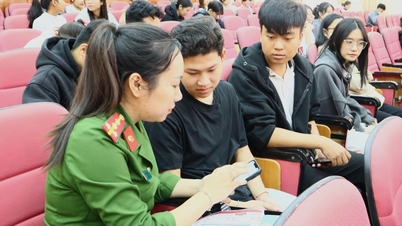
Thanks to this, residents, tourists, pupils and students can easily access information right on their smartphones, turning learning about heritage into a lively, flexible and highly educational experience.
Symbol of French-Vietnamese cultural cooperation
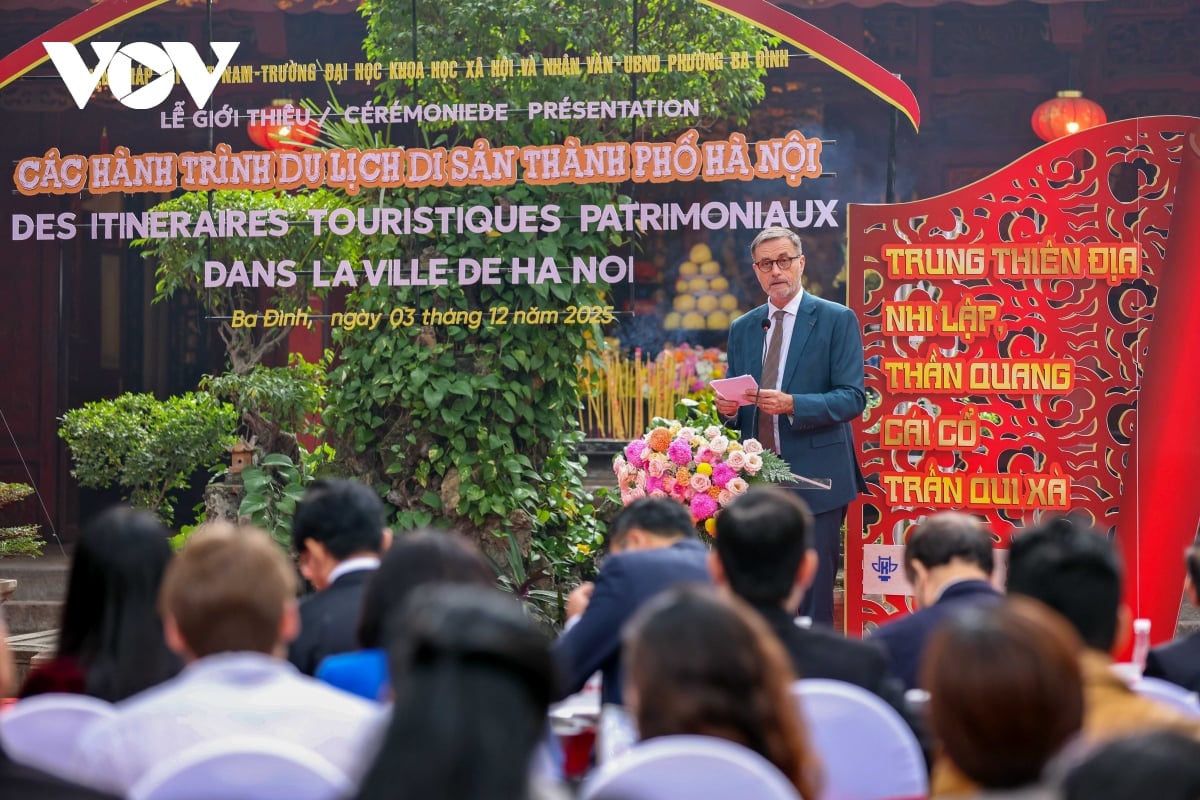
Sharing at the event, Mr. Olivier Brochet - Ambassador Extraordinary and Plenipotentiary of the Republic of France to Vietnam emphasized: "This project is a vivid demonstration of the deep cooperation between France and Vietnam in the fields of culture, heritage and innovation. Through science, technology and training, we are bringing heritage closer to the public, especially the young generation".
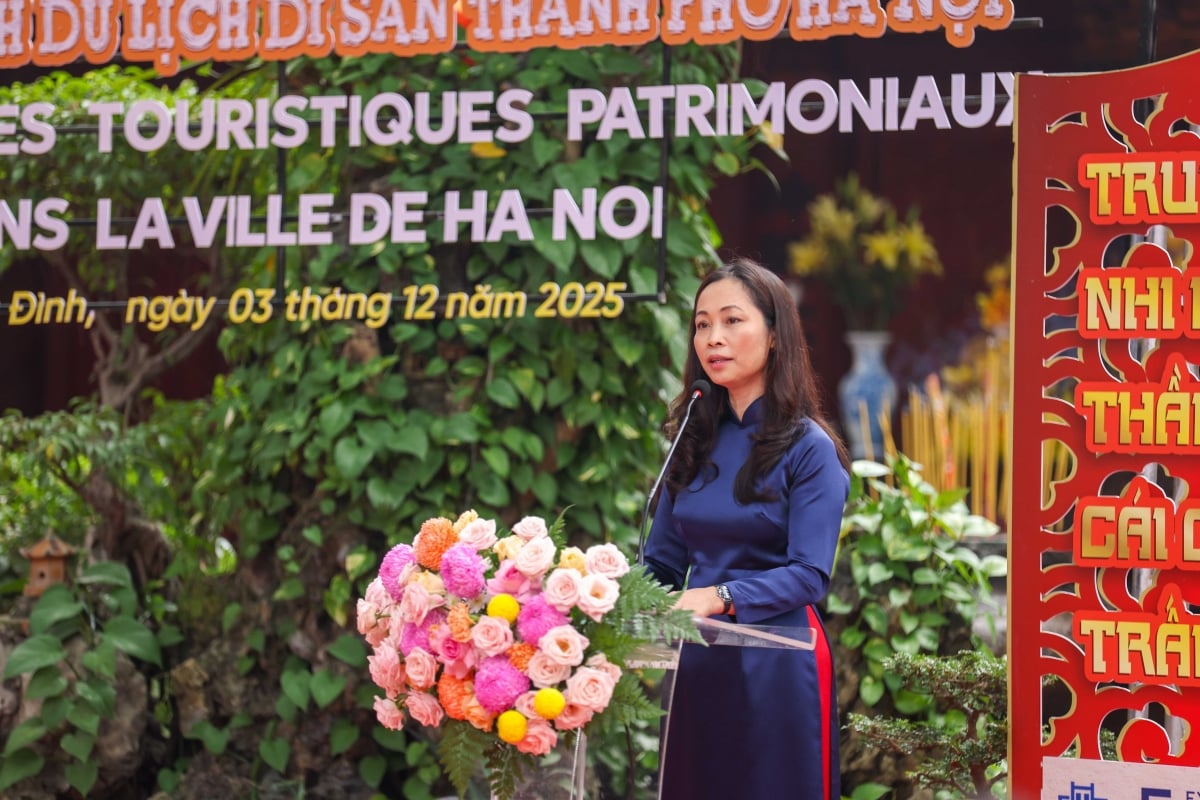
Meanwhile, Dr. Nguyen Thi Hiep, International Technical Expert - International Technical Cooperation Agency, said that in just one year with a modest budget, the project has gathered nearly 40 experts and about 100 students to participate in field surveys. According to her, heritage journeys not only serve tourism, but are also a tool for education, research and community connection.
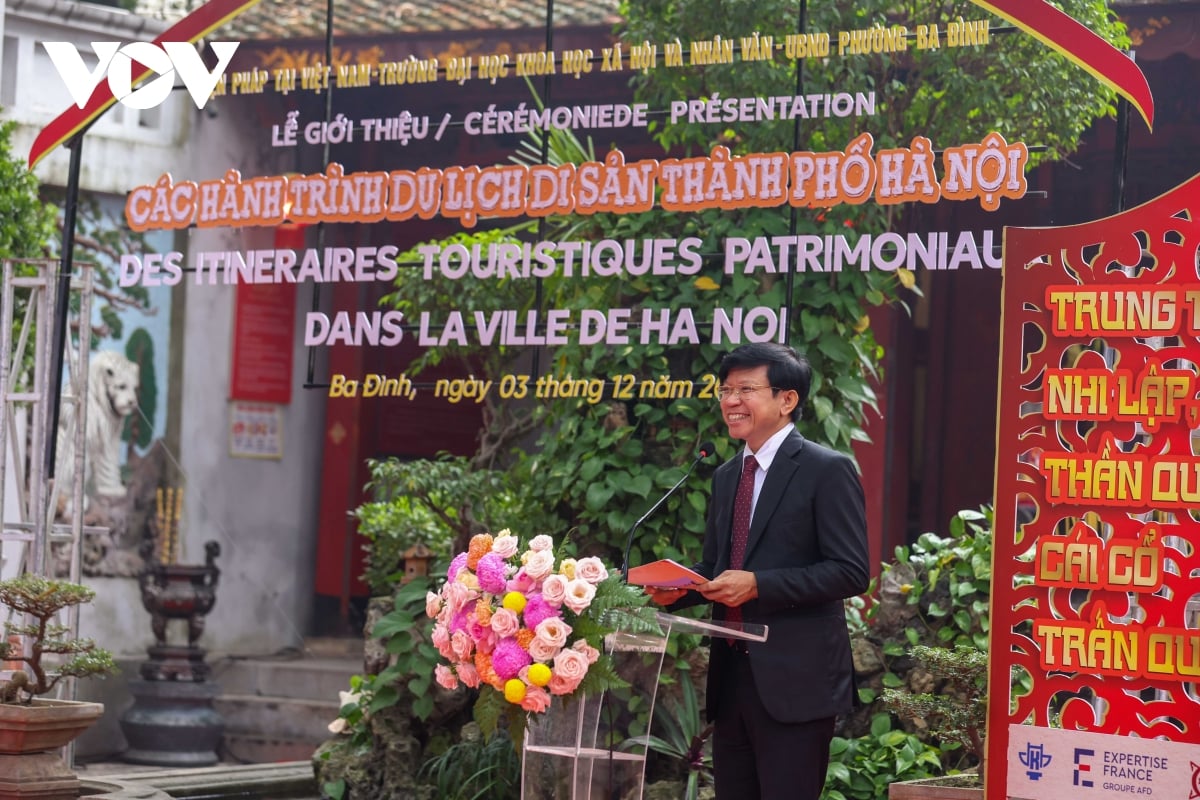
Prof. Dr. Hoang Anh Tuan - Rector of the University of Social Sciences and Humanities affirmed that this is a completely new model of heritage approach, helping to bring seemingly ancient values closer and more accessible to young people and international tourists. The school hopes that the project will continue to be expanded and replicated in other districts of Hanoi and many localities across the country.
Hanoi – a living museum in the digital age
More than just a tourist route, “Hanoi Heritage Tours” opens up a new perspective on the Capital: Hanoi is not just a destination, but a living museum, where the past and present go hand in hand, where heritage does not lie dormant in books but is present, telling stories and conversing with people.
In the future, when the “heritage network” is expanded as envisioned by the research team – each relic is a “stop” connecting culture and history – Hanoi will appear as a living memory map, guided by technology and preserved by the community’s love for heritage.
Source: VOV
Source: http://sodulich.hanoi.gov.vn/danh-thuc-di-san-ha-noi-qua-4-hanh-trinh-so-hoa-doc-dao.html


![[Photo] Cat Ba - Green island paradise](/_next/image?url=https%3A%2F%2Fvphoto.vietnam.vn%2Fthumb%2F1200x675%2Fvietnam%2Fresource%2FIMAGE%2F2025%2F12%2F04%2F1764821844074_ndo_br_1-dcbthienduongxanh638-jpg.webp&w=3840&q=75)























































Comment (0)