

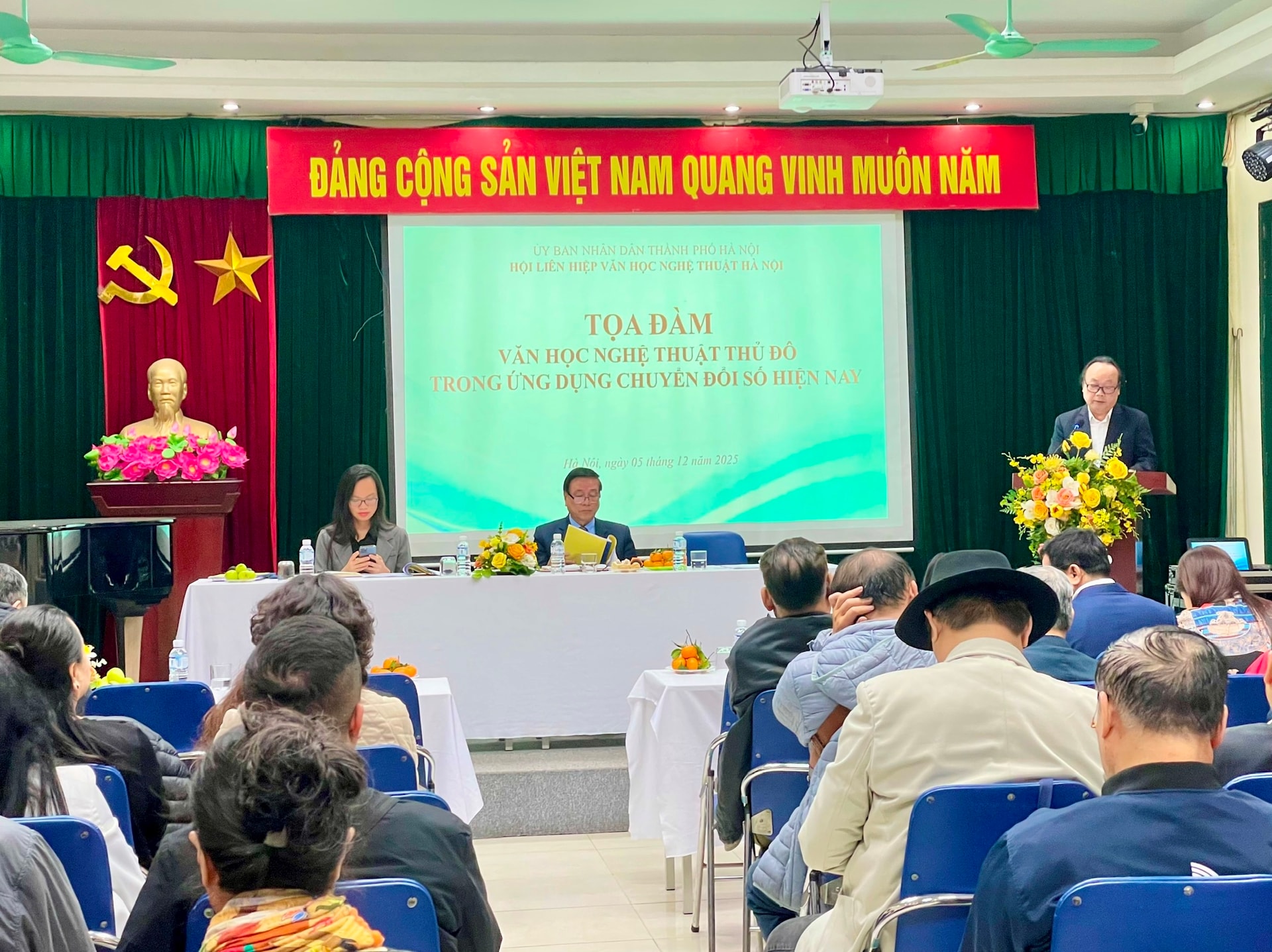
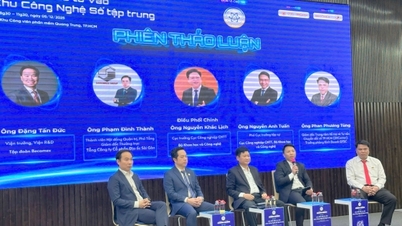
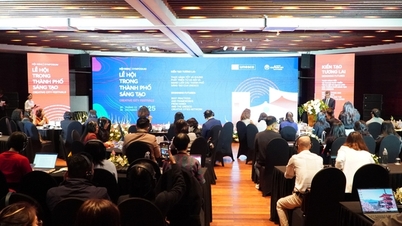
On December 5, in Hanoi , the Hanoi Literature and Arts Association organized a seminar on "Literature and Arts of the Capital in the Application of Digital Transformation Today" to raise awareness of the importance of digital transformation in the field of literature and arts; help artists better understand digital transformation, new technology trends; their applications in the fields of literature, arts and life, thereby contributing to orienting the role of artists in the new context.
Applied but not much
In his opening speech, People's Artist Tran Quoc Chiem, Chairman of the Hanoi Literature and Arts Association, affirmed that digital transformation is an inevitable trend and affects all fields and professions, including literature and arts.
According to People's Artist Tran Quoc Chiem, in recent years, artists in the capital have produced many works and projects of high value in terms of content and art, many of which have won domestic and international awards. However, the application of science and technology and digital transformation in creating and promoting works is still limited. The field that has applied technology the most is architecture.
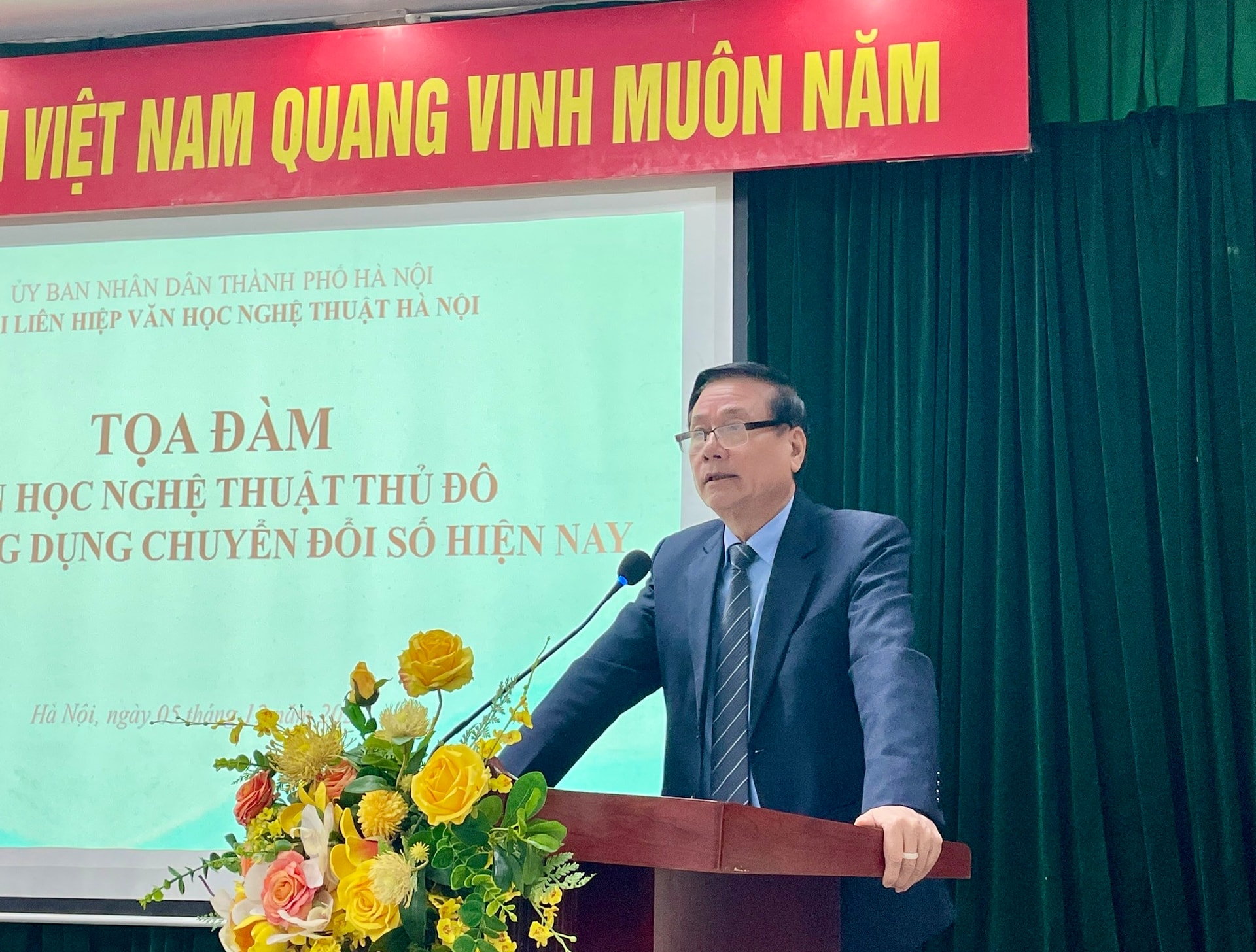
In addition, the Hanoi Music Association, the Hanoi Art Photography Association, and the Hanoi Cinema Association are also gathering places for members with large investments in machinery, digital technology equipment, building cyberspace, along with recording and filming software, photo software, 3D design, net screens, etc., creating favorable conditions for working and improving the quality of songs, movies, stage, photography and fine arts. From the investment in digital technology, every year, many works of members have won many awards at film festivals, music and dance festivals, stage festivals, and many works are displayed at domestic and international art and photography exhibitions.
In the current period, not only domestic and international competitions, festivals and exhibitions, but also most competitions and festivals held in the city, the Organizing Committee also receives works online, thereby creating an attraction for authors in terms of convenience, while also facilitating the organizing committee and judges in the process of judging and selecting works.
With the Hanoi Writers Association and the Hanoi Folk Arts Association, although their main focus is writing and research, many members have disseminated and promoted their works online... Along with that, the websites of specialized associations have also actively posted the works of their members.
People's Artist Tran Quoc Chiem said that in order to create a breakthrough in digital transformation in literary and artistic creation and promotion activities, professional associations need to organize seminars, talks, and training courses on the application of digital technology in creating and promoting works for members; build a digital database of literary and artistic works; invest in human resources and equipment to collect data information, operate that database, and all individuals can access, view, listen, and read literary and artistic works of members of professional associations.
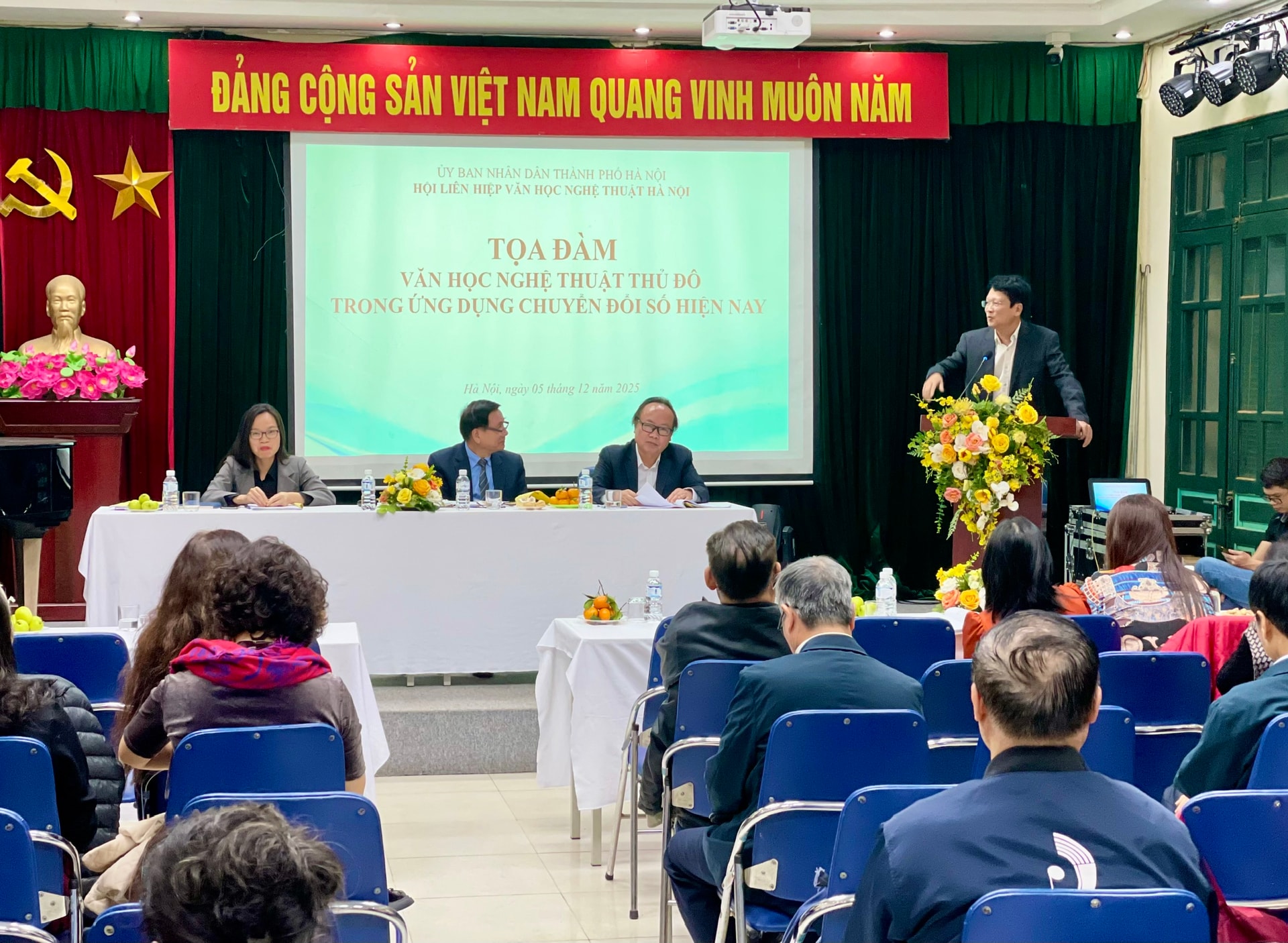
“The digital age is an opportunity for artists to directly receive and learn to create more diverse and high-quality works, bringing good and humane values to society and people to enjoy those quality products,” People's Artist Tran Quoc Chiem emphasized.
A powerful tool to support artists in the capital to enter a new era
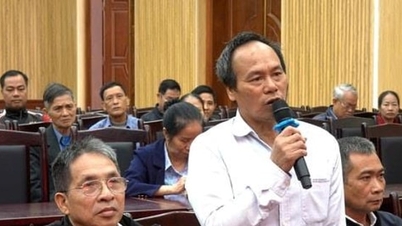
At the seminar, delegates and artists from the capital in various fields discussed and shared about the application of digital technology and AI in the creation, promotion and introduction of works. All opinions agreed that digital technology is a powerful support tool for artists from the capital to bring multi-dimensional and diverse literary and artistic works, creating good artistic effects and impacts, meeting the current public's enjoyment needs.
Writer Tran Gia Thai, Chairman of the Hanoi Writers Association and Dr. Bui Van Nien (Hanoi Folklore Association) both said that in literary creation and in the research of culture and folklore, the application of digital technology helps access huge sources of documents of all aspects and types, from historical documents, languages, images, sounds, etc.; increase speed and efficiency in the process of creating, analyzing, interpreting, and summarizing documents; especially AI plays a key role in processing the huge amount of data (big data) collected by cultural researchers. Digital technology also helps researchers simulate, reproduce and propose solutions for archiving cultural, literary and artistic heritage; build digital archives; and at the same time help disseminate works and research to the public quickly.
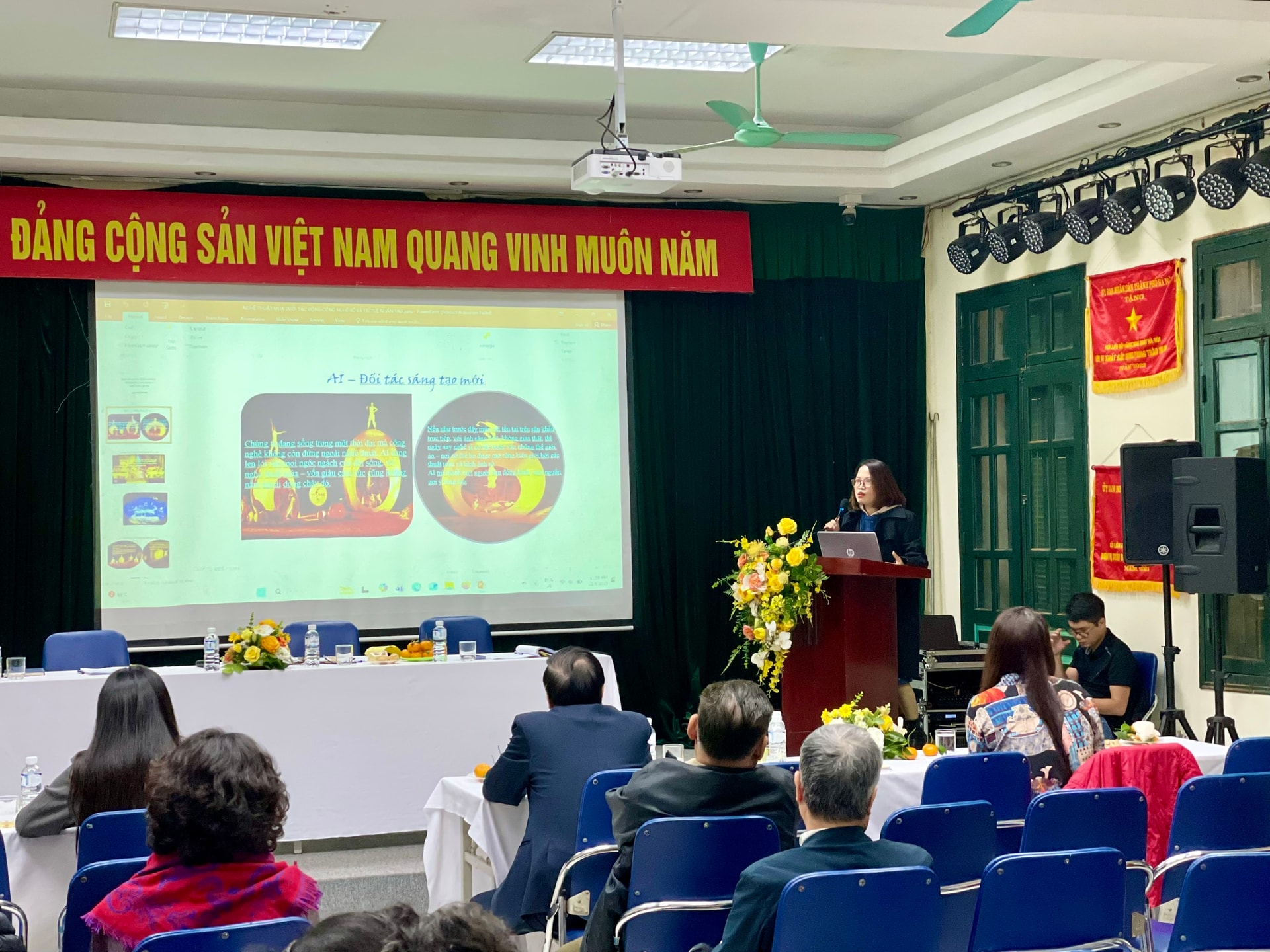
However, delegates also said that digital transformation also poses challenges for artists. The explosion of digital content makes literature and art have to compete fiercely with games and social networks to retain public audiences. If AI is abused, works will lose their emotions, meaning they will lose their humanistic depth, their identity, and the uniqueness that makes up the unique personality of each creator...
“Digital transformation is not a temporary trend but it is the inevitable path for literature and art to adapt to the new era. Applying technology does not destroy the “humanity” of literature and art but helps it innovate, spread and become closer to its target audience. Every artist today needs to become a “digital creator”, knowing how to exploit new tools but still maintaining the artistic soul. The combination of humanistic thinking and technological skills is the “key” to firmly lead literature and art into the digital age - the creative age”, writer Tran Gia Thai commented.
Taking examples of cinematographic works by members and artists in the capital that effectively applied digital technology such as “Dragon's Child”, “The Legend of the Taurus”, “Tunnel: The Sun in the Dark”, “Red Rain”…, People's Artist Ha Bac (Hanoi Cinema Association) said that AI and digital technology not only help save costs or shorten production time, but more importantly, have become “co-creators” with artists, helping Vietnamese works deeply touch the hearts of audiences.
According to People's Artist Ha Bac, in the current wave of digital transformation, artists are special "boatmen". They not only bring traditional art across the turbulent waters of the new era, but also pioneer and dedicate themselves, so that the art of the Capital in particular and Vietnam in general can find a new shore in the digital age. Today's artists cannot just stop at the role of content creation. They must also be "technology masters", knowing how to exploit new tools such as AI, VR, AR, digital effects... to turn ideas into vivid forms. However, technology is only a means. What creates true value is still the soul, personality and mettle of the artist. Amidst the vastness of data and shimmering effects, artists are the ones who keep the "flame of humanity", the ones who decide whether a work is just an industrial product or a work of art that truly moves people's hearts.
Delegates all agreed that, in order to contribute to the development of literature and art in the capital and the country, artists need to have a proactive attitude in engaging in technology to master it, and at the same time know how to cooperate with technology experts, so that art and science can complement and support each other.
Digital transformation does not overshadow art, on the contrary, it opens the wings for creativity. But only when artists know how to preserve their identity and Vietnamese soul in each work, will technology become an “extended arm” of art, not a “shadow” that obscures the light of creativity.
Source: https://hanoimoi.vn/chuyen-doi-so-thuc-day-van-hoc-nghe-thuat-thu-do-phat-trien-da-chieu-but-pha-725793.html
![[Photo] Cat Ba - Green island paradise](/_next/image?url=https%3A%2F%2Fvphoto.vietnam.vn%2Fthumb%2F1200x675%2Fvietnam%2Fresource%2FIMAGE%2F2025%2F12%2F04%2F1764821844074_ndo_br_1-dcbthienduongxanh638-jpg.webp&w=3840&q=75)


























































Comment (0)