


From a consistent policy system, a widespread network of educational institutions to strong digital transformation and a pervasive learning culture in the community, Hanoi has gradually met all of UNESCO's strict criteria, affirming its position as a dynamic and pioneering city in human and knowledge development.
A solid foundation for a learning society
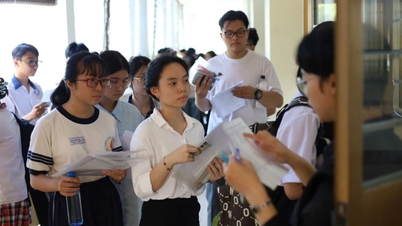
As the leading political , economic, cultural and educational center of Vietnam, Hanoi plays a key role in training and fostering high-quality human resources and discovering and nurturing talents. The city concentrates more than 70% of the country's universities, research institutes, scientific and technological organizations; owns 82% of the laboratories and more than 65% of the leading scientists. Hanoi's education system stretches from kindergarten to university with 121 universities and academies; 352 vocational training institutions; 2,913 kindergartens and general schools; 526 community learning centers; 1,192 libraries, and many community living spaces, serving the lifelong learning needs of the people.
Hanoi is also the place where thousand-year-old cultural values crystallize and spread, modern development goes hand in hand with heritage preservation. Typical relics such as Thang Long Imperial Citadel, Hoan Kiem Lake, Temple of Literature - Quoc Tu Giam - 949-year-old University, along with unique cuisine have created the unique identity of the capital. With a vision of sustainable development and deep integration, Hanoi is not only a political and economic lighthouse but also a leading center of cultural and educational creativity in Vietnam, reaching out to the region and the world.
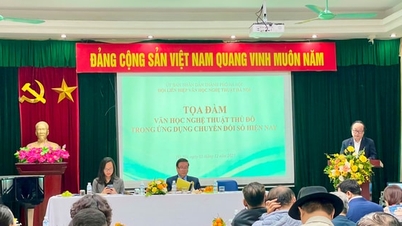
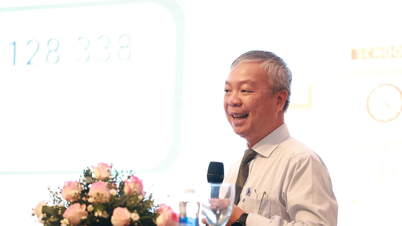
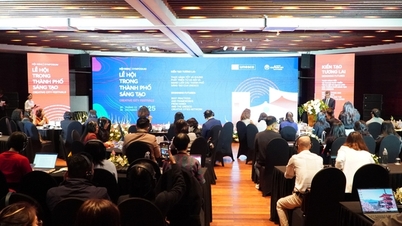
At the Forum on Lifelong Learning and Building a Learning Society in 2025 with the theme "Lifelong Learning to Become a Useful Person", held on April 26, 2025, Permanent Vice Chairman of the Hanoi People's Council Tran The Cuong (then Director of the Hanoi Department of Education and Training) shared that the important point of a "useful person" in the current context is knowing how to live responsibly, knowing how to learn, cooperate, apply what has been learned to solve practical problems and serve the community. Lifelong learning is the way to help each person become a better version of themselves, maximize their own abilities, thereby making positive contributions to their family, community and society.
According to Mr. Tran The Cuong, the Hanoi Department of Education and Training clearly identifies its pioneering role in spreading the spirit of lifelong learning. Educational institutions from preschool to general education, continuing education and vocational training have actively innovated teaching methods, focusing on developing students' self-study, self-research, life skills and lifelong learning; constantly improving the quality of teachers and educational administrators - those who play a role in inspiring the young generation's endless learning journey.
“However, the gap in learning opportunities between population groups, especially in rural areas, freelance workers, the elderly, etc., still exists. Mobilizing social resources for education and lifelong learning also has difficulties and limitations. Flexible learning models, blended learning, and digital learning still need to be expanded, invested in, and replicated further,” Mr. Tran The Cuong emphasized.
Permanent Vice Chairman of the Hanoi People's Council Tran The Cuong also affirmed: "Lifelong learning is not a slogan but a motto, a cultural feature of every Hanoian. In this journey, every organization, every community, every citizen has a role and responsibility."
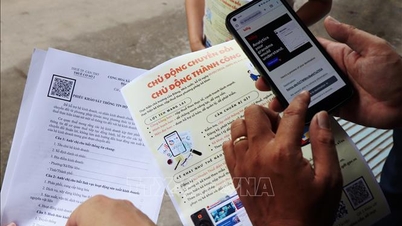
Promoting inclusion as a core principle in the process of building a learning city, to ensure lifelong learning opportunities for all citizens, especially disadvantaged and vulnerable groups. The city has adopted a human rights and equity-based approach, removing barriers related to age, gender, ethnicity and socio-economic conditions. Inclusion is integrated into all key strategies and policies, emphasizing equal access to education for the community. Hanoi has paid attention to developing 526 community learning centers and more than 4,600 village and residential group cultural houses - places where free or low-cost classes on digital skills, life skills, health education, environmental protection and vocational training are held, attracting millions of participants, especially in disadvantaged areas.
For disadvantaged children, the city organizes free charity classes in (old) districts such as Thanh Xuan, Hoang Mai, Chuong My, Ba Dinh and Tay Ho, accepting more than 300 children each year. Children with special needs study at specialized schools such as Xa Dan School (for hearing-impaired children), Nguyen Dinh Chieu (for visually impaired children), Binh Minh (for intellectually disabled children), and schools in Thanh Tri, Dong Anh and Long Bien. Each year, about 330 early intervention students, 500 disabled students and 100 ethnic minority students are newly recruited.
In addition, the Ba Vi Boarding School for Ethnic Minorities receives about 840 ethnic minority students each year. To narrow the regional gap, the “Twin Schools” program has been implemented, connecting more than 1,190 inner-city and suburban schools, helping nearly 90,000 teachers receive professional training. The city also provides scholarships and tuition exemptions for poor students, people with disabilities and ethnic minorities, and supports Lao and Cambodian students with a budget of about 10 billion VND/year (equivalent to about 390,000 USD/year).
For prisoners and drug addicts, the City Police in collaboration with the Department of Education and Training organize literacy and vocational training classes at prisons in Thanh Oai, Ba Vi, and Soc Son, attracting more than 200 students each year. Through these initiatives, Hanoi affirms its commitment to building a fair and inclusive learning city that leaves no one behind.
Efforts to promote lifelong learning
To promote lifelong learning for everyone, clearly demonstrating the orientation of developing a comprehensive and sustainable learning city, Hanoi has built and implemented many policies and strategies. In particular, Resolution No. 23-NQ/TU dated November 16, 2023 of the Hanoi Party Committee on "Strengthening the Party's leadership in promoting learning, promoting talents, and building a learning society by 2030, with a vision to 2045" is the most important legal basis, affirming the city's strong political determination in promoting lifelong learning and developing high-quality human resources.
Along with that, the Hanoi People's Committee issued Plan No. 115/KH-UBND dated April 15, 2024 to implement the movement "The whole country competes to build a learning society, promote lifelong learning in the period 2023 - 2030" including 9 standards, 26 criteria and 49 assessment indicators, specified at each level: individual, family, clan, community and administrative unit. The implementation is periodically monitored and has a transparent reward mechanism according to the Law on Emulation and Reward. These strategic documents have laid a solid foundation for the effective organization of lifelong learning programs, aiming to build Hanoi into a typical learning city in Vietnam and in the region.
With the determination to build a learning city, Hanoi is the only locality in the country to issue a specialized Resolution of the City Party Committee on the work of promoting learning, promoting talents, lifelong learning and building a learning society, clearly defining medium-term and long-term goals, higher than national goals. Typically, in the medium-term goal (3-5 years), the city completes universal preschool education for kindergarten children; achieves level 2 literacy standards; universalizes primary and secondary education at level 3; 99.5% of people aged 15-60 are literate.
Regarding human resource training, the city aims for 100% of cadres, civil servants and public employees to be trained in network information security; 75 - 80% of the workforce to be trained, of which 55 - 60% have degrees and certificates; 50% of people of working age have life skills and information usage capacity; 50% of the population aged 15 and over have technical expertise (of which 12% have university degrees or higher).
Regarding the application of technology in education, 60% of educational institutions deploy digital technology in management and teaching; 70% of community learning centers apply information technology; 80-85% of public schools meet national standards. Building a learning model: 50% of citizens meet the standards of learning citizens and digital skills; 60% of families, clans, and communities meet learning standards; 50% of units and 40% of district-level localities are recognized as meeting learning standards.
The city also clearly identified long-term goals (5-10 years) with specific numbers: Raising the literacy rate of people aged 15-60 to 99.6%; 100% of cadres, civil servants and public employees trained in network information security; 100% of the workforce trained, of which 60-65% have degrees and certificates; 80% of educational institutions and 90% of community learning centers apply digital technology; 85-90% of public schools meet national standards; 80% of families, clans and communities; 70% of units and 60% of districts, towns and cities meet learning standards...
Hanoi has also actively mobilized and used financial resources to build a learning city through a strategy of diversifying capital sources, combining public investment with contributions from social resources and the private sector. Recognizing that education is a key driving force for sustainable urban development, the city allocates about 20% of its stable annual budget to education, ensuring continuous funding for infrastructure, programs and initiatives. To diversify resources, Hanoi has implemented a plan for the 2019-2025 period to mobilize social resources for education and training development. This plan includes policies and thematic resolutions on building, renovating and upgrading the school system across the city, with a total estimated cost of VND30,000 billion (about USD1.2 billion) for 653 schools, contributing to raising the rate of schools meeting national standards to nearly 80%.
Promoting the socialization of education also plays an important role in resource mobilization. Currently, Hanoi has 108 non-public education projects, with a total registered capital of over VND15,250 billion (about USD590 million), on an area of over 1.9 million square meters of land. Of these, 72 projects are under construction and 38 projects have been completed and put into operation. On average, each year, Hanoi mobilizes about VND2,800 billion (about USD110 million) from the private sector to invest in education.
Innovation and digital transformation promote lifelong learning
In the process of building a learning city, Hanoi has not only demonstrated its determination through strategic directives but also proactively implemented many specific initiatives. Notably, three typical projects have made a clear mark in terms of society, culture and education, contributing to realizing the goal of building Hanoi into a comprehensive and inclusive learning city according to UNESCO's orientation, including: "Happy School" model, "School Stage" project and "Promoting lifelong learning movement in families, clans and communities in the period 2021-2030" program.
Regarding the “Happy School” model, Hanoi is implementing it according to UNESCO’s recommendations with a set of 15 criteria, focusing on building a safe, creative and learner-centered school environment. In the 2024-2025 school year, the city will have 2,913 schools at all levels participating in the model through many practical activities such as building green - clean - beautiful spaces, innovating teaching methods, supporting school psychology and developing comprehensive capacity for students. This initiative not only contributes to improving the quality of education but also creates a foundation for forming a positive, humane and sustainable school culture.
Launched in 2022, the “School Stage” Project has brought traditional theatrical arts (cheo, cai luong, drama, etc.) to schools as a form of aesthetic and national cultural education. During the period 2022 - 2024, more than 80,000 students participated in school performances organized by theaters. It is expected that by 2030, the project will reach about 2 million students through 2,000 performances in 1,700 schools. This is a cross-disciplinary educational model, connecting schools with the arts, contributing to the development of students' ability to perceive, create and raise cultural awareness.
Regarding the Program "Promoting lifelong learning movement in families, clans and communities in the period of 2021 - 2030", Hanoi aims to promote multi-generational and inter-generational learning and strengthen community cohesion through learning activities. As of 2024, the whole city had 1,420,907 families achieving the title of "Learning Family" (67.4%); 6,943 clans achieving the title of "Learning Clan" (59%) and 4,362 communities/residential groups achieving the title of "Learning Community" (77%). The program has contributed to spreading the culture of learning to all classes of people, promoting the improvement of vocational skills and life skills - especially in the context of increasingly strong urbanization and digital transformation.
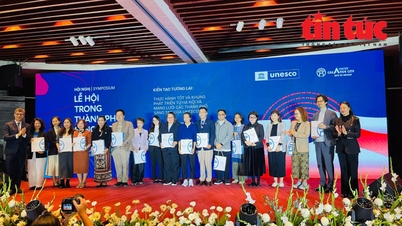
It can be seen that Hanoi's recognition as a Global Learning City does not come from a few individual factors, but is the result of a persistent process of building a vision, perfecting policies, investing in infrastructure and nurturing a learning culture in the community. These achievements show that Hanoi is on the right track when considering people as the center, knowledge as the driving force and lifelong learning as the key to development. The UNESCO title is both a recognition and a commitment for the Capital to continue expanding learning opportunities for all citizens, gradually building a modern, humane and sustainable society.
Source: https://baotintuc.vn/giao-duc/ha-noi-tro-thanh-pho-hoc-tap-toan-cau-xung-dang-cho-nhung-no-luc-ben-bi-20251205165750805.htm

![[Photo] Cat Ba - Green island paradise](/_next/image?url=https%3A%2F%2Fvphoto.vietnam.vn%2Fthumb%2F1200x675%2Fvietnam%2Fresource%2FIMAGE%2F2025%2F12%2F04%2F1764821844074_ndo_br_1-dcbthienduongxanh638-jpg.webp&w=3840&q=75)
































































Comment (0)