

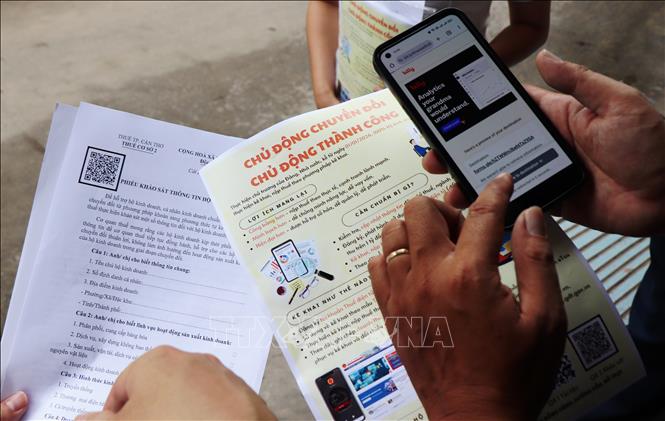
About 2.3 million business households will not have to pay income tax.
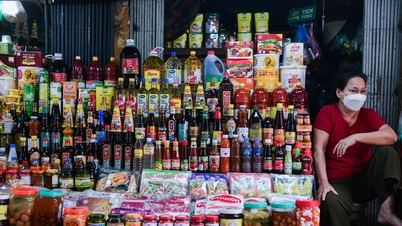
According to information from the Ministry of Finance on the afternoon of December 5, the Government has just issued Report No. 1112/BC-CP dated December 1 to the National Assembly Standing Committee (NASC) on receiving and explaining the opinions of the National Assembly Deputies, in which it proposed to adjust the regulations on personal income tax on the income of business households and individuals.
Accordingly, regarding the level of non-taxable revenue, the Government has proposed to adjust from 200 million VND/year to 500 million VND/year. At the same time, this 500 million VND/year level is also the level that can be deducted before paying tax. "Thereby, it will contribute to significantly reducing tax obligations for business households and individuals.
According to the Tax Authority's estimate, the total tax reduction for business households and individuals is about 11,800 billion VND/year," said a representative of the Ministry of Finance.
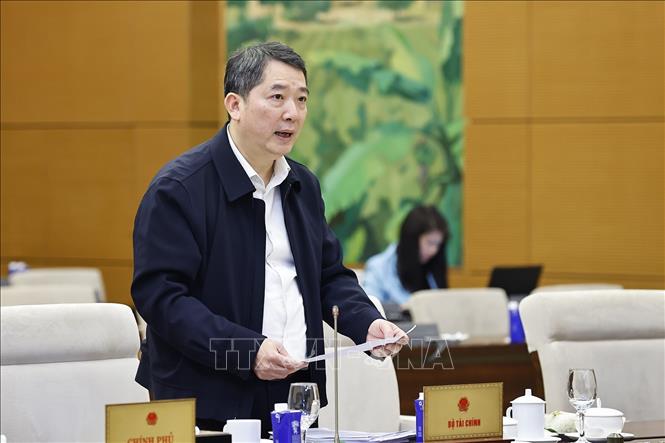
Previously, at the 52nd meeting, Deputy Minister of Finance Cao Anh Tuan said that if the above revenue level is applied, according to tax industry data, by October 2025, it is expected that about 2.3 million business households will not have to pay taxes (accounting for about 90% of the total 2.54 million business households).
According to the Tax Authority's estimate, the total tax reduction (including personal income tax and value added tax - VAT) is about 11,800 billion VND. On the other hand, the draft law supplements regulations for business households and individuals with revenue from 500 million VND/year to 3 billion VND/year, tax calculation based on income (revenue - expenses) will be applied. "In which, for business households and individuals with revenue from 500 million VND/year to 3 billion VND, both the method of calculating tax based on revenue rate and the amount of 500 million VND will be deducted from revenue before calculating tax", the Ministry of Finance stated.
According to the Ministry of Finance, this is to ensure tax collection in accordance with the nature of income tax and apply a tax rate of 15% similar to the corporate income tax rate (CIT) stipulated in the Law on CIT for enterprises with revenue under 3 billion VND/year. Accordingly, all households and individuals doing business must pay tax according to actual income, if income is high, they pay more tax, if income is low, they pay less, if there is no income, they do not have to pay tax.
Therefore, according to the representative of the Ministry of Finance, the level of revenue not subject to tax will not have much impact on households and individuals doing business that have to pay tax. In case households and individuals doing business cannot determine the cost, they will have to pay tax at a rate based on the revenue.
Proposal to 'keep the basic threshold but adjust flexibly'

Speaking to reporters of Tin Tuc and Dan Toc newspaper on the afternoon of December 5, Mr. Nguyen Quang Huy, CEO of the Faculty of Finance and Banking (Nguyen Trai University) said that the goal of adjusting the tax exemption threshold for business households is not only to support costs but also to encourage transparent and stable operations; help business households reinvest and improve their capacity. In particular, it creates a foundation for the gradual transition from professional individual business households to enterprises; creating fairness according to industry, location and family labor scale.
“The best approach is to keep a basic threshold but flexibly adjust it according to the reality of each group,” Mr. Nguyen Quang Huy suggested for policy agencies to refer to.
According to financial experts, the bill raises the non-taxable revenue of households and individuals doing business from 200 million VND to 500 million VND/year, then should be adjusted according to a number of factors such as: Adjustment by industry group, because each industry has different characteristics of profit and cost.
“For example, for group A with high costs and low profits such as small F&B (food and beverage), retail, grocery, handicraft production, agricultural products, etc., the tax-free threshold can increase by 2-2.5 times, about 1-1.25 billion VND. Group B with average profits such as personal transportation, basic services, trade and services, the tax-free threshold can increase by 1.5-1.8 times, about 750-900 million VND. Group C with relatively high profits such as advanced personal services, training, property rental, etc., the threshold increases slightly by 1.0-1.2 times, about 500-600 million VND. That is, whichever industry has to spend more, the threshold is higher to suit the business reality,” expert Nguyen Quang Huy suggested.
In addition, this financial expert also recommends that the adjustment of tax thresholds should also be based on the locality, for example, the cost of premises and labor in Hanoi and Ho Chi Minh City is often very high compared to other places. Therefore, the Ministry of Finance should consider adding regional coefficients for Hanoi and Ho Chi Minh City, centrally-run cities have higher coefficients than the remaining provinces and cities; at the same time, apply a pilot for 6-12 months, then summarize, evaluate, learn from experience, adjust or supplement before applying nationwide.
"This method reflects reality, avoiding the situation of same revenue but different living standards and expenses," Mr. Nguyen Quang Huy shared.
The general formula needs to be concise and easy to calculate. Accordingly, the new tax exemption threshold = 500 million × industry coefficient × locality coefficient × labor coefficient. Thus, the management agency only needs to issue a simple lookup table, and business households can immediately see the applicable threshold.
Example 1 with a small F&B household, 3 employees, in Ho Chi Minh City. F&B industry: coefficient 2.3; Ho Chi Minh City area has coefficient 1.6; three employees have coefficient 1.6. From there, the threshold ≈ 500 × 2.3 × 1.6 × 1.6 ≈ 2.9 billion VND, very suitable for the reality of high costs and low profit margins. Or for example, for a personal service household, 1 person, in Hanoi, the threshold ≈ 880 million (slight increase, reasonable)….
Source: https://baotintuc.vn/kinh-te/bo-tai-chinh-thong-tin-ve-nguong-doanh-thu-mien-thue-doi-voi-ho-ca-nhan-kinh-doanh-20251205162920779.htm

![[Photo] 60th Anniversary of the Founding of the Vietnam Association of Photographic Artists](/_next/image?url=https%3A%2F%2Fvphoto.vietnam.vn%2Fthumb%2F1200x675%2Fvietnam%2Fresource%2FIMAGE%2F2025%2F12%2F05%2F1764935864512_a1-bnd-0841-9740-jpg.webp&w=3840&q=75)


![[Photo] Cat Ba - Green island paradise](/_next/image?url=https%3A%2F%2Fvphoto.vietnam.vn%2Fthumb%2F1200x675%2Fvietnam%2Fresource%2FIMAGE%2F2025%2F12%2F04%2F1764821844074_ndo_br_1-dcbthienduongxanh638-jpg.webp&w=3840&q=75)




















































































Comment (0)