


In recent weeks, PC gamers have been the ones feeling the impact of the AI whirlwind on the hardware market most acutely. AI data centers with virtually unlimited financial resources are reaching everywhere, scooping up the best hardware, including DRAM memory.
Given the enormous demand from the biggest names in the AI industry, memory manufacturers are prioritizing DRAM orders from data centers. Other contracts are being put on hold, including those for smartphones and laptops.
Widespread crisis
According to Jeff Janukowicz, vice president of research at IDC , DRAM is integrated "in every aspect of today's digital society," from laptops, smartphones, gaming consoles, TVs to cars.
"There are so many things at stake," Jeff Janukowicz told The Verge .
IDC predicts smartphone sales will decline in 2026 due to a RAM shortage. At the same time, the average selling price is expected to increase by $9 .
Some brands, such as Xiaomi, are warning customers about future price increases. Simultaneously, laptop manufacturers may have to find ways to cut costs, and the price of gaming PCs will likely rise.
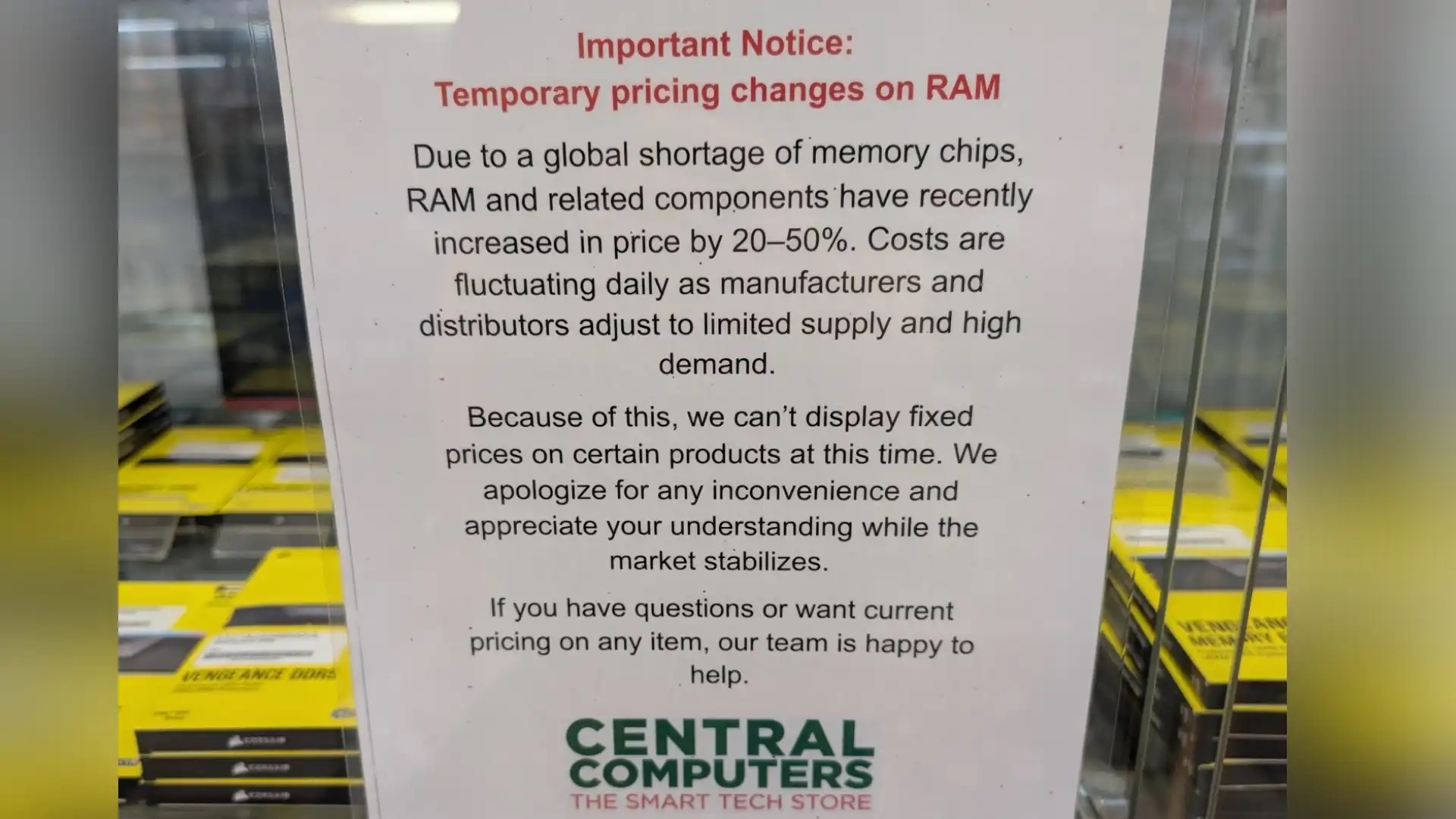 |
A computer component retailer stopped listing RAM due to constantly fluctuating prices. Photo: Steve Lin. |
This assessment is consistent with previous reports. In late November, Bloomberg reported that Lenovo had begun stockpiling RAM as part of an effort to "balance price and supply" for customers next year.
Dell and HP are also planning to adapt. In last month's earnings call, Dell CEO Jeff Clarke said the company "will do everything it can to mitigate the impact, but the reality is that production costs are rising across all products."
Meanwhile, HP's Enrique Lores said they would try to mitigate the shortage by increasing prices or reducing the amount of RAM included in their devices.
Companies can also cut costs in other areas. "You might have to use cheaper batteries or batteries with smaller capacities. The screen is also a component to consider in order to reduce costs," Janukowicz noted.
Who holds the DRAM market share?
93% of the global DRAM market is currently controlled by three major corporations. According to data from Counterpoint Research, in Q2 2025, SK Hynix held 38% of the market share, followed by Samsung (32%) and Micron (23%). No other company achieved a market share above 5%.
It seems that all three major players are reluctant to intervene prematurely to halt the rapid price surge in the DRAM market. In their recent financial reports, they all proudly announced record revenue and profits.
For Samsung, the memory business accounts for a larger share than most other consumer products. In the last quarter, this segment generated a record $18.12 billion , representing more than a quarter of the company's total revenue. This figure is nearly double the revenue of the entire home appliance and TV segment during the same period.
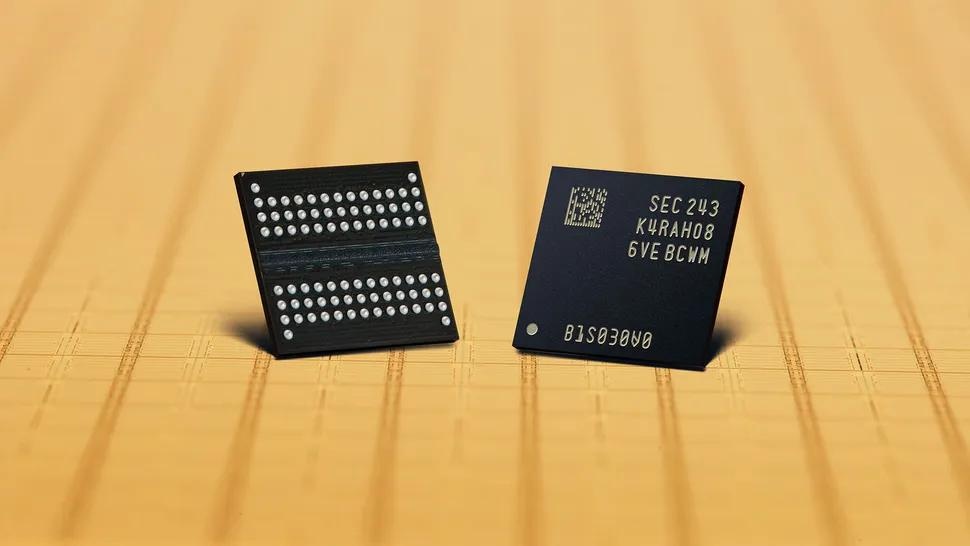 |
The global DRAM market is dominated by three major players. Photo: Samsung. |
At this point, Micron, which raked in a record $11.32 billion in Q4 2025, is making the most drastic changes to meet DRAM demand. They announced the closure of their long-standing consumer-oriented Crucial brand to focus on supplying memory for AI companies.
"If you're not a server customer, you'll be considered a second priority for memory vendors," Gartner analyst Shrish Pant told The Verge .
Meanwhile, Samsung and SK Hynix, two other major DRAM manufacturers, could dedicate up to 40% of their total global memory production to a single AI project, according to Tom's Hardware . They reached an agreement to supply Open AI with 900,000 DRAM wafers per month.
With the booming AI memory market, major DRAM manufacturers also seem to be taking advantage of this opportunity to profit. SK Hynix's net profit more than doubled, from $3.92 billion in Q3 2024 to $8.6 billion in Q3 2025.
Micron also reported a tenfold increase in revenue, from $778 million in fiscal year 2024 to $8.6 billion in fiscal year 2025.
The price surge is beginning to hit.
Despite various measures to address the DRAM shortage and price surge, technology companies can still "pass some of the increased costs on to consumers," Janukowicz said.
This is especially true for inexpensive devices like Chromebooks and the Google Pixel 9A, as there is less likelihood of replacing parts at a lower cost.
Several companies have begun raising prices. Personal computer manufacturers CyberPowerPC and Maingear announced price increases due to rising RAM costs. Similarly, modular laptop manufacturer Framework has also adjusted its prices. Even Raspberry Pi, a manufacturer of single-board computers, has been forced to increase prices on its new devices.
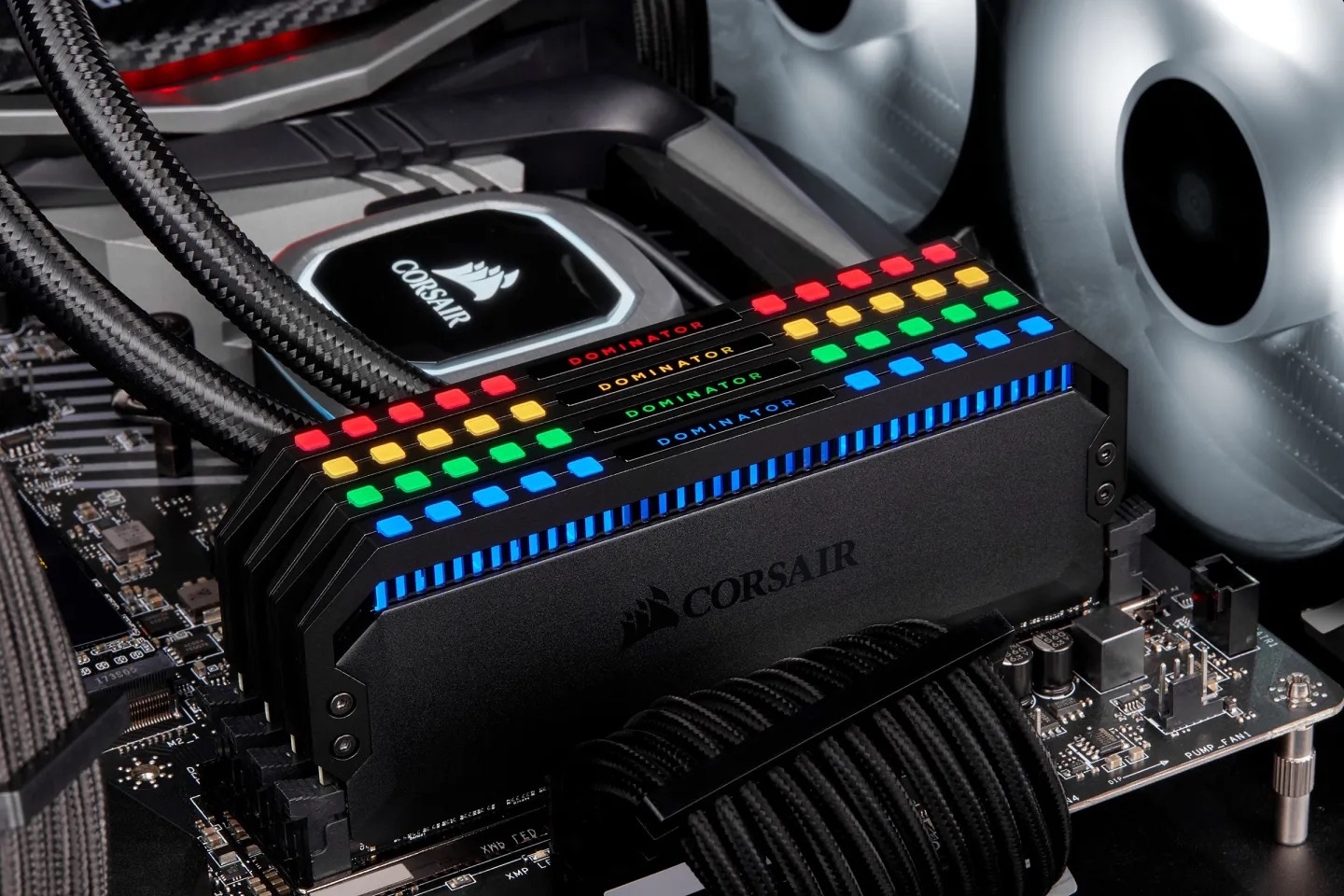 |
Computer RAM is in short supply, and prices are skyrocketing. Photo: Corsair. |
In early December, TrendForce, citing several reliable sources, revealed that Lenovo had notified customers about an upcoming price increase. The adjustments by the world's largest computer manufacturer are expected to take effect in early 2026.
Meanwhile, there are also reports that Dell, the world's third-largest computer manufacturer, is increasing prices by at least 15-20% for its personal computer products. The new prices could take effect as early as mid-December.
Concerns about a price increase for the Steam Machine handheld gaming console began to surface as the manufacturer hesitated to release a specific price. Pierre-Loup Griffeis, a veteran Valve expert, stated that the product's price would be "in line with the current PC market."
Popular tech YouTuber Moore's Law is Dead, a channel that frequently gets early news from manufacturers, retailers, and related partners, suggests that Microsoft will raise the price of the Xbox Series X again due to scarcity. Currently, the price is over $150 higher than its launch price five years ago.
The desktop computer component market has seen RAM prices increase two to four times compared to a few months ago. For example, Corsair Vengeance DDR5 RAM (2x16 GB), which cost $134.99 in September, has now skyrocketed to $427.99 , according to data from PCPartPicker .
SSDs, which primarily use NAND flash memory instead of DRAM, also face similar challenges as AI companies procure storage equipment for their data centers.
SK Hynix, Samsung, and Micron also manufacture these devices. Similar to DRAM, they are shifting their focus to AI customers and abandoning the rest.
Source: https://znews.vn/day-la-khung-hoang-se-khien-gia-moi-do-cong-nghe-tang-vot-post1610599.html




































































Comment (0)