

In San Lung village, Bat Xat commune, Mr. Lo Sanh Din's family has many years of experience raising native black pigs. Mr. Din shared: "Complete vaccination helps the pigs stay healthy, limit the risk of disease and grow quickly. Thanks to that, each year the family sells hundreds of pigs for meat, with a much better income than before."

Bat Xat commune currently has a total herd of more than 3,100 buffaloes and cows, over 7,500 pigs, nearly 2,500 dogs and more than 11,000 poultry. The commune People's Committee has coordinated with the Bat Xat Regional Veterinary Station to vaccinate against: anthrax, foot-and-mouth disease, cholera, rabies and avian influenza.
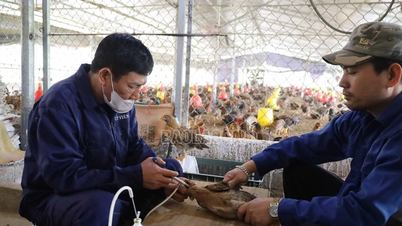
Vaccination is an effective solution to protect livestock. We assign veterinary staff to each village, to have a firm grasp of the number of livestock and poultry to ensure that vaccinations are correct, sufficient, and not missed.

To improve efficiency, the commune government coordinates with specialized agencies to promote propaganda, helping people understand the benefits of vaccinating livestock, thereby proactively coordinating with veterinary staff to properly implement technical procedures.
Up to now, Bat Xat commune has completed over 95% of the vaccination plan and is continuing to deploy additional vaccinations, striving to complete all of them before November 30, 2025.
Muong Khuong commune currently has over 10,000 cattle and more than 68,000 poultry. This year's vaccination work was implemented early and effectively, so up to now, the commune has exceeded the set plan by 13%.
Mr. Pham Duc Trung - Vice Chairman of Muong Khuong Commune People's Committee, said: "With the characteristics of a highland commune, cold climate, long winter, the locality pays special attention to vaccination work, considering this the most proactive and effective disease prevention measure to protect livestock."
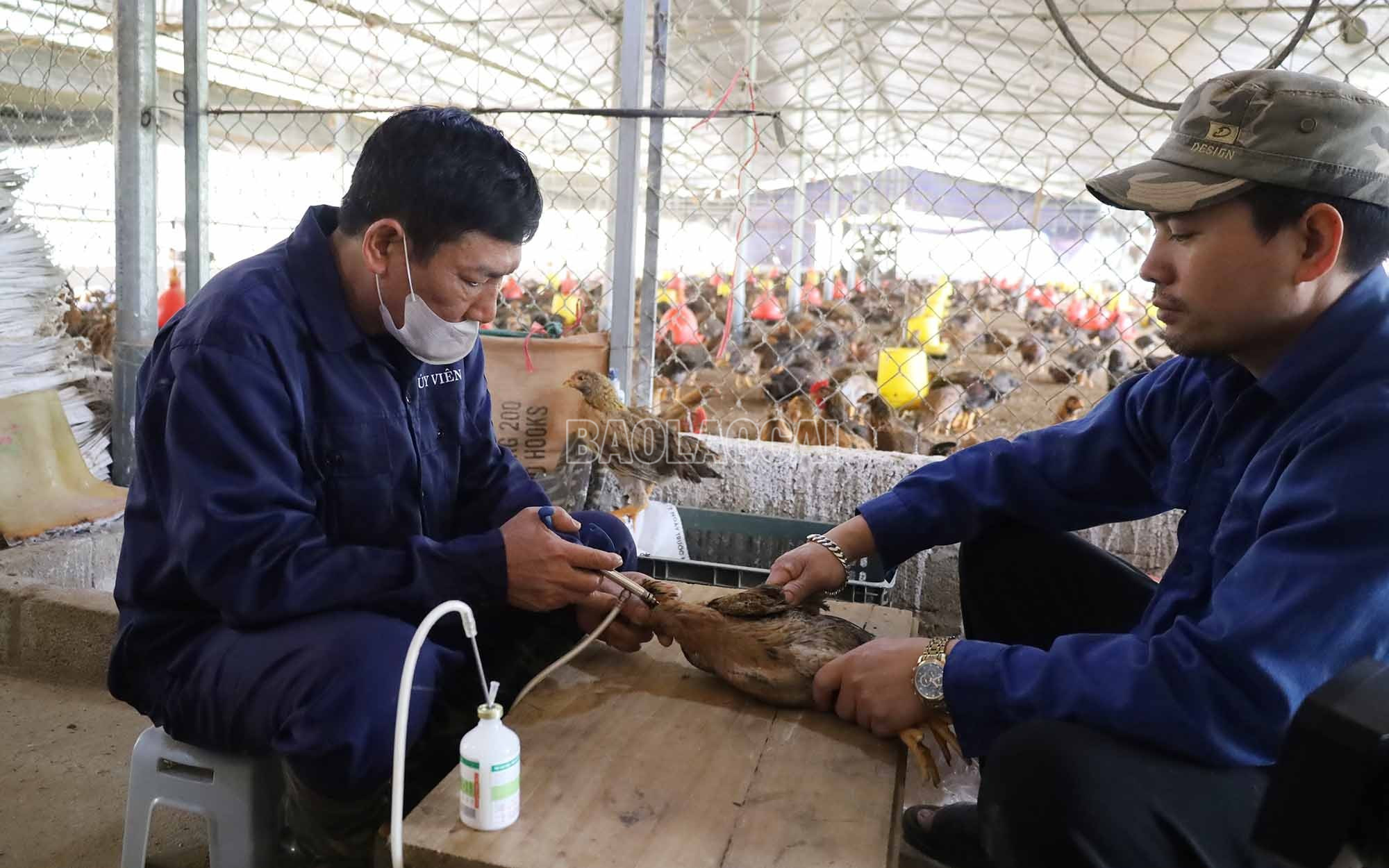
The commune directed departments and specialized units to stick to the grassroots level, deploy mass vaccination, prioritize concentrated livestock farming areas, and at the same time support people to vaccinate newborn or newly imported livestock.
In Hanh Phuc commune, vaccination for livestock is also being vigorously implemented. Up to now, the commune has completed 94% of the second vaccination plan.
To ensure high vaccination efficiency, the locality directed veterinary staff to closely coordinate with village chiefs to review and accurately count the number of livestock in each household, ensuring that the right subjects, time and type of vaccine are vaccinated. At the same time, the commune increased propaganda on the loudspeaker system, instructing people to properly implement measures to care for, raise and clean barns, helping livestock to recover quickly, improve resistance, and minimize the risk of disease outbreaks.


According to the plan, each year the agricultural sector will carry out two main vaccination campaigns, and at the same time organize additional vaccination campaigns for livestock and poultry that have not been vaccinated, are just reaching the age of vaccination, or have expired their protective immunity. In addition, when an outbreak occurs, specialized agencies will conduct emergency vaccinations to prevent the disease from spreading widely.
According to information from the provincial Department of Crop Production, Plant Protection and Animal Husbandry, Veterinary Medicine and Aquaculture, since the beginning of the year, a number of dangerous infectious diseases such as African swine fever, foot-and-mouth disease, and rabies have appeared in many localities, causing significant losses to livestock farmers. Along with that, the weather is in the transitional period, the temperature has dropped sharply, increasing the risk of disease in livestock herds.
To effectively vaccinate livestock and poultry, the provincial Department of Crop Production, Plant Protection and Animal Husbandry, Veterinary Medicine and Aquaculture has coordinated with localities to promote propaganda and raise the responsibility of local authorities and breeders in fully and properly implementing vaccination.
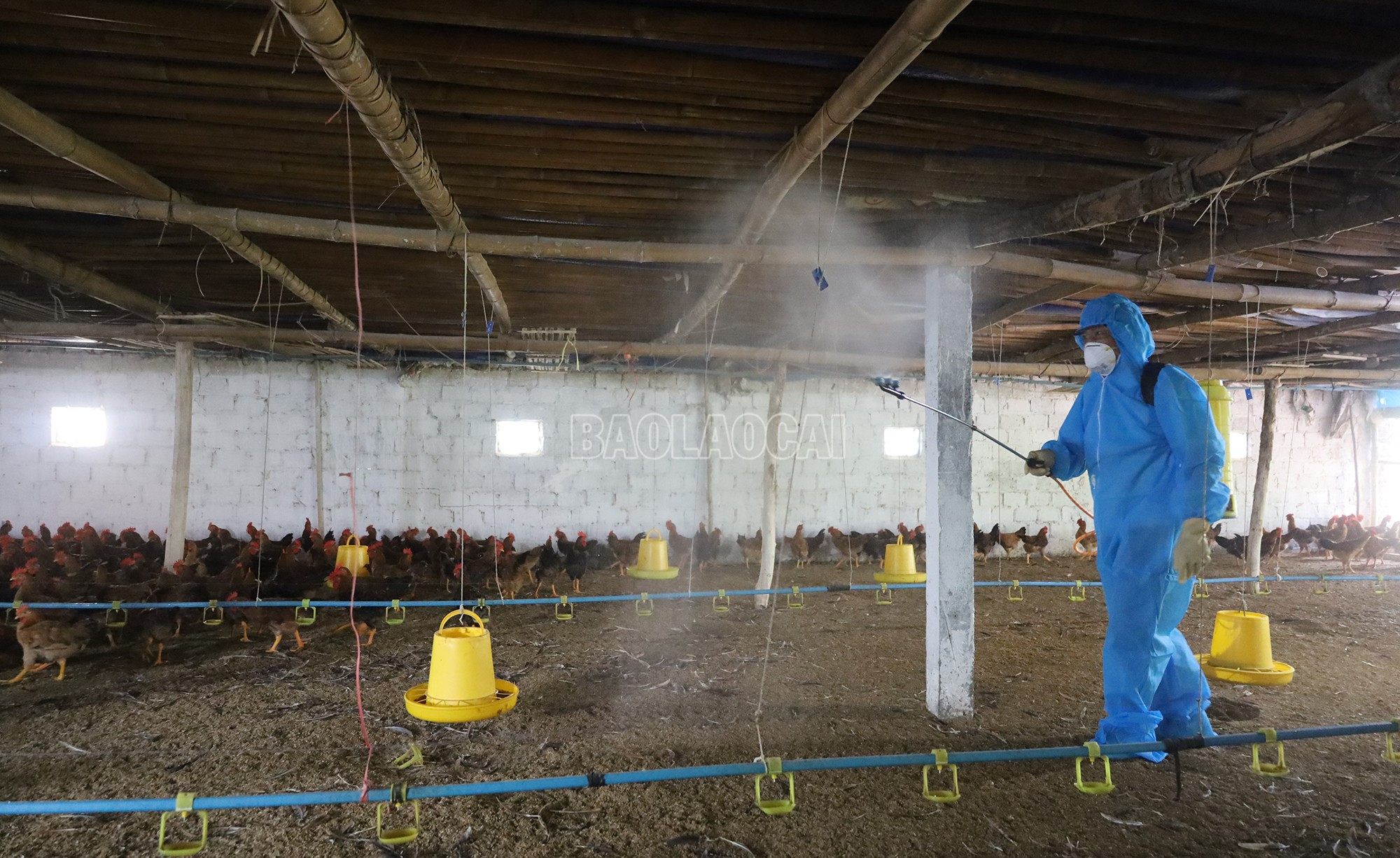
Up to now, the whole province has organized the injection of more than 1.83 million doses of vaccine for livestock, reaching nearly 80% of the plan, of which, 126,000 doses of foot-and-mouth disease vaccine for buffaloes and cows; over 84,000 doses of septicemia for buffaloes and cows; nearly 200,000 doses of swine fever, septicemia, and paratyphoid; over 116,000 doses of rabies vaccine; over 1.25 million doses of avian influenza; and nearly 50,000 doses of foot-and-mouth disease vaccine.
In addition to the vaccines supported by the State, many livestock farming households have proactively invested funds to inject other vaccines such as vaccines against African swine fever, lumpy skin disease, etc., contributing to improving resistance and protecting livestock in a more proactive and comprehensive way.
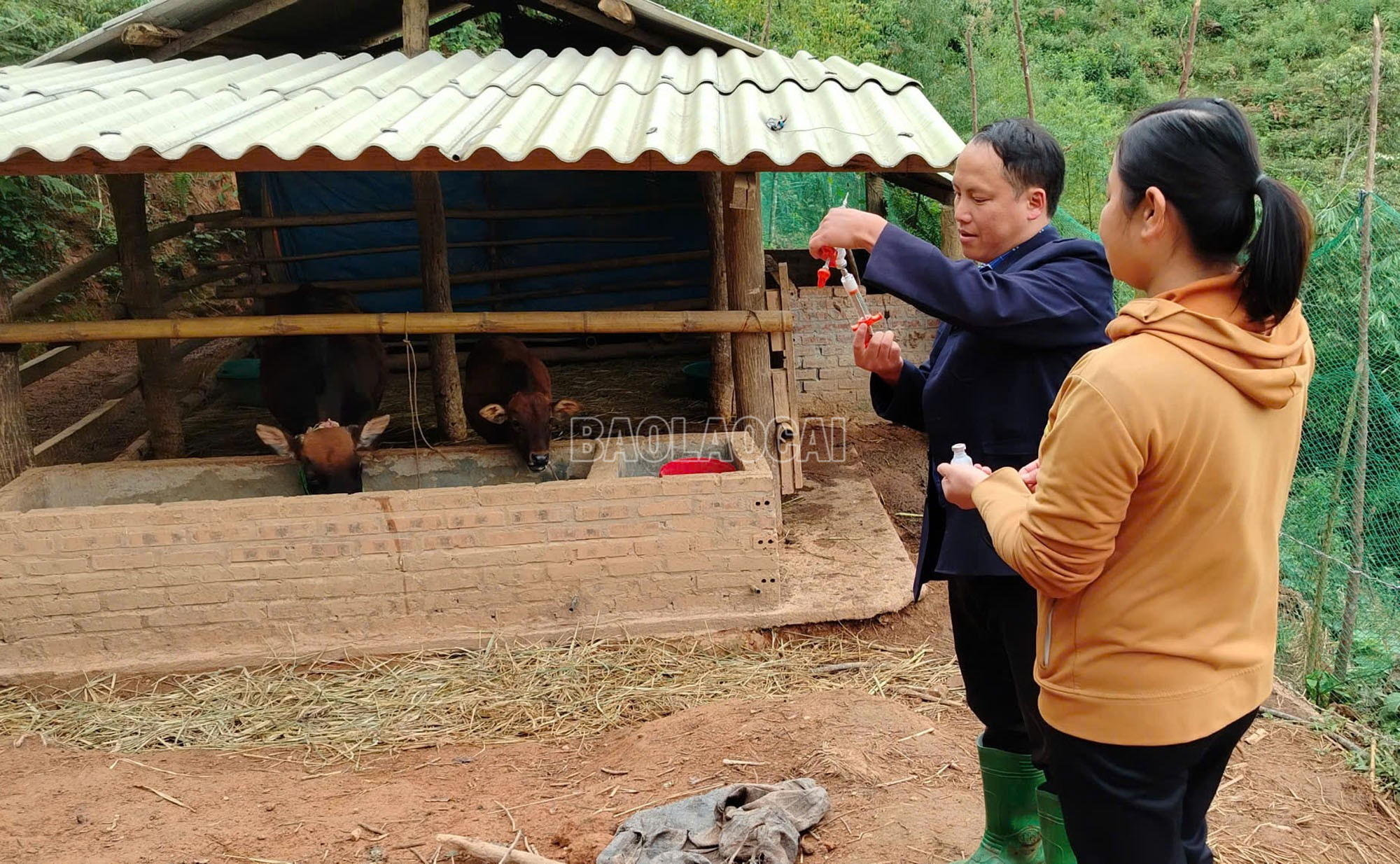
Along with vaccination work, the specialized agency has provided 18,182 liters of chemicals to localities to implement the Month of Hygiene, Disinfection and Sterilization, to prevent and control epidemics in general and avian influenza in particular, ensuring a safe livestock environment and reducing the risk of spreading pathogens.
With the proactive and drastic direction of all levels and sectors and the active response of the people, the vaccination of livestock in the province is being effectively implemented. This is an important solution contributing to the protection of livestock, stabilizing production, towards the goal of safe and sustainable agricultural development of Lao Cai province.
Source: https://baolaocai.vn/day-nhanh-tien-do-tiem-phong-vac-xin-cho-vat-nuoi-post886508.html
![[Photo] Prime Minister Pham Minh Chinh attends the annual Vietnam Business Forum](https://vphoto.vietnam.vn/thumb/1200x675/vietnam/resource/IMAGE/2025/11/10/1762780307172_dsc-1710-jpg.webp)




![[Photo] Prime Minister Pham Minh Chinh attends the Patriotic Emulation Congress of the Ministry of Foreign Affairs for the 2025-2030 period](https://vphoto.vietnam.vn/thumb/1200x675/vietnam/resource/IMAGE/2025/11/10/1762762603245_dsc-1428-jpg.webp)






























































![Dong Nai OCOP transition: [Article 3] Linking tourism with OCOP product consumption](https://vphoto.vietnam.vn/thumb/402x226/vietnam/resource/IMAGE/2025/11/10/1762739199309_1324-2740-7_n-162543_981.jpeg)








Comment (0)