

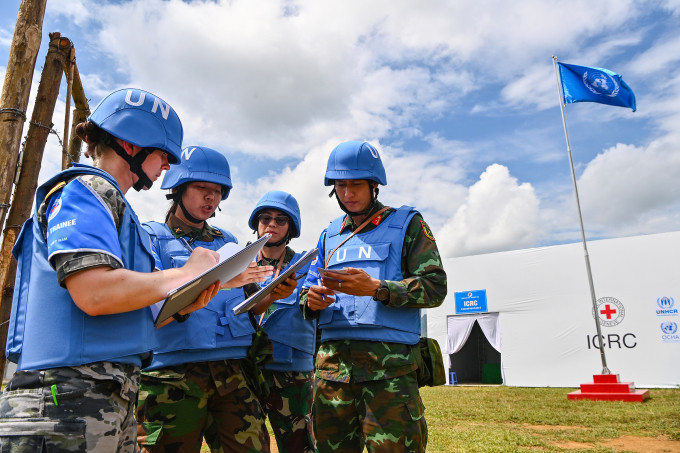
In the draft currently under review, the Ministry of National Defense also proposed that individuals participating in peacekeeping forces receive allowances for foreign affairs, civilian affairs, propaganda, equipment, and command position allowances. Women would receive special allowances. The Ministry of National Defense and the Ministry of Public Security would have policies prioritizing the placement and employment of individuals upon their return after completing their missions.
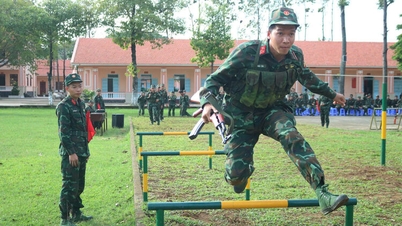
Those selected to participate in United Nations peacekeeping operations must meet several criteria. First, they must be officers, professional soldiers, non-commissioned officers, or soldiers of the People's Army, or officers, non-commissioned officers, technical specialists, or soldiers of the People's Public Security, meeting a series of specific requirements.
These requirements include: a desire to join the force; the ability to operate in peacekeeping missions (primarily in Africa); strong political conviction and absolute loyalty to the Fatherland, the People, the Party, and the State; revolutionary moral qualities and exemplary conduct; a clear background; meeting the age, health, and foreign language requirements set by the United Nations...
The National Defence and Security Council decides on the deployment, adjustment, and withdrawal of Vietnamese forces participating in United Nations peacekeeping operations. The Prime Minister, who is also the Vice Chairman of the National Defence and Security Council, is authorized to withdraw deployed Vietnamese forces back to Vietnam in case of emergency.
In addition to the above contents, the bill also includes provisions on international cooperation in peacekeeping; force deployment procedures; force building and training plans; uniforms and identification equipment for peacekeeping forces, etc.
Since June 2014, Vietnam has officially deployed forces to participate in United Nations peacekeeping operations. By mid-2024, Vietnam had sent 812 officers to serve in the UNMISS (South Sudan), MINUSCA (Central African Republic), UNISFA (Abyei region), EUTM RCA (European Union Training Mission in Central Africa), and the United Nations Headquarters.
Officers are assigned to individual roles such as military staff, training, and equipment; liaison officers; military observers; military-civilian coordination officers; communications officers; catering officers; and personal police officers within the Mission. Unit-based assignments include a Level 2 Field Hospital with 63 personnel and an Engineering Team with 184 personnel.
Currently, the deployment of peacekeeping forces is carried out according to Resolution 130/2020 of the National Assembly, but the implementation process has encountered many limitations. The procedures for deployment, selection, and training of forces are not complete or rigorous. The provision of resources, finances, and the remuneration policies for officers do not meet the practical needs. "Developing a Law on participation in United Nations peacekeeping forces is necessary," the Ministry of National Defense affirmed.
The Government is expected to submit the draft to the National Assembly for comments at the 9th session (mid-2025) and for approval at the 10th session (late 2025).
LA (according to VnExpress)Source: https://baohaiduong.vn/de-xuat-nang-luong-truoc-nien-han-cho-si-quan-hoan-thanh-tot-nhiem-vu-gin-giu-hoa-binh-388742.html


![[Image] Close-up of the newly discovered "sacred road" at My Son Sanctuary](/_next/image?url=https%3A%2F%2Fvphoto.vietnam.vn%2Fthumb%2F1200x675%2Fvietnam%2Fresource%2FIMAGE%2F2025%2F12%2F13%2F1765587881240_ndo_br_ms5-jpg.webp&w=3840&q=75)
























































Comment (0)