

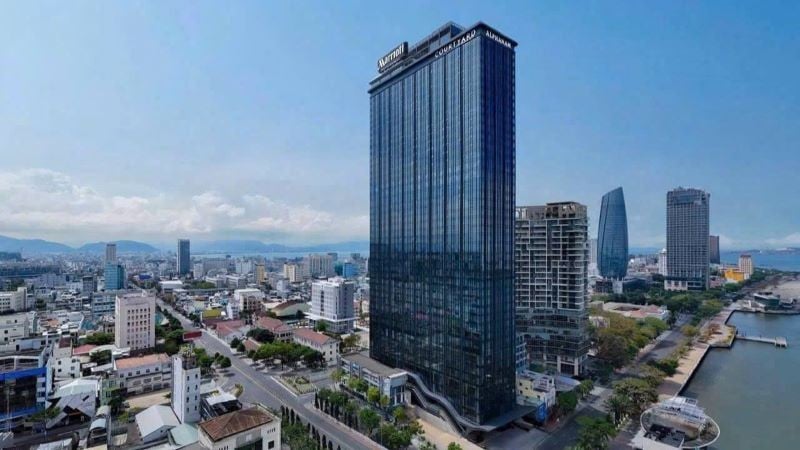
On June 29, 2006, the Law on Real Estate Business No. 63/2006/QH11 was passed by the Vietnamese National Assembly for the first time, marking the first time that real estate brokerage was officially recognized as a legal profession within the Vietnamese legal system. Accordingly, since 2006, June 29th has been the traditional day for real estate brokers.
Enhancing the role of real estate brokers in the sustainable development of the market.
On the morning of June 28th, in Bac Giang , the Vietnam Association of Real Estate Brokers (VARS) organized a seminar titled "Vietnamese Real Estate Brokers Facing a New Landscape - Changing Strategies, Leading the Game." This was one of the prominent activities in the series of Vietnam Real Estate Brokers Festival 2025.

In his opening remarks, Dr. Nguyen Van Dinh, Chairman of the Vietnam Real Estate Brokers Association, emphasized that the real estate brokerage profession plays a crucial role in connecting supply and demand in the real estate market, bridging investors, real estate developers, and customers. Not only does it contribute to accelerating transactions, but this force also plays a vital role in connecting and reflecting information between supply and demand, improving the quality, diversity, and suitability of real estate products, and promoting sustainable market development.

Also in his welcoming remarks, Dr. Nguyen Van Khoi, Chairman of the Vietnam Real Estate Association, affirmed that in the process of creating a dynamic, transparent, and efficient economy , institutional and administrative reforms are becoming one of the most important levers. Changes in laws, policies, and management mechanisms are having and will continue to have a profound impact on how the real estate market operates, from planning, investment, and development to product distribution.
Sharing her thoughts at a panel discussion within the framework of the conference, Ms. Tong Thi Hanh, Director of the Department of Housing and Real Estate Market Management, Ministry of Construction, expressed her concerns about the activities of real estate brokers and the increasingly professional, sustainable, and efficient operation of real estate exchanges. With the Law on Real Estate Business laying the foundation for the real estate brokerage profession in Vietnam, real estate brokerage has officially become an extremely important profession in the country's economy, especially in connecting buyers and sellers.
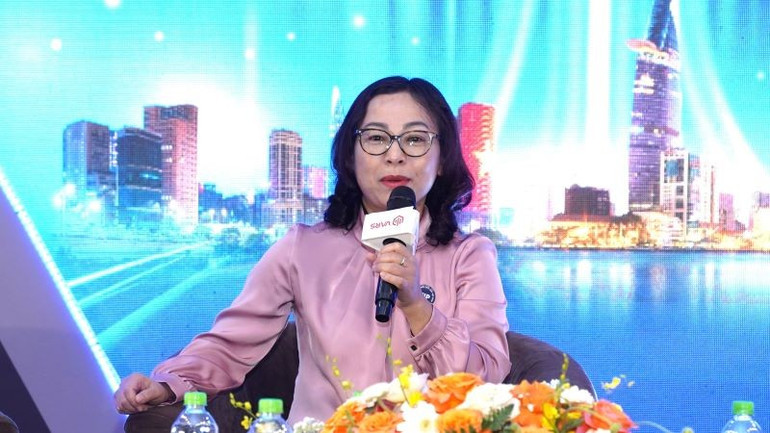
According to Ms. Hanh, at this point, it can be said that the real estate brokerage profession has taken on another crucial role – a vital bridge for state management agencies in ensuring transparency in the Vietnamese real estate market. Real estate brokers themselves are key factors reflecting the reality of the real estate market and have a significant impact on market fluctuations. The amended and supplemented 2023 Real Estate Business Law further clarifies the legal status of real estate brokers and real estate exchanges by granting them more power and responsibility. Real estate exchanges will be responsible for ensuring the legality of real estate when it is put into business, and they are also responsible for reporting to state management agencies on housing and the real estate market, regarding requirements for anti-money laundering in real estate business…
Regarding the state management agency, Ms. Hanh added that the functional unit aims to reform the institutional framework concerning the operational status, position, and role of real estate brokers and real estate exchanges, while also providing brokers and real estate exchanges with tools to control whether the properties offered for sale meet the legal requirements.
The real estate market faces opportunities and challenges from institutional reforms.
Analyzing and assessing the Vietnamese real estate market in light of the impact of comprehensive institutional and administrative reforms, Associate Professor, Dr. Tran Dinh Thien, former Director of the Vietnam Institute of Economics, emphasized that it took 40 years for the private sector, from being recognized as just an ordinary force, to become the most important driving force for development and growth of the economy. Therefore, it can be said that Resolution 68 on the private sector is an impressive highlight of the economy this year, contributing to its positioning. Furthermore, the merger and reorganization of provinces, and the streamlining of the two-tiered government system, open up opportunities and space for economic development, including real estate businesses.
Referring to the strategy for real estate businesses to break through in the new arena, Dr. Vo Tri Thanh, Director of the Institute for Brand and Competitive Strategy, stated that the new era is not a dream, but a number, a clear aspiration with a defined goal that emphasizes transformative change and suggests strategic solutions for businesses to proactively adapt, create competitive advantages, and break through in the new arena.

During the panel discussion "Vietnam's Real Estate Market in the New Era: New Rules, New Thinking" within the framework of the conference, speakers expressed confidence that, with analyses and proposals based on practical experience, real estate businesses will have a stronger foundation to establish and adjust their business strategies flexibly, maximize opportunities, leverage internal strengths, and confidently enter the new era.
"In this new context, continuing to operate in the old way will inevitably lead to the risk of falling behind. Only those units that dare to change their mindset, proactively adjust their strategies, and make breakthroughs in innovation can rise to a competitive advantage," said Mr. Nguyen Chi Thanh, Vice Chairman of the Vietnam Real Estate Brokers Association.
Dr. Le Xuan Nghia, a member of the National Financial and Monetary Policy Advisory Council and former Vice Chairman of the National Financial Supervision Committee, analyzed that the supply-demand relationship in the real estate market differs from that of normal commodity markets. When prices rise sharply, sellers stop selling and wait for prices to rise further. This causes supply and demand to move in parallel, without meeting.
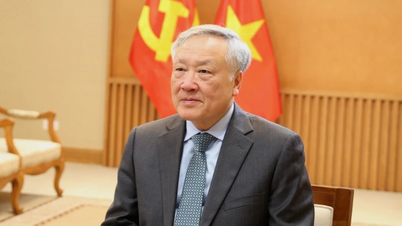
"If the government hadn't acted quickly and increased supply to the market, a real estate bubble could have formed in 2023 and continued until now. If not dealt with promptly, the bubble would burst. At that point, no one would buy, and no one would sell, posing a risk of a real estate market collapse and affecting the entire banking system," Mr. Nghia warned.
However, Mr. Nghia said that recently, there have been encouraging signs regarding the supply, as long-stalled social housing and commercial housing projects have been significantly resolved in the first six months of this year. "Thanks to Resolution 171 of the National Assembly on piloting the implementation of commercial housing projects through agreements on land use rights or existing land use rights, Hanoi has seen over 100 projects resolved. The supply will be more abundant in the future," Mr. Nghia said.
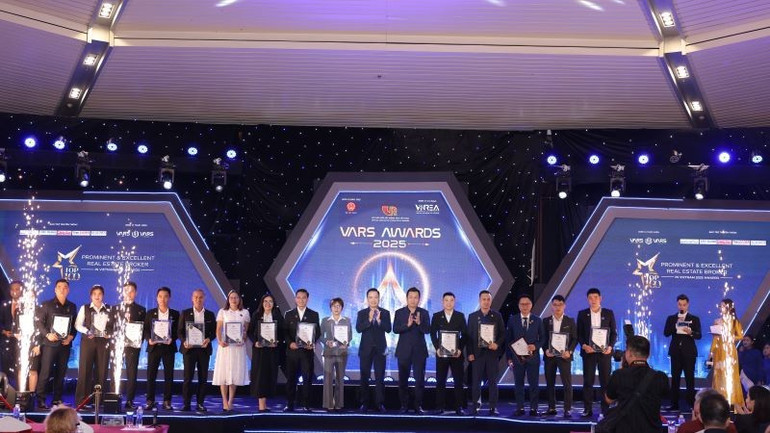
Later that afternoon, as part of the festival, the Organizing Committee held an event to honor the real estate brokerage profession in Vietnam.
Source: https://nhandan.vn/dieu-chinh-hoan-thien-chinh-sach-voi-nghe-moi-gioi-bat-dong-san-trong-ky-nguyen-moi-post890305.html

![[Photo] Prime Minister Pham Minh Chinh holds a phone call with the CEO of Russia's Rosatom Corporation.](/_next/image?url=https%3A%2F%2Fvphoto.vietnam.vn%2Fthumb%2F1200x675%2Fvietnam%2Fresource%2FIMAGE%2F2025%2F12%2F11%2F1765464552365_dsc-5295-jpg.webp&w=3840&q=75)


![Passion fruit 'capital' faces sustainability challenge: [Part 3] Building supply chain linkages](https://vphoto.vietnam.vn/thumb/402x226/vietnam/resource/IMAGE/2025/12/12/1765517075835_1232-akk00534-130606_948.jpeg)


































































Comment (0)