Vietnamese postal enterprises expand network connections to China
VietNamNet•11/03/2024
Viettel Post has just announced expanded investment, increasing the connectivity of the Vietnam-China logistics network. Previously, Vietnam Post had also taken steps to promote cooperation in postal services and logistics between the two countries.
Major Challenges for Postal Businesses: According to the General Statistics Office, China is currently a major trading partner of Vietnam, with total import and export turnover between Vietnam and China estimated at US$173.2 billion in 2023. However, in a recent proposal to the Government and the Prime Minister , the Vietnam Young Entrepreneurs Association suggested that the Government and relevant ministries and agencies further accelerate administrative procedure reforms and especially reduce logistics costs. The association cited the example of high logistics costs in Vietnam's agricultural sector, significantly higher than in other countries in the region; for instance, logistics costs account for 15.1% of the value of a container of bananas.
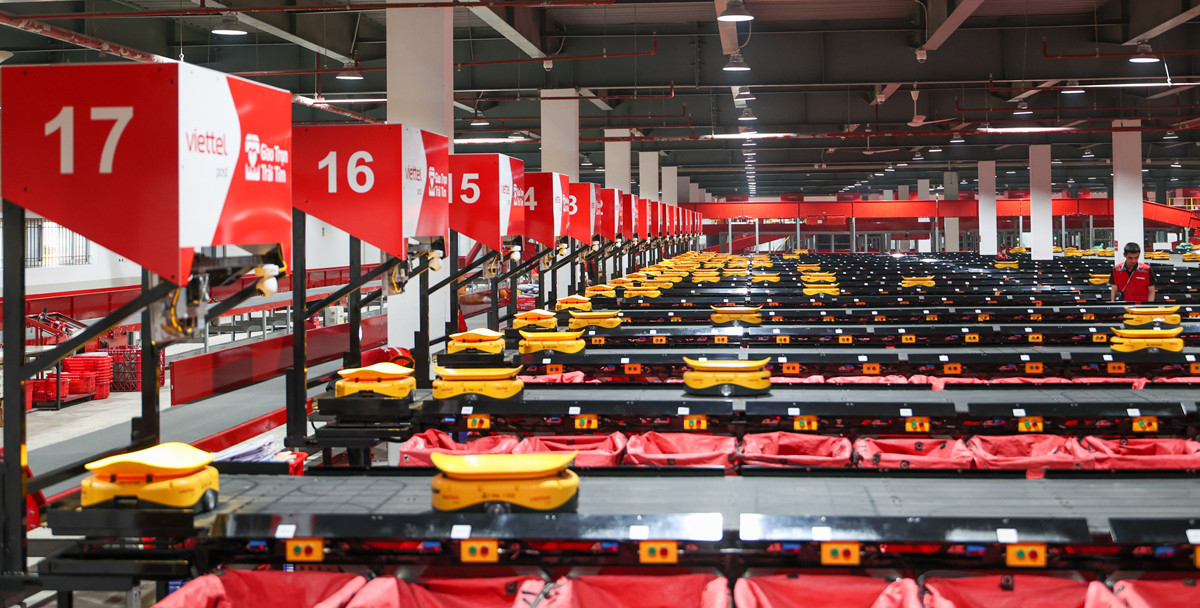
The rapid development of e-commerce and logistics is demanding that Vietnamese postal businesses quickly innovate, automate, and focus on investing in network infrastructure development. (Illustrative image: M. Son)
In recent years, the postal and delivery network has developed with a nationwide network of vehicles and service points. Besides the two major companies, Vietnam Post and Viettel Post, many other businesses in the market have also invested in developing warehousing infrastructure and operational centers to organize transportation, handling, and service provision. In addition, there are over 50,000 transportation and logistics businesses, mostly small and medium-sized enterprises, that lease infrastructure to operate their services. Given this situation, experts believe that the postal and logistics infrastructure of domestic businesses is still fragmented and not optimized, resulting in high domestic and international logistics costs. On the other hand, in the next 10 years, logistics and e-commerce are predicted to be among the fastest-growing sectors of the economy . Major global logistics and e-commerce companies are already present in the Vietnamese market. This requires domestic postal businesses, especially traditional ones, to quickly innovate, digitally transform, and automate in order to create a long-term competitive advantage for themselves. Vietnamese postal businesses are accelerating digital transformation and automating operations. (Video source: Viettel Post) The Vietnamese postal development strategy until 2025 defines a vision to make postal services an essential national infrastructure and a key component of the digital economy, especially e-commerce; expanding the service ecosystem and new operating spaces; and promoting the development of a digital government and a digital society. One goal by 2025 is to achieve an average growth rate of at least 30% for postal services supporting e-commerce. Alongside this, the strategy aims to develop at least three large postal businesses to lead the market. The postal sector is participating in expanding the Vietnam-China goods connection channel. Recognizing the need to redesign the network to meet both e-commerce and logistics needs, in recent years, the two major traditional postal businesses, Vietnam Post and Viettel Post, have undertaken numerous activities. The expectation is to establish a network infrastructure that ensures the provision of postal products and services, as well as other products and services, to users with high service quality but at reasonable and competitive prices compared to foreign businesses. Regarding trade connections between Vietnam and China, on March 8th, Viettel Post announced a logistics cooperation with Chinese partners. This is part of the postal company's plan to expand investment and network connections abroad, with the aim of developing into a logistics technology company.
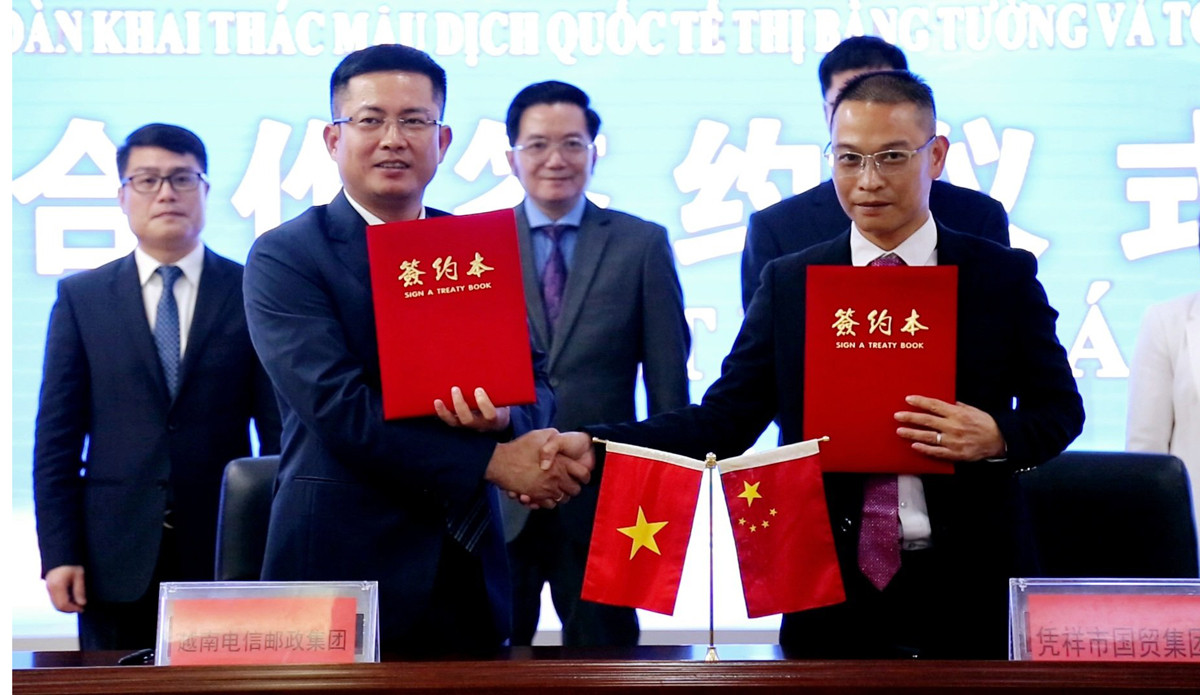
On March 7th, Viettel Post signed an agreement with the government of Pingxiang City (China) to cooperate in establishing a representative office and building a China-ASEAN agricultural product trading center in the city. (Photo: Thu Huong)
To kickstart the formation of cross-border trade routes between China, Vietnam, and ASEAN, Viettel Post worked with authorities and businesses in the Chinese cities of Nanning and Pingxiang for three days, from March 5th to 7th, to sign cooperation agreements. Specifically, in addition to deciding to invest in two large logistics centers in China, including the China-ASEAN agricultural product trading center in Pingxiang and the logistics center in Nanning, Viettel Post also announced cooperation with Chinese businesses to effectively utilize multimodal transport. This will contribute to improving the cross-border transport network infrastructure to optimize logistics costs, shorten transit times, and increase the competitiveness of Vietnamese goods. Similarly, in September and October 2023, Vietnam Post, the postal enterprise with the largest network in Vietnam, also took steps to promote cooperation in postal and logistics services with Chinese agencies and businesses. In mid-September last year, a delegation from Vietnam Post, led by Chairman of the Board of Members Nguyen Truong Giang, visited and worked with the General Administration of Post and Telecommunications of China and China Post. During this meeting, leaders from Vietnam Post and China Post discussed issues requiring adjustments in future cooperation and explored possibilities for collaboration in transportation and cross-border e-commerce services. The two postal services also agreed on a collaborative approach through the establishment of working groups in each respective field.
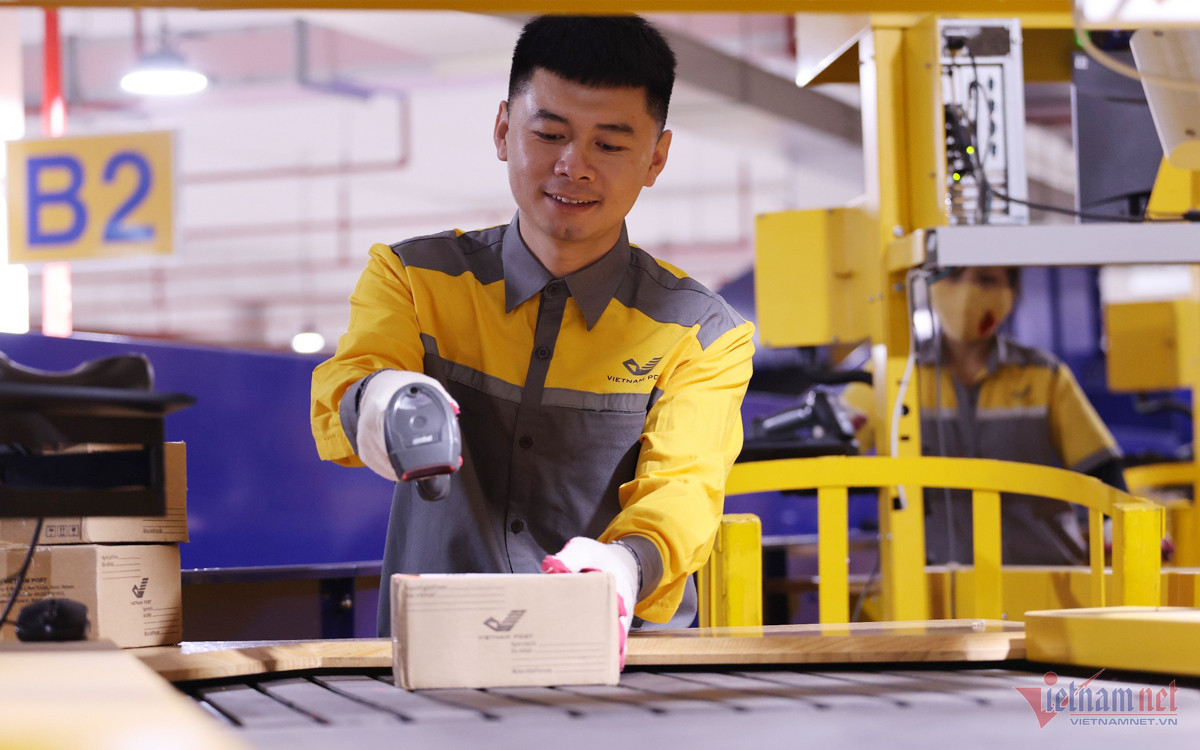
Vietnam Post Logistics will cooperate with Ideal Logistics TYZ (China) to develop logistics and warehousing operations in both countries and internationally. (Illustrative photo: Q. Bao)
Most recently, at the end of October 2023, in Hanoi , Vietnam Post Logistics and Ideal Logistics TYZ (China-Vietnam-Thailand Supply Chain Management Co., Ltd.) signed a cooperation agreement. Accordingly, the two companies agreed to cooperate in developing logistics and warehousing activities in Vietnam, China, and internationally; to collaborate in promoting commercial business activities, e-commerce, product consumption, and the use of services provided by each other to expand the domestic and international logistics market. These expanded international cooperation activities, aimed at meeting the needs of the e-commerce and logistics market, partly demonstrate that traditional Vietnamese postal enterprises are making shifts, focusing on investing in expanding their network infrastructure to further affirm their position as key postal enterprises in the new context.



![[Photo] The captivating scenery of the fragrant maple forest in Quang Tri](/_next/image?url=https%3A%2F%2Fvphoto.vietnam.vn%2Fthumb%2F1200x675%2Fvietnam%2Fresource%2FIMAGE%2F2025%2F12%2F10%2F1765353233198_lan09046-jpg.webp&w=3840&q=75)
![[Photo] Explore the US Navy's USS Robert Smalls warship](/_next/image?url=https%3A%2F%2Fvphoto.vietnam.vn%2Fthumb%2F1200x675%2Fvietnam%2Fresource%2FIMAGE%2F2025%2F12%2F10%2F1765341533272_11212121-8303-jpg.webp&w=3840&q=75)





























![[Video] The craft of making Dong Ho folk paintings has been inscribed by UNESCO on the List of Crafts in Need of Urgent Safeguarding.](https://vphoto.vietnam.vn/thumb/402x226/vietnam/resource/IMAGE/2025/12/10/1765350246533_tranh-dong-ho-734-jpg.webp)

























































Comment (0)