


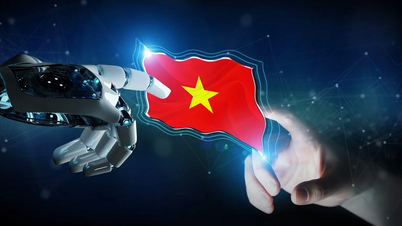
At the "80 Years of Independence-Freedom-Happiness" national achievement exhibition, people had the opportunity to directly visit and experience the first humanoid robot "Made in Vietnam," researched and developed by Vingroup . Such products demonstrate that the strategic direction of technological development is not just a policy, but is gradually becoming a part of daily life.
From strategic direction to specific policies
Implementing the General Secretary's directives and the Politburo 's Resolution No. 57-NQ/TƯ dated December 22, 2024, on breakthroughs in national science, technology, innovation, and digital transformation, the Government has issued many important documents. On June 12, 2025, the Prime Minister signed Decision No. 1131/QĐ-TTg announcing the list of 11 technology groups and 35 strategic technology product groups, identifying national priority directions.
Subsequently, on June 27, 2025, the National Assembly passed the Law on Science, Technology and Innovation, which for the first time codified the concepts of "strategic technology" and "strategic technology products." This provides the legal foundation for building specific policy mechanisms, unlocking and concentrating resources for research, development, and commercialization of leading technologies.

Based on the new legal framework, the Ministry of Science and Technology is developing a national plan for strategic technology development by 2030, aiming to form strategic technology industries that link infrastructure, institutions, human resources, and markets. The goal is to make Vietnam one of the leading research and development (R&D) centers in the region, gradually mastering core technologies and creating internationally competitive industries.
The project is designed according to a roadmap, in which the initial phase prioritizes selecting a number of pioneering products to serve as "models," testing mechanisms, and thereby creating a ripple effect within the research and business community. Simultaneously, the Ministry of Science and Technology is shifting strongly from a "self-proposal" mechanism to a "proactive ordering" mechanism, proactively identifying strategic problems and assigning tasks to units with sufficient capacity to implement them.
The "conductor" of the strategic technology mastery process.
According to Deputy Minister of Science and Technology Bui The Duy, the selection of strategic technology products adheres to three groups of criteria. Firstly, they must contribute to solving major national problems, have a clear impact on productivity growth, social welfare, national defense, and security. Secondly, they must have the potential to replace imports, have export potential, and be commercialized within a relatively short period. Thirdly, they must have the conditions to master core technologies and maintain Vietnamese value in the product and service chain.
Based on that, the Ministry of Science and Technology has identified six key products to be implemented in 2025, including: Large Language Modeling (LLM) and Vietnamese virtual assistants; AI edge processing cameras; autonomous mobile robots; 5G mobile network equipment systems; blockchain network infrastructure and applications for traceability and cryptographic assets; and unmanned aerial vehicles (UAVs). These are areas that have both the potential for rapid commercialization and strategic significance for improving labor productivity, ensuring security and safety, and promoting technology exports.
During the implementation process, the Ministry of Science and Technology collaborated with major enterprises, research institutes, and universities to finalize criteria, identify the lead agency, and develop an implementation roadmap for each product. Deputy Prime Minister Nguyen Chi Dung requested that the list of tasks be concretized according to the "7 clear" principles: clear person, clear task, clear responsibility, clear time, clear authority, clear product, and clear resources; and that a "chief engineer" be appointed to lead each task group.
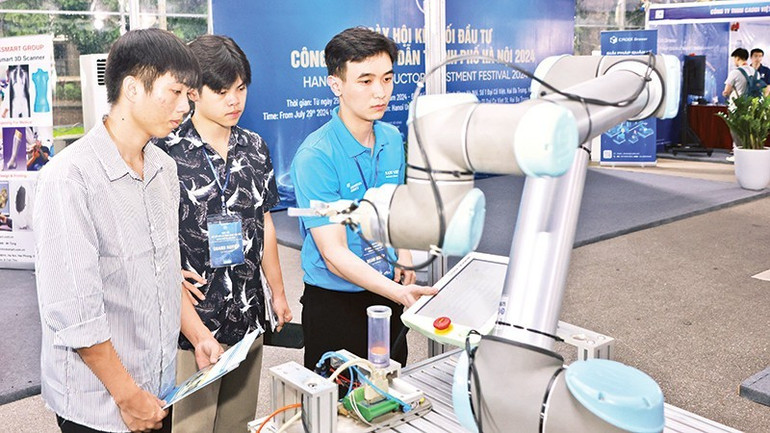
Along with policy refinement, the Ministry of Science and Technology focuses on the efficient allocation and utilization of resources. The National Science and Technology Development Fund (NAFOSTED) is being restructured to streamline procedures and prioritize funding for strategic tasks. The Ministry is also developing a research infrastructure development plan, aiming to establish 7 to 10 national key laboratories operating under an open model, strengthening public-private partnerships and closely connecting with businesses, shortening the path from research to marketable products.
In addition, the Ministry promotes the formation of strategic technology clusters at the local level, linked to regional advantages and specific mechanisms regarding investment, land, and human resources. One of the key focuses is to leverage the leading role of large enterprises and leading research institutes such as the Vietnam Academy of Science and Technology, thereby creating "locomotives" for each priority technology sector.
According to Ha Minh Hiep, Chief of the Office of the Ministry of Science and Technology, the Ministry has submitted a proposal to the Prime Minister to allow the deployment of four strategic technology products starting from October 31, 2025, while aiming to deploy the remaining products in December 2025. Despite numerous challenges regarding resources, high-quality human resources, and the competitive environment, with strong political determination, innovative approaches, and the coordinated efforts of stakeholders in the innovation ecosystem, Vietnam is gradually moving closer to mastering strategic technologies, creating a foundation for sustainable development and deeper integration in the coming years.
Source: https://nhandan.vn/dot-pha-trong-phat-trien-cac-cong-nghe-chien-luoc-quoc-gia-post929650.html


![[Photo] Closing Ceremony of the 10th Session of the 15th National Assembly](/_next/image?url=https%3A%2F%2Fvphoto.vietnam.vn%2Fthumb%2F1200x675%2Fvietnam%2Fresource%2FIMAGE%2F2025%2F12%2F11%2F1765448959967_image-1437-jpg.webp&w=3840&q=75)


![[Photo] Prime Minister Pham Minh Chinh holds a phone call with the CEO of Russia's Rosatom Corporation.](/_next/image?url=https%3A%2F%2Fvphoto.vietnam.vn%2Fthumb%2F1200x675%2Fvietnam%2Fresource%2FIMAGE%2F2025%2F12%2F11%2F1765464552365_dsc-5295-jpg.webp&w=3840&q=75)






























![[OFFICIAL] MISA GROUP ANNOUNCES ITS PIONEERING BRAND POSITIONING IN BUILDING AGENTIC AI FOR BUSINESSES, HOUSEHOLDS, AND THE GOVERNMENT](https://vphoto.vietnam.vn/thumb/402x226/vietnam/resource/IMAGE/2025/12/11/1765444754256_agentic-ai_postfb-scaled.png)






































Comment (0)