

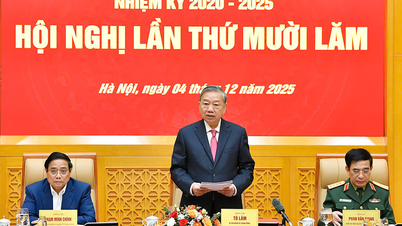
This information was given at a meeting on December 5 of the Government Standing Committee chaired by Prime Minister Pham Minh Chinh , giving opinions on the free trade zone project being prepared to be submitted to competent authorities.
There are more than 7,000 special economic zones and free trade zones in operation worldwide, and this model is also being expanded into multifunctional zones of industry, urban areas, services, finance, high technology, and innovation, attracting maximum resources for development.
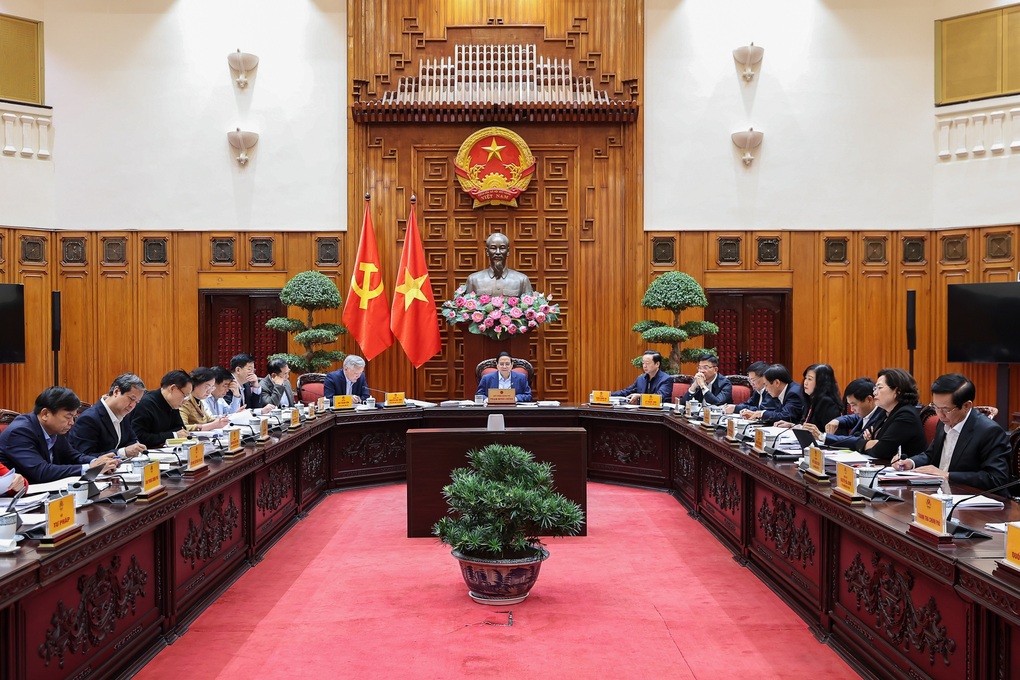
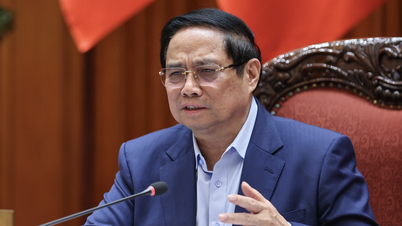
Meeting of the Government Standing Committee on December 5 (Photo: Doan Bac).
In Vietnam, the general legal system does not have specific regulations on the mechanism, policies, management and operation of free trade zones.
The National Assembly has previously issued resolutions on piloting a number of specific mechanisms and policies for the development of Da Nang City and Hai Phong City, including the content of free trade zones. Therefore, the development of a free trade zone project is urgent and needs to be implemented immediately.
The Ministry of Finance said it plans to establish free trade zones in Da Nang, Hai Phong, and Ho Chi Minh City in 2026. By 2030, the country is expected to have about 6-8 free trade zones and similar models in localities with favorable conditions.
By 2045, Vietnam will have 8-10 free trade zones and similar models that meet international standards, compete with countries in the region, and contribute 15-20% of GDP.
Prime Minister Pham Minh Chinh proposed clarifying the concept of free trade zones and their similarities and differences with international trade centers.
According to the Prime Minister, the mechanisms and policies for these two subjects have similarities and differences, so it is necessary to flexibly and creatively apply existing regulations.
Regarding the selection of pilot locations for free trade zones, the Prime Minister noted that they must be suitable and balanced across regions, in accordance with the pilot spirit (not many in number and with a certain amount of time for evaluation).
The Head of Government noted population issues, ensuring social security and the environment, as well as streamlining the apparatus, operating effectively and efficiently in the direction of increasing decentralization and delegation of power along with inspection and supervision, and increasing the initiative of free trade zones.
On the same morning, Prime Minister Pham Minh Chinh chaired a meeting of the Government Standing Committee on proposed mechanisms and policies to promote the development of the national oil and gas refining and energy center in Dung Quat Economic Zone (Quang Ngai).
According to reports, Dung Quat oil refinery is Vietnam's first oil refinery, located in Dung Quat economic zone.
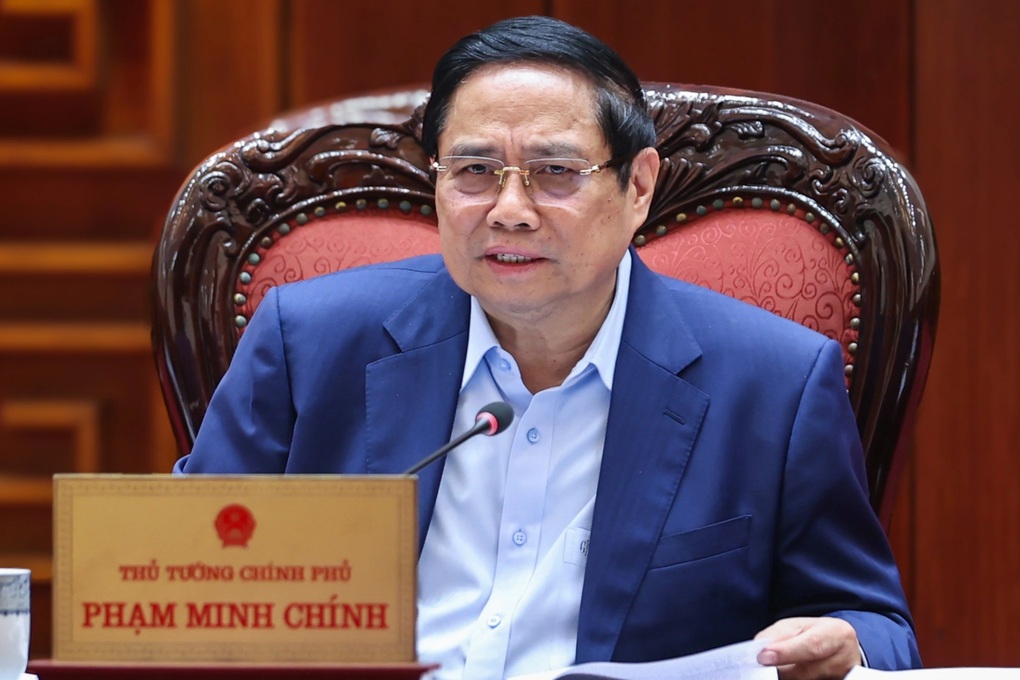
Prime Minister Pham Minh Chinh delivered the concluding remarks at the Government Standing Committee meeting (Photo: Doan Bac).
Prime Minister Pham Minh Chinh emphasized that the Dung Quyet oil refinery, invested and implemented by Vietnam, is operating effectively and has a plan to expand into phase 2, in line with the country's overall development.
He noted that there should be a general project to ensure comprehensive, feasible and effective implementation, thereby developing a national petrochemical and energy center in Dung Quat economic zone, meeting the requirements of rapid and sustainable development.
Ministries, branches and localities are assigned to work with the National Energy Industry Group (Petrovietnam) to review and clarify existing contents and possibly apply new contents, specific, breakthrough and stronger policies to propose to competent authorities.
Source: https://dantri.com.vn/thoi-su/du-kien-lap-khu-thuong-mai-tu-do-tai-tphcm-da-nang-hai-phong-vao-nam-2026-20251205145438524.htm


![[Photo] National Assembly Chairman Tran Thanh Man attends the VinFuture 2025 Award Ceremony](/_next/image?url=https%3A%2F%2Fvphoto.vietnam.vn%2Fthumb%2F1200x675%2Fvietnam%2Fresource%2FIMAGE%2F2025%2F12%2F05%2F1764951162416_2628509768338816493-6995-jpg.webp&w=3840&q=75)
![[Photo] 60th Anniversary of the Founding of the Vietnam Association of Photographic Artists](/_next/image?url=https%3A%2F%2Fvphoto.vietnam.vn%2Fthumb%2F1200x675%2Fvietnam%2Fresource%2FIMAGE%2F2025%2F12%2F05%2F1764935864512_a1-bnd-0841-9740-jpg.webp&w=3840&q=75)



































































Comment (0)