

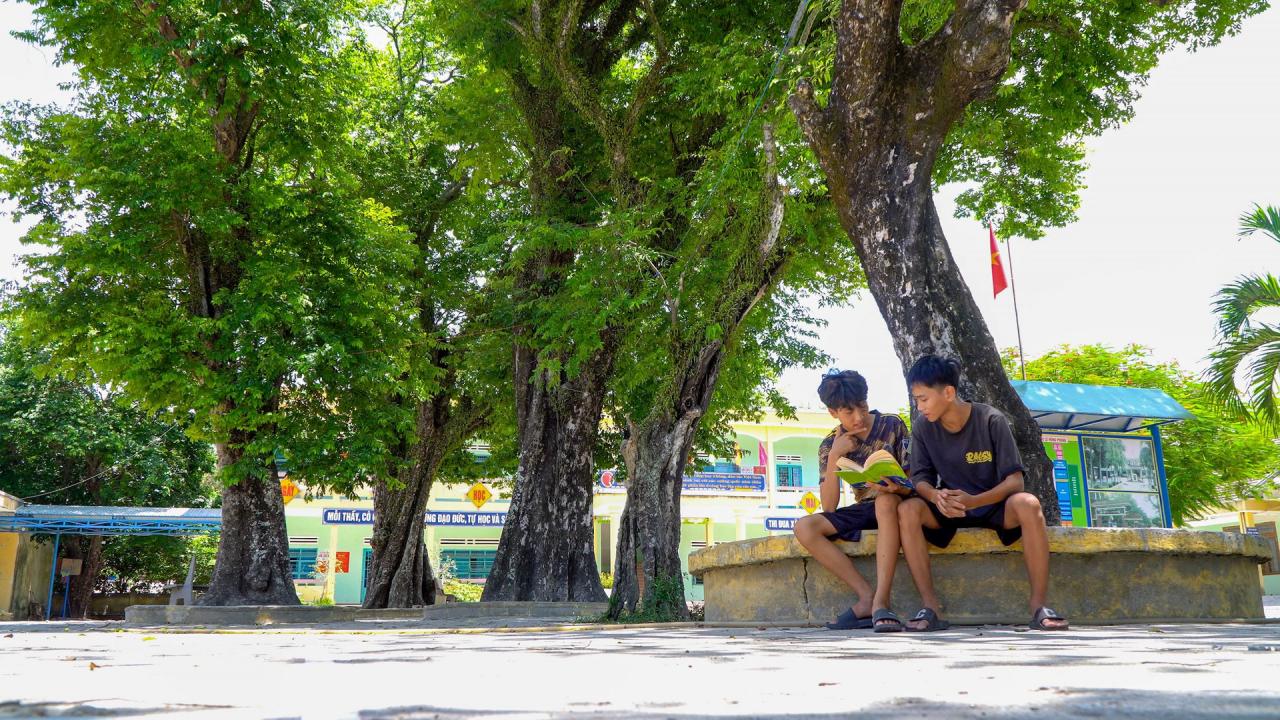
Witnesses of history
On the first day of school, students of Le Hong Phong Primary School gathered under the ancient persimmon trees during recess on a hot sunny day. We met Mr. Ho Xuan (born in 1946, Group 3, Hung My village), the security guard, who has been connected to this land, the school, and these persimmon trees for nearly 80 years.
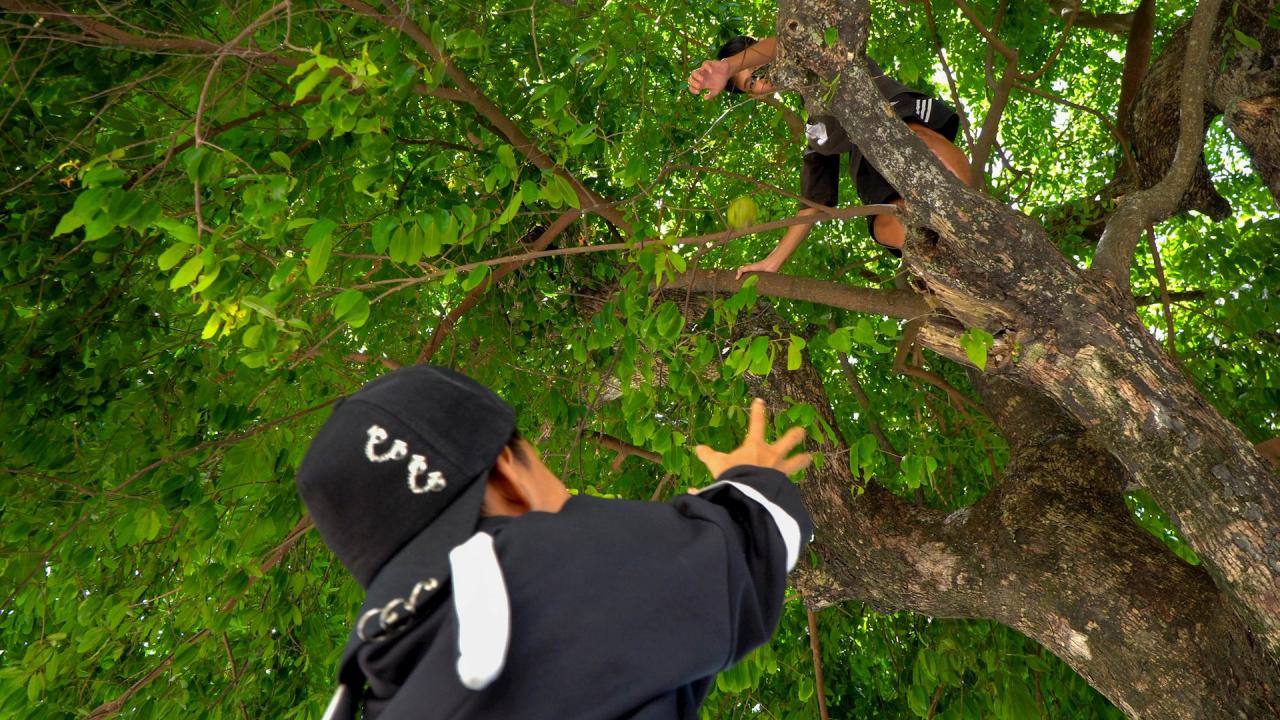
The house was just a few steps from the school, and the childhood memories of that "school gatekeeper, guarding the persimmon tree" were of days climbing persimmon trees to pick fruit to sell for a few thousand dong a dozen.
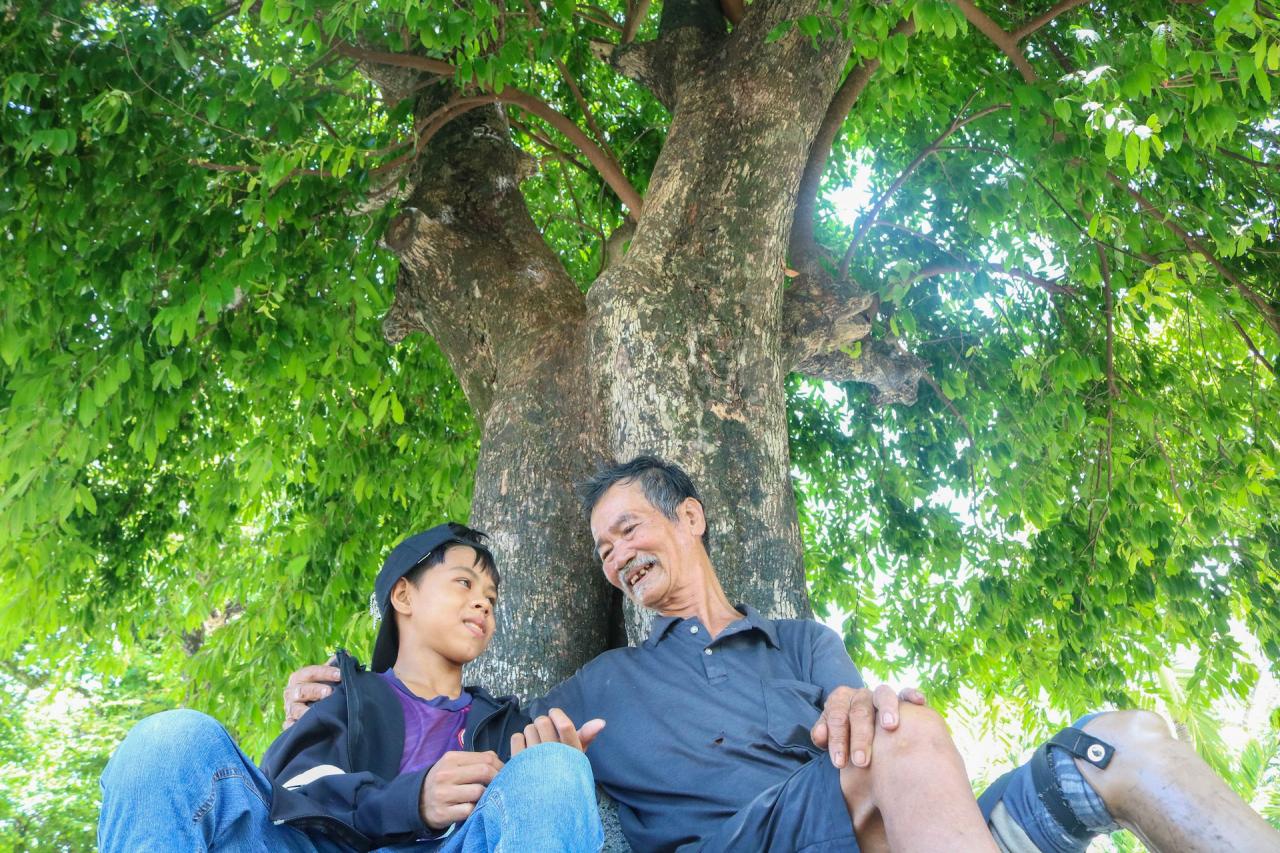
Recalling the origins of the ancient persimmon trees in his village, Mr. Xuan reminisced: “When I was a child, every midday the children in the village would climb the persimmon trees to play. The branches were sturdy, intertwined, and we could climb from one tree to another without fear of falling because the canopy was so strong. I also asked my grandparents about who planted these persimmon trees. But no one knew. My grandparents had seen these tall, large trees since they were children.”
Recounting the past with a choked voice, Mr. Xuan added that countless soldiers had sacrificed their lives under the 16 persimmon trees of Hung My village in the past. During the resistance against the Americans, this place served as an enemy prison camp, where many soldiers were tortured and executed.
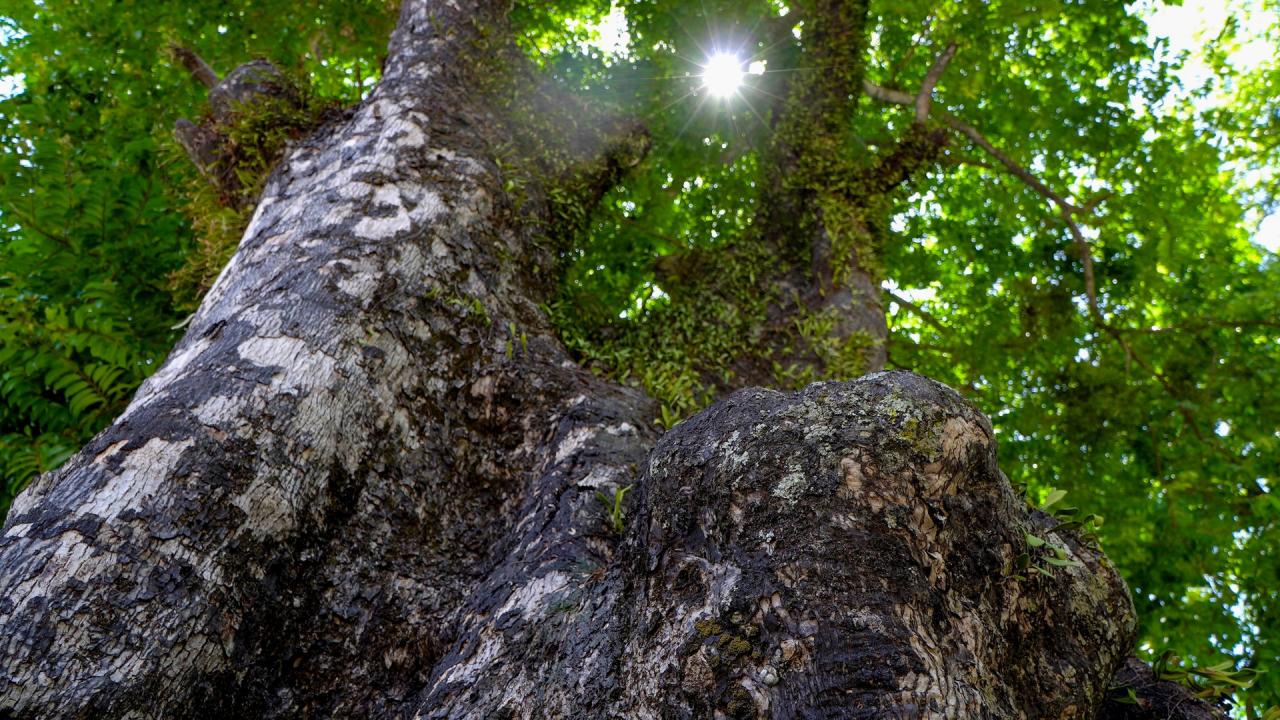
At the age of 93, Mr. Bui Loc (Group 6, Hung My village) said: "It's probably over 300 years old. My parents don't even know when it originated. I only remember that before 1975, I used to go to those ancient persimmon trees to play, eating the seeds from the unripe fruit and selling the ripe fruit. Whenever I go far away, I always miss the village and the persimmon trees."
Following the elderly villagers of Hung My, we entered the grounds of Le Hong Phong Primary School. The scent of persimmons wafted gently through the air. The shade of the persimmon trees covered the large courtyard. Some of the trees were about 30 meters tall, too large for four or five people to encircle. Many had rotten, hollow trunks; some still bore the scars of war, partially missing due to bombs and bullets. But the remaining 15 persimmon trees, having weathered storms and the passage of time, still stood tall, lined up from the gate to the back of the school.
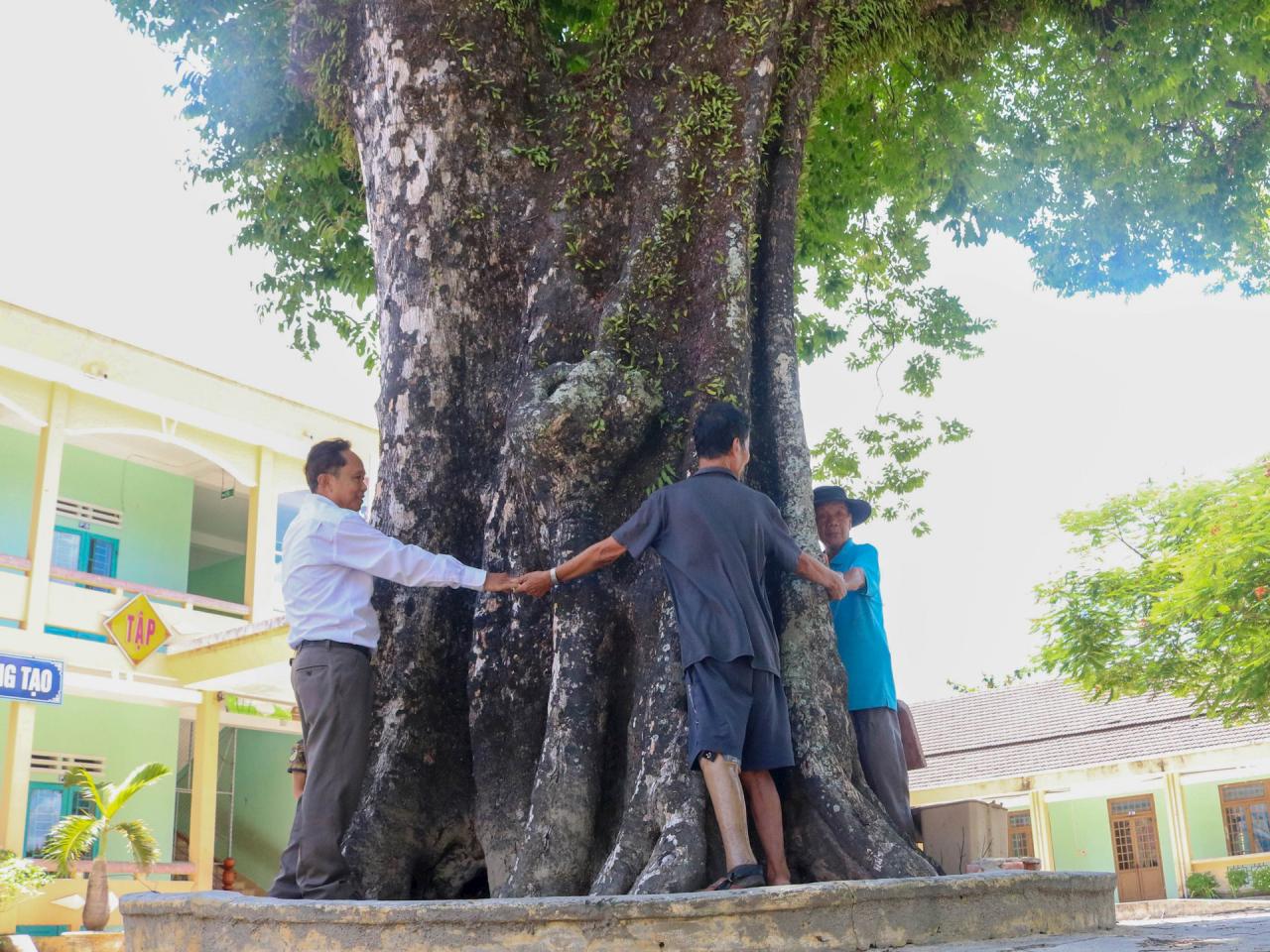
Having taught and served as principal at this school for 41 years, teacher Nguyen Van Ngoc emotionally recounted his time spent with the ancient persimmon trees: “My father was one of the people who built the school, but he didn't know who planted these persimmon trees or where they came from. During my time teaching, serving as vice principal, and then principal, I was dedicated to the Binh Trieu Provincial High School, later renamed Le Hong Phong Primary School… Countless generations of students have passed through, and under the shade of these persimmon trees are countless memories of flag-raising ceremonies, extracurricular activities, and all the joys and sorrows of school life…”
[ VIDEO ] - Elderly villagers share the history and origins of the ancient persimmon orchard in Hung My village:
Expected to become a heritage tree.
Despite surviving two wars, numerous school upgrades and road expansions, and village renovations, the ancient persimmon trees still stand tall. Aware of the value of these trees, the local people and authorities have preserved the original state of the land, protecting the trees and refraining from cutting them down.
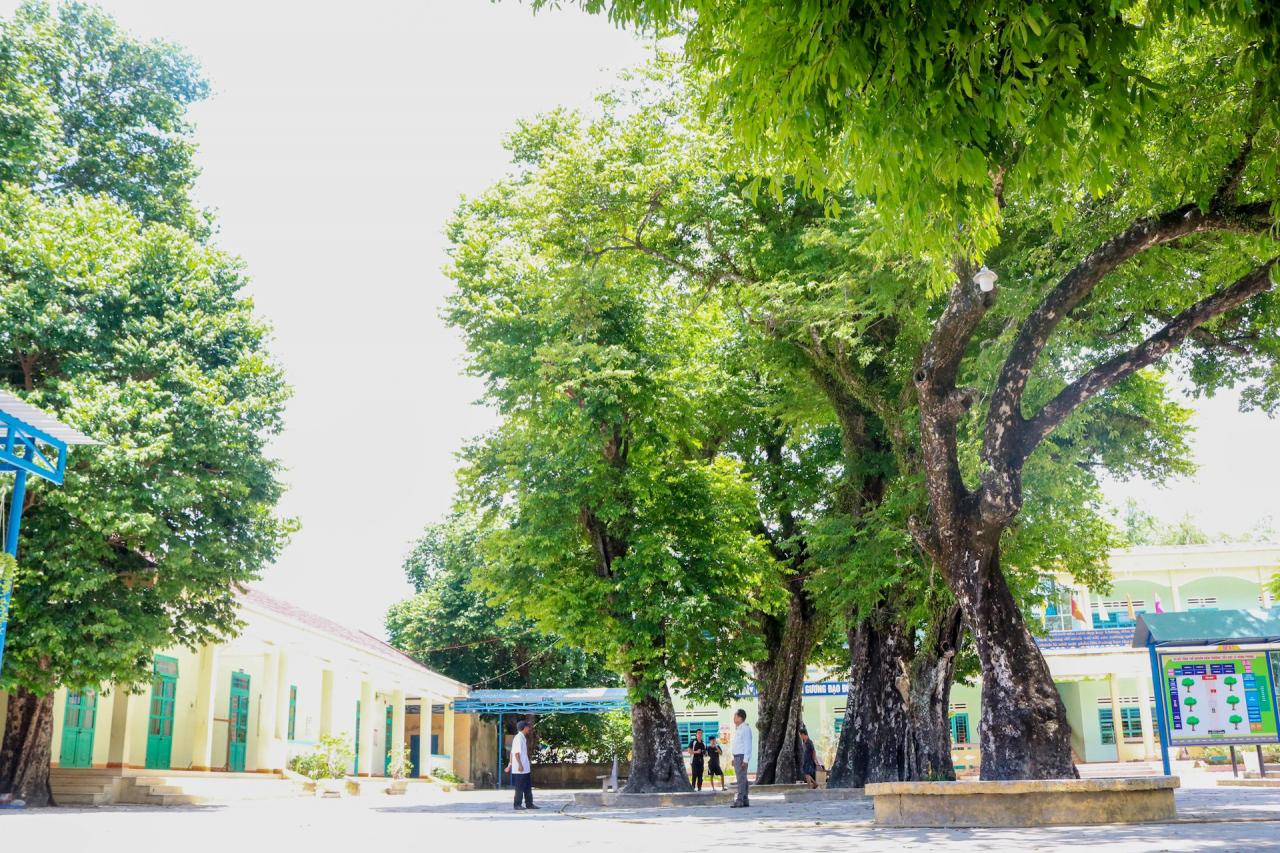
Mr. Huynh Viet Tien, Secretary of the Hung My village Party branch, said: "The persimmon trees in Hung My village are not only historical relics but also symbols of the people of Hung My, resilient in the face of nature, defiant in the face of the enemy, and always clinging to their land to protect their village throughout history."
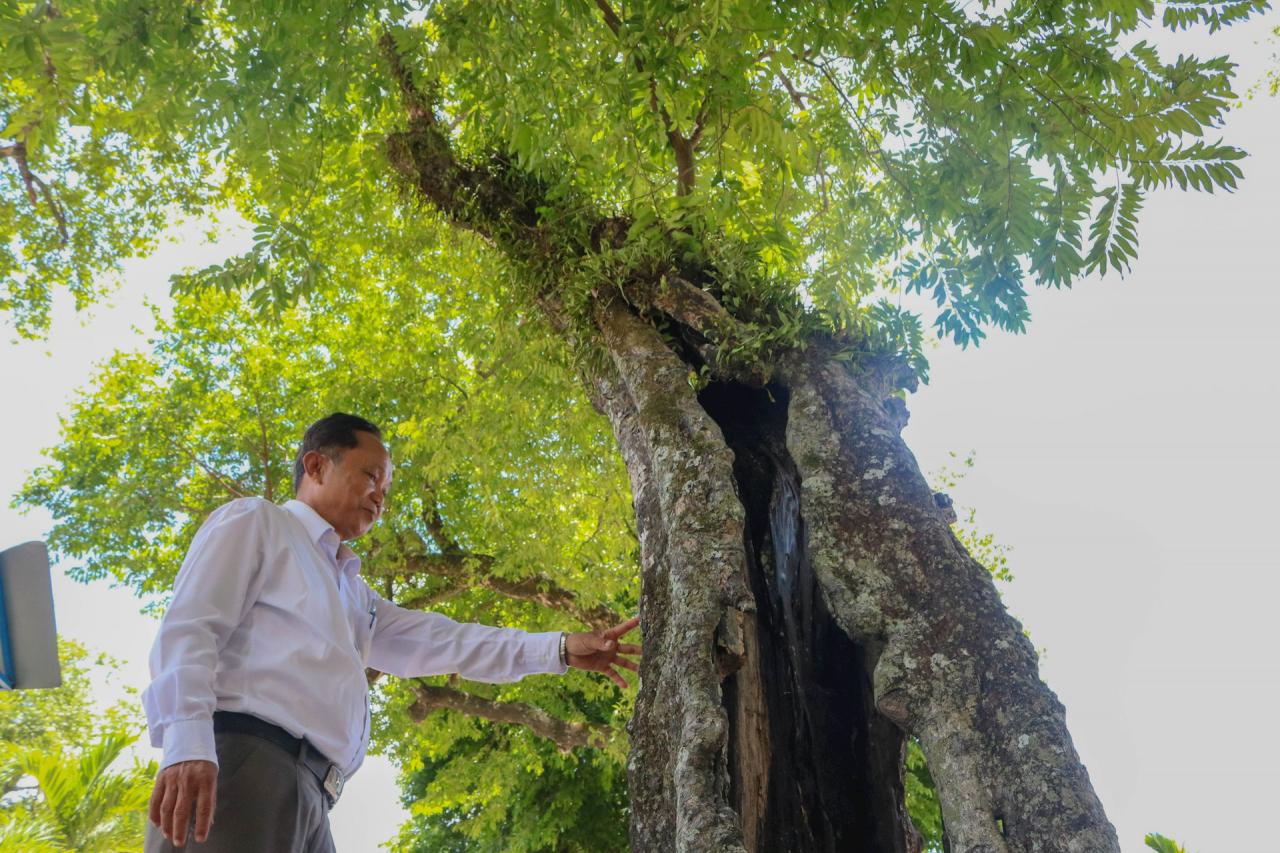
In response to the policy of building new rural areas and cultural villages, especially the policy of preserving and restoring cultural relics and heritage, we have surveyed and prepared documents to register the persimmon trees in Hung My village as Vietnamese Heritage Trees.”
The Vietnam Heritage Tree Conservation Initiative was launched by the Vietnam Association for Nature and Environment Protection on March 18, 2010, to mark the beginning of the United Nations-initiated Decade of Biodiversity.
To be recognized as a Heritage Tree, ancient trees must meet the following criteria: For naturally growing trees, they must be over 200 years old, over 40m tall, and have a circumference of over 6m for single-trunk trees; over 25m tall and 15m in circumference for banyan and fig trees. For planted trees, they must be over 100 years old, over 30m tall, and have a circumference of over 3.5m for single-trunk trees; over 20m tall and 10m in circumference for banyan and fig trees. The tree must have a distinctive shape (priority is given to species with landscape, cultural, and historical value). If a tree does not meet the technical criteria mentioned above, but has exceptional scientific , historical, cultural, or aesthetic value, it may be considered.
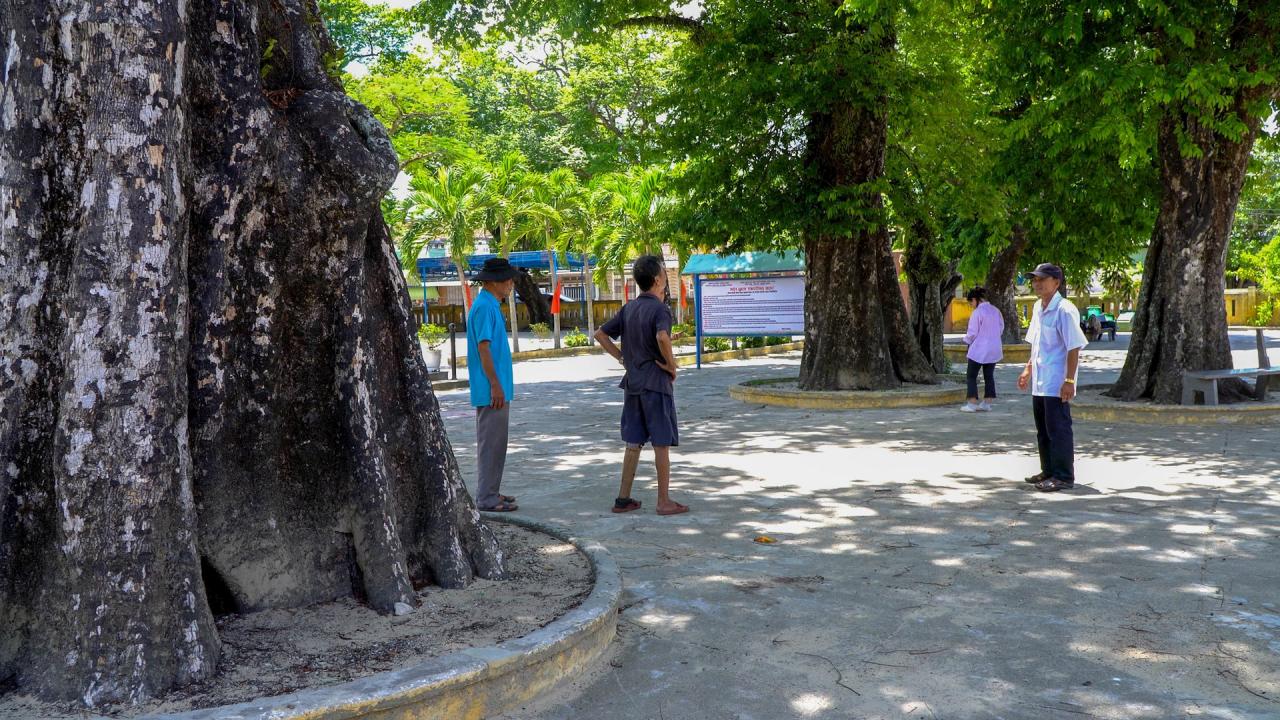
According to Mr. Nguyen Ba, Chairman of the People's Committee of Binh Trieu commune, more than 10 years ago, the locality paid attention to and reviewed the persimmon trees in Hung My village. In 2022, responding to the wishes of the people, the People's Committee of Binh Trieu commune submitted a proposal to higher authorities to recognize the persimmon tree as a Vietnamese Heritage Tree. And upon receiving the official letter from the Department of Culture and Information of Thang Binh district requesting the People's Committees of communes and towns to conduct a review and prepare dossiers for registration as a Vietnamese Heritage Tree, the People's Committee of Binh Trieu commune seriously implemented the request.
“To raise community awareness in nature conservation, biodiversity development, and improving the natural environment, as well as developing local tourism , we are carefully studying the size, height, coordinates… and the process of preparing the application for the recognition of the persimmon tree as a Vietnamese Heritage Tree. We plan to complete it by the end of September 2024,” Mr. Ba said.
Source: https://baoquangnam.vn/duoi-nhung-goc-thi-co-thu-lang-hung-my-3140918.html

![[Photo] General Secretary and President To Lam meets with National Assembly delegates from ethnic minorities.](https://vphoto.vietnam.vn/thumb/1200x675/vietnam/resource/IMAGE/2026/04/20/1776696701056_a1-bnd-8331-3342-jpg.webp)

![[Image] National Assembly discusses the implementation of the socio-economic development plan.](https://vphoto.vietnam.vn/thumb/1200x675/vietnam/resource/IMAGE/2026/04/20/1776696707422_ndo_br_img-20260420-185419-jpg.webp)


























































Comment (0)