

Experts predict that a quiet but profound shift in global financial dynamics may be imminent, significantly altering the relationship between the Chinese yuan and the US dollar.
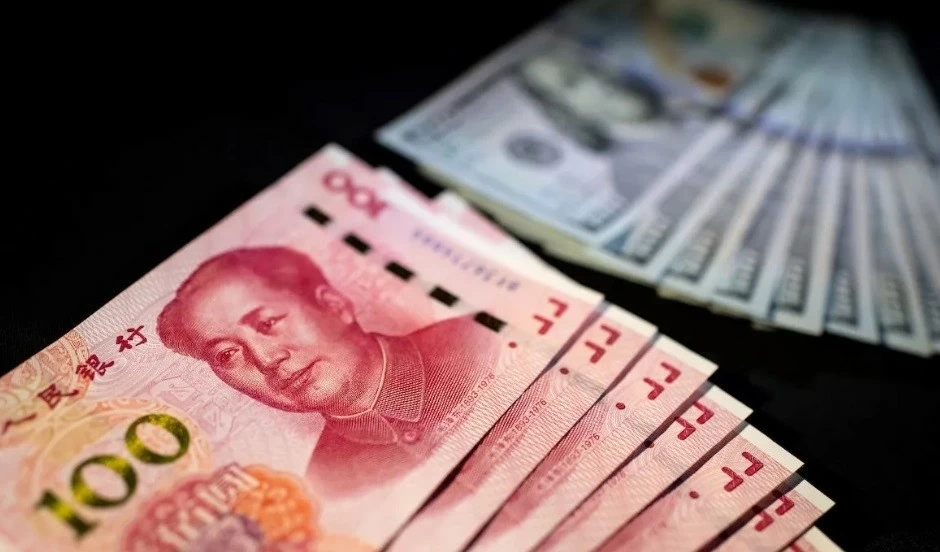 |
| The Chinese yuan could surge if Chinese companies convert $2 trillion into yuan to hedge against the Federal Reserve's interest rate cuts. (Source: Getty) |
The notable move by some Chinese companies to repatriate significant amounts of USD-denominated assets is central to this shift – a scenario that is likely to unfold as US interest rates are cut in the coming months.
Massive capital outflow is about to leave the US.
At the Jackson Hole economic symposium last week, Fed Chairman Jerome Powell made it clear that the Fed is ready to cut interest rates in September. Specifically, he said: “It’s time for policy to be adjusted. The path is clear, the timing and pace of the cuts will depend on upcoming data, changes in the outlook and the balance of risks.”
Powell stated that the Fed remains focused on its dual mission of bringing inflation down to 2% and boosting the job market, while also seeking to ease monetary policy.
The Fed's move is expected to trigger a wave of capital outflows back to China, with far-reaching impacts on the yuan, the dollar, and global currency markets in general.
Estimates suggest that Chinese companies have accumulated more than $2 trillion in overseas investments, the majority of which is deposited in dollar-denominated assets.
Since the outbreak of the Covid-19 pandemic, Chinese companies have reaped higher profits by shifting their business overseas and holding larger asset portfolios, primarily in US dollars. However, this trend may soon reverse given the Fed's decision to cool inflation and the growing economic challenges facing the world's largest economy.
As borrowing costs fall, the attractiveness of holding USD-denominated assets is likely to decrease, incentivizing Chinese companies to shift investments back to China.
Forecasts for the amount of repatriated investment vary, but estimates range from $400 billion to $1 trillion. Even at lower end of this range, the impact on the yuan could be significant, with some analysts predicting Beijing's currency could appreciate by as much as 10% against the US dollar.
Driving force
Analysts believe that the narrowing interest rate differential between the US and China is likely to fuel this trend. In recent years, Chinese companies have built a substantial overseas investment portfolio, ranging from US Treasury bonds to corporate bonds and numerous real estate holdings.
However, with the Fed's upcoming move, all calculations are gradually shifting.
In contrast to the challenging economic landscape in Washington, Beijing's economic environment remains relatively stable, although it still faces its own challenges. As a result, domestic investments are becoming more attractive as US bond yields decline. Therefore, this is an opportune time to redirect capital flows.
If US interest rates fall and the dollar loses some of its strength, Chinese companies may choose to repatriate funds, converting their dollar holdings into yuan. This could put upward pressure on the yuan's value, especially if there is a large inflow of capital.
A stronger yuan could signal a broader rebalancing of economic power, especially amid ongoing US-China tensions and the growing importance of the world's second-largest economy on the international stage.
While this scenario is possible, it remains uncertain. Several factors could influence the extent and timing of capital flight and, consequently, the appreciation of the RMB.
First and foremost, the People's Bank of China (PBOC) certainly cannot sit idly by and allow the yuan to appreciate uncontrollably. Beijing is known for its tight control over its currency and always intervenes when necessary to maintain stability.
If Chinese companies were to simultaneously transfer hundreds of billions, or even up to a trillion, of dollars, it could have far-reaching impacts on global markets.
The US dollar's dominance as the world's primary reserve currency has long been bolstered by strong demand for American assets. A significant shift in this demand could impact the dollar's value and potentially alter the balance of economic power between the two superpowers.
This isn't just a story for the US and China. A stronger yuan could also impact other currencies, especially in emerging markets that compete with China in export markets.
Furthermore, if the yuan appreciates significantly, it could give a competitive advantage to other Asian economies with weaker currencies by comparison and potentially reshape trade dynamics in the region.
Nevertheless, these factors still carry uncertainties, even though the possibility of a stronger yuan and a weaker dollar is real and could reshape the global economic landscape in different ways.
Source: https://baoquocte.vn/fed-manh-tay-cac-cong-ty-trung-quoc-dong-loat-thao-chay-thi-truong-tai-chinh-toan-cau-sap-doi-dien-voi-con-dia-chan-284644.html



























![[Photo] Prime Minister Pham Minh Chinh holds a phone call with the CEO of Russia's Rosatom Corporation.](/_next/image?url=https%3A%2F%2Fvphoto.vietnam.vn%2Fthumb%2F1200x675%2Fvietnam%2Fresource%2FIMAGE%2F2025%2F12%2F11%2F1765464552365_dsc-5295-jpg.webp&w=3840&q=75)












































Comment (0)