

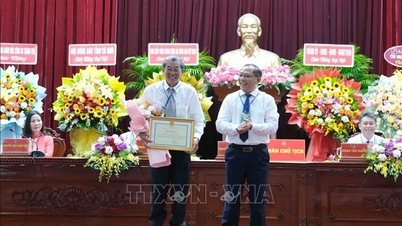
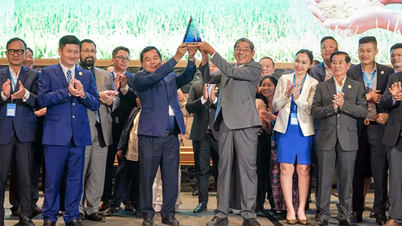
At the " Science, Technology, Innovation and Digital Transformation Week" organized by the People's Committee of Can Tho City on December 9th, engineer Ho Quang Cua's sharing about his journey in breeding the ST25 rice variety attracted the attention of many delegates.
Mr. Cua revealed that over 100 years ago, Vietnamese rice was famous in the European market. In the Mekong Delta, many delicious rice varieties such as Chau Hang Vo and Trang Tep were once renowned. However, when the scientific and technological revolution in rice varieties took place, these varieties were eliminated from the farmers' production areas.
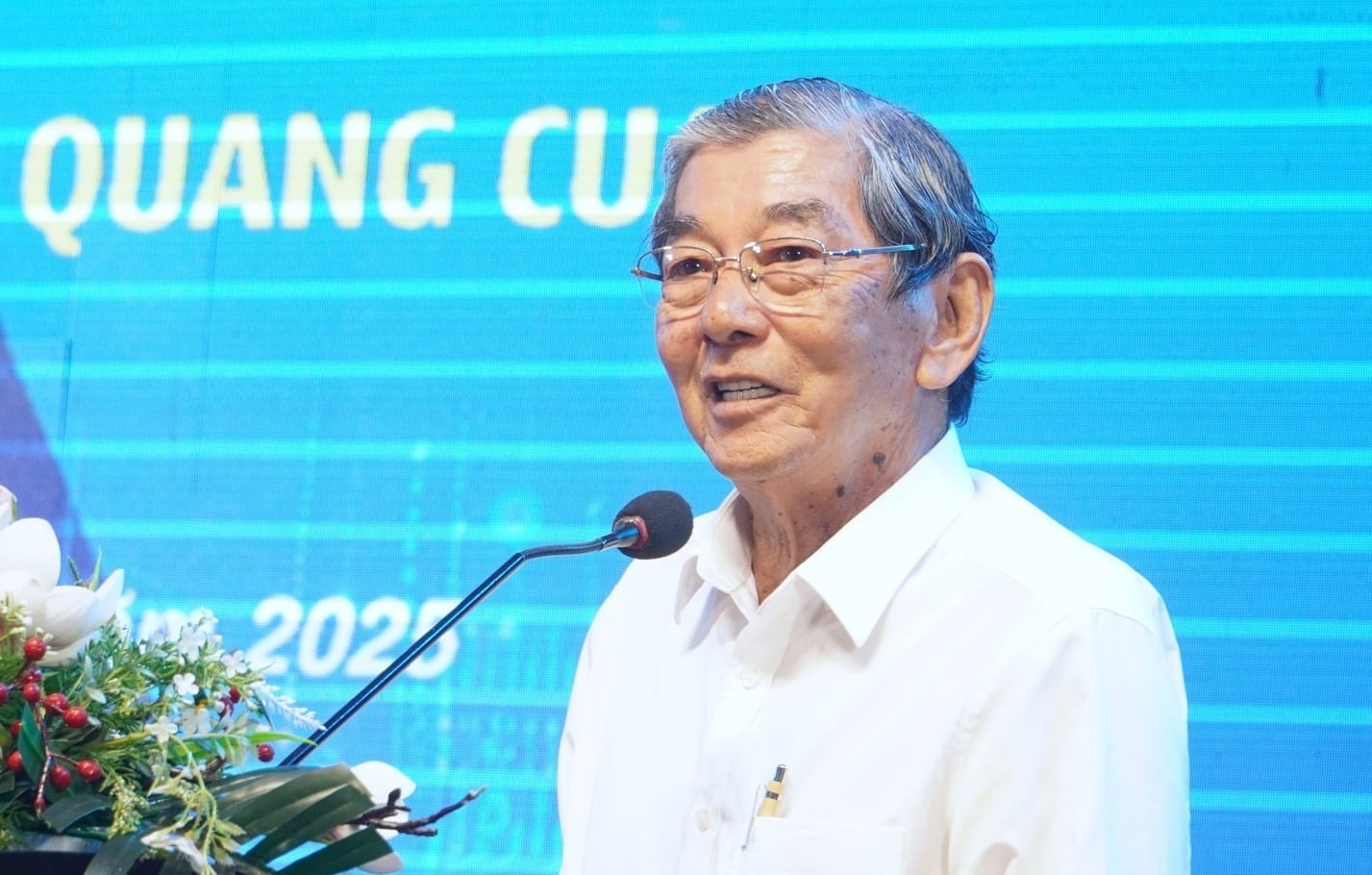
Engineer Ho Quang Cua shares his journey in breeding the ST25 rice variety. Photo: Kim Anh.
Initially, the research team for the ST25 rice variety, established by him and his colleagues, simply worked on it for fun, without high expectations. But as they began implementing the project and gradually learned, the team realized they needed to standardize their work. The rice variety absolutely had to be improved, shortening its growth period and ensuring it wouldn't be affected by photoperiod, meaning it could be grown year-round and yield high productivity.
The support of local leaders, the bold application by farmers, and the domestic demand for fragrant rice spurred him and his colleagues to come up with more ideas to breed the ST25 rice variety.
In 1980, engineer Ho Quang Cua began collecting fragrant rice varieties for experimental cultivation. By the late 1990s, while analyzing the quality of the ST3 rice variety from a project he supervised at the Soc Trang Department of Science and Technology, he found that ST3 closely resembled Khao Dak Mali rice from Thailand in terms of geometric, physical, and chemical properties, as well as rice quality.
By 2001, the time when ST3 was successful, Mr. Cua had also discovered the original variety of ST3, VDD20 (short-grain), which was a cross between a fragrant rice variety and two local short-grain fragrant rice varieties from Taiwan. From this foundation, the research team continued to crossbreed fragrant rice in the Mekong Delta with the Tam Tien Vua rice variety in the North. After two years of crossbreeding and 5.5 years of selection over 11 seasons, ST25 was sent for national testing and completed in 2018.
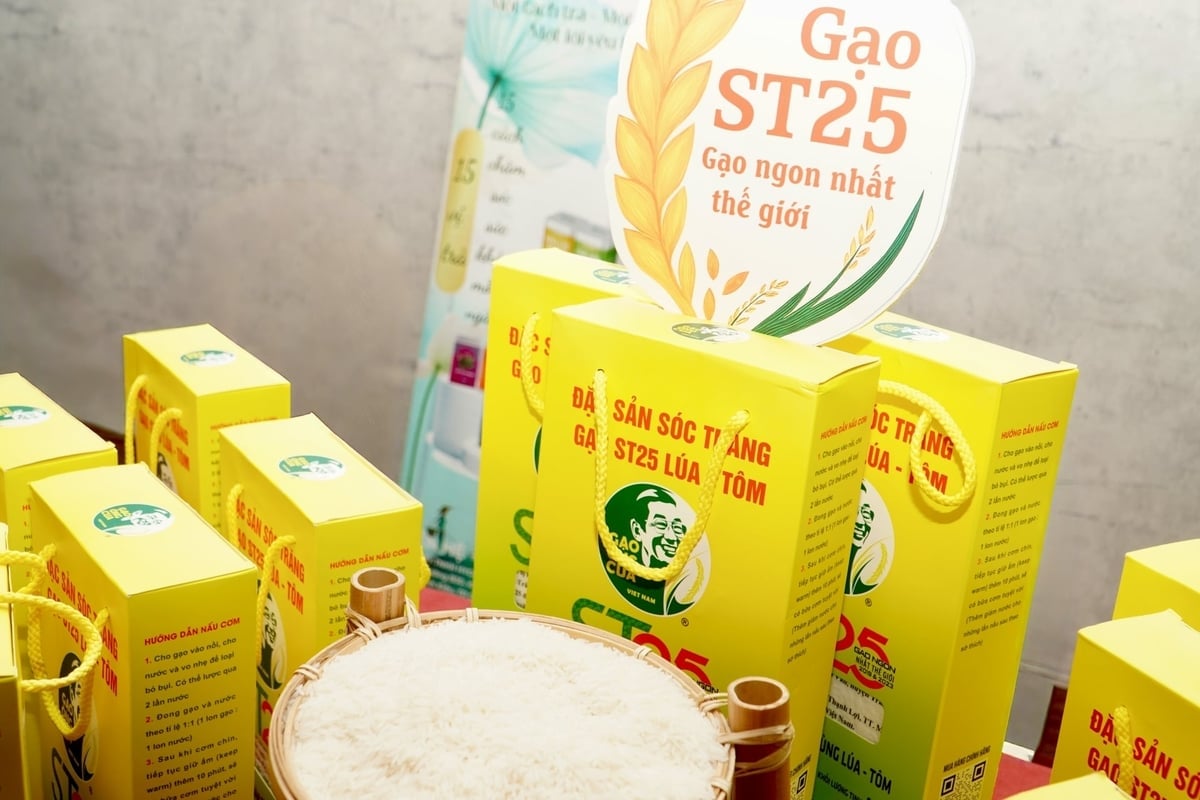
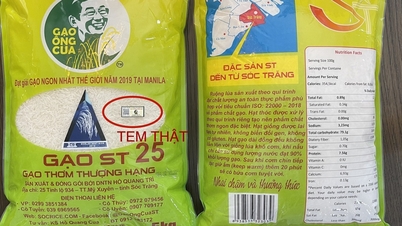
ST25 rice is delicious, flavorful, and rich in minerals when grown in coastal areas or in rice-shrimp rotation zones. Photo: Kim Anh.
Thanks to this, ST25 rice possesses a unique quality. Engineer Ho Quang Cua stated that ST25 is completely different from all other types of rice. The rice grains are only flavorful and rich in minerals when grown in coastal areas.
From a scientific perspective, Mr. Cua assessed that ST25 possesses all the elements necessary to determine the deliciousness of the rice grain as well as the taste preferences of consumers.
"Five years ago, a geneticist from Thailand asked me how we managed to beat them. I explained that it was due to a completely new factor that makes the rice so delicious, unlike the most famous award-winning rice varieties in the world ," engineer Ho Quang Cua recounted.
Another advantage is that, due to the complex hybridization of ST25, the research team was able to select many lines with good adaptability, which can be grown from the South to the North, from coastal areas to plains and even highlands.
In particular, the ST25 fragrant rice variety is currently "guarding" the front lines of Vietnam's climate change response, especially in rice-shrimp farming areas. In saline areas – where tiger shrimp are raised – as long as there is enough freshwater during the rainy season for 90 days, ST25 rice can be grown. This has created new awareness among farmers about climate change and reduced greenhouse gas emissions.
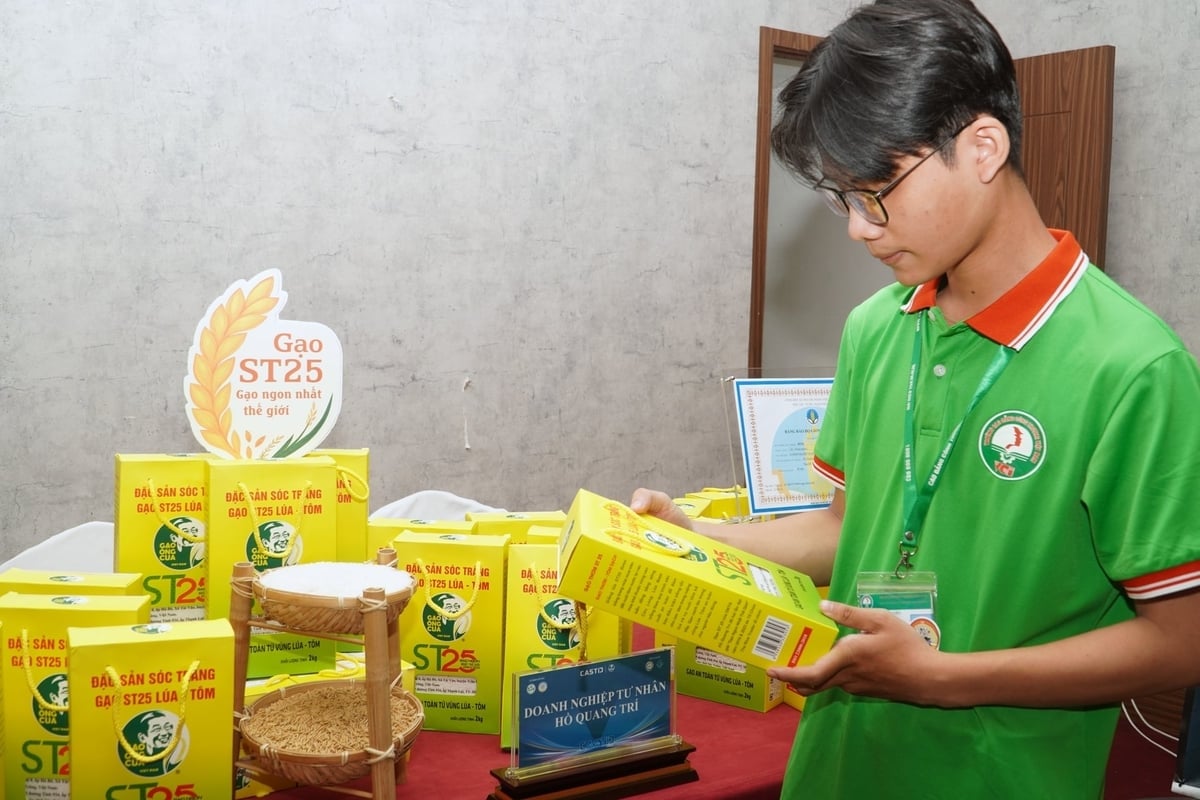
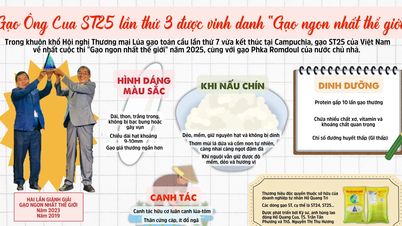
Having won first prize three times at the "World's Best Rice" competition, ST25 rice is increasingly trusted and chosen by consumers. Photo: Kim Anh.
According to Mr. Cua, if ST25 rice is grown in rice-shrimp farming areas, the emission reduction efficiency will be significantly higher compared to growing it in areas solely dedicated to rice cultivation. This is because after each shrimp crop, the fields are drained to remove salt and collect rainwater, a process that greatly reduces emissions. Furthermore, to facilitate mechanization, the fields must be drained three times, thus multiplying the cost reduction efficiency.
In terms of productivity, Mr. Cua calculated that the average yield of fresh ST25 rice in the rice-shrimp farming area is nearly 7 tons/ha, among the highest currently. Currently, the price of ST25 rice is about 3,000 VND/kg higher than other local rice varieties, generating significant income for farmers.
Source: https://nongnghiepmoitruong.vn/gao-st25-ngon-nhat-the-gioi-nho-pham-chat-khong-giong-ai-d788624.html













![Green tea pork: [Part 2] A new specialty brand from Thai Nguyen](https://vphoto.vietnam.vn/thumb/402x226/vietnam/resource/IMAGE/2025/12/10/1765338249553_2114-img_6953-nongnghiep-112106.jpeg)





![[Video] The craft of making Dong Ho folk paintings has been inscribed by UNESCO on the List of Crafts in Need of Urgent Safeguarding.](https://vphoto.vietnam.vn/thumb/402x226/vietnam/resource/IMAGE/2025/12/10/1765350246533_tranh-dong-ho-734-jpg.webp)















































Comment (0)