

The Ca Mau Provincial Fisheries Department, in collaboration with the Fisheries School (Can Tho University), recently organized a training course on two-stage shrimp farming techniques for members of the Tan Thanh hamlet cooperative (Dam Doi commune, Ca Mau province). This is an important step in promoting the application of science and technology in production, helping farmers access modern farming processes.
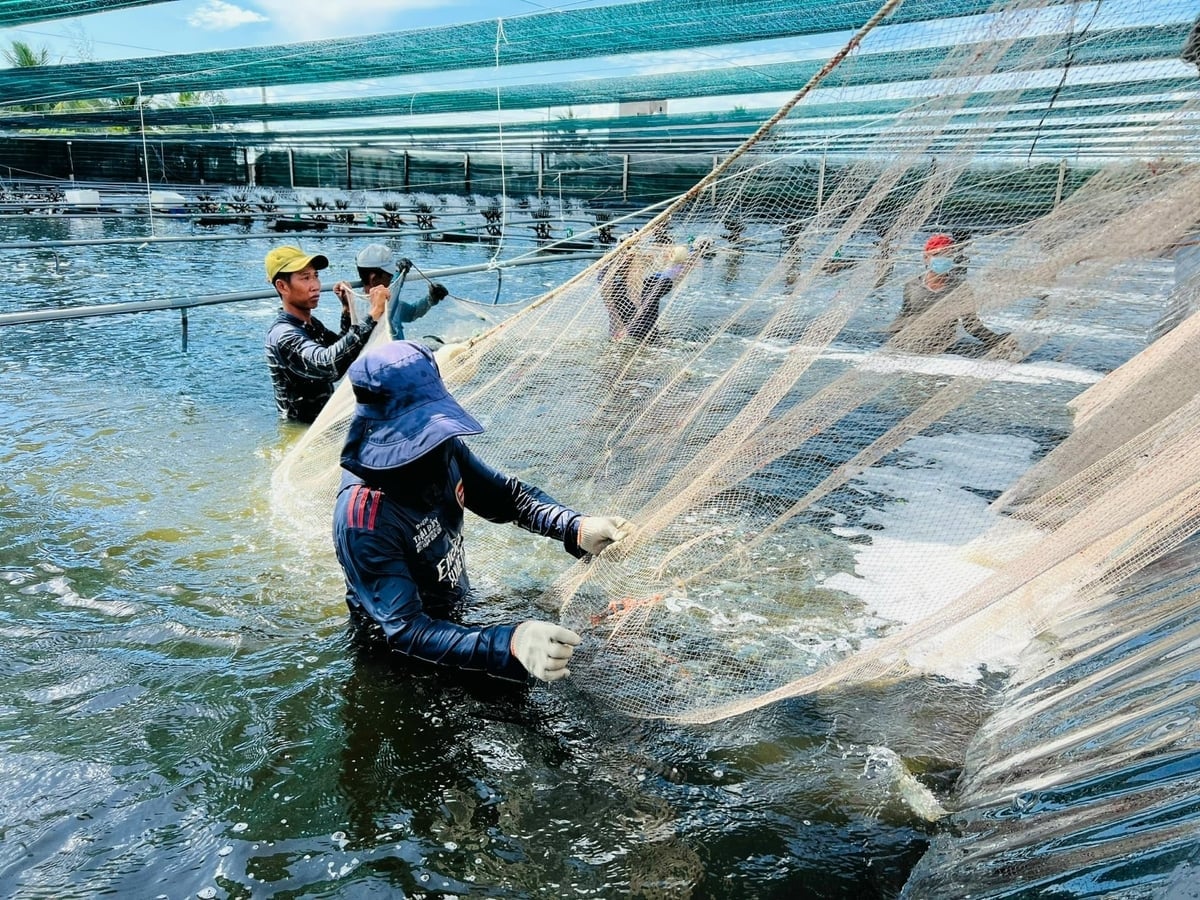
The high-tech shrimp farming model in Ca Mau is highly regarded for its success rate. Photo: Trong Linh.
The Tan Thanh hamlet cooperative currently has 30 members participating in a two-stage shrimp farming model on an area of 40 hectares. For many years, this area has been recognized as one of the regions that boldly applies scientific and technological advancements. As a result, the average income reaches 5-8 million VND/month/household, with some households achieving 10-20 million VND/month.
At the training course, Associate Professor Dr. Chau Tai Tao - lecturer at the School of Fisheries ( Can Tho University) - introduced in detail to the farmers the two-stage shrimp farming process based on the application of biotechnology and a modern environmental management system. This included preparing nursery ponds and grow-out ponds, establishing aeration and bottom oxygenation systems, managing the microbial ecosystem, determining appropriate stocking density, using biological products, and implementing disease prevention methods according to biosafety standards. The combination of scientific knowledge and practical experience was deemed essential to help farmers easily access and apply the techniques directly to their own ponds.
According to Associate Professor Dr. Chau Tai Tao, the two-stage shrimp farming model is the dominant trend in the modern shrimp industry due to its superior environmental management capabilities. In the first stage, shrimp are reared in a closed environment with a system of machinery to continuously monitor water quality. The shrimp's resistance is enhanced from a young age thanks to a stable microbial ecosystem. When transferred to commercial ponds, the shrimp grow quickly and uniformly, their health is easier to manage, thus shortening the farming time and increasing productivity.
Mr. Nguyen Minh Duong, a member of the Tan Thanh hamlet cooperative, said that in the past, traditional farming methods often faced many difficulties such as slow shrimp growth, unstable pond environments, and a high risk of disease. Feed costs and environmental treatment also increased with each harvest. When switching to a two-stage farming system, the pond environment is tightly controlled.
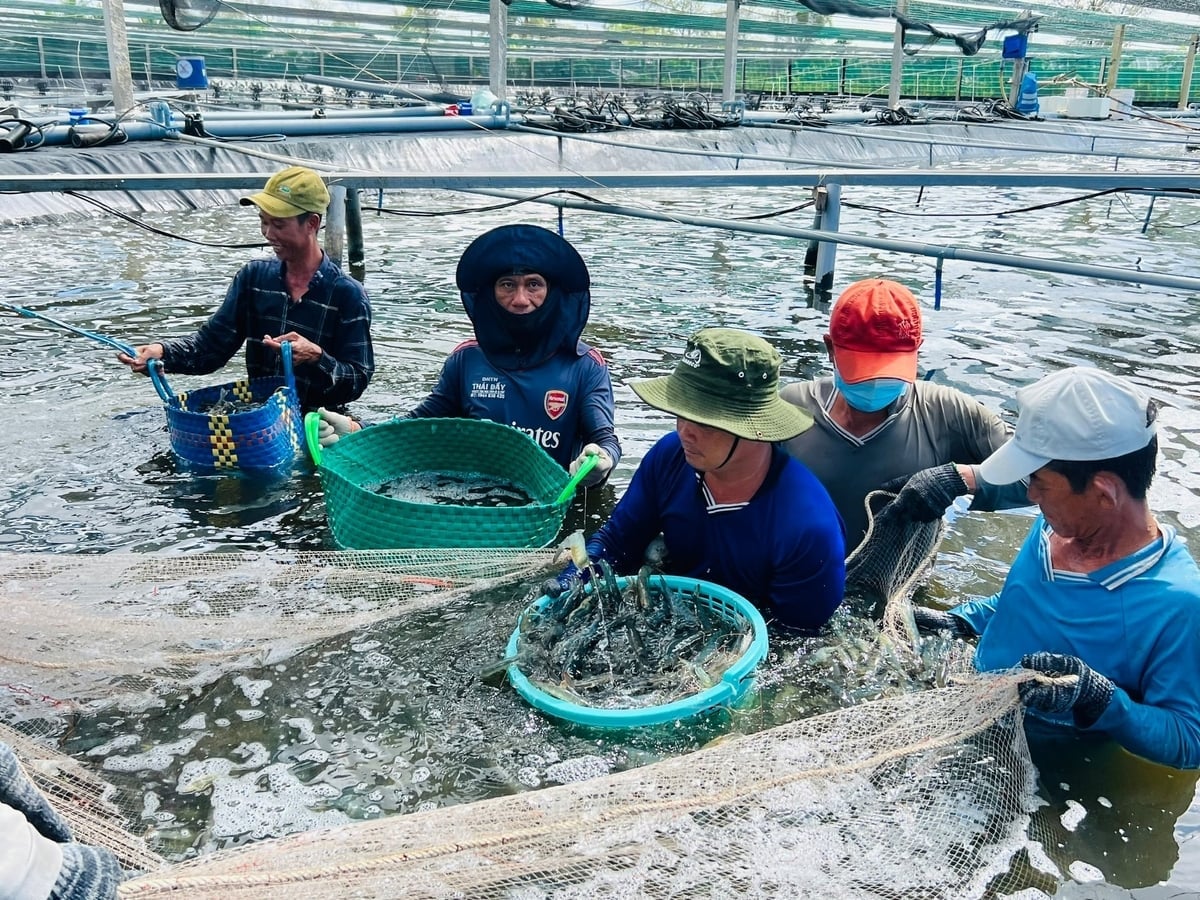
Combining scientific knowledge and practical experience is considered essential to make it easier for farmers to access and apply this knowledge to their fish ponds. Photo: Trong Linh.
Although the initial investment is higher due to the need to build nursery ponds and water treatment systems, according to Mr. Duong, the economic efficiency is many times greater, especially when environmental indicators are well managed and recommendations from experts are followed correctly. Thanks to the stability and significantly increased profits, many members of the cooperative hope that the model will be replicated in the future.
The Ca Mau Fisheries Department stated that the training program not only helps farmers master the farming process but also provides opportunities for practical application and direct guidance on operating models. This is an important direction to shift from production practices based on experience to a production model that applies biotechnology, environmental monitoring, and risk management according to international standards.
The locality aims to continue expanding biosecure shrimp farming areas, promote the application of science and technology, and build linkages between cooperatives, businesses, and research institutions to enhance the value of Ca Mau shrimp products.
Source: https://nongnghiepmoitruong.vn/ca-mau-ung-dung-khoa-hoc-cong-nghe-nuoi-tom-2-giai-doan-d788474.html












![Green tea pork: [Part 2] A new specialty brand from Thai Nguyen](https://vphoto.vietnam.vn/thumb/402x226/vietnam/resource/IMAGE/2025/12/10/1765338249553_2114-img_6953-nongnghiep-112106.jpeg)





![[Video] The craft of making Dong Ho folk paintings has been inscribed by UNESCO on the List of Crafts in Need of Urgent Safeguarding.](https://vphoto.vietnam.vn/thumb/402x226/vietnam/resource/IMAGE/2025/12/10/1765350246533_tranh-dong-ho-734-jpg.webp)















































Comment (0)