

Regarding the review of the continued implementation of the 2% value-added tax reduction policy, the Finance and Budget Committee expressed its agreement, but noted: Some members of the Committee still have concerns about the Government 's explanations when proposing the VAT reduction for the last six months of 2023.
The assessment of the implementation of the VAT reduction policy in 2022, as presented in the Government's Impact Assessment Report No. 226/BC-CP, which serves as the basis for proposing further VAT reduction policies, may not be entirely consistent with reality.
The government believes that the VAT reduction solution under Resolution No. 43/2022/QH15 has indirectly stimulated domestic consumption, with total retail sales of goods and consumer service revenue in 2022 increasing by 19.8% compared to the previous year, contributing to macroeconomic stability with many positive indicators in economic development in 2022.
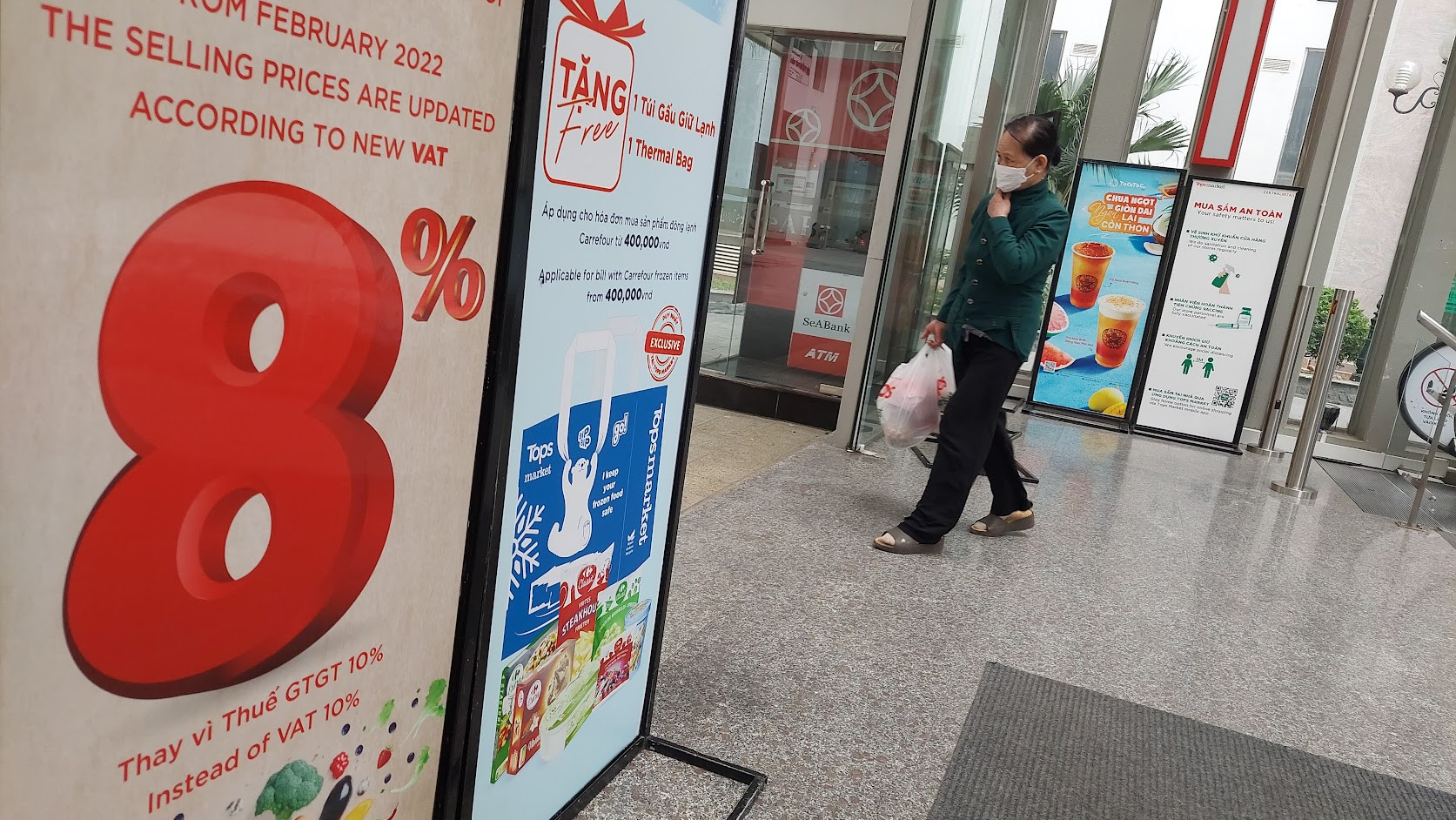
However, purchasing power and consumption at the present time are different from the context of 2022. In 2022, people's purchasing power and consumption surged and grew strongly after being suppressed by the pandemic. At this stage, both people and businesses are facing significant difficulties.
Therefore, some opinions within the Finance and Budget Committee suggest that the VAT reduction policy in the second half of 2023 is unlikely to have the same effect on stimulating demand and promoting growth as in 2022. Accordingly, it is proposed that stimulus measures in 2023 focus on removing bottlenecks to increase disbursement and maximize the effectiveness of public investment spending in the economic recovery package, rather than continuing policies to reduce budget revenue.
There are also opinions that the 2% VAT reduction policy under Resolution No. 43/2022/QH15 expired on December 31, 2022. From the beginning of 2023, the 10% VAT rate was reinstated for these product groups as stipulated in the VAT Law. At the end of 2022, many associations and localities requested an extension of Resolution No. 43/2022/QH15.
If this solution had been implemented from the beginning of January 2023, it would have created more favorable conditions for the production and business sector. The government's proposal to reduce VAT from July 1, 2023, is relatively late, and the tax reduction has not been implemented continuously, so the policy has not had much effect on businesses.
"Disruptions in policy implementation also lead to other limitations and costs in management and implementation, complicate the transition process for businesses, and affect input VAT deductions," the Finance and Budget Committee shared.
The majority of opinions within the Committee agreed on the period for applying the VAT reduction policy as from July 1, 2023 to December 31, 2023.
However, some argue that implementing the policy in the last six months of 2023 may not allow sufficient time for it to take effect, making it difficult to achieve its objectives. Therefore, it is suggested that consideration be given to extending the policy's implementation period beyond the government's proposal to ensure stability, proactive implementation, and sufficient time for the policy to be effective.
Extending the holiday period beyond Tet would stimulate demand more effectively.
In discussions with VietNamNet reporters, many businesses and associations also suggested that the application cycle needs to be re-evaluated.
Mr. Nguyen Chanh Phuong, Vice Chairman of the Ho Chi Minh City Handicraft & Wood Processing Association (Hawa), assessed that the 2% VAT reduction is very good, but it needs to be implemented sooner.
According to him, as early as October/November 2022, associations and large businesses had already proposed this issue and were ready to reduce VAT by 2% at that time.
"We missed the opportunity to stimulate demand during two peak consumption periods: the Lunar New Year 2023 and the recent long April 30th - May 1st holiday," said Vice President Hawa, adding that if the proposed 2% VAT reduction is approved, a more reasonable period would be from September 1st, 2023 to March 1st, 2024, encompassing the entire Lunar New Year consumption season in 2024.
According to him, there could be regulations requiring tax adjustments to follow a semi-annual cycle for the fiscal year, but a reasonable VAT reduction cycle that effectively supports the production and business activities of enterprises is a bold decision that needs consideration. Demand should be stimulated at a time when people are focused on shopping.
Mr. Phuong cited an example: in some open economies, authorities allow businesses to proactively schedule tax reductions to suit their specific industries. Some industries focus on Tet (Lunar New Year) consumer goods, while others concentrate on other occasions. The accounting is the responsibility of the businesses themselves; they manage the tax cycle independently, and the tax authorities monitor based on the total cycle time.
Sharing the same view, Mr. Nguyen Ngoc Hoa, Chairman of the Ho Chi Minh City Business Association, said that the 2% VAT reduction cycle should be extended to increase the policy's impact. Policies are issued with a time lag, requiring time to be absorbed into product costs and selling prices. Ideally, the VAT reduction from 10% to 8% should be extended beyond the Lunar New Year 2024, a time when domestic consumer demand increases.
In addition, authorities should also consider other taxes that could be exempted or reduced during this period, such as reducing registration tax. Despite the difficult economic situation, there are still groups of customers who are eligible to buy houses and cars, and it is necessary to stimulate their spending.
Mr. Nguyen Van Khanh, Vice Chairman of the Ho Chi Minh City Leather and Footwear Association, also believes that this policy will somewhat stimulate consumer demand, but the application cycle needs to be longer, because if it only lasts until the end of the year, that is too short.
The government proposes continuing to implement the 2% VAT reduction policy as stipulated in Resolution No. 43/2022/QH15 dated January 11, 2022, of the National Assembly on fiscal and monetary policies supporting the socio-economic recovery and development program. Specifically: A 2% reduction in the value-added tax rate applies to groups of goods and services currently subject to a 10% tax rate (now 8%), except for the following groups of goods and services: telecommunications, information technology, financial activities, banking, securities, insurance, real estate business, metals, prefabricated metal products, mining products (excluding coal mining), coke, refined petroleum, chemical products, and goods and services subject to excise tax. |
Source































































































Comment (0)