


Hai Phong is promoting the implementation of waste classification at source, synchronizing collection, propaganda and monitoring models in each locality, contributing to improving the effectiveness of environmental management.
Efforts to increase waste sorting rates and reduce waste generation.
Records in some areas show differences in conditions and habits between urban and rural areas, but all are making efforts to increase the rate of people participating, aiming to reduce the load on landfills and improve the living environment.
Dong Hai Ward currently has 26 garbage collection points, operating continuously in four shifts a day from 4:30 a.m. to 11:00 p.m., non-stop during the week. Every day, the locality generates about 10 m³ of household waste.
Waste sorting at source has been strongly implemented since 2024, following the policy of Hai An district before the merger. After implementing the two-tiered government model, the People's Committee of the ward continues to issue plans to raise awareness, limit the use of single-use plastics, and maintain the "Green, Clean, and Beautiful Sunday" movement.
According to the Chairman of the People's Committee of Nguyen Trong Khiem Ward, to date, 12,222 out of a total of 13,166 households (92.83%) have implemented waste sorting at source. 100% of schools in the area have incorporated environmental protection into their curriculum and extracurricular activities. Organizations such as the Women's Union, Youth Union, and Veterans' Association maintain bright, green, clean, and beautiful streets; organize recyclable waste exchange programs; and guide members in making bio-fertilizer from organic waste.
The biggest challenge facing the locality currently is the lack of temporary waste collection points and facilities for waste collection due to limited funding. The indiscriminate dumping of garbage in the Phuong Luu regulating lake area has caused public outrage; the ward has established a task force to address the issue, and so far no new violations have been recorded. This is a common challenge for inner-city wards experiencing rapid urbanization.
In the coming time, Dong Hai ward will launch emulation among residential groups, commend typical models; establish propaganda teams and monitoring teams at the grassroots level; review garbage collection points and strengthen inspection and handling of violations of illegal dumping and unclassified garbage.
Another locality is An Duong ward, home to approximately 20,000 families with 70,000 residents. The amount of household waste generated daily reaches about 70 tons. Collection, transportation, and processing achieve a 99.9% success rate. Over 18,400 households in the ward, representing 91.8% of the total, are currently practicing waste sorting at source.
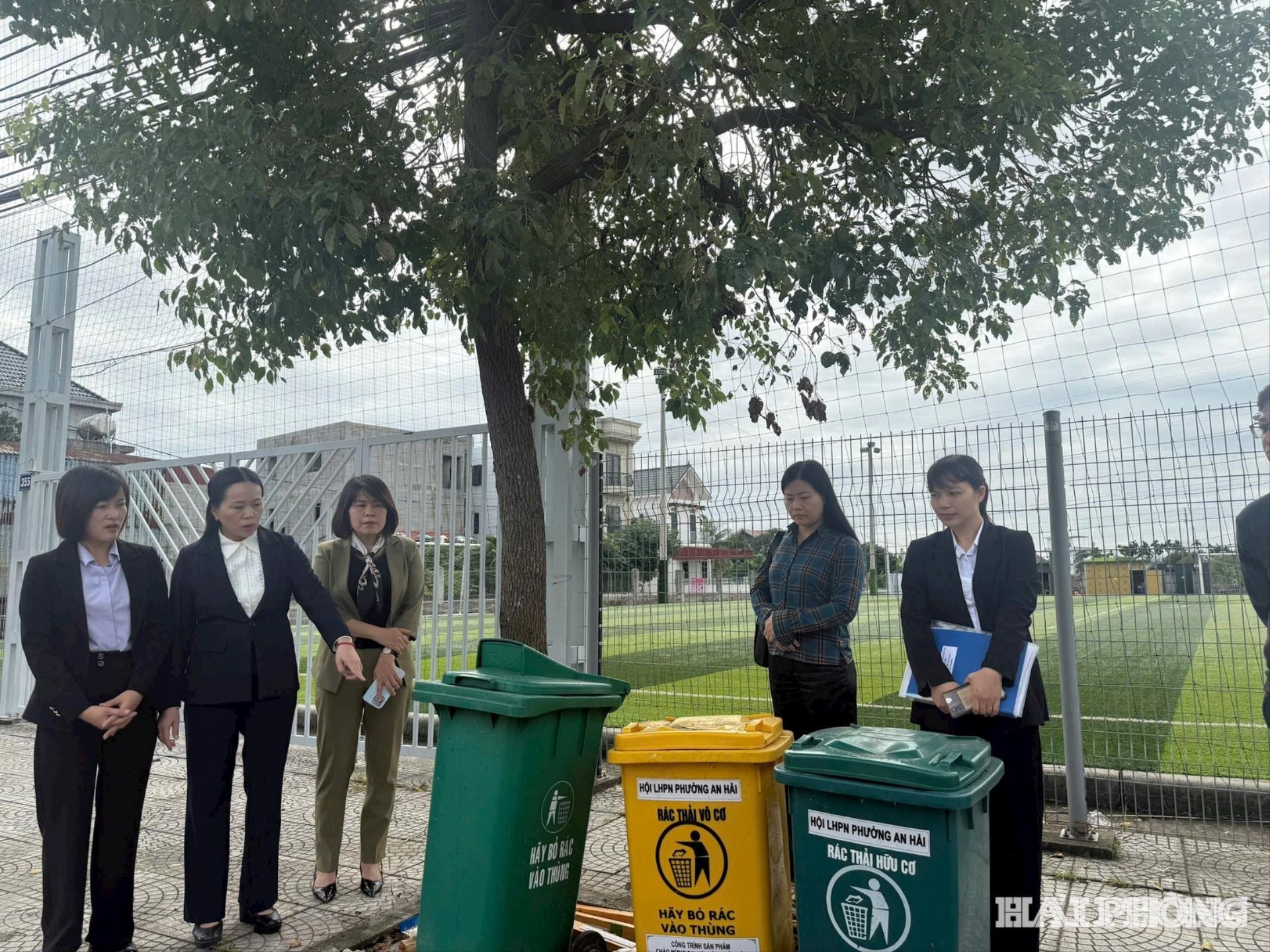
However, the process of classifying domestic solid waste at source still faces difficulties. The infrastructure for collection, transportation and treatment is not synchronous and does not meet the requirements; many waste collection points are not suitable for planning, have small areas and do not ensure technical requirements for environmental protection.
Scaling up the composting model
In a purely agricultural locality like Vinh Lai, household waste collection is carried out by 25 collection teams with 65 workers, collecting two to three times a week. The amount of waste generated in the whole commune is about more than 13 tons per day.
The rate of people participating in waste sorting at source is about 45%, lower than in urban areas due to differences in awareness, habits and economic conditions. The collection staff are mainly people past working age, and the maintenance cost is only 3,000 to 5,000 VND per person/month.
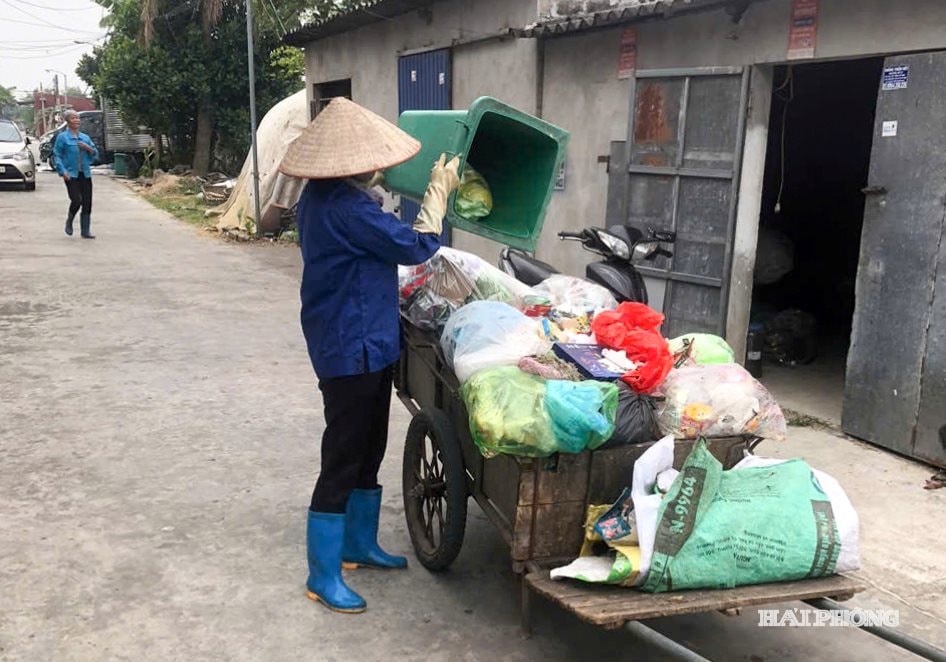
Despite the difficulties, the commune still effectively maintains community models such as women's roads, veteran roads and self-managed youth unions. The model of classifying organic waste to compost humus into fertilizer, initiated by the Women's Union and the Farmers' Association, has been initially implemented in a number of households.
Over the past year, the commune has inspected and issued warnings to 3 cases of violations related to wastewater discharge causing environmental pollution.
The commune's People's Committee leaders stated that in the coming time, they will continue to expand the model of composting organic waste; maintain leveling and processing at centralized landfills; and spray biological agents to reduce odor and limit the spread of pollution. The commune aims to increase the rate of waste sorting at source, striving for 100% of households to do so in the future. At the same time, they requested the city to invest in a waste treatment plant to replace the current landfill method, and to provide additional equipment for the waste collection force.
Every day, Hai Phong generates more than 3,300 tons of solid household waste. From urban areas to rural communes, localities are gradually increasing the rate of waste sorting and implementing organic composting models suitable to local conditions. When sorting at source is implemented synchronously, the amount of waste requiring processing will be significantly reduced, thereby easing pressure on landfills and improving the quality of the living environment.
KIM GIANGSource: https://baohaiphong.vn/hai-phong-thuc-day-phan-loai-rac-tai-nguon-529054.html














![[Podcast] National Assembly approves personal allowance deduction of VND 15.5 million/month](https://vphoto.vietnam.vn/thumb/402x226/vietnam/resource/IMAGE/2025/12/10/1765340032834_hnm-1cdn-vn-thumbs-540x360-2025-11-04-_hnm-1cdn-vn-thumbs-540x360-2025-06-27-a7b22b8722-_thu.jpeg)






























































Comment (0)