

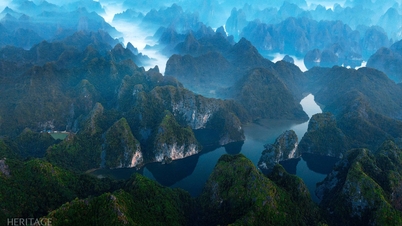
Son Doong Cave, one of the world's most magnificent natural wonders, is located in the core area of Phong Nha-Ke Bang National Park, in Quang Binh province. Not only is it a source of pride for Vietnam, but this cave also serves as proof of nature's miraculous power in creating structures that surpass human imagination.
The story of the discovery of Son Doong Cave began in 1990, when Mr. Ho Khanh, a forest worker in Phong Nha, accidentally found the cave entrance while sheltering from the rain. The large cave ceiling, shrouded in thick fog, and the sound of rushing water emanating from it astonished him. However, for various reasons, this discovery was gradually forgotten until a British-Vietnamese expedition led by Howard Limbert, with the support of Mr. Ho Khanh, conducted a survey in 2009. It was from this expedition that Son Doong was confirmed as the world's largest natural cave, with a volume of up to 38.5 million cubic meters. 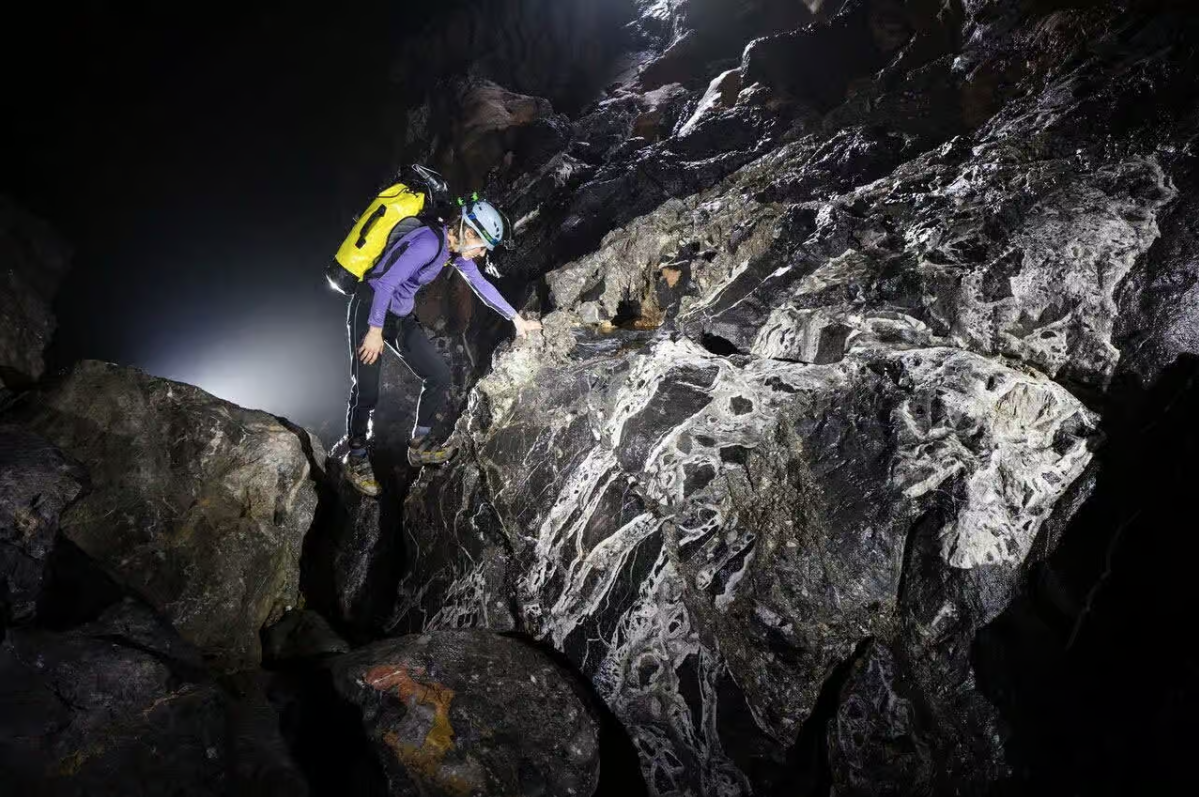
The sheer size of Son Doong Cave is truly awe-inspiring. Nearly 9km long, with some sections reaching heights of 200m and widths of 160m – large enough to contain an entire city with 40-story buildings. But what makes Son Doong special isn't just its enormous scale; it's the unique ecosystem within. Natural skylights in the cave ceiling allow light to penetrate, creating conditions for plant life to thrive, forming miniature primeval forests. The underground river, waterfalls, and distinct weather system inside the cave further enhance its allure.
Son Doong Cave also contains giant stalactites, some reaching heights of over 80 meters. These natural rock formations, along with a variety of unique flora and fauna, have astonished scientists . Some creatures, such as spiders, fish, and millipedes with no eyes and transparent bodies, have been discovered in the cave, demonstrating their remarkable adaptation to the perpetually dark environment. 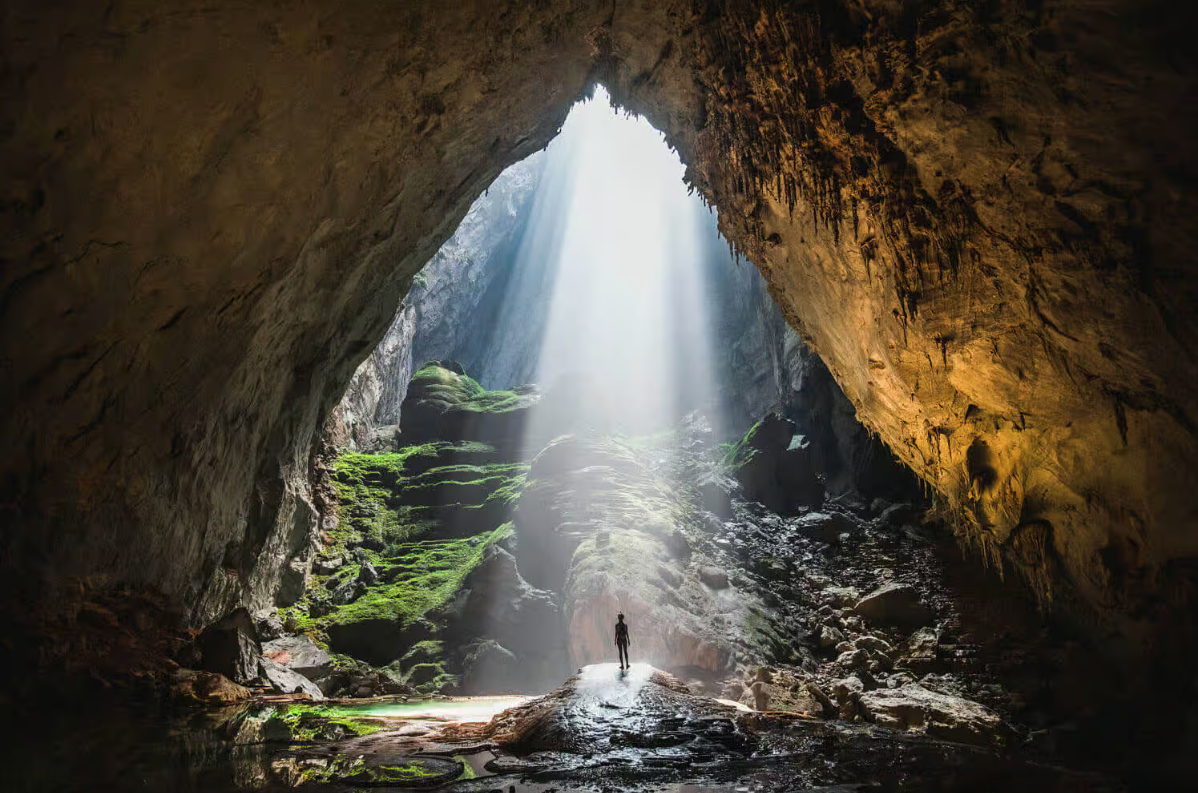
The exploration of Son Doong Cave is also an inspiring story. After the 2009 survey, the expedition team returned in 2010 with specialized equipment to overcome the "Vietnam Wall"—a cliff over 90 meters high blocking the cave's interior. The successful expedition confirmed the impressive scale of Son Doong and provided the world with the first images of this wonder.
National Geographic magazine and other international organizations have subsequently honored Son Doong as a unique symbol of nature. Besides its natural beauty, Son Doong also brings immense economic and cultural value. Exploration tours organized by Oxalis Adventure have created direct jobs for many local people and boosted the development of tourism in Quang Binh. Documentaries, international television programs like Good Morning America , and music projects such as Alan Walker's " Alone Pt. II" music video have contributed to showcasing the beauty of Son Doong to millions of viewers worldwide.
Nevertheless, Son Doong still holds many undiscovered mysteries. The underground river inside the cave, which disappeared into a deep lake, is suspected by scientists to be connected to other caves in the system. Further expeditions, planned for the future, promise to bring new discoveries, further expanding the stature of this natural wonder.
Son Doong is a unique natural heritage site and a symbol of the wonders of the Earth. From its giant stalactites and stalagmites, to its pristine underground forest and distinctive ecosystem, this cave is a reminder of the importance of protecting and preserving nature's precious gifts. Son Doong, a geological masterpiece, will forever be a source of pride for Quang Binh and for all of Vietnam on the world heritage map.








































































Comment (0)