

The 54th annual meeting of the World Economic Forum (WEF), held in Davos, Switzerland, concluded on January 19th, bringing to an end five days of lively discussions on many currently relevant topics such as artificial intelligence (AI) and climate change.
In his closing address, WEF Chairman Borge Brende called for rebuilding trust in an increasingly fractured and polarized world , viewing this year's conference as a crucial platform to foster dialogue, cooperation, and action-oriented partnerships.
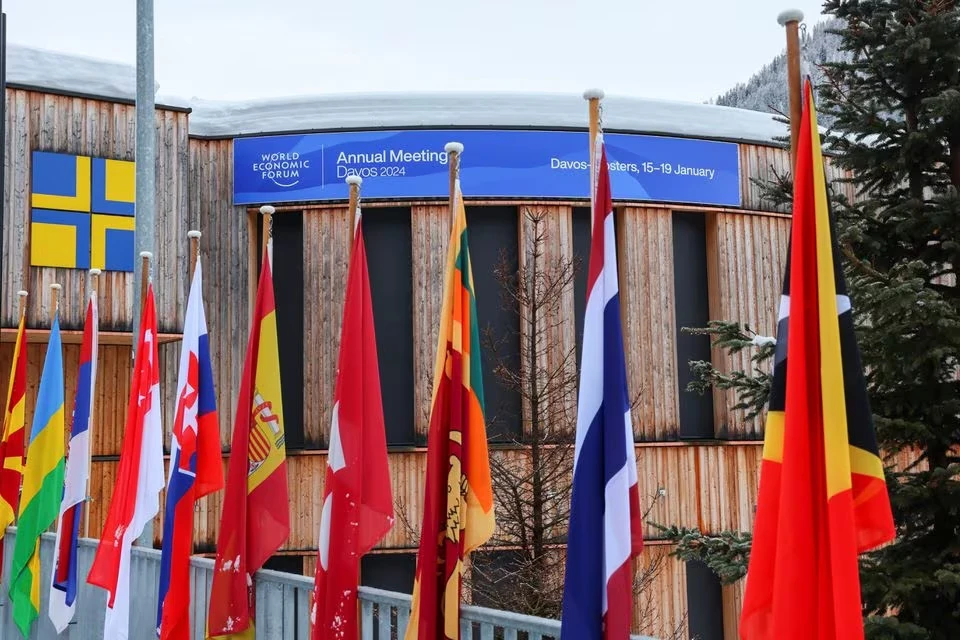
WEF Chairman Borge Brende emphasized the forum's role in fostering a "spirit of solidarity" globally, while affirming that cooperation can yield positive and meaningful results.
According to Brende, the world is grappling with difficult and complex challenges, including global warming, fragile economic growth, and security instability in many places. He emphasized the decline in confidence in recent years, and that this conference calls for rebuilding it, considering it a crucial foundation for global cooperation to address current challenges.
He asserted: "In these challenging and unpredictable times, cooperation is the only sure path to shaping a stable, just, and resilient world capable of withstanding future changes."
Professor Klaus Schwab, founder and Executive Chairman of the WEF, stated: "We must rebuild trust – trust in our future, trust in our ability to overcome challenges, and most importantly, trust in each other." He also emphasized that this trust must be demonstrated through concrete action.
The rapid development of artificial intelligence (AI) was a frequently discussed topic at this year's WEF. UN Secretary-General Antonio Guterres addressed the risks posed by AI, warning of unpredictable dangers if the technology is not regulated. He urged governments to urgently cooperate with technology companies on risk management frameworks for AI development, as well as monitoring and mitigating future harm.
Previously, the International Monetary Fund (IMF) published an assessment stating that the development of AI technology could affect nearly 40% of jobs worldwide, transforming the global economy and potentially deepening inequality between countries and workers within those countries.
With the theme "Rebuilding Trust," this five-day conference focuses on four main priorities: strengthening cooperation in an increasingly fragmented world, promoting economic growth and employment in a new era, measures to make AI a driver of economic growth and social development, and establishing long-term strategies on climate change and energy security.
This year's annual WEF conference was attended by nearly 3,000 leaders from the political, economic, and social sectors, from more than 120 countries. The leaders participated in over 450 sessions and discussions aimed at promoting dialogue across a wide range of fields.
According to VNA
Source


![[Photo] Enchanting ancient rose garden on the mountainside in Nghe An](/_next/image?url=https%3A%2F%2Fvphoto.vietnam.vn%2Fthumb%2F1200x675%2Fvietnam%2Fresource%2FIMAGE%2F2025%2F12%2F19%2F1766109900916_vuon-hong-chin-do-thu-hut-du-khach-toi-check-in-o-ha-noi-3-20162778-1671624890024-1671624890104198100259.jpeg&w=3840&q=75)


![[Photo] General Secretary To Lam visits the exhibition space showcasing books, photo exhibitions, and achievements of digital transformation in journalism.](/_next/image?url=https%3A%2F%2Fvphoto.vietnam.vn%2Fthumb%2F1200x675%2Fvietnam%2Fresource%2FIMAGE%2F2025%2F12%2F19%2F1766110879215_1766110240024-jpg.webp&w=3840&q=75)
















































































Comment (0)