

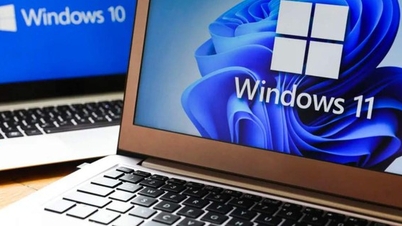
According to the report, malware called Facebookie, recently discovered by security research firm Palo Alto Networks (USA), targets users of computers running the Windows operating system.
The Facebookie malware is designed to hijack Facebook accounts and steal cryptocurrency from users' MetaMask wallets.
According to Palo Alto Networks, the source code of Facebookie contains content in Vietnamese, but it is unclear whether this malware originated in Vietnam.
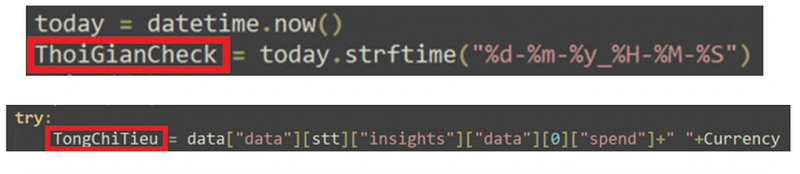 |
| Variables in the source code are named using Vietnamese words, leading security experts to suspect that Facebookie originates from Vietnam. |
Hackers will insert malicious code like Facebookie into free software or software cracking tools, then distribute it online to trick users into downloading it to their computers.
Thanks to this malware, hackers can steal login information from victims' Facebook accounts. In particular, the Facebookie malware is also designed to steal Facebook Business accounts – accounts used to manage fan pages and run advertising campaigns on Facebook…
After successfully hijacking a Facebook Business account, hackers will use this account to purchase advertising content for themselves without the victim's knowledge.
This not only causes financial losses for the victim, but can also lead to the suspension of their Facebook Business account if the hacker runs advertising campaigns that violate Facebook's policies.
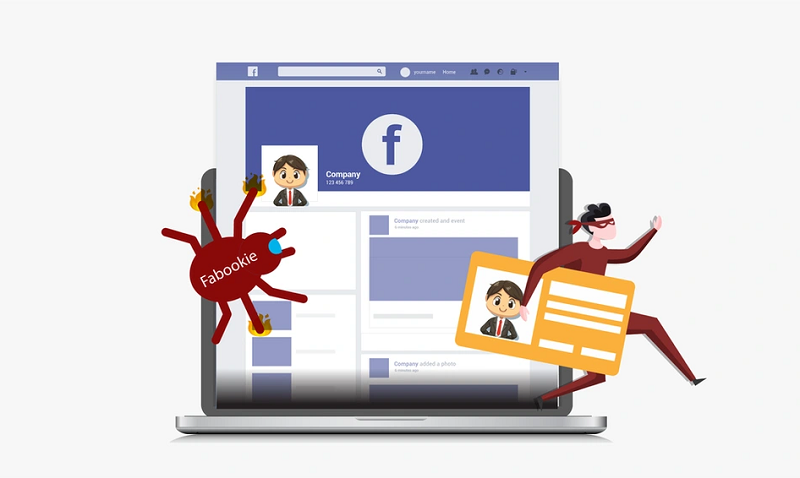 |
| Facebookie is being widely distributed in Vietnam to steal Facebook accounts, so users need to be aware. |
According to cybersecurity company Bkav, the Facebookie malware, which steals Facebook accounts, is showing signs of spreading rapidly in Vietnam. It is estimated that in July, more than 100,000 computers running Windows were infected with this malware.
Currently, most security software on Windows can detect and block this type of malware before it infects the computer.
However, users also need to be more vigilant to prevent infection with other dangerous types of malware in the future. Bkav experts have offered some advice to reduce the risk of malware infection as follows:
You should not install and use cracked software, keygens, etc., to bypass software licensing. Most of these tools contain malware.
Limit the use of password saving features on web browsers, especially for important accounts.
It is advisable to use antivirus software or other network security software to ensure the safety of personal computers as well as systems within agencies, organizations, and businesses.
Source
![[Photo] Prime Minister Pham Minh Chinh holds a phone call with the CEO of Russia's Rosatom Corporation.](/_next/image?url=https%3A%2F%2Fvphoto.vietnam.vn%2Fthumb%2F1200x675%2Fvietnam%2Fresource%2FIMAGE%2F2025%2F12%2F11%2F1765464552365_dsc-5295-jpg.webp&w=3840&q=75)
![[Photo] Closing Ceremony of the 10th Session of the 15th National Assembly](/_next/image?url=https%3A%2F%2Fvphoto.vietnam.vn%2Fthumb%2F1200x675%2Fvietnam%2Fresource%2FIMAGE%2F2025%2F12%2F11%2F1765448959967_image-1437-jpg.webp&w=3840&q=75)















































![[OFFICIAL] MISA GROUP ANNOUNCES ITS PIONEERING BRAND POSITIONING IN BUILDING AGENTIC AI FOR BUSINESSES, HOUSEHOLDS, AND THE GOVERNMENT](https://vphoto.vietnam.vn/thumb/402x226/vietnam/resource/IMAGE/2025/12/11/1765444754256_agentic-ai_postfb-scaled.png)









































Comment (0)