

Many workers are struggling to make ends meet with meager wages.
Pouyuen Vietnam, the largest employer in Ho Chi Minh City, will continue to lay off nearly 6,000 people (equivalent to 10% of the company's total workforce). This is the second round of layoffs by the company since the beginning of the year.
In many localities, layoffs are also a reality for numerous businesses, especially labor-intensive ones such as textiles and footwear... The reason is the sharp decline in orders.
According to the Ministry of Labour, Invalids and Social Affairs, the shortage of orders is expected to continue, so the number of workers laid off may not stop here.
For workers, job cuts mean even more hardship. Many are just trying to "hold on" to their meager wages. Those who are laid off have to find new jobs, perhaps as motorbike taxi drivers or construction laborers.
Last April, Mr. Cuong was laid off, and his wife also received notice that she would be leaving her job in June. Having lost his job at the age of 44, for the past few months, Mr. Cuong has been working as a construction laborer in the mornings and as a parking attendant for restaurants in the afternoons.
"In PouYuen, where I work, I earn over 10 million VND. But now, working outside, you don't earn that much. Outside, you only get around 4.5 million VND, which isn't enough to cover expenses. And then there's the children's education," said Chau Van Cuong ( Tra Vinh ).
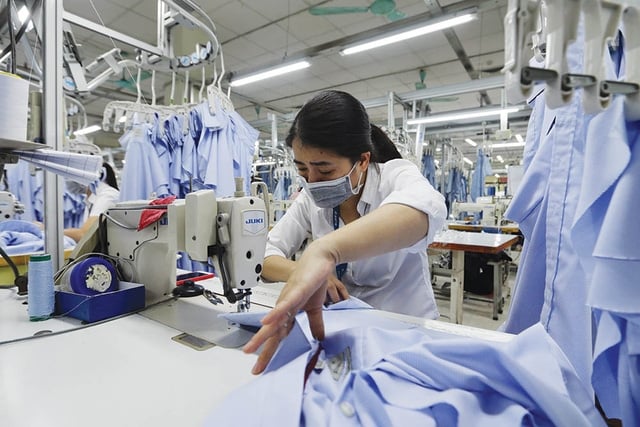
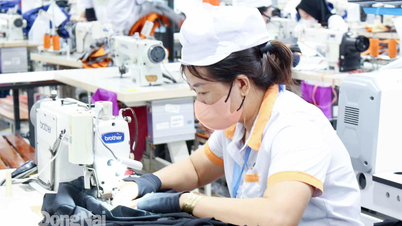
Many workers have had their working hours reduced or even been laid off due to a lack of orders from businesses (Illustrative image).
Unlike previous years when May marked the peak of winter production, many textile and footwear factories in various localities are now operating at a reduced capacity. For example, at Araviet Co., Ltd., workers start their shifts at 7:30 AM and finish at 4:00 PM. For the past three months, this has been the same as standard office hours for factory workers.
For Ms. Thuy, this was the first time in 10 years of working as a factory worker that she had experienced such a significant drop in income.
"The decrease in orders has resulted in lower income for us," said Nguyen Thi Thuy, a worker at Araviet Co., Ltd.
Last year, income here was nearly 10 million VND, but now it's only 6-7 million VND per month, leading to some workers quitting. Reduced income means losing workers. Businesses also have to struggle, stretching out work, and adding an extra hour of overtime each week to retain employees.
"We are trying our best to maintain this situation, but we cannot increase work because there are no orders, yet we still have to keep all current employees while waiting for recovery," said Kim Jyung Tae, Production Director of Araviet Co., Ltd.
The majority of the unemployed are unskilled laborers.
According to Ms. Tran Thi Thanh Ha, Head of the Labor Relations Department of the Vietnam General Confederation of Labor , statistics show that from September 2022 to March 2023, 560,000 workers were affected by order cuts. Of these, 55,000 workers left the labor sector (contracts terminated).
Ms. Ha stated that to support affected workers, the Vietnam General Confederation of Labor has implemented a support policy allowing even non-union members working in businesses that pay union dues to the labor union to receive support ranging from 700,000 to 3 million VND per person.
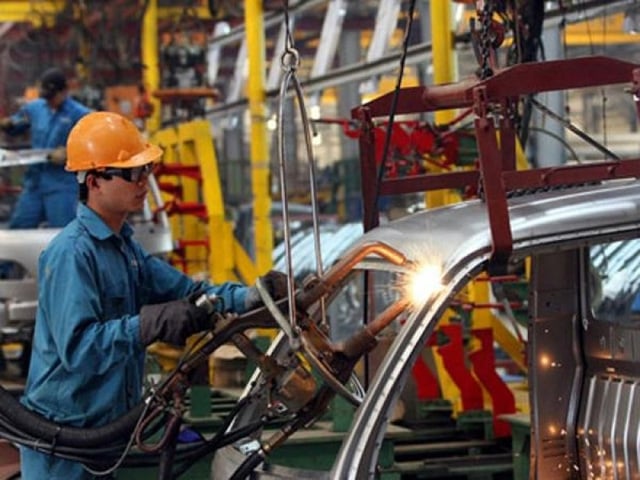
Adjusting the economic structure must be linked to the labor structure.
According to Mr. Ngo Xuan Lieu, Director of the National Center for Employment Services, Department of Employment, Ministry of Labor, War Invalids and Social Affairs, based on daily aggregated data on the implementation of unemployment insurance policies, the majority of unemployed are unskilled laborers (accounting for 60-70%). Therefore, the labor structure is problematic; the higher the skill level of the worker, the lower the risk of unemployment.
"Therefore, adjusting the economic structure must be linked to the labor structure, which is a crucial issue," Mr. Lieu emphasized.
Mr. Lieu assessed that workforce reductions, especially in labor-intensive businesses, will put immense pressure on localities in addressing employment and social welfare issues. Therefore, policies are needed to support businesses in their recovery and production activities.
Long-term support policies are needed.
Supporting workers who experience job cuts is not simply about finding them new jobs. In Ho Chi Minh City, lessons learned from the COVID-19 outbreak, as well as the recovery and subsequent downturns in economic growth, have shown that proactive and long-lasting, ripple effects cannot be achieved solely through temporary solutions.
"Rent assistance is being handled on a local level and hasn't yet become a policy during this difficult period for the city. We will study and propose a policy to support housing costs for workers, especially those who have stopped working, had their jobs reduced, or experienced a decrease in income," said Mr. Phan Van Mai, Chairman of the People's Committee of Ho Chi Minh City.
The basis for this policy is to include rental housing prices, which account for 20-30% of workers' income, as part of the price stabilization program that Ho Chi Minh City has successfully implemented for many years.
"This is a strong desire of the City's trade union organization to ensure that policies align with the lives and employment of workers, rather than being temporary or ad hoc welfare activities," said Mr. Tran Doan Trung, Standing Vice Chairman of the Ho Chi Minh City Federation of Labor.
Immediately after the COVID-19 pandemic, the Ho Chi Minh City Department of Construction proposed a support package of 100 billion VND for preferential loans to landlords who are currently providing accommodation for nearly 1 million workers.
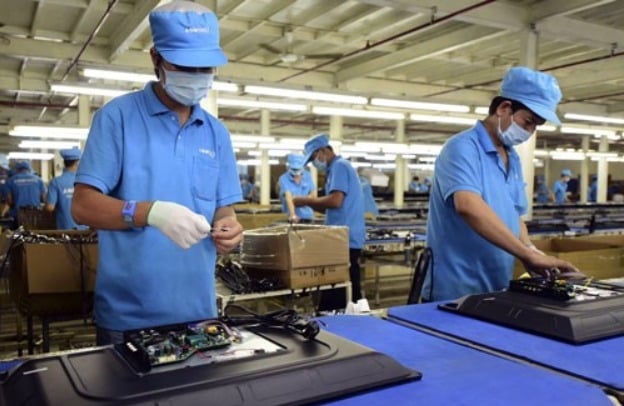
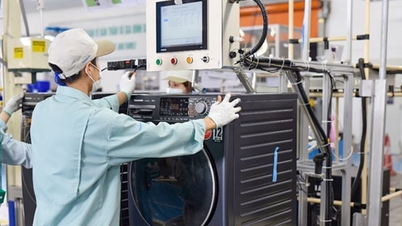
Besides temporary solutions, long-term policies are essential in supporting workers (Illustrative image).
To build sustainable and long-term policies to support workers, according to Ms. Tran Thi Thanh Ha, Head of the Labor Relations Department of the Vietnam General Confederation of Labor, local authorities need to implement measures to support businesses such as tax deferral and tax incentives. In addition, policies on credit for businesses and workers are also necessary.
The textile, footwear, and wood processing industries have seen a reduction of approximately 200,000 workers recently. The difficulties faced by businesses will inevitably lead to difficulties for workers as well. In light of this situation, the Prime Minister has instructed the Ministry of Labor, Invalids and Social Affairs to promptly implement solutions and to lead the development of a policy plan to support workers.
These are necessary short-term solutions, but in the long term, to limit job cuts, changing the structure of the labor market is crucial. Workers with low qualifications and limited skills will be more severely affected and face a higher risk of losing their jobs.
Technological advancements will mean that Vietnam's abundant and cheap labor force will no longer be a competitive advantage or an attractive investment resource.
Source link


























































































Comment (0)