

 |
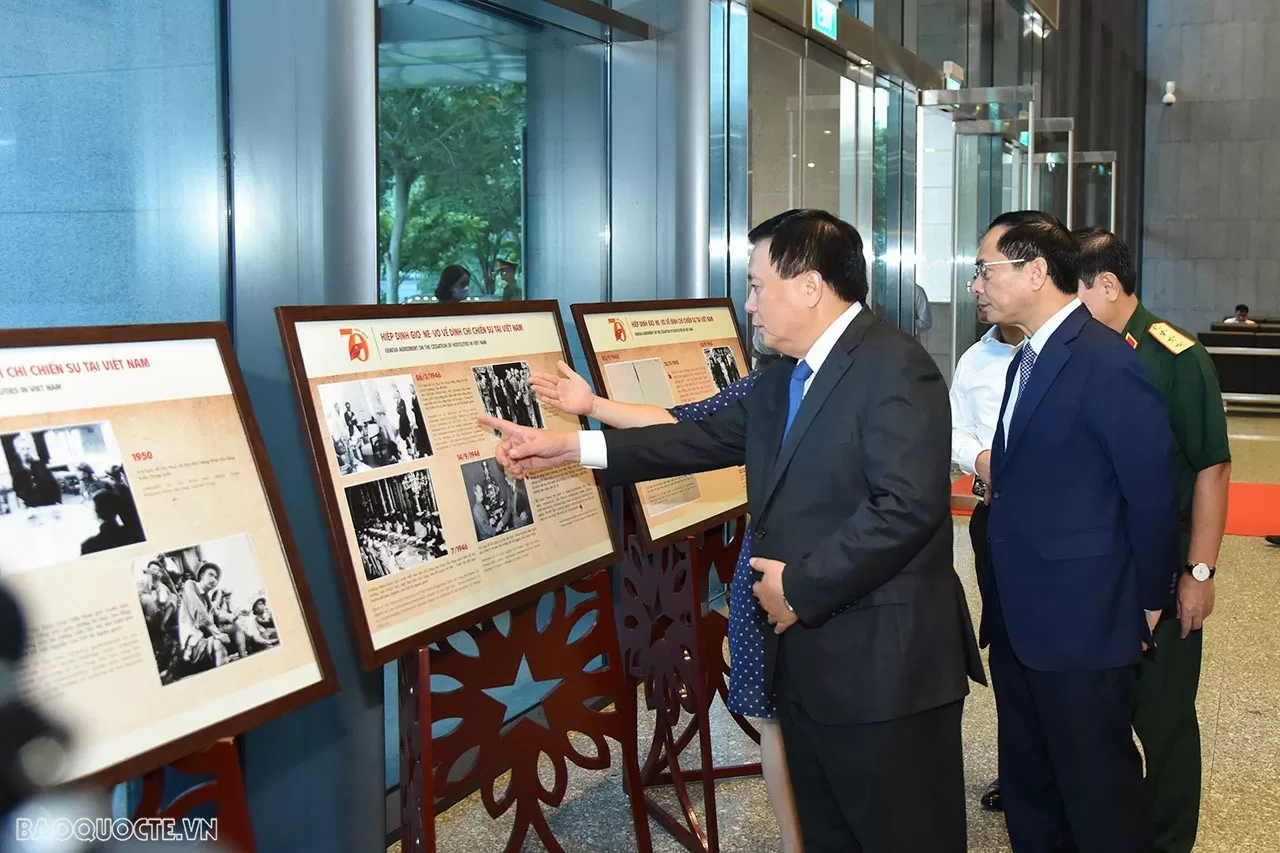
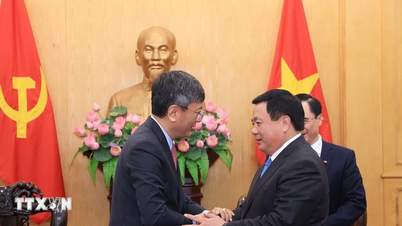
| Comrade Nguyen Xuan Thang, Member of the Political Bureau, Director of the Ho Chi Minh National Political Academy, Chairman of the Central Theoretical Council, and other leaders attended the scientific conference '70 Years of the Geneva Agreement on the Cessation of Hostilities in Vietnam'. (Photo: Tuan Anh) |
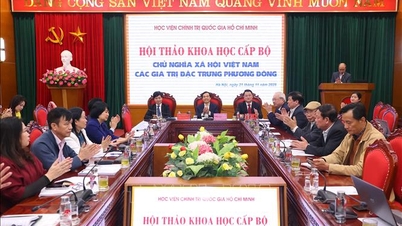
Attending the seminar were Comrade Nguyen Xuan Thang, Member of the Political Bureau, Director of the Ho Chi Minh National Academy of Politics, Chairman of the Central Theoretical Council; leaders and former leaders of the Party, State and Ministry of Foreign Affairs ; leaders of various committees, ministries, research institutions, scientists, and representatives of the families of members of the negotiating, signing and implementing delegations of the Geneva Agreement.
The seminar "70 Years of the Geneva Accords on the Cessation of Hostilities in Vietnam" aims to highlight the historical significance and contemporary relevance of the Geneva Accords to the national liberation struggle of the Vietnamese people and the people of the world; and at the same time, to summarize the valuable lessons learned that remain relevant to the cause of national construction, development, and defense.
This is also an opportunity for delegates to acknowledge and honor the immense contributions of Vietnam's diplomatic sector, including the merits of historical witnesses, those who negotiated, signed, and brought about the victory of the Geneva Conference, opening a new phase for the revolutionary cause of the Party and the nation.
The handbook contains many valuable lessons on foreign relations.
In his opening remarks at the seminar, Minister of Foreign Affairs Bui Thanh Son emphasized that exactly 70 years ago, on July 21, 1954, the Geneva Agreement on the cessation of hostilities in Vietnam was signed in Geneva (Switzerland), becoming an important historical milestone in the national liberation and reunification of our country.
In this first participation, Vietnamese diplomacy affirmed the mindset, character, and intellectual capacity of a nation with a rich history of thousands of years of civilization; a resilient will to protect its independence; and imbued with the essence of national culture and the diplomatic thought, style, and art of Ho Chi Minh.
The minister shared that research on the Geneva Conference has consistently attracted the attention of politicians, diplomats, military leaders, and historians both domestically and internationally for the past 70 years.
Numerous scientific seminars and conferences on the Geneva Accords have been organized, and each seminar and conference has provided us with new perspectives, new discoveries, and valuable new research results on the Geneva Accords.
Time has passed, and most historical witnesses are gone. This conference is very timely, and through frank, scientific, and objective exchanges, we aim to unify our understanding of the role and significance of the Agreement. Based on this, we will propose initiatives and lessons learned from the negotiation, signing, and implementation of the Agreement in the new context, meeting the requirements of contemporary foreign affairs.
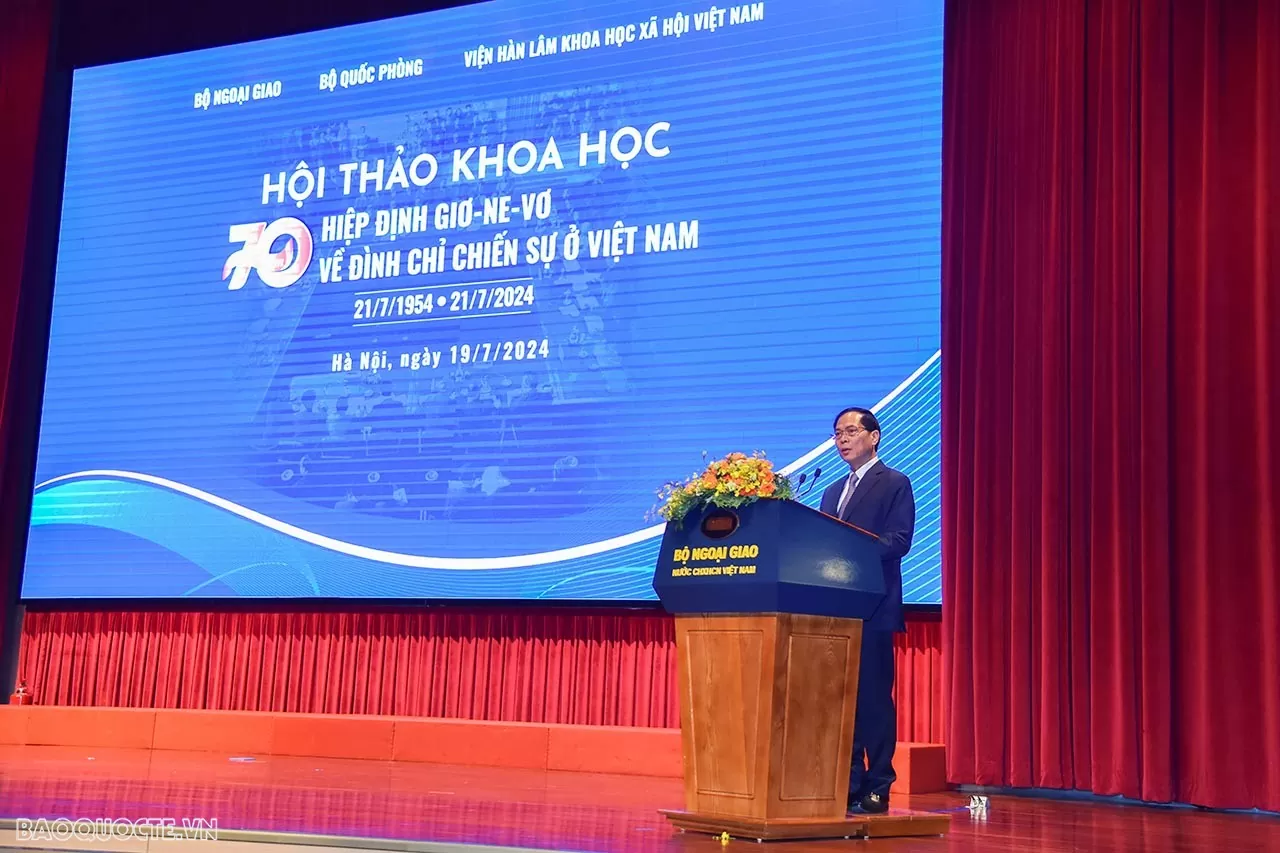 |
| Foreign Minister Bui Thanh Son delivered the opening remarks at the scientific conference '70 Years of the Geneva Accords on the Cessation of Hostilities in Vietnam'. (Photo: Tuan Anh) |
At today's seminar, based on the guidance and direction of Comrade Nguyen Xuan Thang, Minister Bui Thanh Son hopes that the presentations from agencies and researchers at the seminar, from a historical perspective, will contribute to deepening the meaning and historical significance of the Geneva Agreement.
The seminar also provides an opportunity for us to review, summarize, and evaluate the valuable and still relevant lessons of the Geneva Conference and the 1954 Geneva Agreement for the cause of national construction and defense.
The conference also brought together many high-quality papers, demonstrating the interest and enthusiasm of agencies, scholars, and veteran officials regarding the negotiation, signing, and implementation of the Agreement. These papers were compiled into the Conference Proceedings, serving as valuable research and reference material.
The process of negotiating, signing, and implementing the Geneva Accords is a handbook containing many valuable lessons on foreign policy, reflecting the unique identity of the Vietnamese school of foreign policy and diplomacy, which has been inherited, creatively applied, and developed in the negotiation, signing, and implementation of the 1973 Paris Agreement later on, as well as in building, developing the country, and defending the homeland today.
Drawing historical lessons from the negotiation, signing, and implementation of the 1954 Geneva Accords is of great practical significance, contributing to the research, development, and refinement of the theoretical and methodological foundations for foreign affairs and diplomacy in the Ho Chi Minh era, as well as the development, refinement, and implementation of the Party's foreign policy in new stages of national development.
5 major lessons in foreign policy
Speaking at the conference, Professor Dr. Nguyen Xuan Thang, Member of the Politburo, Director of the Ho Chi Minh National Academy of Politics, and Chairman of the Central Theoretical Council, affirmed that the Geneva Agreement on the cessation of hostilities in Vietnam, signed to mark a great victory ending the nine-year protracted resistance war against French colonial aggression by the Vietnamese people, has become a glorious milestone of the young revolutionary diplomacy under the leadership of the Party.
The immense historical significance of the Geneva Accords is clearly demonstrated in President Ho Chi Minh's appeal following the successful Geneva Conference on July 22, 1954: “Our diplomacy has achieved great success… The French government has recognized the independence, sovereignty, unity, and territorial integrity of our country, and acknowledges that French troops will withdraw from our country…”.
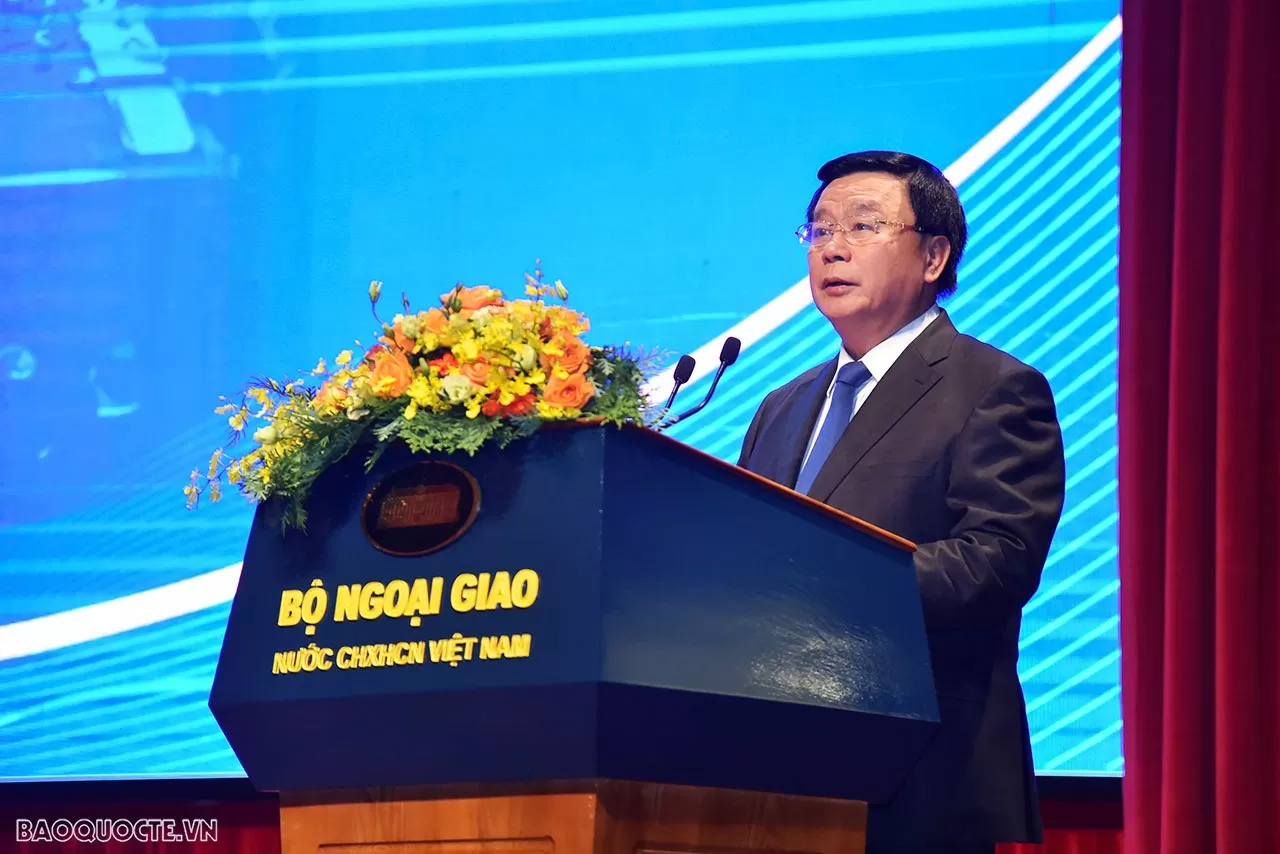 |
| Professor Dr. Nguyen Xuan Thang, Member of the Politburo, Director of the Ho Chi Minh National Academy of Politics, and Chairman of the Central Theoretical Council, delivered the keynote address at the scientific conference. (Photo: Tuan Anh) |
The Vietnam Labor Party affirmed: “Achieving the aforementioned Agreement was a great victory for our people and army...it was also a victory for peace-loving people around the world, for the people of friendly countries...for the French people...it was a defeat for colonial aggression...it was a defeat for American imperialism.”
Speaking about the significance of the victory and the new situation of the Vietnamese revolution brought about by the Geneva Accords, President Ho Chi Minh remarked: "If before we only had mountains and forests and night, now we have rivers and seas and day."
Comrade Nguyen Xuan Thang stated that, although 70 years have passed, the historical significance of the Geneva Agreement on the cessation of hostilities in Vietnam remains intact, offering invaluable lessons and vividly reflecting the principles, strategies, and art of diplomacy, the maturity and immense contributions of Vietnamese diplomacy to the revolutionary cause of the Party and the nation; and illuminating President Ho Chi Minh's aspiration for "a peaceful, unified, independent, democratic, and prosperous Vietnam."
Those are the lessons.
Firstly, we must uphold and strengthen the Party's leadership. The victory of the Democratic Republic of Vietnam's negotiating delegation at the Geneva Conference was the result of the revolutionary line, the line of all-people, comprehensive, protracted resistance based primarily on self-reliance, and the correct foreign policy under the wise leadership of the Party Central Committee and President Ho Chi Minh.
This is one of the most eloquent proofs of the victory of the banner of national independence linked with socialism; of the banner of justice and righteousness that President Ho Chi Minh emphatically affirmed in the Declaration of Independence that gave birth to the Democratic Republic of Vietnam: "Vietnam has the right to enjoy freedom and independence, and in fact has become a free and independent nation."
It was also a victory of the unwavering will and indomitable spirit of the entire Vietnamese nation, responding to and following President Ho Chi Minh's call for national resistance, with the determination: "We would rather sacrifice everything than lose our country, than be enslaved."
Secondly, we must leverage our combined strength and closely coordinate the political, military, and diplomatic fronts. The Geneva Accords were the result of the persistent struggle of our army and people, from the Viet Bac Autumn-Winter victory of 1947 to the Border Campaign of Autumn-Winter 1950 and the Winter-Spring Strategy offensive of 1953-1954, culminating in the Dien Bien Phu victory.
The events of the Geneva Conference reflected the reality of the balance of forces on the battlefield, as our army and people intensified offensive operations to narrow the enemy's occupied territory, coordinating with diplomatic efforts to force the French colonialists to sit at the negotiating table from a losing position.
During the war of resistance against the US, the motto "fight and negotiate simultaneously" was creatively applied and developed during the negotiations at the Paris Conference (1965-1973), with a close combination of military and political struggle with diplomatic struggle, using the results of combat on the battlefield as the basis for achieving victory at the negotiating table.
As President Ho Chi Minh affirmed: "Strength is the gong, and diplomacy is the sound. The bigger the gong, the louder the sound." Based on this profound understanding, during the period of national renewal and integration, the Party has set forth the policy of closely combining socio-economic development with national defense, security, and foreign relations; considering the promotion of foreign relations as a crucial and ongoing task; promoting the pioneering role of foreign relations alongside strengthening national defense and security to protect the Fatherland early and from afar, safeguarding the country before it is in danger, and creating a peaceful and stable environment for rapid and sustainable national development.
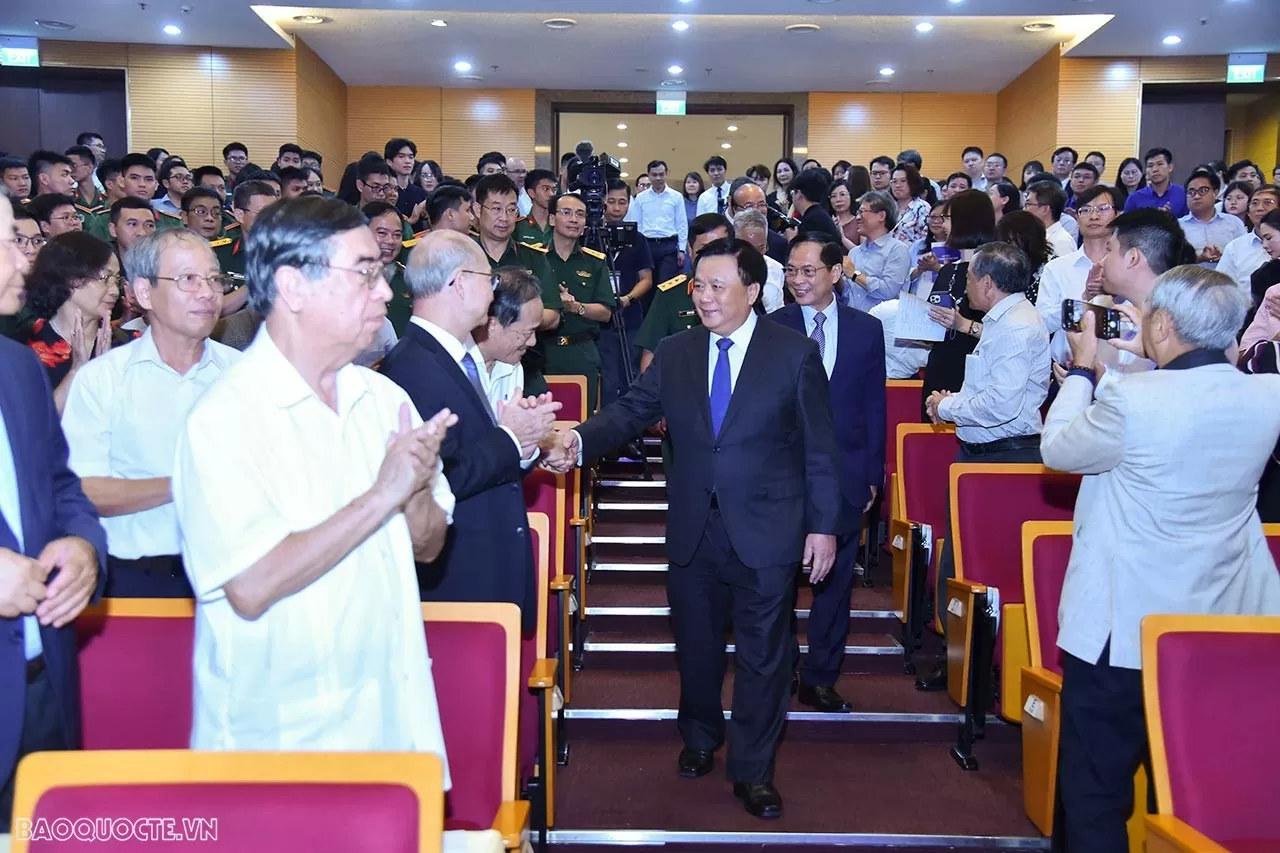 |
| Delegates attending the scientific conference '70 years of the Geneva Accords on the cessation of hostilities in Vietnam'. (Photo: Tuan Anh) |
Thirdly, upholding independence and self-reliance; ensuring national and ethnic interests are paramount. This is a fundamental lesson of Vietnamese diplomacy, creatively practiced and applied by outstanding diplomats in the Ho Chi Minh era, and throughout the revolutionary cause of the Party and the nation.
Although the Geneva Conference was organized at the initiative of and under considerable influence and pressure from major powers with differing interests and objectives, the negotiating delegation of the Government of the Democratic Republic of Vietnam, as the victor, upheld the spirit of international solidarity, raised the banner of justice, and desired peace and an end to the war; while resolutely maintaining its principled position, as President Ho Chi Minh stated: "The French Government sincerely respects the genuine independence of Vietnam" during the negotiations leading to the signing of the Geneva Agreement.
Building upon and developing that lesson, today, our Party has set forth the correct policy: "Continuing to implement an independent, self-reliant, multilateral, and diversified foreign policy"; ensuring the highest national interests on the basis of the fundamental principles of the United Nations Charter and international law, equality, cooperation, and mutual benefit.
Fourth, we must thoroughly understand the principle of "maintaining constancy while adapting to change." The negotiation and signing of the Geneva Accords showed that the unchanging principle was to uphold independence and self-reliance, and persistently fight for a peaceful, independent, and fully unified Vietnam; adapting to change meant being flexible and adaptable in strategy in specific situations to achieve victory step by step, in stages, until complete victory was achieved.
The creative application and practice of the Vietnamese diplomatic principles of "maintaining constancy while adapting to change" and "persisting in principles, being flexible in tactics" during the đổi mới (renovation) period is a vivid manifestation of the foreign policy deeply rooted in the "Vietnamese bamboo" character, as General Secretary Nguyen Phu Trong summarized: a firm root, a strong trunk, and flexible branches; gentle and skillful but very resilient and resolute; flexible and creative but very strong-willed, steadfast, and courageous.
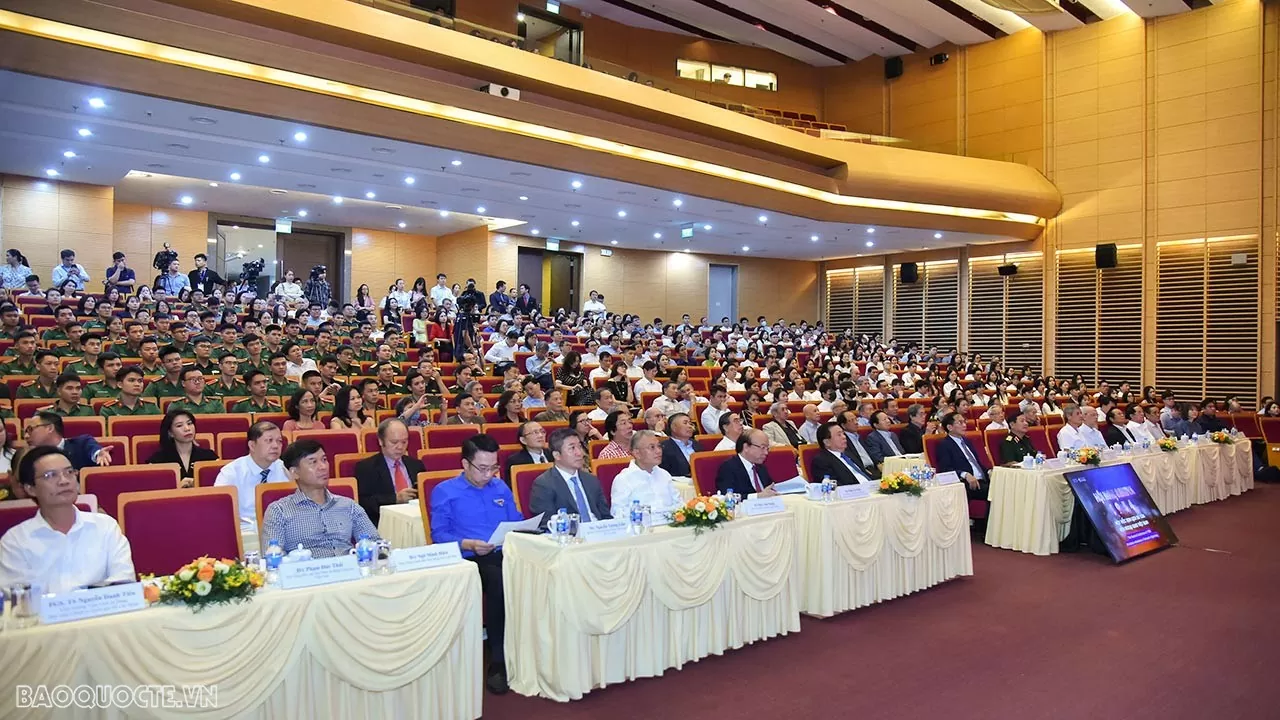 |
| Delegates attending the scientific conference '70 years of the Geneva Accords on the cessation of hostilities in Vietnam'. (Photo: Tuan Anh) |
Fifth, we must harness the strength of the people and the great national unity, uphold the banner of righteousness, and combine national strength with the strength of the times. The historic victory at Dien Bien Phu and the success at the Geneva Conference were victories of the great strength of the Vietnamese people and the great national unity, with the sympathy, support, and assistance of international friends, including the progressive people of France and other colonial countries.
During the Geneva Conference negotiations, the Government of the Democratic Republic of Vietnam always prioritized propaganda and garnering international public opinion to uphold its just position for peace, cooperation, and progress of humanity; demonstrating the goodwill and aspirations for independence of the Vietnamese people, and exposing the conspiracies of the French colonialists and American imperialists to sabotage the Conference and prolong the negotiations.
The profound lessons learned from the public opinion struggle at the Geneva Conference were drawn upon and applied during the negotiations at the Paris Conference, securing strong support and sympathy from the world's people for the revolutionary cause of the Vietnamese people.
Building on the traditions of the nation and the valuable lessons of the Vietnamese revolution, today, our Party continues to affirm the viewpoint that "the people are the foundation," promoting the strength of the people and the great national unity; emphasizing that Vietnam is a friend, a reliable partner, and a responsible member of the international community, seeking the sympathy and support of the international community for the cause of renovation, national construction and development, and the firm protection of the socialist Vietnamese Fatherland.
Therefore, Comrade Nguyen Xuan Thang suggested that delegates and scientists focus on clarifying and further analyzing and affirming that the Geneva Agreement was the pinnacle of victory for Vietnam's revolutionary diplomacy in the resistance war against French colonial aggression; clarifying the scale and significance of the Geneva Agreement for the Vietnamese revolutionary process and the world revolutionary movement; promoting the values and lessons learned from the Geneva Agreement, and inspiring the aspiration to build a strong, democratic, prosperous, civilized, and happy country, steadily advancing towards socialism…
Source


![[Photo] Closing Ceremony of the 10th Session of the 15th National Assembly](/_next/image?url=https%3A%2F%2Fvphoto.vietnam.vn%2Fthumb%2F1200x675%2Fvietnam%2Fresource%2FIMAGE%2F2025%2F12%2F11%2F1765448959967_image-1437-jpg.webp&w=3840&q=75)

![[Photo] Prime Minister Pham Minh Chinh holds a phone call with the CEO of Russia's Rosatom Corporation.](/_next/image?url=https%3A%2F%2Fvphoto.vietnam.vn%2Fthumb%2F1200x675%2Fvietnam%2Fresource%2FIMAGE%2F2025%2F12%2F11%2F1765464552365_dsc-5295-jpg.webp&w=3840&q=75)





































![[OFFICIAL] MISA GROUP ANNOUNCES ITS PIONEERING BRAND POSITIONING IN BUILDING AGENTIC AI FOR BUSINESSES, HOUSEHOLDS, AND THE GOVERNMENT](https://vphoto.vietnam.vn/thumb/402x226/vietnam/resource/IMAGE/2025/12/11/1765444754256_agentic-ai_postfb-scaled.png)











































Comment (0)