

TPO - In Binh Duong province, there are several ancient structures recognized as national and provincial-level historical relics. Among them are the ancient houses and tombs of the Tran family, considered the wealthiest at that time.
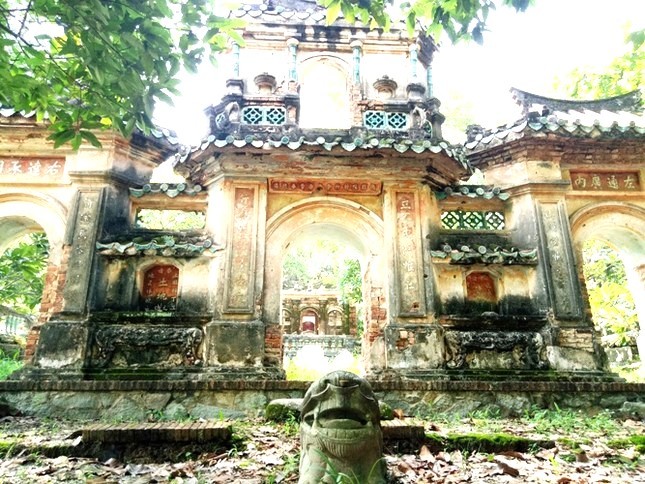 |
Due to the loss of historical records, local people today do not know exactly when the ancient tomb of the Tran family in Binh Duong was built. What remains suggests that the tomb complex was an elaborately constructed feudal-style architectural ensemble. Some sources suggest that the tomb belongs to Mr. Tran Van Lan (one of the wealthiest men in the former Thu Dau Mot province, now Binh Duong province). |
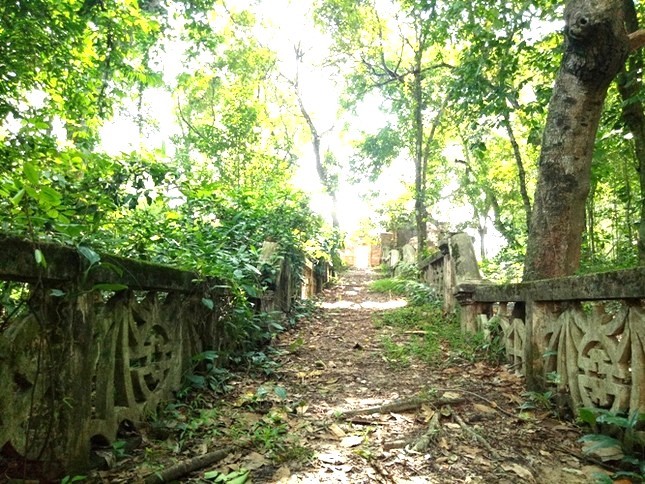 |
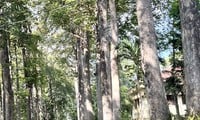
On a low hill in KP 5 (Hiep Thanh Ward, Thu Dau Mot City, Binh Duong), the ancient tomb is covered by ancient trees. Only the locals know whose tomb it is because the entrance to the tomb has no name. |
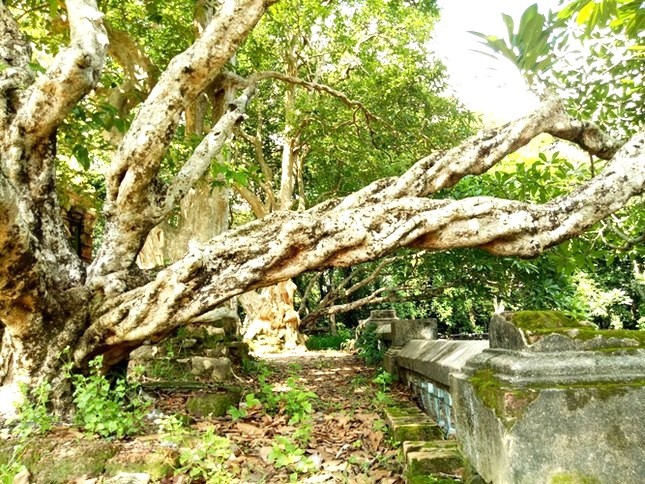 |
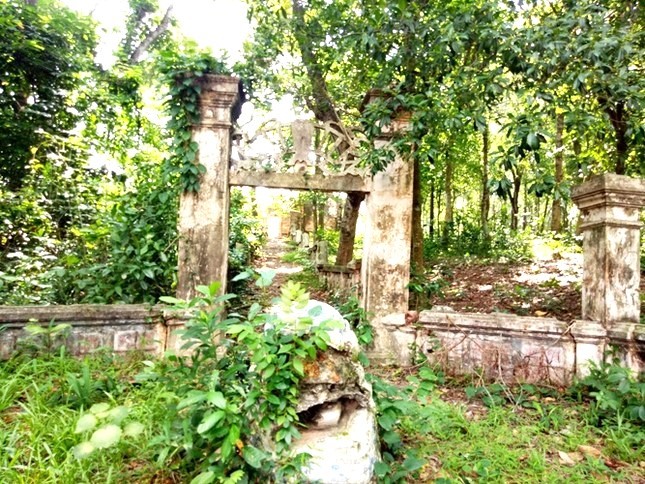
From the outside, the tomb complex evokes a sense of fear due to its desolate and gloomy appearance. However, inside lies a masterpiece of ancient architecture. With its unique style and remnants from hundreds of years ago, this ancient tomb complex sparks curiosity in all who visit. |
 |
According to recorded documents, Mr. Tran Van Lan was a timber trader during his lifetime, and had many sawmills located along the Saigon River as well as in the mountainous areas upstream of this river on the border with Cambodia. Not only was he a famous businessman, but his children were also very successful. |
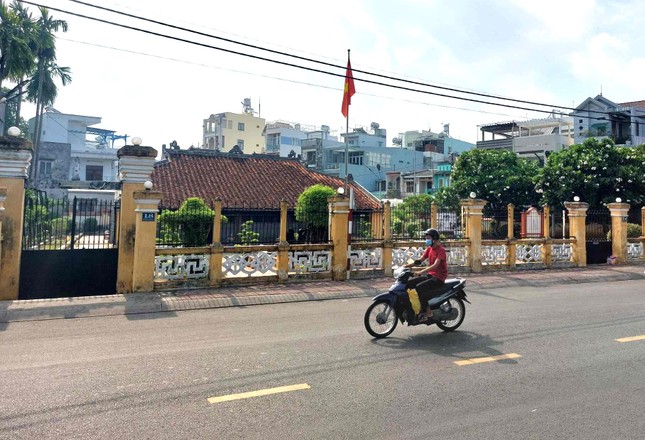 |
Among them, it's worth mentioning Mr. Tran Van Ho (son of Mr. Lan), a high-ranking official at the time. Other sons of Mr. Lan included Tran Van Te, Tran Cong Vi (a doctor), and Dr. Tran Van Trai. Mr. Lan also had a son named Tran Cong Vang – a renowned dentist who brought honor to the family by spending money to build dozens of Tran family mansions scattered throughout the region. |
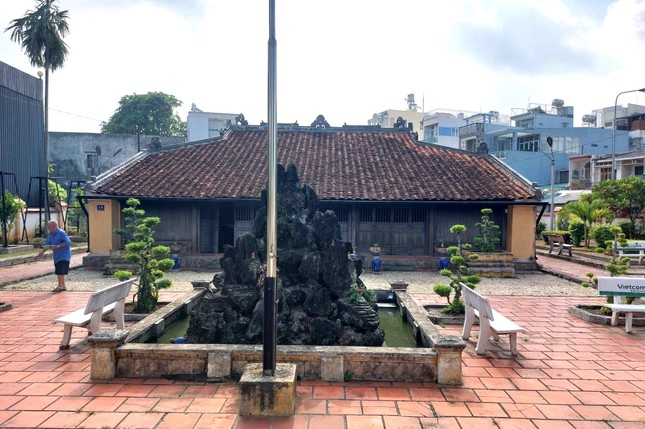 |
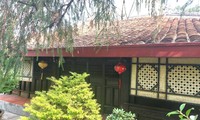
Tran Van Ho ancient house is located on Bach Dang street (Phu Cuong ward, Thu Dau Mot city) built in Canh Dan year 1890 with the architectural style of the house in the shape of the letter "T", total construction area of 200m2. The ancient house is built in the style of 3 rooms, 2 wings including 36 round columns, 6 rows of round columns from front to back, each row is 6 columns placed on stone blocks, the floor is paved with tiles. According to Mr. Mai Van Toi (85 years old), the caretaker of the house, it used to be a very large property with many different sections. However, after two wars, some surrounding structures were demolished. To build the house, the owner hired more than 300 workers from the ancient capital of Hue to Binh Duong, and the construction lasted for three years. The house is situated next to and facing the Saigon River because the owner was the proprietor of the largest shipyard in Binh Duong at that time. Notably, women were not allowed to enter the house, even if they were the owner's daughters or granddaughters. |
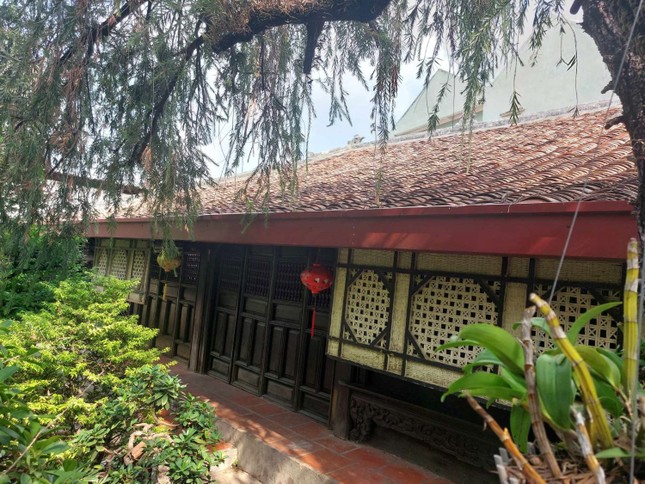 |
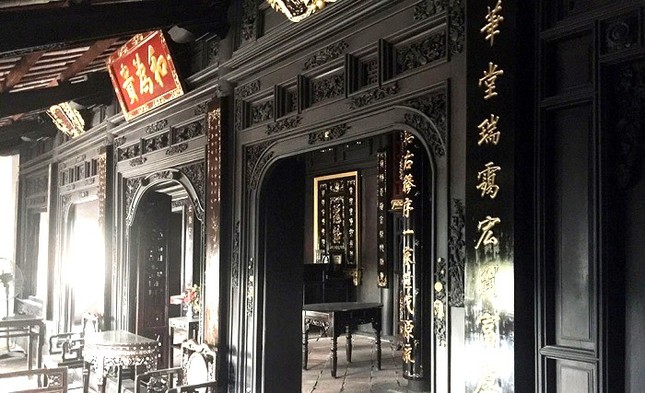
The Tran Cong Vang ancient house is located behind the Tran Van Ho ancient house, built in an inverted "T" shape on a 1,333 m2 plot of land, with the house itself covering 323 m2, completed in 1892. The interior decoration is elaborately carved, from the base of the columns to the roof, tables, chairs, cabinets, altars, window frames, and decorative panels... horizontal plaques, couplets, four-panel paintings, and scrolls... all are meticulously carved, painted, and inlaid with mother-of-pearl, making the house magnificent and solemn. |
 |
The ancient houses of the Tran family in Binh Duong are now all recognized as national relics. In addition, there are 3 ancient houses of other families recognized as provincial relics, including: Nguyen Tri Quan ancient house in quarter 1 (Tan An ward, Thu Dau Mot city), built in 1890; Do Cao Thua ancient house in Bach Dang islet (Bach Dang commune, Tan Uyen city), built around the end of the 19th century, Dinh-shaped architecture; Duong Van Ho ancient house in Dieu Hoa hamlet (Bach Dang commune, Tan Uyen city), built within 4 years (from 1911-1914); Duong Van Ho ancient house was built on a high mound, near Dong Nai river. The total area of the relic is more than 2,935m2. These houses are designed similarly with many types of precious wood. |
Speaking to a reporter from Tien Phong newspaper, Mr. Bui Huu Toan, Director of the Department of Culture, Sports and Tourism of Binh Duong province, said that the ancient houses and tombs in the area are managed and looked after by relatives of the owners. The State only provides financial support when these structures are restored or repaired.
Source: https://tienphong.vn/kham-pha-lang-mo-nha-co-cua-dong-ho-be-the-nhat-nhi-o-binh-duong-post1639313.tpo






























![[Video] The craft of making Dong Ho folk paintings has been inscribed by UNESCO on the List of Crafts in Need of Urgent Safeguarding.](https://vphoto.vietnam.vn/thumb/402x226/vietnam/resource/IMAGE/2025/12/10/1765350246533_tranh-dong-ho-734-jpg.webp)
























































Comment (0)