

The Ministry of Natural Resources and Environment is drafting a Decision of the Prime Minister promulgating reasonable and legitimate recycling cost norms for a unit volume of products and packaging, and administrative management costs for managing, supervising, and supporting the implementation of the responsibility for collecting and treating waste by manufacturers and importers (hereinafter referred to as the draft Decision).
The established recycling cost standards are still inadequate.
Speaking at At a workshop on the draft decision mentioned above, organized by the Vietnam Chamber of Commerce and Industry (VCCI) in coordination with the Legal Department (Ministry of Natural Resources and Environment) on June 28th in Hanoi , Mr. Dau Anh Tuan, Deputy Secretary General and Head of the Legal Department (VCCI), emphasized that the requirement for manufacturers to be responsible for collecting, processing, and recycling products (EPR) is a very progressive point in the Environmental Protection Law. However, if the recycling cost (Fs) is not appropriate, EPR will be difficult to implement.
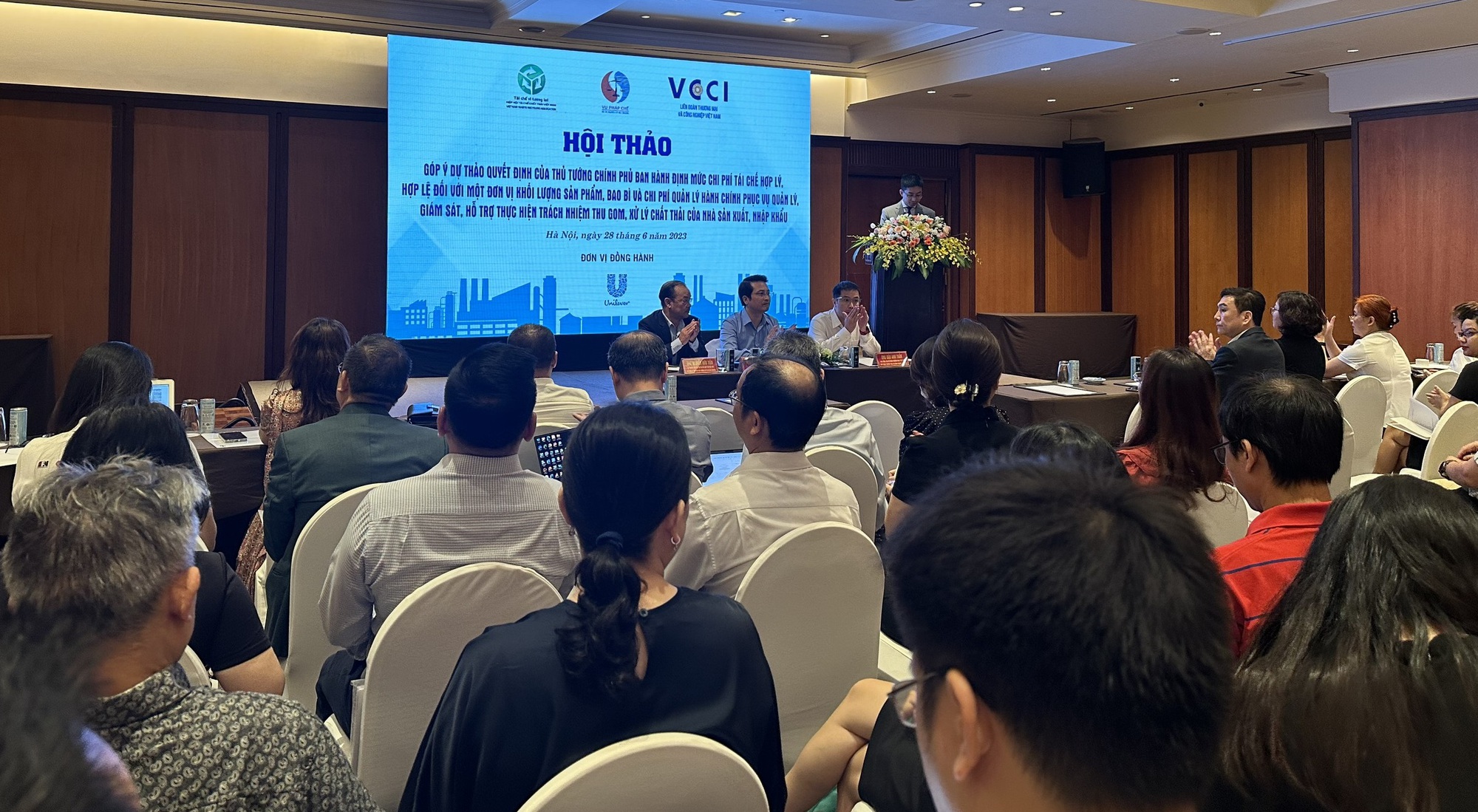
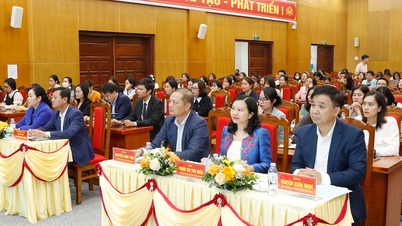
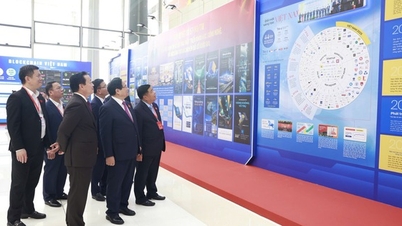
Overview of the conference
Speaking at the workshop, Ms. Chu Thi Van Anh, Vice President of the Vietnam Beer, Wine and Beverage Association (VBA), stated that in the spirit of supporting the Government in protecting the environment and promoting the green economy and circular economy, businesses in the beverage industry are committed to fulfilling their responsibilities to the best of their ability, proactively researching solutions for recycling and handling specific packaging materials, including aluminum, glass, plastic, and paper.
However, the current Fs (Feed Price) still has many shortcomings, especially since research consulting on Fs yields different results and lacks reliability, making it unsuitable for the reality in Vietnam. Specifically, the Fs for aluminum packaging is 6,180 VND/kg, nearly five times higher than the national average of 1,250 VND/kg.
"The very high recycling quotas lead to the risk of increased production and consumption costs, causing difficulties and affecting the competitiveness of businesses, which is inconsistent with the Prime Minister's directive on removing difficulties for production and business and stabilizing people's lives," Ms. Chu Thi Van Anh emphasized.
A reasonable implementation roadmap is needed.
Sharing their views at the workshop, representatives from various associations and industries stated that requiring manufacturers to be responsible under the EPR (Environmental Protection Regulation) is a very new policy, and most Asian countries have not yet implemented it mandatorily. Enforcement for thousands of types of packaging and products is complex and requires detailed guidance.
Many types of packaging and products still lack recycling technologies and recycling facilities, leaving many businesses without readily available solutions. Immediate implementation of high penalties would be difficult and impractical for businesses without adequate guidance on the new regulations. Therefore, a reasonable roadmap for implementing EPR is necessary.
Ms. Nguyen Cam Van, Director of the Hanoi Office and External Relations Officer of the European Business Association in Vietnam, suggested that in the first three years (2024-2026), the focus should be on providing guidance on implementation, not applying penalties, and only collecting any outstanding payments if necessary.
"In addition, the method of submitting recycling contributions should be changed from an advance payment based on the projected quantity at the beginning of 2024 to a final settlement based on the actual quantity at the end of 2024 (i.e., payment in April 2025), so that businesses can still fully fulfill their environmental responsibilities while reducing difficulties for them (similar to paying corporate income tax at the beginning of the next period)."
"In addition, businesses should be allowed to combine both self-recycling and paid recycling support for the same type of packaging and products, instead of being forced to choose one of the two methods," Ms. Van said.
Many associations have proposed preferential policies for environmentally friendly packaging or the use of recycled materials. This would encourage businesses to use recycled materials in packaging, increase resource efficiency, reduce dependence on virgin materials in production, create an outlet for the recycling industry, and help promote the development of the recycling industry in Vietnam.

Ms. Chu Thi Van Anh, Vice President of VBA, expressed her opinion at the workshop.
Regarding this aspect, Ms. Chu Thi Van Anh shared: "The beverage industry proposes adjusting the Fs (Feed Rate) appropriately for packaging using recycled materials to encourage recycling. At the same time, Fs = 0 should be applied to packaging and products where the value of recovered materials is higher than the recycling cost, including paper packaging, rigid plastic packaging, and metal packaging. The reason is that these types of packaging and products are essentially fully recovered and pose little risk to the environment."
Looking at the balance of interests between finished product businesses and recycling businesses, Ms. Huynh Thi My, General Secretary of the Vietnam Plastics Association, emphasized: "We should harmonize the interests of finished product businesses and recycling businesses. We shouldn't focus solely on recycling businesses while negatively impacting the larger business community that is making significant contributions to the country."
In his concluding remarks at the workshop, Mr. Phan Tuan Hung, Director of the Legal Department, stated that the opinions expressed would be noted and incorporated.
"Regarding Fs, we will adjust it, possibly increasing or decreasing it to ensure suitability and harmony. Regarding administrative costs, the consulting group has also pointed out that administrative costs are very high; we will discuss and propose reducing these costs."
"After the workshop, we remain open to listening to the opinions of associations and businesses. If associations and businesses find something too unreasonable, we are ready to invite them to our office, where someone will sit down with them to discuss and clarify the draft. If there are well-founded arguments, we are ready to listen and make further improvements," Mr. Hung emphasized.
According to the Law on Environmental Protection, starting in 2024, manufacturers and importers must fulfill their responsibility to recycle their products and packaging. To fulfill this responsibility, businesses can choose to organize the recycling of products and packaging themselves or contribute financially to the Vietnam Environmental Protection Fund to support recycling.
When choosing to contribute financially to the Vietnam Environmental Protection Fund, the amount a business must pay is calculated using the formula F = RVFs. In this formula, F is the total amount to be contributed; R is the mandatory recycling rate for each type of product and packaging; V is the volume of products and packaging produced, marketed, and imported during the year of the recycling responsibility; and Fs is the reasonable and valid recycling cost per unit volume of products and packaging.
Source link


























































































Comment (0)