

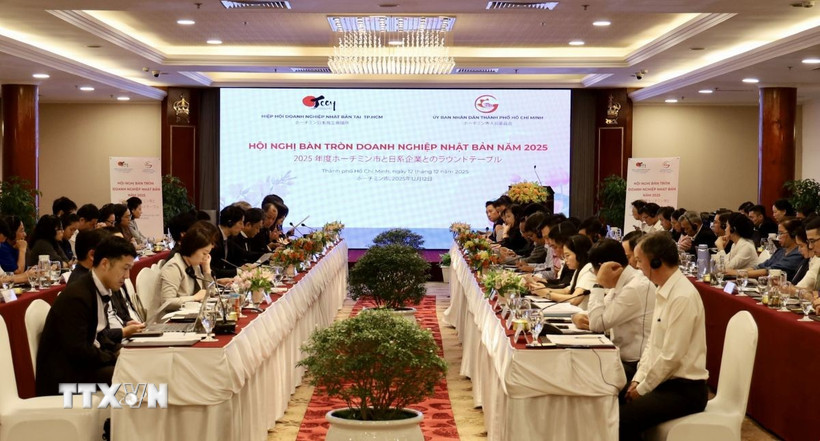
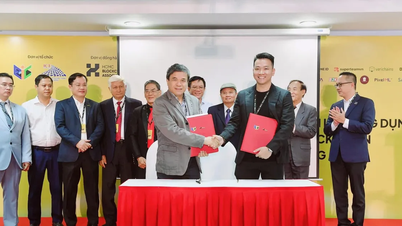
On the morning of December 12th, the Ho Chi Minh City Trade and Investment Promotion Center (ITPC), in collaboration with the Japan Chamber of Commerce and Industry in Ho Chi Minh City (JCCH), organized the 2025 Japan Business Roundtable Conference.
This is an annual event, held for over 20 years, aimed at resolving obstacles and gathering suggestions from the Japanese business community to promote effective cooperation between the two sides.
Mr. Nguyen Loc Ha, Vice Chairman of the People's Committee of Ho Chi Minh City, stated that 2025 marks a new stage of development in Vietnam-Japan relations, as the two countries are extensively implementing the framework of the "Comprehensive Strategic Partnership for Peace and Prosperity in Asia and the World."
Having been maintained and developed for over two decades, the Japan Business Roundtable Conference is not merely a channel for dialogue but has become a trusted forum for fostering in-depth collaborative initiatives that bring practical and long-term benefits to both sides.
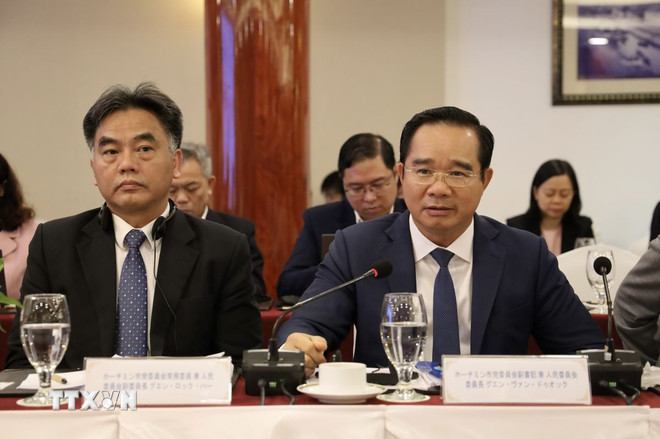
Assessing the role of the Japanese business community, city leaders affirmed that Japanese investors have long been an important part of the local socio -economic development.
This collaborative effort is clearly evident in every infrastructure project, industrial park, and high-quality human resource training program. To date, with over 2,200 investment projects and a total registered capital exceeding US$15 billion, the Japanese business community has demonstrated trust, perseverance, and professionalism in the Ho Chi Minh City market.
Mr. Ono Masuo, Consul General of Japan in Ho Chi Minh City, emphasized that Vietnam is an irreplaceable partner of Japan and that the two sides are continuing to build a solid cooperative relationship together; in which economic cooperation is the main pillar, and Japan is ready to support Vietnam's industrial development through high-tech fields, digital transformation, green transformation, and together with Vietnam, move towards a "new era."
Given that economic cooperation between the two countries is expected to continue expanding and deepening, building a more favorable business environment for Japanese companies to operate in Vietnam is extremely important.
Mr. Ono Masuo believes that the annual dialogue conference between Ho Chi Minh City leaders and Japanese businesses is an effective solution to achieve this goal. Through this dialogue, the obstacles faced by Japanese businesses will be gradually resolved, and the cooperative relationship between Japanese and Ho Chi Minh City authorities at all levels will be further strengthened.
Regarding the development orientation of Ho Chi Minh City, Mr. Nguyen Thanh Toan, Deputy Director of the Ho Chi Minh City Department of Finance, stated that 2025 is a special time when Ho Chi Minh City expands its administrative boundaries, opening up tremendous opportunities in terms of markets, infrastructure connectivity, and access to international financial resources.
Based on that foundation, the city's economy in 2025 is expected to continue its positive growth with an estimated Gross Regional Domestic Product (GRDP) of over 8%, attracting FDI of over US$8.1 billion, with Japan ranking 5th in terms of investment capital that year.
According to the Head of the Department of Finance, Ho Chi Minh City will focus on implementing five key breakthroughs to create momentum for development. The first is the construction of an International Financial Center in Thu Thiem to attract global capital flows.
Secondly, the plan involves developing a chain of smart cities connecting the entire region, integrating digital infrastructure and green transportation, with key projects currently seeking investment such as urban and inter-regional railway lines. Next is the restructuring of the economy towards innovation and high technology, with Binh Duong playing a pivotal role in modern industrial production.
The fourth key area is the development of the maritime economy and logistics, forming Free Trade Zones in Cai Mep-Thi Vai-Can Gio based on the model of a digital super-port, along with investment in green energy such as offshore wind power and petrochemical complexes.
Finally, the city is focusing on developing a chain of international-standard eco-tourism and high-end resort destinations in Vung Tau, Can Gio, and surrounding areas.
To realize these goals, in addition to general tax and land incentives under the Investment Law, Ho Chi Minh City is implementing superior special mechanisms through the amendment of Resolution 98/2023/QH15 on piloting some special mechanisms and policies for the development of Ho Chi Minh City.
These adjustments include expanding the autonomy in selecting strategic investors, applying special incentives for large-scale projects, implementing the Transport-Oriented Development (TOD) model, and improving the public-private partnership (PPP) mechanism.
In addition, policies providing direct financial support for high-tech projects, research and development (R&D), and semiconductor workforce training are also being prioritized.
Mr. Kume Kunihide, President of the Japan Chamber of Commerce and Industry in Ho Chi Minh City (JCCH), affirmed his agreement with and appreciation for Vietnam's important development directions, along with Ho Chi Minh City's strategic vision of "3 regions - 1 special economic zone - 3 corridors - 5 pillars".
The association has high expectations for the synchronized development of infrastructure, especially in the railway sector with 27 lines already approved by the Prime Minister, and believes that this direction will create strong momentum, helping the city rise to become a leading urban center in the Asian region.
Within the framework of the conference, JCCH presented 23 recommendations and proposals from the Japanese business community. The JCCH chairman acknowledged the decisive leadership of the city's leaders and the active cooperation of relevant departments and agencies, which had thoroughly addressed most of the recommendations.
JCCH is committed not only to maintaining the annual roundtable conference but also to strengthening exchanges and cooperation, aiming to build "Relationship 2.0".
The association expressed its expectation for the continuous improvement of the business environment through the acceleration of digital transformation in state management, aiming to optimize operating conditions for foreign investors.
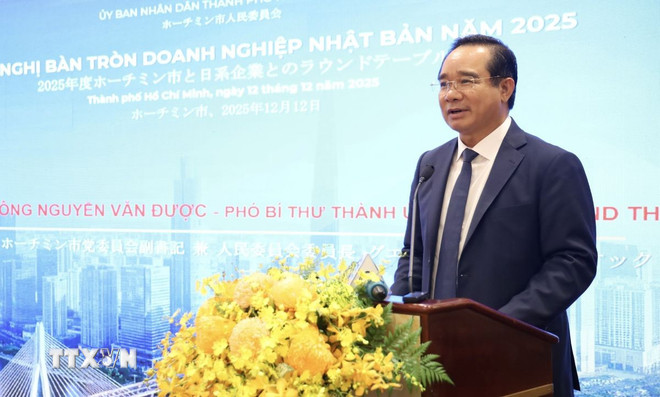
Chairman of the Ho Chi Minh City People's Committee, Nguyen Van Duoc, stated that to support businesses in the long term, Ho Chi Minh City will focus on implementing a series of comprehensive solutions, starting with institutional and investment environment reforms. Accordingly, the city aims to reduce the cost and time of procedures by 30%, and achieve 100% online public services by 2025, creating a transparent and stable environment for businesses to invest.
Regarding transportation and logistics infrastructure, the city is accelerating projects such as the Ring Road, metro lines, and TOD (Transit-Oriented Development) urban areas; upgrading seaports and airports; and building smart logistics networks and green transportation.
Ho Chi Minh City is also making all necessary preparations to operate an International Financial Center with tax incentives and a one-stop visa system that will attract international investors, with Japanese businesses being key partners.
Ho Chi Minh City is also promoting renewable energy, waste treatment, and smart city projects; and collaborating with JCCH to raise green governance standards, increase climate resilience, and reduce emissions.
Regarding human resources, the city is expanding its efforts to attract experts and train personnel in eight key areas, and implementing the "Talent for Future City" program to train 10,000 ESG-data-innovation professionals. The Fintech and International IFRS training center will strengthen the human resource foundation for long-term cooperation with Japanese businesses.
“The roundtable conference between city leaders and the Japanese business community is not just an annual meeting, but has become a strategic partnership mechanism where both sides share a vision, identify common priorities, and open up new areas of cooperation suitable to the rapidly changing regional and global context. Entering the next stage of development, to consolidate the positive results achieved, both sides need to explore more innovative approaches, new directions of cooperation, and models that bring clearer mutual benefits,” Mr. Nguyen Van Duoc further suggested.
Source: https://ttbc-hcm.gov.vn/lanh-dao-thanh-pho-ho-chi-minh-doi-thoai-cung-cong-dong-doanh-nghiep-nhat-ban-1020200.html


![[Image] Close-up of the newly discovered "sacred road" at My Son Sanctuary](/_next/image?url=https%3A%2F%2Fvphoto.vietnam.vn%2Fthumb%2F1200x675%2Fvietnam%2Fresource%2FIMAGE%2F2025%2F12%2F13%2F1765587881240_ndo_br_ms5-jpg.webp&w=3840&q=75)

























































Comment (0)