

A harmonious blend of agriculture and traditional culture.
With its rich potential in landscapes, culture, and people, Lao Cai has effectively exploited these resources to develop tourism through the cooperative model. The linkages between households involved in tourism contribute to the formation of more professional tourism products and services, bringing economic benefits. At the same time, it preserves and promotes the traditional cultural values of the locality.
The Happy Lao Cai Agricultural Tourism Cooperative is a new highlight of green tourism in Cam Duong ward, Lao Cai province. Established with the goal of exploiting the potential of local agriculture, landscapes, and culture in a sustainable manner, the cooperative not only creates unique tourism products but also opens up a green economic development direction for the local community.
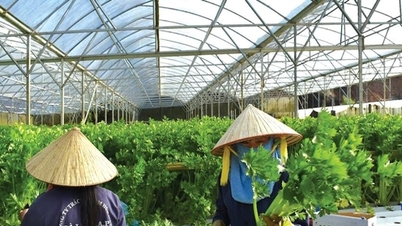
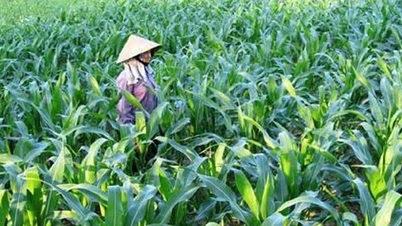
From its inception, Happy Lao Cai Cooperative has identified its core product as green experiential spaces and clean agriculture. The cooperative has built organic vegetable gardens, organic crop fields, and local specialty product processing facilities according to sustainable production standards, minimizing environmental impact.
Mr. Pham Thanh Khanh, Director of Happy Lao Cai Agricultural Tourism Cooperative, said that green tourism cannot be separated from green agriculture. If the raw materials, soil, and environment are not clean, it is impossible to create valuable tourism products. Therefore, we invest in agriculture first, creating a clean foundation to develop experiential services.
According to Mr. Pham Thanh Khanh, the cooperative's activities undergo annual environmental impact assessments; the cooperative uses organic waste composted into bio-fertilizer for crops, and wastewater is treated through biological filtration tanks; the construction materials for the experiential area are mainly bamboo, wood, and stone to harmonize with the landscape. Thanks to this systematic approach, the cooperative's model quickly attracts tourists seeking a green, peaceful space and an experience of local agricultural life.
The Happy Lao Cai Agricultural Tourism Cooperative is currently linked with dozens of households, forming a closed supply chain from cultivation, livestock farming, processing to tourism services. Each participating household is guaranteed a market for their agricultural products through the cooperative's tourism products, thus increasing people's income by 20-40% compared to before participating in the model. To create sustainable income for the community, the cooperative applies a circular economy model: tourism creates a stable source of income, and a portion of the profits is reinvested in clean raw material areas.
One of the highlights of Happy Lao Cai is the seamless integration of agriculture and traditional culture. Visitors can immerse themselves in a green space, close to nature, enjoy fresh farm produce, experience planting vegetables and harvesting fruit, and prepare traditional dishes using locally sourced, clean ingredients. Especially, they can cook and enjoy traditional dishes, watch cultural performances, and learn about local customs.
Create a clear, professional path with a unique identity.
Muong Lo Tourism Cooperative was established in 2019, headquartered in Trung Tam Ward. The Cooperative attracted 12 households to do homestay in Trung Tam Ward and neighboring communes and wards to participate. Since its establishment, the Cooperative has promoted its role in connecting members to develop sustainable community tourism and is a bridge between travel companies and Cooperative members, contributing to creating a new direction for local tourism that is methodical, professional, and has its own identity. Cooperative members support each other in investing in facilities, sharing tourism experiences, communication skills... all aimed at promoting and introducing Trung Tam Ward's community tourism to tourists.
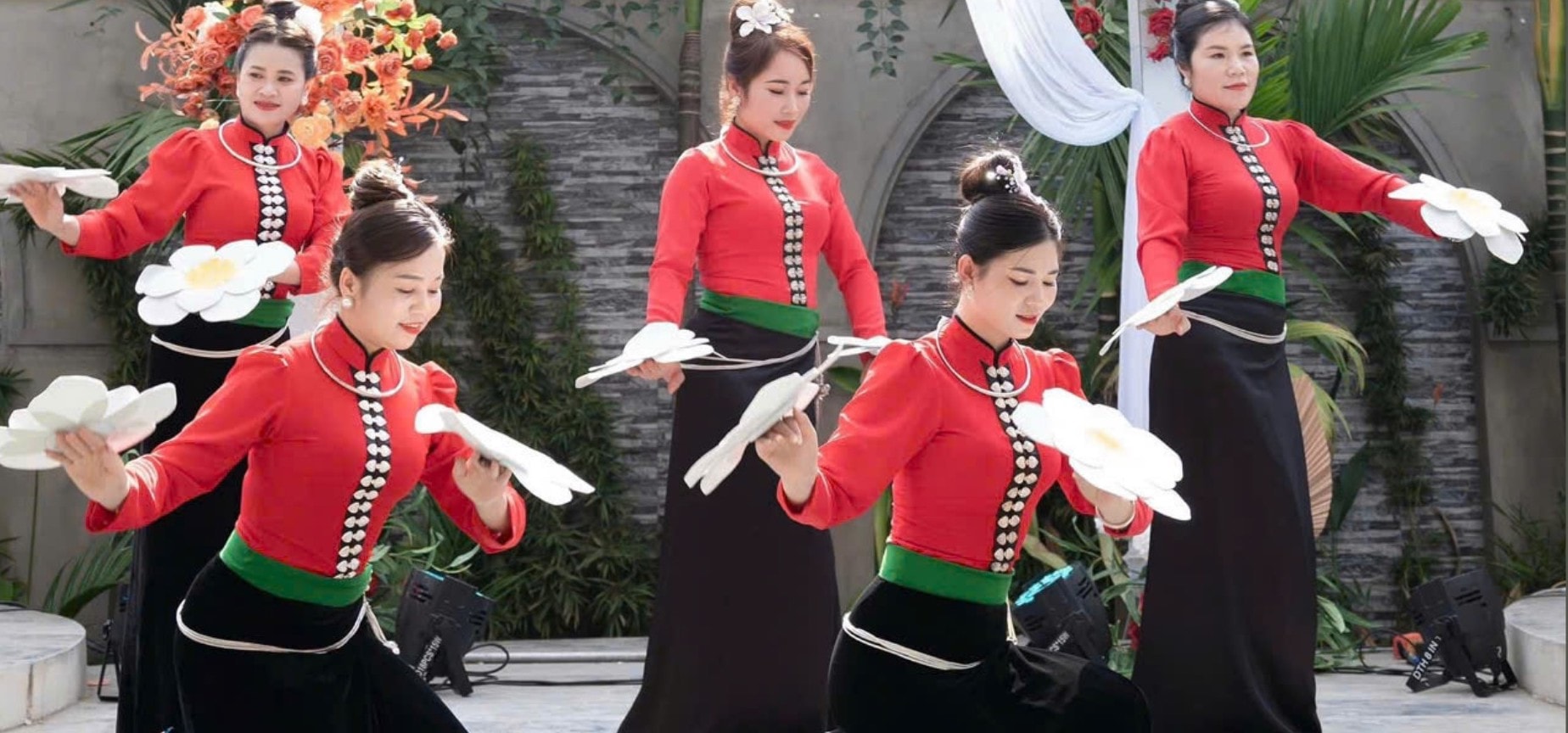
In addition, the Muong Lo Tourism Cooperative encourages tourist attractions and guesthouses to be renovated and upgraded in a green, clean, and beautiful manner to meet the needs of tourists. Members of the cooperative also collaborate in producing and selling products and souvenirs such as traditional Thai ethnic clothing, scarves, and bags, as well as specialty rice, dried meat, and sausages to tourists.
To better serve tourists, in addition to focusing on investing in facilities and providing food and accommodation, cooperative members actively promote local culture through various forms, participate in performing folk art shows, and have established 10 performing arts groups that regularly perform to meet the needs of tourists staying at member homestays.
Ms. Lo Thi Xoan, a member of the Muong Lo Tourism Cooperative, said: "Since joining the cooperative, my family has received training on how to do community tourism. With the support from other members of the cooperative, my family has boldly invested capital to renovate our stilt house with full amenities to welcome guests. As a result, my family earns over 100 million VND per year from tourism."
More and more widespread and multiplied
Van Chan commune (Lao Cai province) is assessed to have the potential to develop community tourism and green tourism by promoting cultural values and effectively exploiting natural landscapes and traditional cultures of ethnic groups.
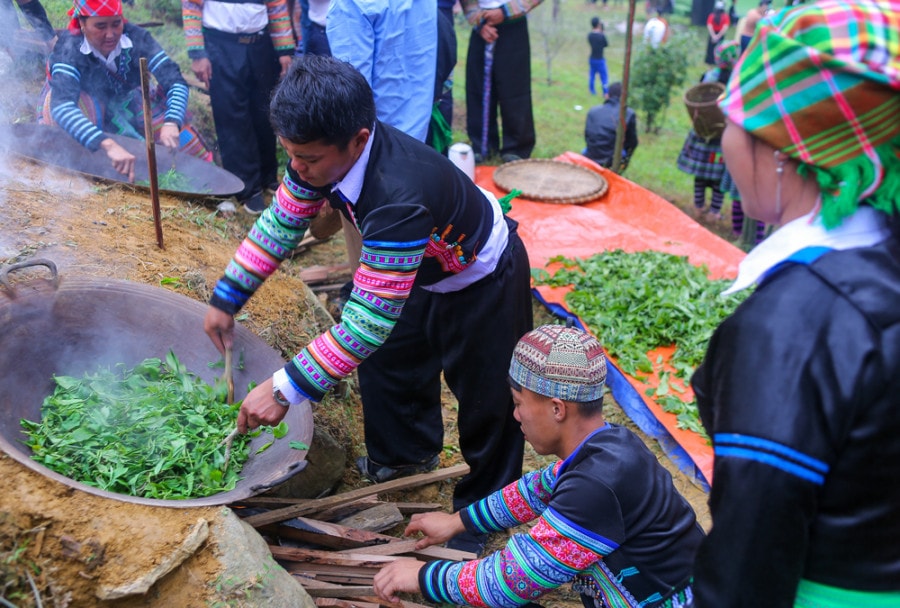
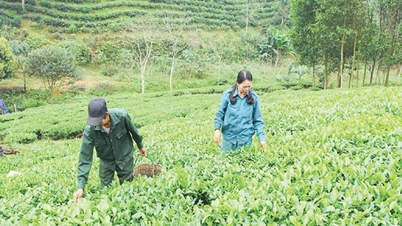
Implementing a two-tiered administrative model, Van Chan commune was officially established by merging Son Thinh town and the communes of Suoi Giang, Dong Khe, and Suoi Bu. Among these, Suoi Giang has long been known as an attractive tourist destination with its ecological tourism area at an altitude of over 1,300 meters, cool climate year-round, famous ancient Shan Tuyet tea plantations, and many attractions such as Coc Tinh, Thien Cung Cave, and the Suoi Giang Tea Culture Space… Upon arriving in Suoi Giang, visitors are amazed by the century-old tea forests, enduring the sun and wind of the highlands, a source of pride for the Mong people.
Representing the tea-growing community, Ms. Lam Thi Kim Thoa, Director of Suoi Giang Cooperative (Van Chan), shared that the cooperative plays a crucial role in maintaining the livelihoods of the Mong ethnic group, with 98% of the people relying on ancient Shan Tuyet tea trees. From a handicraft facility, the cooperative has developed into a modern processing unit, producing in a "clean - green - sustainable" direction, combining traditional techniques and new technologies. The cooperative is a pioneer in applying QR codes to trace each tea plant, using renewable energy, and promoting digital commerce, bringing Suoi Giang Shan Tuyet tea products to the international market.
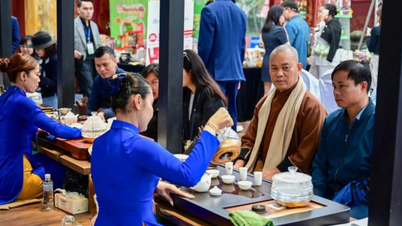
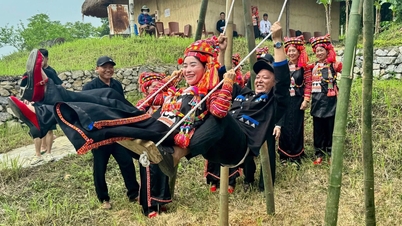
In recent years, Ta Phin Community Tourism Cooperative (Ta Phin Commune) has been known as a place to experience the unique cuisine and culture of the Dao ethnic community. Coming here, in addition to enjoying the beautiful climate and landscape, many tourists expressed their impression when experiencing the work of the Dao people such as picking medicinal leaves, making medicine, attending Dao Nom script classes, watching artisans making drums and engraving silver. Ta Phin Community Tourism Cooperative gathers 38 business households, operating in a systematic manner, so the number of visitors as well as tourism revenue have both improved.
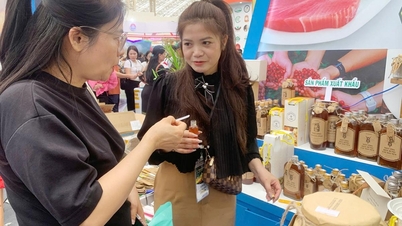
Or we can also mention Hoang Lien Sa Pa Ecotourism Cooperative (Sa Pa ward) which has effectively exploited tourism development and promoted and sold indigenous products of Sa Pa mountains and forests such as honey, Gynostemma pentaphyllum tea... bringing in an average revenue of tens of millions of VND per month. Thanks to that, the income of the members of the Cooperative has also been increasingly improved. The Cooperative operates according to the principle of creating opportunities for small producers, building communication and marketing capacity, as well as producing quality products and associating with environmental protection responsibility.
The cooperative models for developing green tourism, combining effective experiential agriculture with the preservation of ethnic cultural identity in Lao Cai province have now been replicated in many localities such as Ban Ho, Ta Van, Ta Phin, Nam Cang, etc., with the participation of hundreds of households. As a result, the income of many families has reached 40-50 million VND/year to hundreds of millions VND/year, and the poverty rate in these localities has decreased rapidly and sustainably.
Source: https://daibieunhandan.vn/lao-cai-hop-tac-xa-phat-trien-du-lich-xanh-gan-voi-bao-ton-ban-sac-van-hoa-10399876.html


![[Photo] Closing Ceremony of the 10th Session of the 15th National Assembly](/_next/image?url=https%3A%2F%2Fvphoto.vietnam.vn%2Fthumb%2F1200x675%2Fvietnam%2Fresource%2FIMAGE%2F2025%2F12%2F11%2F1765448959967_image-1437-jpg.webp&w=3840&q=75)










































![[OFFICIAL] MISA GROUP ANNOUNCES ITS PIONEERING BRAND POSITIONING IN BUILDING AGENTIC AI FOR BUSINESSES, HOUSEHOLDS, AND THE GOVERNMENT](https://vphoto.vietnam.vn/thumb/402x226/vietnam/resource/IMAGE/2025/12/11/1765444754256_agentic-ai_postfb-scaled.png)



































Comment (0)