

Many households have escaped poverty.
Dong Giang and La Da are two communes with a large ethnic minority population, located in the eastern part of the province. In recent years, the lives of the people have gradually changed thanks to the development of cooperative economics , combined with the transformation of crops and livestock and the development of services.
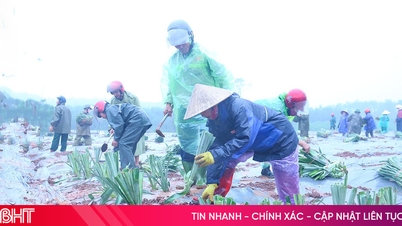
Since developing the collective economic model, Dong Giang has undergone a significant transformation. The commune currently has three effectively operating agricultural cooperatives: the Green Farm Agricultural Cooperative, the Dong Giang Agricultural Service Cooperative, and the Dong Tien Agricultural Service Cooperative. These cooperatives not only support farmers with seeds and techniques but also link with businesses to ensure stable product consumption.
.jpg)
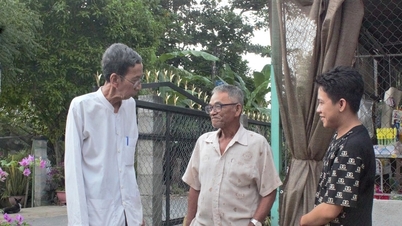
Pham Duy Hien, Secretary of the Commune Party Committee, said: “We consider cooperative economics as an important lever to help people escape poverty. When linked in the same production chain, people no longer have to worry about the market for their products, and at the same time learn how to do business systematically, knowing how to calculate costs and profits like real business people.”
Besides developing key crops, Dong Giang also focuses on restoring traditional products such as black pigs, grass-fed goats, and bamboo-cooked rice... both preserving cultural identity and increasing income. Currently, the commune aims to develop distinctive OCOP products associated with local brands.
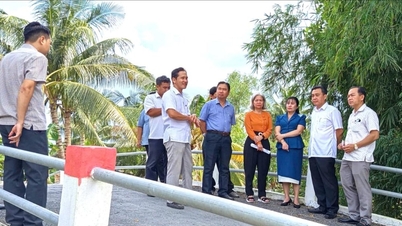
Thanks to investments in irrigation systems such as Saluon Lake, Suoi Thi spillway, and the network of internal irrigation canals, people have become more proactive in irrigation. Along with that, policies supporting seeds, supplies, and agricultural extension have been implemented synchronously, helping to increase productivity and the value of agricultural products.
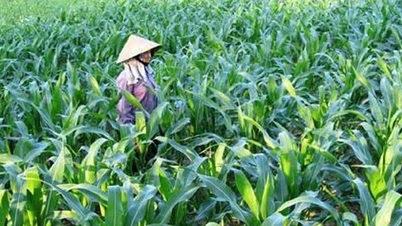
Thanks to this, Dong Giang commune earns over 6.3 billion VND annually from advantageous crops such as hybrid corn, rubber, cashew nuts, and sugarcane. Rubber latex harvesting alone reaches approximately 130 tons, bringing in an estimated value of 20 billion VND.
Not far from Dong Giang, La Da commune is also a predominantly ethnic minority area, where the movement to develop the collective economy is spreading strongly. The entire commune currently has 4 agricultural cooperatives and 1 Da Mi tourism joint-stock company operating effectively, contributing significantly to improving the lives of the people.
Cooperative societies in La Dạ focus on integrated agricultural production and tourism services. Typical examples include: La Dạ Integrated Agricultural Cooperative, Đa Mi Production, Business and Service Cooperative, Đa Mi Integrated Agricultural and Tourism Cooperative, and Thủy Thoa Agricultural and Industrial Cooperative.
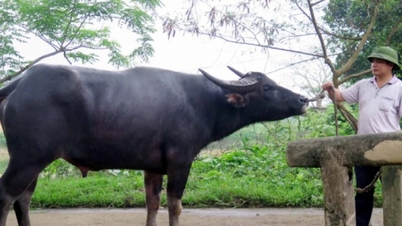
Farmers have shifted their crop structure to suit the soil conditions, focusing on high-value fruit trees such as durian, mangosteen, avocado, and coffee. In addition, cattle, pig, and goat farming has been organized on a larger scale, applying disease prevention techniques and regular vaccinations.
One highlight in La Dạ is the integration of agriculture with ecotourism. Many households utilize their orchards to create tourist attractions, offering fruit-picking experiences and local specialties. Visitors not only enjoy the scenery but also purchase products directly from the orchards, helping locals sell their produce more easily and at better prices.
The goal is to increase the number of cooperatives that meet the standards.
Not only in Dong Giang and La Da communes, but also in many other communes, the cooperative system is playing an increasingly central role in assisting farmers in organizing production, standardizing processes, and linking to markets. Many cooperatives have formed large raw material areas, creating sustainable livelihoods, helping people shift from fragmented production to modern commodity production, thereby increasing income and improving living standards.
Entering the 2026-2030 period, Lam Dong province has identified a shift in focus from "increasing the number of communes meeting the standards" to "improving the quality and sustainability" of each criterion. Based on a review and the new set of criteria for new rural areas, Lam Dong will implement solutions by categorizing communes to focus investment more effectively.
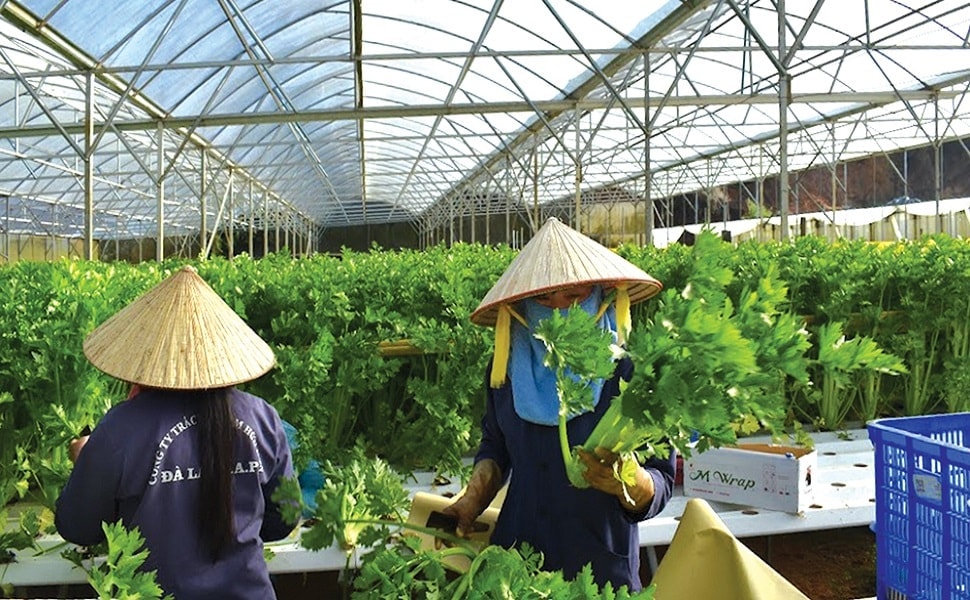
Accordingly, Group 1, comprising 8 communes that have already met the standards and have a good foundation, will be oriented towards building advanced, model new rural communes; focusing on improving services, the environment, digital transformation, and developing distinctive products.
Group 2, comprising 71 communes that have basically met the criteria, will receive support to complete essential infrastructure, strengthen production organization, expand OCOP (One Commune One Product) programs, and fulfill any remaining criteria.
Group 3 comprises 24 disadvantaged communes, including 9 poor communes, which are considered the focus of support, prioritizing investment capital for transportation, clean water, education, health, and sustainable livelihoods, aiming to narrow the gap between more developed and disadvantaged areas.
Along with the commune-level grouping, the province is implementing major tasks in a coordinated manner: consolidating the steering committees for targeted programs according to the two-tiered local government model; perfecting the mechanism for integrating resources and strongly encouraging public-private partnerships; supporting cooperatives and cooperative groups in developing high-tech agriculture, deep processing, and multi-value economy; and promoting digital transformation in production and public services.
Source: https://daibieunhandan.vn/kinh-te-tap-the-giup-nguoi-dan-lam-dong-nang-cao-thu-nhap-on-dinh-cuoc-song-10400132.html

![[Photo] Closing Ceremony of the 10th Session of the 15th National Assembly](/_next/image?url=https%3A%2F%2Fvphoto.vietnam.vn%2Fthumb%2F1200x675%2Fvietnam%2Fresource%2FIMAGE%2F2025%2F12%2F11%2F1765448959967_image-1437-jpg.webp&w=3840&q=75)















































![[OFFICIAL] MISA GROUP ANNOUNCES ITS PIONEERING BRAND POSITIONING IN BUILDING AGENTIC AI FOR BUSINESSES, HOUSEHOLDS, AND THE GOVERNMENT](https://vphoto.vietnam.vn/thumb/402x226/vietnam/resource/IMAGE/2025/12/11/1765444754256_agentic-ai_postfb-scaled.png)












































Comment (0)