

The cultural style in the Middle East is very unhurried. If a partner needs you, they'll rush you like crazy. Conversely, if you need something, you have to patiently wait. Therefore, Vietnamese companies need to be persistent; impatience will lead to missed opportunities for potential cooperation.
Furthermore, Vietnamese businesses should avoid conducting transactions with partners on Fridays. In the Middle East, people only work from Monday to Thursday, which is Sunday to Thursday each week. Friday is a major holiday for Muslims. On this day, customers will not respond to transactions.
These specific points were highlighted by Mr. Tran Trong Kim, First Secretary and Head of the Vietnamese Trade Office in Saudi Arabia, at the seminar "Market Trends and Export Opportunities for Vietnamese Agricultural Products and Processed Foods to Halal Markets," held on September 5th.
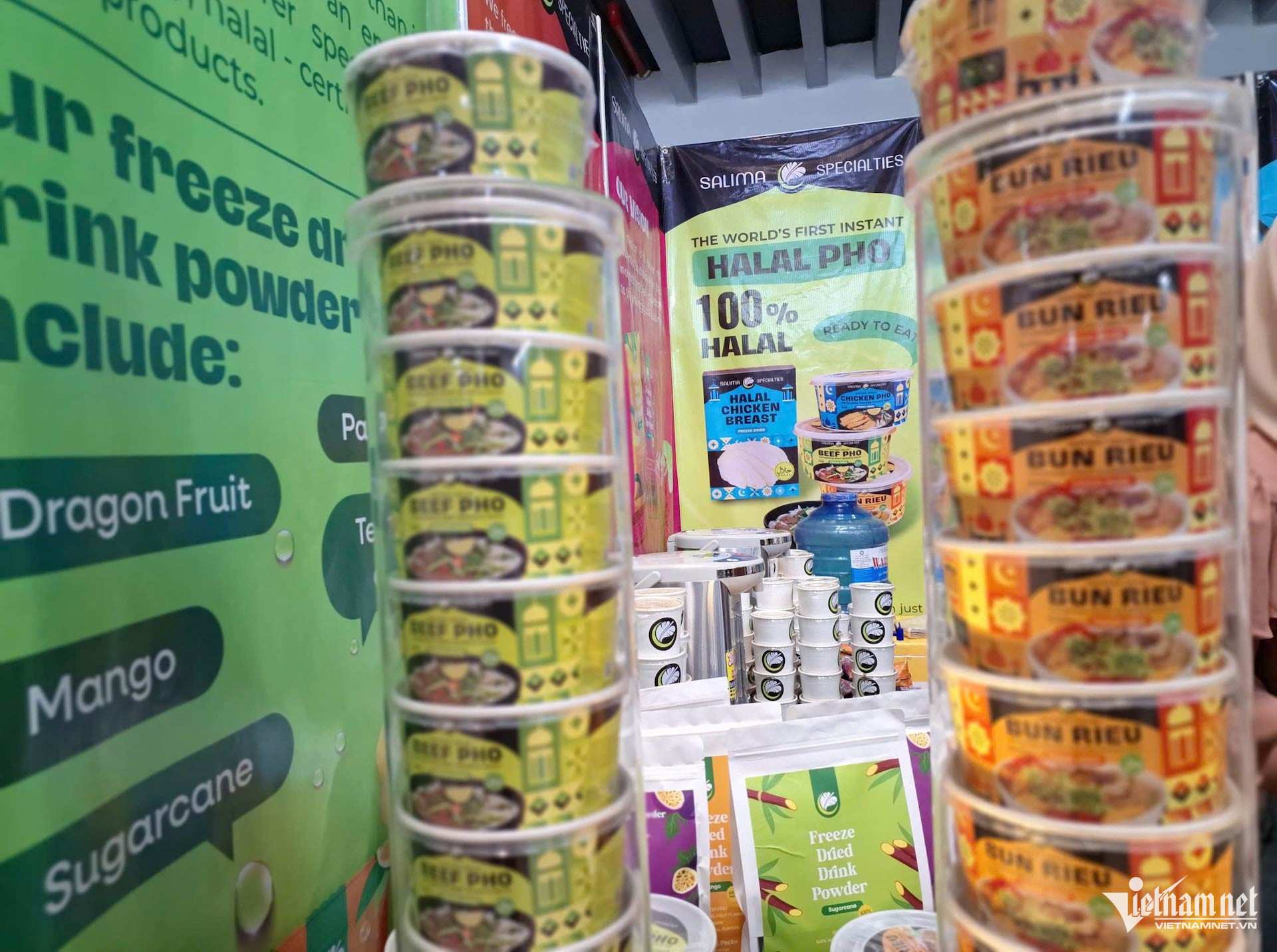
Currently, 95% of Saudi Arabia's goods are imported from abroad, including Vietnam. The main products that Vietnam exports to this market include rice, seafood, coffee, tea, cashew nuts, pepper, and garments.
All processed food products, beverages, and cosmetics intended for export to Saudi Arabia must have Halal certification. Goods must be registered with the Saudi Food and Drug Authority (SFDA) for a certification number, but this process is not complicated and applications can be submitted online.
Saudi Arabia is considered a potential Halal market for Vietnamese businesses. However, Mr. Kim also warned about scams in this market.
Specifically, taking advantage of situations related to the conflict, the fraudsters impersonated members of humanitarian organizations needing to import goods for relief and reconstruction purposes. They requested large orders with favorable prices to deceive sellers and steal the goods.
It should be noted that humanitarian organizations in the Middle East do not have the authority to import goods. Businesses should refuse to do business with such partners.
Furthermore, Vietnamese businesses should not pay any fees in advance related to contract brokerage or invoice issuance. This is also a common fraudulent practice in trade.
"When dealing with businesses in Saudi Arabia or the Middle East, the Vietnamese trade office encourages signing contracts with payment via letter of credit (L/C)," Mr. Kim noted.
The market is worth $2 trillion.
Another potential Muslim market is Indonesia, the country with the world's largest Muslim population, exceeding 244 million people.
According to Mr. Pham The Cuong, Vietnam's Commercial Counselor in Indonesia, the Halal standard is essential for Indonesian people. Total spending on Halal food and beverages in the country reached US$155.3 billion, accounting for 11.1% of the total global Halal food market size (US$1.397 trillion, 2022).
However, in 2024, Vietnam's exports of Halal products to Indonesia only reached approximately $54 million, accounting for nearly 1% of the total export value to Indonesia.
Exports of Halal products to Indonesia are still concentrated in the confectionery and processed food categories of foreign brands with manufacturing plants in Vietnam. The number of domestic companies exporting Halal products is still small. Vietnamese Halal product brands are not yet well-known in Indonesia.
On the other hand, the Indonesian market is the most protectionist in the ASEAN region, which creates difficulties for our country's export businesses.
Therefore, Mr. Cuong believes that it is necessary to form a link between Vietnamese businesses and businesses in countries with developed Halal industries, including Indonesia. This link would not only raise awareness among businesses about Halal standards but also increase export opportunities.
At the same time, the linkage will form a closed supply chain from raw material sourcing and production to distribution and export of products according to Halal standards.
The Halal industry is emerging as a promising economic sector, with an estimated market size exceeding $2 trillion and serving more than 2.2 billion Muslim consumers globally.
According to Ms. Ho Thi Quyen, Deputy Director of the Ho Chi Minh City Trade and Investment Promotion Center (ITPC), in 2025, the Halal industry will continue to grow strongly in the Asian, Middle Eastern, and African markets. Halal trends in 2025 will contribute to reshaping the global Halal business environment, creating new opportunities but also requiring businesses to adapt quickly.
Ms. Quyen noted that product groups in which Vietnam has a competitive advantage, such as agricultural products, processed foods, cosmetics, and pharmaceuticals, can leverage their strengths to seek market share, expand distribution channels, and build brands associated with Halal values.
Source: https://vietnamnet.vn/lich-lam-viec-ky-la-tai-quoc-gia-hoi-giao-2439699.html


















![[Photo] Prime Minister Pham Minh Chinh holds a phone call with the CEO of Russia's Rosatom Corporation.](/_next/image?url=https%3A%2F%2Fvphoto.vietnam.vn%2Fthumb%2F1200x675%2Fvietnam%2Fresource%2FIMAGE%2F2025%2F12%2F11%2F1765464552365_dsc-5295-jpg.webp&w=3840&q=75)









































Comment (0)