

The "advantages" and "disadvantages" of sugary drinks being subject to excise tax.
Prepared for submission to the 15th National Assembly at its eighth session, the Law on Special Consumption Tax (amended), with its proposal to include sugary drinks in the taxable category, is receiving special attention from both the public and businesses.
 |
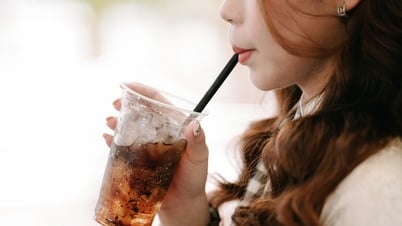
| The draft Law on Special Consumption Tax (amended) adds soft drinks meeting Vietnamese standards with a sugar content exceeding 5 g/100 ml to the list of items subject to special consumption tax. |
Proposal to impose a 10% excise tax.
In the draft Law on Special Consumption Tax (amended), the Government clearly stated that the general trend in reforming special consumption tax in many countries around the world today is to broaden the tax base. This aims to limit the consumption of certain goods that are harmful to public health, children, the environment, or where the state needs to regulate consumption, adding some new goods and services to the list of items subject to special consumption tax (such as sugary soft drinks).
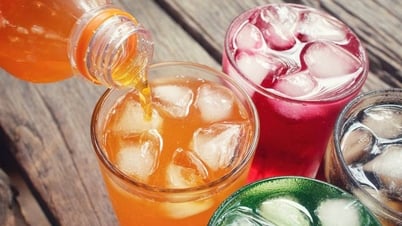
The draft law adds soft drinks conforming to Vietnamese Standards (TCVN) with a sugar content exceeding 5 g/100 ml to the list of items subject to special consumption tax (10% tax rate) to implement the Party and State's directives on protecting public health, and the recommendations of the World Health Organization (WHO), the United Nations Children's Fund (UNICEF), and the Ministry of Health regarding the reality of diseases related to sugary soft drinks in Vietnam.
According to the government, this new policy aims to promptly prevent and reduce the alarming rate of overweight and obesity among children and adolescents, to prevent and minimize the risk of disease and the healthcare burden of non-communicable diseases, to raise awareness and limit the consumption of sugary drinks, and to bring public health benefits, especially to young people, the future generation of the nation, in line with international practices.
In the Report on the Impact Assessment of the Law on Special Consumption Tax (amended), the Ministry of Finance (the lead drafting agency) cited hundreds of figures to demonstrate the necessity of restricting the consumption of sugary soft drinks.
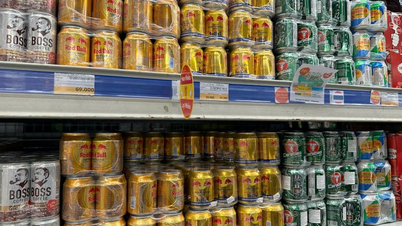
For example, many sugary beverage categories saw strong growth in consumption in 2022 compared to 2021, specifically carbonated drinks (16.7%), energy drinks (25.5%), vegetable and fruit juices (16.92%), sports drinks (35.6%), and ready-to-drink tea (9.8%). These products are expected to continue growing at 6.4-8.7% in the following year.
Meanwhile, the rate of overweight and obesity among Vietnamese children is alarming. Without effective interventions, it is estimated that by 2030, nearly 2 million children aged 5-19 in Vietnam will be overweight or obese.
According to the Ministry of Finance, imposing a 10% excise tax on sugary drinks increases the price of high-sugar beverages, prompting consumers to switch to alternative products or low-sugar drinks.
For the state budget, revenue in 2026 is projected to increase by approximately VND 2,400 billion compared to 2025. However, revenue in subsequent years will decrease compared to the first year, due to the effect of taxing sugary drinks to raise consumer awareness (reducing consumption) and encourage manufacturers to change formulas and produce products with sugar content below the tax threshold.
Another positive impact, according to the Drafting Committee's assessment, is that it will encourage businesses to change the ingredients and formulas of soft drinks, reducing the sugar content in their products to avoid paying taxes. This will encourage businesses to produce and import products that are better for consumer health.
In a preliminary review, the majority of members of the Standing Committee of the National Assembly's Finance and Budget Committee agreed with the inclusion of soft drinks in the taxable category. They also requested the Government to clarify the meaning of "according to Vietnamese Standards," as this regulation could lead to difficulties in implementation for imported products that are not manufactured according to Vietnamese Standards but still contain more than 5 g of sugar per 100 ml.
While agreeing with the aforementioned new policy, the Ministry of Health requested the Ministry of Finance to continue researching and adding, according to a roadmap, other types of sugary drinks to conform with the WHO definition, including drinks containing free sugars, such as carbonated or non-carbonated soft drinks; fruit/vegetable juices and drinks; powdered and liquid concentrates; flavored drinks; energy drinks and sports drinks; ready-to-drink tea; ready-to-drink coffee and flavored milk drinks.
"According to the WHO definition, there are still some types not included in the concept of soft drinks according to Vietnamese standards," the Ministry of Health explained.
The negative impact on businesses is not significant.
According to the Vietnam Beer, Wine and Beverage Association, imposing excise tax on sugary drinks is not feasible in achieving the goal of reducing overweight and obesity rates. Obesity is a complex disease caused by many factors, including excess energy intake and lack of physical activity. Consuming sugary drinks is not the primary or sole cause.
The association also argued that imposing taxes is ineffective in influencing consumer behavior, due to the substitution effect where consumers can consume other foods and beverages with higher sugar and calorie content than soft drinks, such as milk, Milo, and pastries.
- Deputy Prime Minister, Minister of Finance Ho Duc Phoc


Some opinions within the Standing Committee of the Finance and Budget Committee also suggested that, with the goal of contributing to protecting consumer health, proposing to only include sugary soft drinks in the tax scope does not comprehensively cover all products that may affect consumer health. Since sugary soft drinks are not the only products containing sugar, taxing only this product would allow consumers to consume even higher amounts of sugar from other products (such as cakes, candies, etc.), easily leading to overweight and obesity, and potentially harming their health.
At the same time, these opinions suggest that while taxing sugary drinks might change consumer product choices, it may not necessarily achieve the goal of limiting consumption, as people have many other alternatives, such as using sugary drinks prepared on-site according to customer requests. These are products where controlling the sugar content is very difficult, and tax authorities lack sufficient grounds to collect taxes on these beverages.
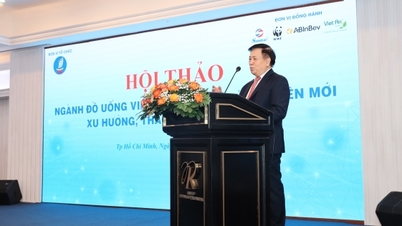
The Vietnam Beer, Wine and Beverage Association emphasizes that the imposition of excise tax on sugary drinks has a significant impact on the beverage industry and related supporting industries in Vietnam, such as the sugar cane, packaging, retail and logistics sectors, particularly affecting small and medium-sized enterprises.
Including sugary drinks in the scope of excise tax could easily provoke strong reactions from businesses producing, trading, and importing beverages, and this is a negative impact that the agency in charge of drafting the amended Excise Tax Law has taken into account.
However, the Ministry of Finance argues that imposing an excise tax on soft drinks with a sugar content exceeding 5 g/100 ml would increase selling prices, thereby contributing to a decrease in consumer demand for this product. Therefore, in the initial period, it may affect the production, revenue, and profits of businesses producing and importing this product, as well as related supporting industries such as the sugar, packaging, and retail sectors.
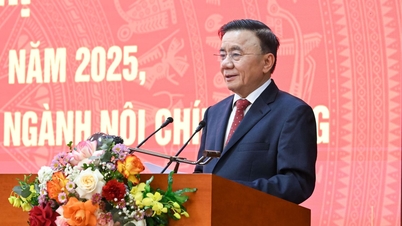
"However, the proposed 10% tax rate on the manufacturer's selling price will have a modest impact on the retail price of products (an increase of about 5%), so the negative impact on the production and business activities of enterprises will not be significant. To reduce the consumption of sugary drinks, the retail price of this item needs to increase by 20% or more, equivalent to a 40% excise tax rate on the selling price of manufacturing and importing enterprises," the Ministry of Finance analyzed.
Furthermore, the drafting agency stated that imposing excise tax on sugary drinks is a public health policy, particularly a preventive measure to protect and improve public health, especially among young people. This contributes to controlling risk factors for disease, reducing morbidity and mortality rates, thus easing pressure on the healthcare system and reducing hospital overcrowding.
Source: https://baodautu.vn/loi-va-hai-khi-do-uong-co-duong-chiu-thue-tieu-thu-dac-biet-d226110.html



































































Comment (0)