

Despite numerous warnings, online scams continue to increase with unbelievably sophisticated methods. Familiar tricks are now being reimagined with advanced technology and an alarming ability to exploit human psychology.
The trap called "misinformation"
On June 13, 2025, Ms. LTT (45 years old, residing in Long Bien District, Hanoi ) received a call from someone claiming to be a delivery driver to her office. Because she had previously ordered dried mangoes from Khanh Hoa, she had no suspicions. The delivery person requested that she transfer 15,000 VND as a "return shipping fee." After Ms. T. transferred the money, the caller called again, informing her that she had inadvertently "registered as a delivery driver" and would be automatically charged 3.5 million VND per month if she did not cancel the order. A link to "unsubscribe" was also sent. Fortunately, Ms. T. was suspicious and did not click on the link.
Just three days later, Ms. T.'s mother, Ms. D.M. (69 years old), became the victim of another, more sophisticated scam. After clicking on a link to a music program on Facebook, her account was compromised. The scammer immediately used this account, and also created a fake account impersonating her daughter, to message her, claiming her account was locked and she urgently needed 100 million VND. Fortunately, just as Ms. M. was about to transfer the money, her daughter unexpectedly returned home and prevented the incident. However, the perpetrator did not stop there, continuing to impersonate Ms. M. using Deepvoice technology, calling her niece to trick her into lending them 30 million VND. However, the niece was vigilant and went to verify the information, thus avoiding losing the money.
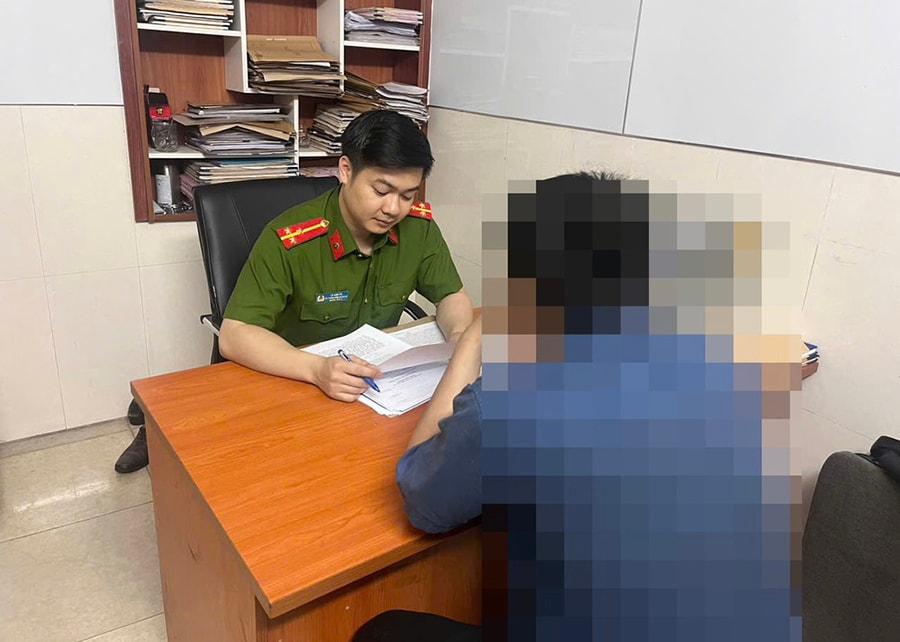
Unlike Mrs. M. and her daughter, Ms. P. (48 years old, residing in Cau Giay District, Hanoi) unfortunately lost over 600 million VND due to a fake phone call from a delivery driver on June 11, 2025. After transferring 16,000 VND as "shipping fee," she received a notification about "incorrectly registered delivery account" and was threatened with monthly deductions. In a state of panic, she followed the instructions to "unregister the transaction," resulting in transferring over 600 million VND to the scammer's account. Only later did she realize she had been scammed and immediately reported it to the police.
According to Lieutenant Colonel, Dr. Dao Trung Hieu, from the Public Security Communication Department ( Ministry of Public Security ), the scams are essentially nothing new. They only change their methods of expression, from traditional phone calls and text messages to fake applications, Deepfake (image spoofing), or Deepvoice (voice spoofing). All exploit three human weaknesses: greed, fear, and lack of knowledge. In particular, the perpetrators are becoming increasingly professional in creating psychological scenarios, putting victims into a state of panic or blind trust. They exploit family relationships, familiar voices, or impersonate government agencies to pressure victims into acting quickly without verifying the authenticity.
Where did the vulnerability come from?
According to a report from the Cyber Security and High-Tech Crime Prevention Department (Ministry of Public Security), in 2024, authorities detected and handled over 11,000 cases related to online fraud and property appropriation, an increase of nearly 30% compared to 2023. At least 24 common forms of fraud are circulating, ranging from impersonating police and court officials, to fraudulent investment schemes, sending fake bank and insurance links, scams promising rewards, and even scams involving "helping to recover stolen money"—a widespread form of "fraud upon fraud."
Lawyer Tran Tuan Anh, Director of Minh Bach Law Firm, believes that the cause of this situation is the lax management of user identities by key organizations such as banks and telecommunications companies. Many bank accounts are still opened using forged documents, through intermediaries, or even openly bought and sold on social media. Meanwhile, phone SIM cards – the key to OTP verification – are still easily registered with false identities or "premium numbers" without thorough verification. Once fraudsters obtain bank accounts and disposable SIM cards, they can completely create a "fake but real" identity to steal assets.
"It's time for banks and network operators to take action beyond just issuing warnings. Tightening account registration procedures, preventing unusual transactions, scrutinizing fake accounts, blocking spam SIM cards, and cooperating closely with investigative agencies are urgent requirements," said lawyer Tran Tuan Anh.
To avoid online scams, the Hanoi City Police advise people not to transfer money before personally receiving their ordered goods and carefully verifying all information. Furthermore, absolutely do not log in to links sent by strangers to avoid falling into scams. Currently, postal and delivery companies all have websites and applications to track shipment information. Therefore, people should proactively access these websites to monitor the progress of their orders and ensure they receive the correct order before accepting delivery. If you are scammed or have your money stolen, you should report it to the nearest police station for timely assistance.
In an age where technology can "impersonate" everything from faces and voices to even identities, trust is the most easily stolen asset. To protect ourselves, everyone should slow down. Because just one moment of carelessness can lead to a lifetime of regret.
Source: https://hanoimoi.vn/lua-dao-online-sap-bay-du-chieu-cu-vo-moi-706435.html
![[Image] Nearly 125,000 Hanoi students completed the Literature exam for the 10th grade entrance exam.](https://vphoto.vietnam.vn/thumb/1200x675/vietnam/resource/IMAGE/2026/05/30/1780117233041_ndo_br_thiet-ke-chua-co-ten-2-png.webp)






























































































Comment (0)