

 |
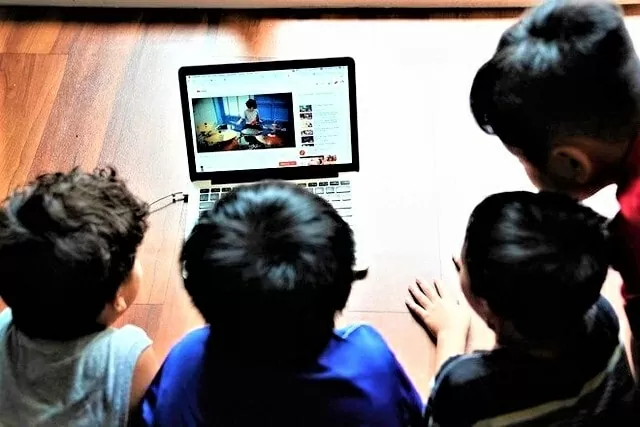
| With technology developing at a rapid pace, the internet has become an indispensable part of children's lives. (Illustrative image from the Internet) |
Confusion... online scams
Recently, social media has been flooded with pleas for help from parents searching for missing children. Online kidnapping is becoming a form of crime that worries many parents about the safety of their children. On online forums, many parents express their anxiety and confusion about this type of crime: "It's really unsettling, there are so many scams now," "Young people are increasingly lacking life skills"...
The phenomenon of children running away from home, especially due to family conflicts or being lured through social media, is an alarming issue that worries many parents. This not only causes immeasurable consequences for children but also reflects a gap in education and a lack of parental involvement.
Many young people today tend to trust friends or strangers more than their parents or relatives. This is partly due to parents often making decisions based on emotions, being overbearing, and easily manipulated or misled by their children. When children perceive their parents as easily deceived and inconsistent, their trust is shaken, and they become more susceptible to external influences.
At the middle and high school age, children are still immature, have little life experience, are impulsive, and are exploring themselves. Their reception of information on social media is sometimes incomplete, making them easily susceptible to being manipulated and led astray by negative influences. At this sensitive age, children are easily affected by what happens in their families and in their personal lives, leading to impulsive or rebellious actions. In particular, the internet and social media are becoming increasingly dangerous with countless scams and traps. Children, with their lack of experience, are very easily becoming victims.
Children running away from home is becoming an increasingly distressing phenomenon, reflecting a generational gap, a lack of emotional education, and obstacles in controlling social media use. While many cases have been resolved and many children have been fortunate enough to be found by their families, there are still unfortunate instances where children return home but suffer psychological trauma and potential risks, which remain a constant concern for their families.
Build a digital immune system for children.
In the digital age, with technology developing at a breakneck pace, the internet has become an indispensable part of children's lives. However, along with the conveniences come countless pitfalls, especially increasingly sophisticated online scams. Equipping children with the skills to cope with and protect themselves in cyberspace is extremely urgent. This is a battle for everyone, requiring the joint efforts and close coordination from many sides, including education, schools, families, and social media platforms.
Education is the first step in building a "digital immune system" for children. From the lowest levels of schooling, children need to be introduced to online safety knowledge in a systematic way, appropriate to their age. This shouldn't just stop at recognizing dangers, but also teach children how to behave responsibly and respectfully when participating in cyberspace.
 |
| Online kidnapping is becoming a form of crime that is causing many parents to worry about the safety of their children. (Illustrative image from the Internet) |
Schools play a central role in translating this knowledge into practical lessons and activities. Instead of just teaching theory, schools create practical educational methods through thematic workshops with cybersecurity experts, simulated phishing scenarios for students to practice handling, and research projects on cybersecurity. The school environment must become a safe place where students can freely share their concerns and anxieties when encountering suspicious situations online without fear of judgment.
Meanwhile, the family is the strongest "shield" protecting children. Parents need to proactively learn about online scams targeting children, and then warn and guide their children. Raising parental awareness about the risks of online scams and how to support their children is extremely important.
Parents shouldn't impose absolute prohibitions, but instead become companions, exploring the online world with their children, while subtly monitoring and always listening to their children's concerns. When children encounter problems, parents should be the first people they trust to seek help.
The "gap" that needs filling
Despite certain efforts, there are still gaps in education that need to be filled. Scams are constantly changing, but educational content sometimes lags behind. Therefore, there is a need for a mechanism to regularly update lessons with real-life situations and new cybercriminal tactics. Secondly, online safety knowledge is sometimes conveyed in a one-sided manner, not linked to specific situations that children might encounter. Simulation, role-playing, and problem-solving are necessary.
Significantly, not all teachers possess sufficient knowledge and skills in cybersecurity to effectively communicate this information to students. Therefore, in-depth training programs for teachers are necessary.
Meanwhile, the digital divide between generations persists. Many parents, and even teachers, do not fully understand how the social media platforms their children use work, leading to difficulties in advising and protecting their children.
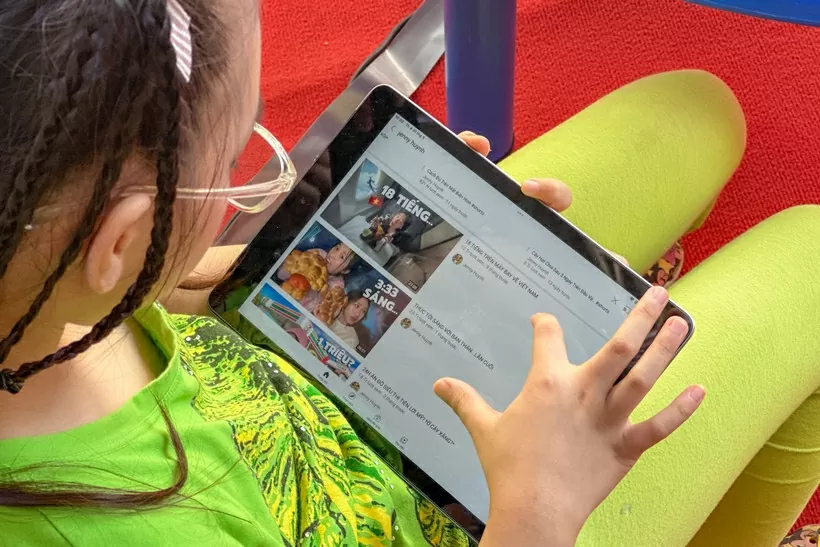 |
| Social media platforms have a major responsibility in creating a safe environment. (Source: VNA) |
To create a "safe ecosystem" for children online, coordination between schools, families, and social media platforms is key. It's necessary to strengthen two-way communication through thematic parent meetings and class-wide Zalo/Facebook groups to share information about online risks, disseminate knowledge, and facilitate direct communication between parents and teachers regarding their children's situation.
In particular, social media platforms have a significant responsibility in creating a safe environment. They need to develop user-friendly tools for reporting abuse and fake accounts; implement mechanisms for quickly censoring harmful content; and actively cooperate with authorities and schools to provide materials and organize awareness campaigns. The participation of social media platforms in online safety education programs in schools would be highly effective.
In summary, protecting children from online scams is a long and complex journey, requiring investment of time, resources, and coordinated efforts. Only when each individual and organization in society recognizes their responsibility and acts decisively can we create a safer online environment where children can learn and develop without fear of pitfalls.
It's time for parents to engage more with their children, connecting and talking more about the various scams occurring online and the safe use of electronic devices. Recent cases of children running away from home serve as a reminder for parents to be more attentive to their children. Building a strong, open family environment, along with equipping children with the necessary skills to protect themselves online, is crucial. Support and listening are the strongest foundations for a child's safe development.
Source: https://baoquocte.vn/lua-dao-truc-tuyen-can-tao-he-mien-dich-so-cho-tre-322787.html


![[Image] Close-up view of the interchange connecting the two expressways and Long Thanh Airport.](https://vphoto.vietnam.vn/thumb/1200x675/vietnam/resource/IMAGE/2026/05/25/1779703378210_ndo_br_z7863716673926-224453a31600126cce10622af6290afd-4549-jpg.webp)








































































































Comment (0)