

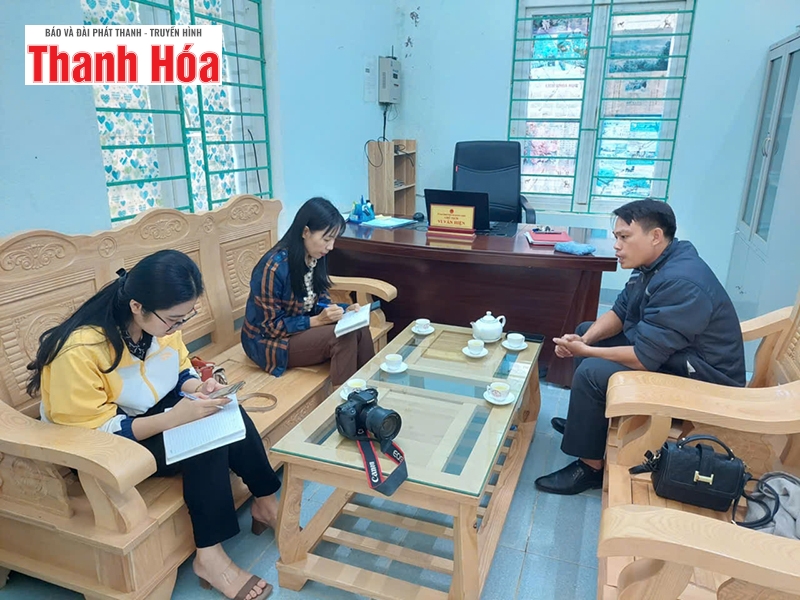
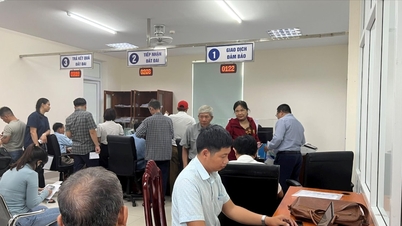
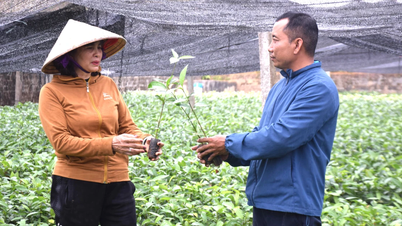
With its function of monitoring and critically analyzing society, the press has become an important force on the front lines against "internal enemies" (In the photo: Reporters from Thanh Hoa Newspaper and Radio and Television Station working at the field).
To fully and effectively promote the role and voice of the people in the fight against corruption, waste, and negative phenomena, close cooperation between the press and the people is essential. This was clearly stated by President Ho Chi Minh: “Since the Party and Government launched the movement against bureaucracy, corruption, and waste through education , self-criticism, and criticism, the masses have learned to criticize, and the press has published the criticisms of the masses.” He also requested that the press “encourage the masses to criticize, but at the same time must lead the criticism of the masses. In this way, the relationship between the press and the masses will be strengthened; and the work of the masses and the press in educating cadres will also yield more results.”
It is evident that President Ho Chi Minh paid great attention to the press in general and its role in the struggle against "internal enemies." Corruption, waste, and negative practices are contrary to the collective interest, the interests of the people, and the country; they corrupt human morality, especially the morality of cadres – those who must always uphold, cultivate, and practice the virtues of diligence, frugality, integrity, and righteousness more than anyone else. However, the struggle against "enemies within" is not easy; therefore, President Ho Chi Minh clearly stated the need for a close connection between the press and the people. Accordingly, the press is not only the voice reflecting the thoughts and aspirations of the people regarding the fight against corruption, waste, and negative practices; More importantly, as the vanguard force on the Party's ideological front, the press must truly become a powerful voice in upholding the rule of law, a voice of strong criticism and struggle against corruption and waste that are eroding moral values and squandering national resources.
Recent years have shown that as the fight against corruption, waste, and negative phenomena—or the "great furnace burning" campaign as the people call it—is increasingly intensified by the Party and the State, the role of the press is also increasingly emphasized and valued. The Party has clearly stated that the immense strength and driving force of the fight against corruption, waste, and negative phenomena lies in the agreement, support, response, and active participation of the people and the entire political system and the press. News agencies and the press have actively participated, accompanying the Party, the State, and relevant agencies in the fight against corruption, waste, and negative phenomena; simultaneously disseminating information, actively combating and uncovering corruption, waste, and negative phenomena, and actively refuting the distorted narratives of hostile forces regarding the fight against corruption, waste, and negative phenomena.
A prime example demonstrating the crucial role of the press in shaping public opinion and information is the timely, accurate, objective, and truthful reporting on corruption cases and the results of their handling by relevant authorities. For instance, the corruption and misconduct case at Viet A Company was promptly and fully reported by the press, helping the public understand the case and, most importantly, publicly exposing numerous officials at the central and local levels involved. This case led to disciplinary and criminal prosecution of hundreds of officials and Party members, including high-ranking officials (three Central Committee members who were ministers, former ministers, and a Provincial Party Secretary; three deputy ministers; and three generals in the armed forces...). For example, the case that occurred at the Consular Department of the Ministry of Foreign Affairs and several related units (40 defendants have been prosecuted, including 2 deputy ministers, former deputy ministers, 1 assistant to the Deputy Prime Minister, 2 Vice Chairmen of provincial/city People's Committees, 2 department heads, and bureau chiefs, etc.). In addition, many cases of corruption in the non-state sector, such as in the fields of securities, corporate bonds, and bidding (FLC Group, Tan Hoang Minh, Van Thinh Phat, AIC Company, etc.), have also been widely reported to the public. This not only helps people better understand and speak out more strongly against corruption, but also creates a solid foundation of trust for the Party and State to continue to intensify the "anti-corruption campaign," aiming to purge corrupt elements from the public administration.
The "abuse of power," or more specifically, the corruption of officials entrusted with power by the people, is the root cause of corruption and negative practices. Therefore, only when power is "confined" within a "cage" of mechanisms and closely monitored can the door to corruption and negative practices be closed. Our Party plays a supervisory role in the exercise of power through Party inspection and supervision; State inspection and auditing; supervision by elected bodies and representatives, the judiciary, the Vietnam Fatherland Front and its member organizations, the press, the people, and society. Among these, the press is emphasized as a kind of "soft power" that has shown immense potential in monitoring power, focusing on monitoring the moral cultivation, lifestyle, and exemplary conduct of officials and Party members, especially those in leadership positions. At the same time, the press detects and reports on corruption and negative behaviors, providing a basis for relevant agencies to conduct inspections, investigations, and handle cases according to the law. Furthermore, the press plays a crucial role in promoting good examples and positive actions, combating and criticizing erroneous viewpoints and acts of corruption and negativity; and protecting, rewarding, and encouraging those who bravely fight against corruption and negative behaviors.
With its function of monitoring and critically analyzing society, the press has become a crucial force in the fight against "internal enemies." Through this, it contributes to the building and rectification of the Party, the protection of socio-economic development achievements, and the preservation of the nation's fine moral and cultural values.
Text and photos: Luu Kiet
Source: https://baothanhhoa.vn/luc-luong-quan-important-nbsp-tren-tran-tuyen-chong-giac-noi-xam-252425.htm

![[Photo] Prime Minister Pham Minh Chinh presides over a meeting on private sector economic development.](/_next/image?url=https%3A%2F%2Fvphoto.vietnam.vn%2Fthumb%2F1200x675%2Fvietnam%2Fresource%2FIMAGE%2F2025%2F12%2F20%2F1766237501876_thiet-ke-chua-co-ten-40-png.webp&w=3840&q=75)




































































Comment (0)