

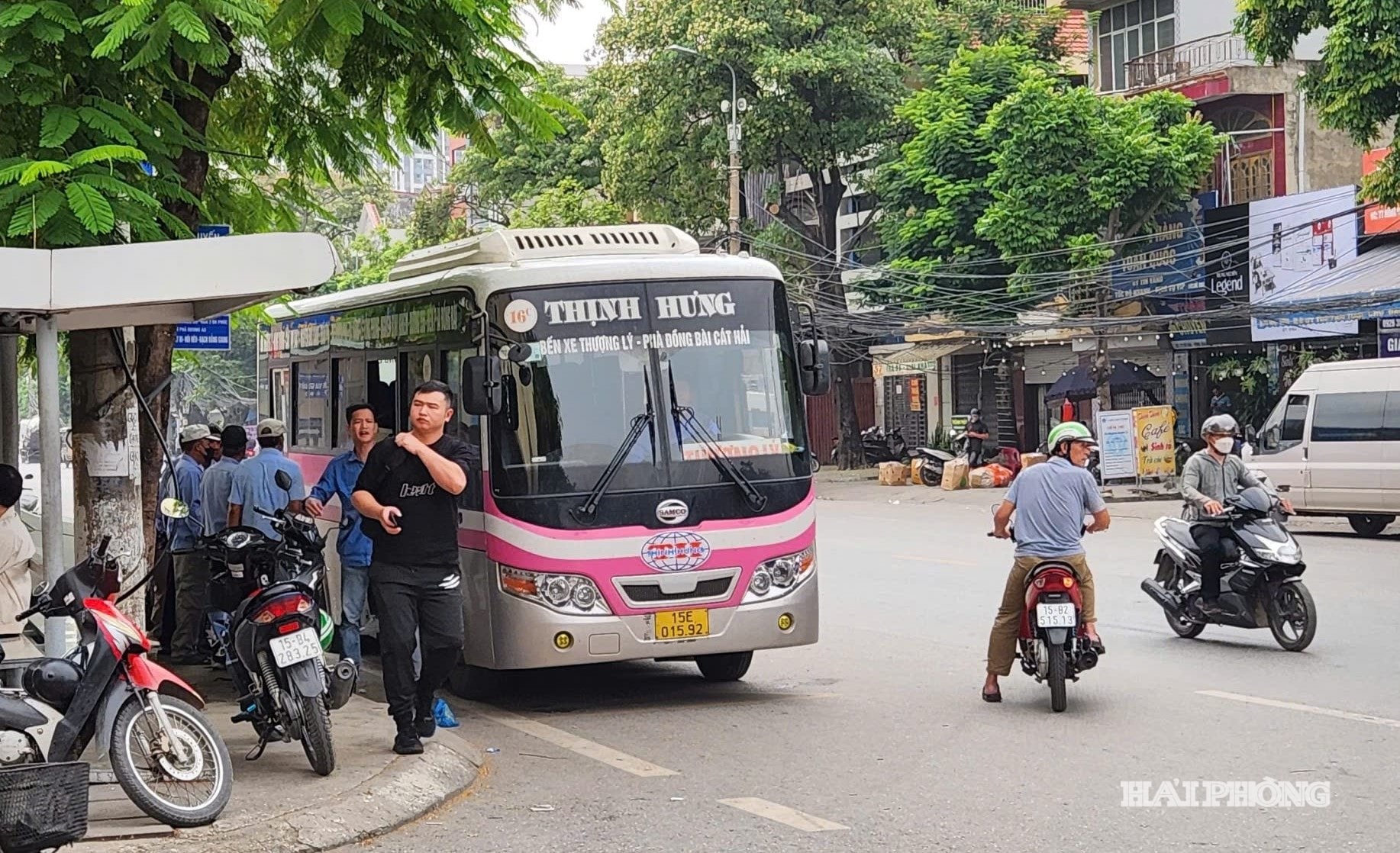
After 5 months of Hai Duong and Hai Phong merging, public passenger transport connection between the East and West regions of Hai Phong by bus is not smooth. People mainly rely on personal vehicles, shared cars or trains to travel, while buses, which are considered the "backbone" of public transport, have not yet played their connecting role.
Lack of connecting lines
Bus route No. 02 (Ben Binh - An Lao Bus Station) operated by Hai Phong Road Joint Stock Company currently only stops at An Lao area, not reaching the central area in the West of Hai Phong. Meanwhile, many officials, civil servants and people living in this area have to travel to East Hai Phong every day to work or handle administrative procedures but cannot choose the bus as a means of transportation.
Ms. Nguyen Thi Hanh, a civil servant in the West Hai Phong area, has to go to the East Hai Phong area to work every day. She said: “My family lives in Hai Duong ward. To go to work at the City Political - Administrative Center, I share a car with my colleagues, which is quite expensive. Although the city arranges trains for officials, civil servants, and public employees, the train time is fixed. There are days when we come home late from a meeting or have an emergency, and we cannot catch the train on time. If there were buses directly connecting the West and East Hai Phong areas with appropriate frequency and vice versa, it would be less difficult for officials, civil servants, public employees, and workers.”
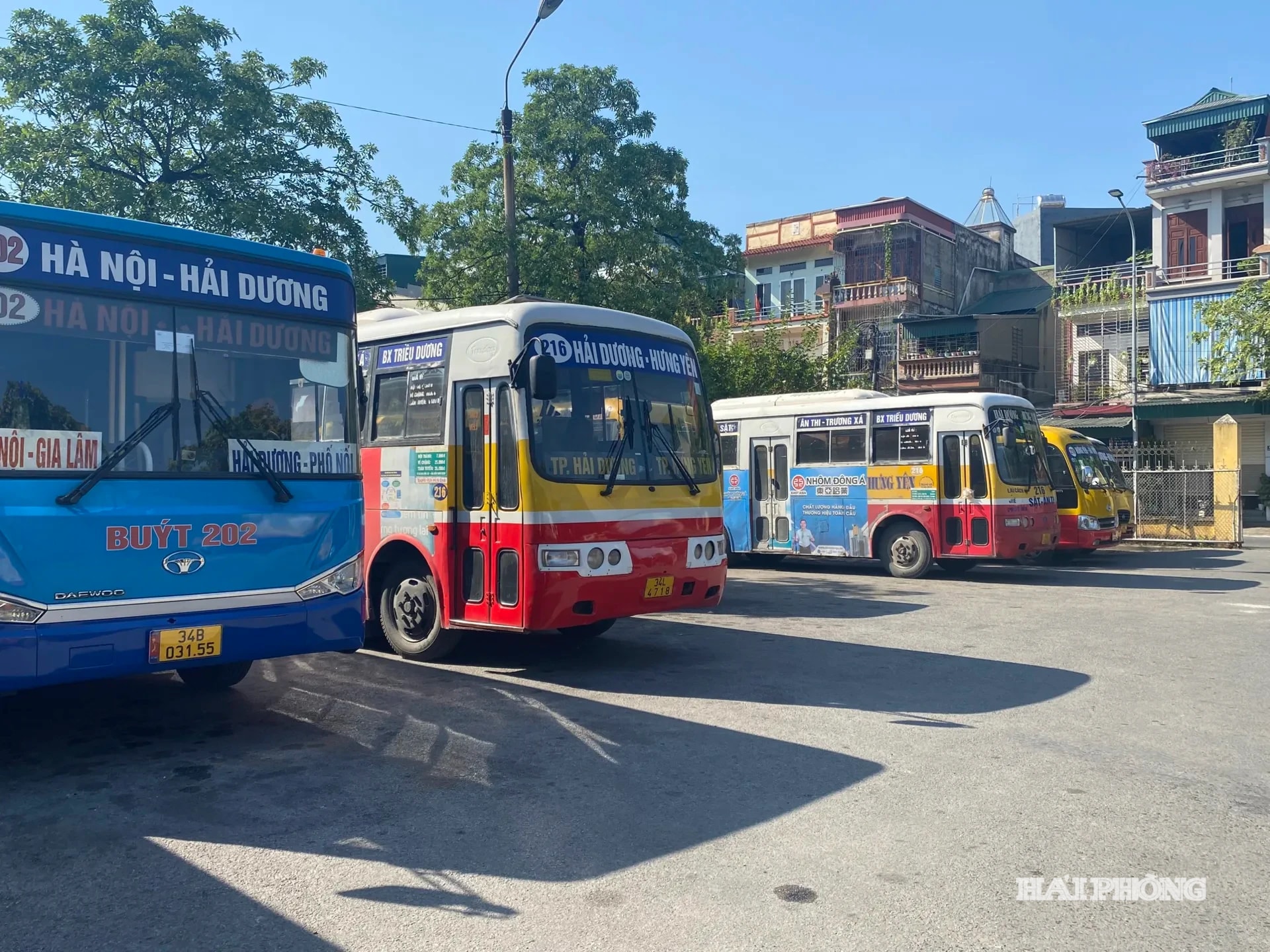
According to the Department of Construction, the East Hai Phong area currently has more than 10 bus routes, including very long distance routes, about 30 - 40 km. However, the farthest route only goes to An Lao, Vinh Bao and Du Nghia areas. The West Hai Phong area also has more than 10 bus routes, but they mainly connect within the area, with few inter-provincial routes. The inter-provincial routes mainly connect with Bac Ninh and Hanoi, with only route 08 connecting from the old West Hai Duong bus station to Kien An ward, but it has not reached many locations in the city center.
Hope there will be more bus routes and subsidized tickets soon
After the merger of provincial administrative units, the administrative boundaries were expanded, and the travel needs of people increased between the East and West areas of the city. Therefore, the expansion and development of connecting public bus routes plays an important role.
Deputy Director of Duc Khoa Transport Joint Stock Company Tran The Dong said that the transport company is operating 3 bus routes, from Tay Hai Duong static parking lot to Quang Ninh, Bac Ninh (formerly Bac Giang) and to Kien An ward (East Hai Phong) with a total of 27 vehicles daily. To develop bus routes connecting the East and West of the city, it is necessary to resolve the relationship of "3 houses" including: the state - investors and consumers (people). Only when these interests are resolved harmoniously, will buses develop.
To support bus development, the government must play the role of a "midwife" to reduce bus fares. According to Mr. Ha Duy Hung, representative of Thinh Hung Transport Company Limited, the subsidy also needs to take into account the long-term factor so that businesses can compensate for vehicle depreciation as well as have the conditions to develop more vehicles and expand new routes. The government's support period should last from 6 to 7 years. This period is also suitable for the time to issue and change route stamps for means of transport. This is also a suitable time for the Ministry of Finance to calculate the depreciation period for cars (from 6 to 10 years).
The biggest challenge today is fierce competition from shared vehicles, technology vehicles and the strong development of private vehicles... According to Mr. Dong, passengers using buses today are mainly students, workers, laborers, civil servants, and low-income people. Therefore, for public transport to be truly effective, there needs to be a flexible subsidy policy, suitable for each route, each area and each target group. "If we are allowed to expand routes to the city center, tourist attractions, administrative areas... and are subsidized, we are ready to invest in new vehicles, increase trips, and serve passengers better," Mr. Dong expressed.
According to the Head of the Department of Transport, Vehicles and Drivers Management Nguyen Quang Hieu (Department of Construction), the bus route connecting the East - West areas of the city plays a particularly important role in ensuring urban connectivity after the merger. This will be the main route to help reduce personal vehicles and create convenient connections between administrative areas, residential areas and industrial zones. The Department of Construction has advised and proposed the City People's Committee to soon develop a Project to develop public bus routes, in which priority is given to studying the route connecting the East - West areas for implementation in the near future.
Buses are not only a means of public transport but also contribute to reducing traffic pressure and creating synchronization in urban development after the merger. The early formation of East-West connecting routes helps people move more conveniently, reduces congestion and opens up development space for the entire city.
HAI MINHSource: https://baohaiphong.vn/mong-moi-tuyen-xe-bust-ket-noi-giao-thong-thanh-pho-528586.html


![[Photo] National Assembly Chairman Tran Thanh Man attends the VinFuture 2025 Award Ceremony](/_next/image?url=https%3A%2F%2Fvphoto.vietnam.vn%2Fthumb%2F1200x675%2Fvietnam%2Fresource%2FIMAGE%2F2025%2F12%2F05%2F1764951162416_2628509768338816493-6995-jpg.webp&w=3840&q=75)
![[Photo] 60th Anniversary of the Founding of the Vietnam Association of Photographic Artists](/_next/image?url=https%3A%2F%2Fvphoto.vietnam.vn%2Fthumb%2F1200x675%2Fvietnam%2Fresource%2FIMAGE%2F2025%2F12%2F05%2F1764935864512_a1-bnd-0841-9740-jpg.webp&w=3840&q=75)

































































Comment (0)