

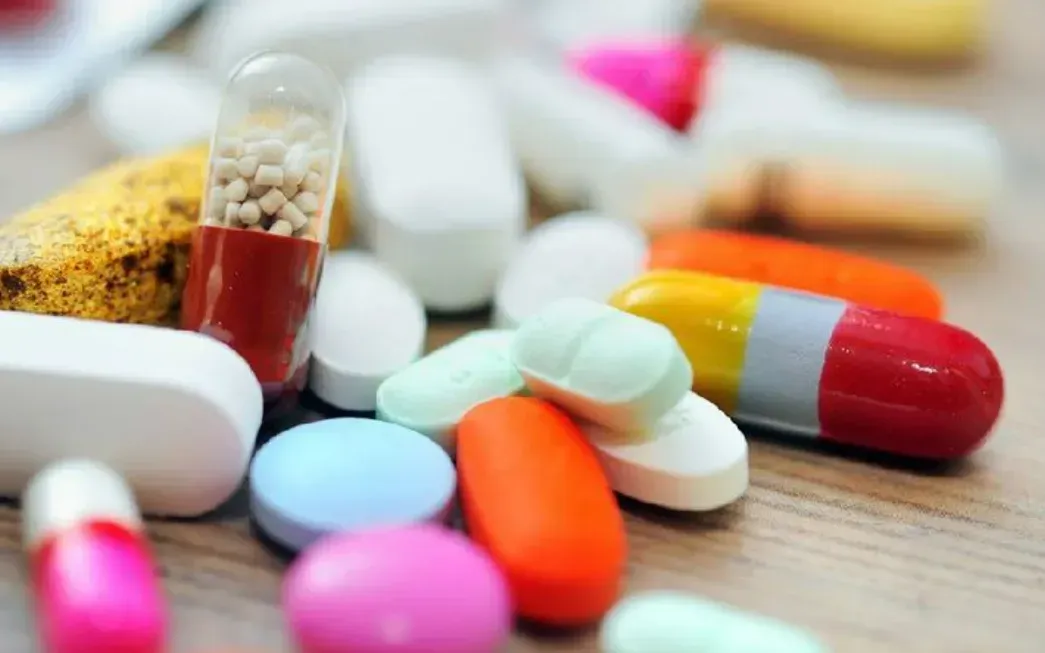
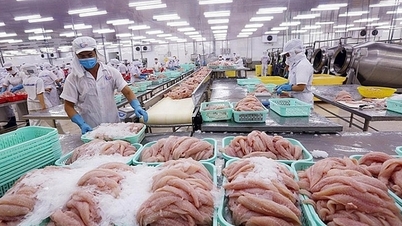
Illustrative image.
Gan Siow Huang, an official from Singapore's Ministry of Trade and Industry, said on October 14 that the US had postponed tariffs on Singaporean pharmaceutical exports to give companies more time to negotiate exemptions.
Previously, the administration of President Donald Trump announced it would impose a 100% tariff on all branded pharmaceutical products starting October 1st, unless pharmaceutical companies built manufacturing facilities in the United States. Branded or patented pharmaceuticals are drugs sold under a brand name protected by a patent. When a patent expires, versions of the same drug can be sold by other companies.
Speaking before the Singapore Parliament , Gan Siow Huang said that the implementation of the tariff was subsequently delayed to allow pharmaceutical companies time to negotiate exemptions with the US government.
Ms. Gan Siow Huang stated that Singapore's pharmaceutical exports to the US averaged S$3.7 billion (approximately US$2.8 billion) annually during the 2022-2024 period. She added that eight of the world's top ten pharmaceutical companies have manufacturing, research, and development operations in the island nation, and pharmaceuticals account for 13% of Singapore's total exports to the US.
Ms. Gan Siow Huang stated that the Singaporean government has been working with pharmaceutical companies based in the country regarding the impact of US tariffs, and many of these businesses have plans to build or expand facilities in the US. According to Ms. Gan, these companies are awaiting more detailed information from the US government to confirm whether their plans qualify for tariff exemptions.
Singapore is heavily reliant on international trade and vulnerable to any global economic slowdown caused by US tariffs. On October 14th, Singapore's Ministry of Trade and Industry announced preliminary estimates showing the country's economy grew by 2.9% in the third quarter year-on-year, a slowdown from the previous three months due to US tariffs putting pressure on key manufacturing sectors.
Data released by Singapore's Ministry of Trade and Industry on October 14th showed that the Singaporean economy grew by 2.9% in the third quarter of 2025, a slight decrease from the 4.5% growth of the previous quarter, but higher than the 2% growth forecast by economists in a Bloomberg survey. Seasonally adjusted figures show the Singaporean economy growing by 1.3%, slightly slower than the 1.5% growth of the previous second quarter.
In a separate statement, the Monetary Authority of Singapore (MAS) said the economy grew by 3.9% in the first three quarters of 2025, faster than the same period last year. The MAS assessed that the output gap would remain positive for the entire year. However, the central bank added that Singapore's Gross Domestic Product (GDP) growth is expected to slow in the coming quarters as activity in trade-related sectors returns to normal.
Singaporean exports to the US are subject to a basic tariff of 10%, despite the US having signed a free trade agreement with Singapore in 2004. Sectoral import tariffs could negatively impact demand for Singaporean products, including semiconductors, consumer electronics, and pharmaceuticals. The Singapore central bank stated in July 2025 that these items account for 40% of Singapore's exports to the US.
Previously, the medical research organization Hilleman Laboratories expressed that it did not expect a direct impact of US tariffs on its operations in Singapore, but warned of the potential for ripple effects due to the interconnected nature of global supply chains that could cause cascading impacts. Furthermore, Hilleman Laboratories argued that tariffs risk increased costs, potentially affecting affordability and accessibility, especially for vulnerable populations. Changes in trade policy could affect delivery schedules, supply sources, and partnerships.
Biotechnology company BioNTech announced it is "closely monitoring the situation" despite having manufacturing facilities in the US. Meanwhile, pharmaceutical company GSK emphasized it is "cooperating constructively" with the US government.
Dr. Deborah Elms, head of trade policy at the Hinrich Foundation charity, argues that even within a single company, different products may or may not be subject to tariffs. She suggests that if pharmaceutical companies were to start building factories in the U.S. to qualify for tariff exemptions, “that wouldn’t really solve the problem.” Dr. Elms also points out that tariffs could be an issue because Singapore is increasingly focused on manufacturing pharmaceuticals for export, and the U.S. is a crucial market.
Source: https://vtv.vn/my-hoan-ap-thue-doi-voi-duoc-pham-cua-singapore-100251014194501788.htm

































































Comment (0)