

The U.S. imposed sweeping export restrictions in October 2022 to limit China's access to semiconductors, key to technologies such as artificial intelligence (AI) and self-driving cars, as well as high-tech weapons. In 2023, Japan and the Netherlands followed suit, but shipments to China – primarily mid- to high-end manufacturing equipment – surged. This prompted Washington to continue urging its two allies to push for tougher measures.
Current restrictions prevent the export of semiconductor manufacturing equipment with a size of 10 to 14 nanometers or smaller. The U.S. wants to expand these restrictions to include some older chip manufacturing equipment.
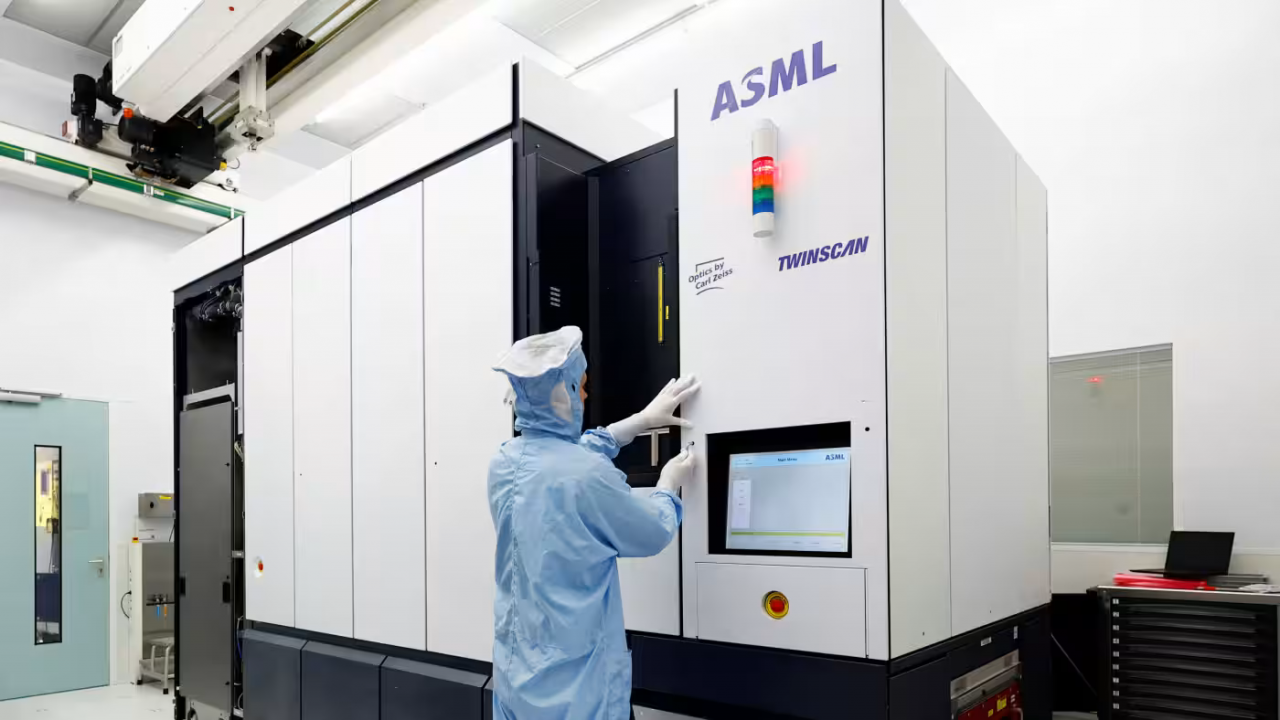
Washington may be eyeing lithography equipment, used to print circuits onto silicon wafers, and etching systems, used in stacking three-dimensional memory chips. Japanese companies like Nikon and Tokyo Electron have particularly advanced capabilities in those areas.
According to Nikkei, essential chip manufacturing chemicals such as photoresist, in which Japanese companies like Shin-Etsu Chemical control over 90% of the market, are also believed to be targeted by Washington.
The U.S. also asked the Netherlands, home to semiconductor manufacturer ASML, to prevent companies that maintain and service chip manufacturing equipment sold to China before last year's trade restrictions took effect. The U.S. also urged Germany and South Korea to stop supplying essential components, according to Bloomberg.
Japanese officials and businesses were taken by surprise by this pressure. On March 8, Minister of Economy , Trade and Industry Ken Saito said they had no plans to implement new measures at this time.
In July 2023, Tokyo added 23 items to its list of restricted export products, including advanced semiconductor manufacturing equipment. Businesses need to apply for a license to export photoresists for ultraviolet lithography.
If Japan tightens restrictions on older chip manufacturing equipment, domestic companies could lose market share, while China's access would not be significantly affected as they could still source it elsewhere.
Pressure from the US emerged amid signs that their initial strategy to hinder China's chip production wasn't as effective as expected. Nearly a year ago, Huawei launched a phone using its own 7nm chip. It appears the tech giant either modified equipment previously used for older chip production to create the new chip, or used components and technology acquired before the ban.
In October 2023, Washington tightened export controls, essentially banning exports to subsidiaries and global offices of Chinese companies. Nikkei noted that the US feared its efforts might be ineffective without coordinated action from its allies.
(According to Nikkei)
Source
































![[Video] The craft of making Dong Ho folk paintings has been inscribed by UNESCO on the List of Crafts in Need of Urgent Safeguarding.](https://vphoto.vietnam.vn/thumb/402x226/vietnam/resource/IMAGE/2025/12/10/1765350246533_tranh-dong-ho-734-jpg.webp)































































Comment (0)